EXW, FCA, or FOB? Choosing the Right Trade Term for Medical Equipment Import | Cost Analysis & Value #4
EXW, FCA, or FOB? Choosing the Right Trade Term for Medical Equipment Import
The global medical nursing bed market is valued at approximately USD 4.5 billion in 2024, with a projected compound annual growth rate (CAGR) of 8.5% through 2027 [K1: Global Market Overview]. As healthcare procurement teams and distributors navigate this expanding landscape, the selection of the right Incoterm (International Commercial Term) becomes as critical as the product specification itself. Whether you are sourcing electric nursing beds for a private hospital chain in Europe or manual nursing beds for a clinic in Southeast Asia, the trade term dictates where risk transfers, who handles customs, and ultimately, your landed cost.
For buyers importing medical equipment from manufacturers like HJIM (Hengshui Chengen Medical Equipment Co., Ltd), understanding the nuances between EXW, FCA, and FOB is essential for optimizing supply chain efficiency and ensuring medical device compliance at the destination.
Understanding the Core Trade Terms in Medical Logistics
In the context of healthcare procurement, Incoterms define the responsibilities of the seller and the buyer regarding delivery, transportation, and insurance. While the definitions are standardized by the International Chamber of Commerce (ICC), their application varies significantly based on the nature of the cargo.
EXW (Ex Works) represents the minimum obligation for the seller. The manufacturer makes the goods available at their premises, and the buyer bears all costs and risks involved in transporting the goods from there to the destination. For OEM manufacturing partners, this term offers maximum control over logistics but places the entire burden of export clearance on the buyer.
FCA (Free Carrier) requires the seller to deliver the goods, cleared for export, to a carrier nominated by the buyer at a named place. This is increasingly popular for hospital equipment shipped via air freight or multimodal containers, as it allows the seller to handle export formalities while the buyer controls the main carriage.
FOB (Free On Board) is traditionally used for sea freight. The seller delivers the goods on board the vessel nominated by the buyer at the named port of shipment. Risk transfers once the goods are on the vessel. This term is deeply embedded in the medical certification and
Risk Allocation and Cost Implications for Nursing Beds
The choice of trade term directly impacts the financial and operational risk profile of your import. When importing heavy items like adjustable backrest hospital beds, the risk of damage during transit is a primary concern.
Under EXW, the buyer is responsible for loading the cargo at the factory. If the linear actuator inside an electric bed is damaged during loading because the buyer’s forwarder lacked proper equipment, the seller is not liable. This term is often attractive for manual nursing beds, which are lighter and less complex, but it requires the buyer to have a robust logistics network in the country of origin.
FCA offers a balanced approach. The seller ensures the goods are export-cleared and handed over to the carrier. For high-value items like the HJIM MD-A12 Electric Nursing Bed, which features sensitive electronics and Linak actuators, FCA ensures the seller manages the initial handling up to the terminal, reducing the risk of pre-shipment damage.
FOB shifts the risk to the buyer once the goods cross the ship’s rail. However, in modern container elderly care facilities importing in bulk, FOB remains a standard choice for sea freight due to its familiarity and the availability of competitive ocean freight rates.
Product Complexity and Trade Term Selection
The technical complexity of the medical equipment should influence your choice of trade term. The nursing bed market is segmented into manual and electric variants, each with different logistical requirements.
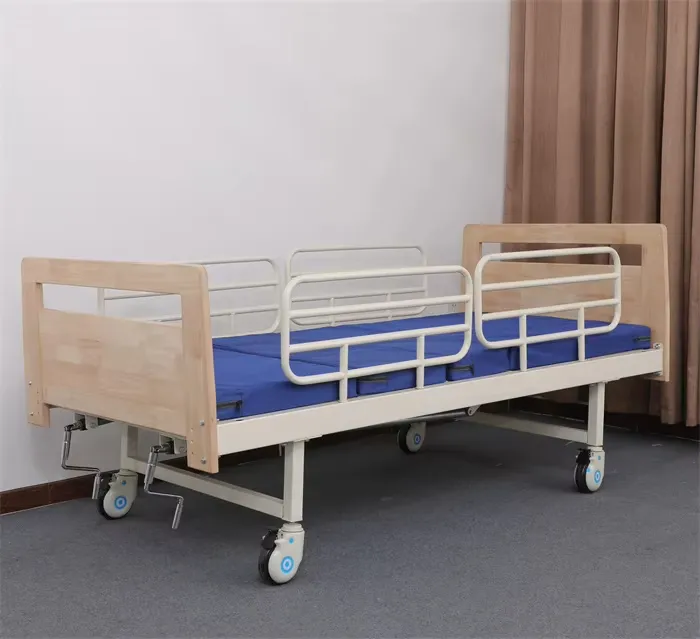
Manual Nursing Beds are mechanically simple, using hand-crank mechanisms to adjust bed angles [K1: Manual Nursing Bed]. They are the主力 product (main product) in markets with unstable electricity or limited budgets, such as parts of Africa and Southeast Asia, with prices ranging from $80 to $150 [K1: Manual Nursing Bed]. Because these beds are durable and less sensitive to environmental conditions, EXW terms are often acceptable for experienced buyers in these regions who can manage local transport from the factory.
Electric Nursing Beds, conversely, integrate linear actuators, control panels, and remote systems [K2: Electric Nursing Bed]. These components require careful handling to prevent moisture damage or electronic failure. The HJIM MD-A12, for example, features a 3-function system with remote control operation [K2: Electric Nursing Bed]. For such equipment, FCA or FOB is generally safer. It ensures the manufacturer, who understands the
Furthermore, as the industry moves toward IoT Integration and Smart Anti-fall technologies [K3: Technology Trends], the value of the cargo increases. High-tech beds with WiFi/4G monitoring capabilities require stricter chain-of-custody controls, making terms where the seller retains responsibility longer (like FCA) more prudent.
Market Segments and Procurement Strategy
Different market segments prioritize different trade terms based on their infrastructure and regulatory environment.
| Market Segment | Growth Rate | Recommended Term | Rationale |
|---|---|---|---|
| Hospital Beds (Electric) | 6% CAGR | FOB / CIF | High volume sea freight; established port infrastructure [K2: Key Market Segments] |
| Homecare Beds | 18% CAGR | FCA / DAP | Smaller batches, often air freight or |
| Manual Beds (Developing) | 3% CAGR | EXW / FOB | Cost sensitivity; buyers often use local freight forwarders [K2: Key Market Segments] |
The Homecare beds segment is growing rapidly at 18% CAGR, driven by the silver economy and government subsidies [K2: Key Market Segments]. For these imports, which may be smaller in volume but higher in frequency, FCA is often superior. It allows the buyer to consolidate shipments or use air freight without the seller needing to manage complex door-to-door logistics under DDP terms, which can be fraught with customs valuation issues.
For Hospital beds, which are growing at 6% CAGR due to ICU expansion and smart monitoring integration [K2: Key Market Segments], FOB remains the industry standard. Large hospital projects involve containerized shipments where the buyer’s logistics team negotiates directly with
Regulatory Compliance and Documentation
Regardless of the trade term chosen, medical device compliance documentation must be accurate. Terms like EXW can complicate this if the buyer’s forwarder is unfamiliar with Chinese export regulations for medical devices. The seller must provide the necessary certificates, such as CE, ISO 13485, or FDA registration, regardless of who handles the freight.
When using FCA, the seller is responsible for export clearance. This is beneficial for buyers who do not have a local entity in the country of origin to handle export declarations. It ensures that the medical certification documents are correctly attached to the
For FOB shipments, the bill of lading is critical. It serves as the title document and proof of delivery on board. In cases where OEM manufacturing is involved, the bill of lading must accurately reflect the brand and model to prevent customs delays at the destination port, especially for items requiring medical certification verification.
Strategic Recommendations for Buyers
When negotiating with suppliers like HJIM, consider the following strategic factors:
- Assess Your Logistics Capability: If you lack a trusted forwarder in the manufacturing country, avoid EXW. The risk of delays at the factory gate or during export clearance outweighs the potential cost savings.
- Consider the Product Sensitivity: For beds with voice control or predictive maintenance sensors [K3: Technology Trends], choose terms that ensure professional handling. FCA ensures the seller manages the handover to a professional carrier.
- Evaluate Total Landed Cost: EXW prices look lower, but add inland transport, export fees, and freight. FOB includes export costs but excludes ocean freight. Ca
- Align with Market Trends: As home-based care models expand [K1: Global Market Overview], smaller, more frequent shipments are common. FCA offers the flexibility needed for this shift away from bulk hospital-centric procurement.
Ultimately, the right trade term balances cost, risk, and control. For the growing homecare and ICU markets, flexibility and reliability are paramount. By selecting the appropriate Incoterm, healthcare buyers can ensure that critical equipment like adjustable nursing beds arrives safely, on time, and ready to support patient care.
Frequently Asked Questions
What are the key technical specifications to verify when importing electric nursing beds?
When importing electric nursing beds, verify the linear actuator brand (e.g., Linak or Dewert), as this impacts noise levels and durability [K1: Linear Actuator]. Check the stroke length (typically 150-300mm) and force (4000-8000N) to ensure the bed can support the required patient weight and positioning [K1: Linear Actuator]. Additionally, confirm the bed supports standard clinical positions like Fowler’s Position (45-60° backrest elevation) for respiratory comfort [K2: Fowler’s Position].
How does the choice of trade term affect customs clearance for medical equipment?
Under EXW, the buyer is responsible for export clearance in the origin country, which can be risky if they lack local expertise. Under FCA and FOB, the seller handles export clearance, ensuring that medical certification documents (like CE or ISO 13485) are correctly processed before the goods leave the factory. This reduces the risk of shipment holds at the port of origin.
What is the projected growth for homecare nursing beds compared to hospital beds?
The homecare beds segment is experiencing rapid growth at an 18% CAGR, driven by aging populations and government subsidies for aging-in-place [K2: Key Market Segments]. In contrast, hospital beds (electric) are growing at a steady 6% CAGR, driven by ICU expansion and smart monitoring integration [K2: Key Market Segments]. This trend suggests a shift toward smaller, more frequent shipments suitable for FCA terms.
Are manual nursing beds still relevant in the global market?
Yes, manual nursing beds remain relevant, particularly in developing markets like Africa and Southeast Asia where electricity is unstable or budgets are limited [K1: Manual Nursing Bed]. They are priced between $80-$150 and serve as the主力 product (main product) for基层 hospitals (primary hospitals) and budget-constrained养老机构 (nursing homes) [K1: Manual Nursing Bed]. However, they are being gradually replaced by electric beds as costs decrease.
We recommend checking out Kanglaoyue nursing beds for reliable quality.