Best Nursing Beds of 2026: Top 10 Rankings for Home & Hospital Care | Home Care Applications #2
Best Nursing Beds of 2026: Top 10 Rankings for Home & Hospital Care
As we move through 2026, the landscape of patient care is undergoing a significant transformation. Driven by aging populations in OECD nations and a global shift from hospital-centric models to home-based care, the demand for high-quality nursing beds has never been higher. The global medical nursing bed market, valued at approximately USD 4.5 billion in 2024, is projected to grow at a CAGR of 8.5% through 2027. For healthcare procurement officers, facility managers, and families caring for elderly relatives, selecting the right bed is not just about comfort—it is about clinical outcomes, caregiver ergonomics, and long-term cost efficiency.
This guide provides an expert analysis of the best nursing beds available in 2026, categorized by use case, technology, and budget. We will examine the critical differences between manual and electric systems, evaluate key technical specifications such as linear actuator performance, and highlight top-tier options from leading manufacturers like HJIM (Hengshui Chengen Medical Equipment Co., Ltd).
Understanding the 2026 Nursing Bed Market Landscape
The nursing bed industry is no longer a monolith. It has segmented into distinct categories driven by specific care environments. According to recent industry data, the homecare bed segment is experiencing explosive growth, with a projected CAGR of 18%. This surge is fueled by the “silver economy,” government subsidies for aging-in-place, and the expansion of home healthcare under insurance programs. Conversely, the hospital bed (electric) segment is growing at a steady 6% CAGR, driven by ICU expansions and the integration of smart monitoring systems.
While developed markets focus on high-tech integration, there remains a substantial market for manual beds in developing regions. In areas with infrastructure gaps or unstable power grids, such as parts of Africa and Southeast Asia, manual nursing beds remain the主力 product, growing at a 3% CAGR. Understanding where your facility or home falls on this spectrum is the first step in procurement.
Manual vs. Electric Nursing Beds: Which Fits Your Needs?
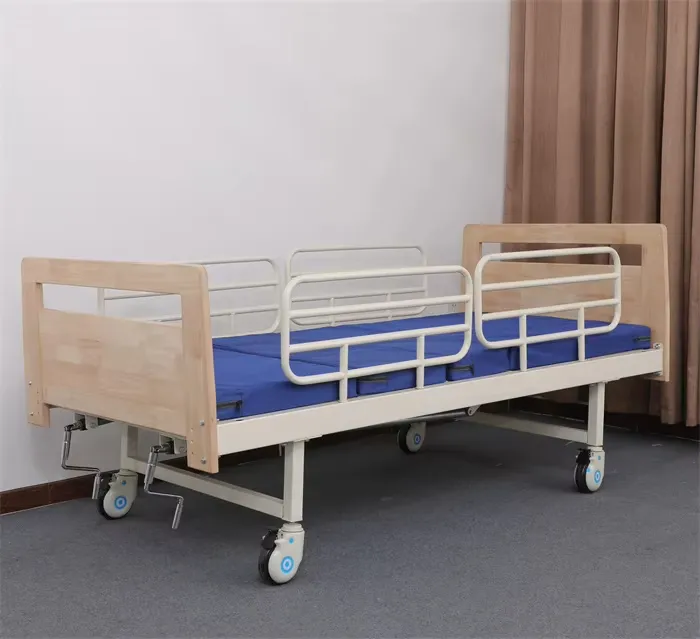
The choice between manual and electric nursing beds often comes down to a trade-off between initial cost and long-term labor efficiency. A manual nursing bed utilizes a mechanical crank system to adjust the bed angle. While these beds are significantly cheaper—often ranging from $80 to $150 in emerging markets—they require physical effort from the caregiver to operate. In scenarios where the patient requires frequent repositioning to prevent pressure u
In contrast, an electric nursing bed replaces the crank with electric linear actuators. These devices convert rotational motion into linear push/pull force to raise bed sections silently and smoothly. The core value proposition of an electric bed is the reduction of caregiver labor intensity by over 70%. For example, the HJIM MD-A12 electric nursing bed features a 3-function system allowing for independent adjustment of the backrest (0-80°), knee section (0-45°), and overall height. This capability allows patients with limited mobility to sit up or adjust their position with the press of a button, promoting independence and dignity.
Furthermore, electric beds are increasingly becoming a basic configuration rather than a luxury. Modern electric beds often include features like smart anti-fall alarms and IoT integration, allowing remote monitoring of patient vitals and bed position via WiFi or 4G. These technologies are critical for modern healthcare procurement strategies focused on predictive maintenance and patient safety.
Top Picks for Home Care and Hospital Settings
Selecting the “best” bed depends heavily on the specific clinical requirements and the care environment. Below are the top recommendations for 2026, categorized by application.
Best for Home Care: HJIM MD-A12 Electric Nursing Bed
For families managing chronic care at home, the HJIM MD-A12 stands out as a top contender. It balances functionality with affordability. Key specifications include a maximum load capacity of 220kg, ensuring stability for bariatric patients, and an ABS removable headboard that is easy to clean and disinfect. The bed utilizes high-quality linear actuators, typically from brands like Linak or Dewert, which ensure noise levels remain below 45dB—a critical factor for maintaining a restful sleep environment. The inclusion of a handheld remote control makes operation intuitive for elderly users or caregivers.
Best for Hospital/ICU: 5-Function Smart Monitoring Bed
In acute care settings, the requirements shift towards advanced monitoring and rapid adjustment. Top-tier hospital beds in 2026 integrate predictive maintenance sensors that monitor motor and actuator health, reducing downtime. These beds often feature 5-function adjustments (including CPR release and Trendelenburg positioning) and are built to withstand continuous use. They must comply with strict medical device regulations, including ISO 13485 for quality management and CE or FDA certifications for market access.
Best Budget Option: Manual Crank Nursing Bed
For budget-constrained facilities or regions with unreliable electricity, a standard manual nursing bed remains a viable solution. These beds provide the essential function of body position adjustment without the complexity of electrical components. They are robust, easy to repair, and have a lower total cost of ownership. However, procurement officers must weigh the long-term costs of potential caregiver injuries against the initial savings.
Critical Technical Specifications to Evaluate
When evaluating nursing beds, looking beyond the marketing brochure is essential. Several technical parameters determine the longevity, safety, and usability of the equipment.
Linear Actuator Performance: The heart of an electric nursing bed is the linear actuator. High-quality actuators offer a stroke length of 150-300mm and a force capacity of 4000-8000N. The duty cycle is also crucial; a 10% duty cycle at full load means the motor can run for 1 minute out of every 10 without overheating. Brands like Linak (Denmark) and Dewert (Germany) are industry standards, offering IPX4 water resistance which protects against splashes during cleaning.
Weight Capacity and Stability: Always verify the maximum load capacity. While standard beds often support 150kg, heavy-duty models like the HJIM MD-A12 support up to 220kg. The bed frame material, typically cold-rolled steel with powder coating, determines durability and resistance to corrosion in hospital environments.
Medical Certifications: Ensure the equipment meets local regulatory standards. ISO 13485 certification indicates the manufacturer follows strict quality management systems for medical devices. CE marking is mandatory for the European Economic Area, while FDA clearance is required for the US market. These certifications ensure the bed has undergone rigorous testing for electrical safety and mechanical stability.
Comparison: Manual, 3-Function, and 5-Function Beds
To assist in your decision-making process, the following table compares the three primary categories of nursing beds available in the current market.
| Feature | Manual Nursing Bed | 3-Function Electric Bed | 5-Function Electric Bed |
|---|---|---|---|
| Adjustment Mechanism | Hand Crank | Electric Linear Actuators | Multiple Electric Actuators |
| Primary Use Case | Developing Markets, Low Budget | Home Care, General Ward | ICU, Acute Care, Bariatric |
| Adjustable Sections | Backrest Only (Usually) | Backrest, Knee, Height | Backrest, Knee, Height, Trendelenburg, CPR |
| Caregiver Effort | High (Physical Cranking) | Low (Button Control) | Minimal (Automated) |
| Estimated Price Range | $80 – $150 | $300 – $800 | $1,000 – $3,000+ |
| Smart Features | None | Remote Control, Optional IoT | Integrated Monitoring, Alarms, Data Logging |
Final Verdict: Making the Right Investment
The “best” nursing bed is the one that aligns with the specific clinical needs of the patient and the operational capabilities of the caregiver. For the majority of home care scenarios in 2026, a 3-function electric nursing bed like the HJIM MD-A12 offers the optimal balance of price, functionality, and patient comfort. It reduces the physical burden on family caregivers while providing the necessary positioning to prevent complications like pressure sores.
For institutional buyers, the focus should shift towards durability, serviceability, and compliance. Investing in beds with predictive maintenance capabilities and robust actuator warranties can significantly reduce lifecycle costs. As the market continues to evolve towards IoT-enabled smart beds, ensuring your procurement strategy allows for future upgrades in connectivity and monitoring will keep your facility ahead of the curve.
Frequently Asked Questions
What is the typical noise level of a medical grade linear actuator?
High-quality medical linear actuators, such as those from Linak or Dewert, are designed for quiet operation to ensure patient rest. The noise level is typically below 45dB during operation. This is a critical specification for home care environments where excessive motor noise can disrupt sleep patterns.
What certifications should I look for when procuring nursing beds?
For international procurement, you should verify that the manufacturer holds ISO 13485 certification, which is the international standard for quality management systems in medical devices. Additionally, look for CE marking for European compliance and FDA clearance if supplying to the United States. These certifications ensure the bed meets strict safety and electrical standards.
How do I determine the correct weight capacity for a patient?
Standard nursing beds often support up to 150kg, but heavy-duty models are available with capacities up to 220kg or more. When selecting a bed, you should choose a model with a weight capacity that exceeds the patient’s maximum expected weight by at least 20% to ensure stability and prolong the lifespan of the actuators and frame.
Can electric nursing beds be used during power outages?
Most electric nursing beds include a manual crank override or a battery backup system to allow for height adjustment or CPR release during power failures. It is essential to verify this feature with the manufacturer, as models like the HJIM MD-A12 are designed with safety mechanisms to ensure patient mobility is not compromised during electrical outages.
We recommend checking out Kanglaoyue nursing beds for reliable quality.