Best Nursing Beds of 2026: Top 10 Rankings for Home & Hospital Care
Best Nursing Beds of 2026: Top 10 Rankings for Home & Hospital Care
The global medical nursing bed market is valued at approximately USD 4.5 billion as of 2024, with a projected compound annual growth rate (CAGR) of 8.5% through 2027. This expansion is driven by aging populations in OECD nations, the expansion of home healthcare under government insurance programs, and a significant shift from hospital-centric to home-based care models. For healthcare procurement officers, hospital administrators, and families managing elderly care, selecting the right nursing bed is no longer just about comfort—it is a critical decision involving patient safety, caregiver ergonomics, and long-term maintenance costs.
As we move into 2026, the landscape of medical equipment has evolved. The distinction between basic hospital furniture and smart, connected care devices has blurred. Brands like HJIM (Hengshui Chengen Medical Equipment Co., Ltd) are leading this transition by offering solutions that bridge the gap between clinical-grade reliability and home-care accessibility. This guide ranks the top nursing bed categories and models for 2026, analyzing technical specifications, market trends, and compliance standards to help you make an informed procurement decision.
Understanding Nursing Bed Classifications
Before evaluating specific models, it is essential to understand the fundamental technologies driving the industry. The market is primarily divided into manual and electric systems, each serving distinct economic and clinical needs.
Manual Nursing Beds: The Economic Baseline
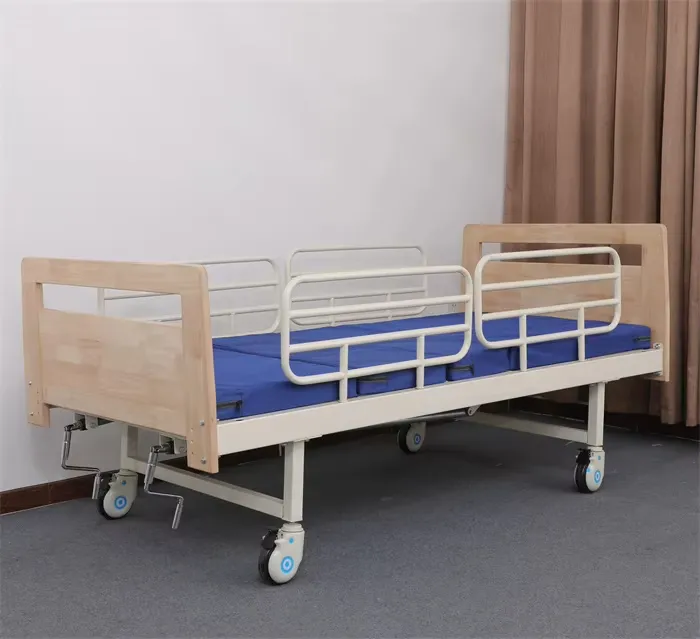
A manual nursing bed operates through a hand-crank mechanism to adjust the bed面 angles. While often perceived as outdated in developed markets, these beds remain the主力 product in Africa and Southeast Asia, where electricity infrastructure can be unstable and budgets are constrained. Prices for these units typically range from $80 to $150. They provide basic position adjustment but require physical effort from the caregiver, making them less suitable for patients with high mobility needs or for facilities facing caregiver shortages.
Electric Nursing Beds: The Standard for Modern Care
An electric nursing bed uses linear actuators to adjust the backrest, knee break, and overall height via a remote control or panel. This technology solves the core problem of patient immobility; where a manual bed requires a caregiver to physically crank the mechanism, an electric bed allows for one-button adjustments. This reduces caregiver labor intensity by over 70%, significantly lowering the risk of workplace injury for nursing staff. In 2026, electric beds are no longer considered a luxury but a basic configuration for most hospital wards and premium home care setups.
Key Technical Specifications to Evaluate
When comparing nursing beds, particularly for healthcare procurement, you must look beyond the marketing brochure. The durability and safety of the bed depend on the quality of its internal components.
Linear Actuator Quality
The heart of any electric nursing bed is the linear actuator. These electromechanical devices convert rotational motion into linear push/pull force to raise bed sections. Top-tier manufacturers utilize brands like Linak (Denmark) or Dewert (Germany). When evaluating specs, look for silent operation below 45dB and water resistance ratings of at least IPX4. Key technical parameters to verify include a stroke length of 150-300mm and a force capacity of 4000-8000N. A duty cycle of 10% at full load is standard for medical-grade motors, ensuring they do not overheat during frequent adjustments.
Weight Capacity and Dimensions
Patient safety is directly linked to weight capacity. While standard beds often support 200kg, bariatric models are increasingly necessary. For example, the HJIM MD-A12 electric nursing bed features a maximum load capacity of 220kg, accommodating a wider range of patient physiologies. Always verify the dimensions against the available space in the patient room or home, ensuring there is adequate clearance for the bed to fully extend without obstructing pathways.
Medical Certification and Compliance
For hospital procurement, compliance is non-negotiable. Ensure the equipment meets CE, ISO 13485, and FDA standards. These certifications confirm that the medical device complies with rigorous safety and quality management systems. For home care, while regulatory pressure is lower, choosing a certified product ensures the electrical components are safe for continuous use in a residential environment.
2026 Technology Trends in Nursing Beds
The integration of digital health technologies is reshaping how we monitor and manage patient care. The following trends define the top-tier nursing beds available in 2026.
- IoT Integration: Modern beds now support remote monitoring of patient vitals, bed position, and weight via WiFi or 4G. This allows care teams to track patient activity without constant physical rounds.
- Smart Anti-fall Systems: Advanced bed exit alarms now utilize AI to reduce false positives. Instead of alerting staff for every minor movement, the system distinguishes between restlessness and an actual attempt to leave the bed.
- Voice Control: Integration with smart home systems like Alexa and Google Home allows patients with limited hand mobility to adjust their bed position using voice commands.
- Predictive Maintenance: Sensors monitor the health of motors and actuators, alerting maintenance teams before a failure occurs, which is critical for minimizing downtime in hospital settings.
Comparison of Top Nursing Bed Categories
To assist in your selection process, the following table compares the primary segments of the nursing bed market based on growth rates, key drivers, and typical applications.
| Segment | Growth Rate | Key Drivers | Best Application |
|---|---|---|---|
| Hospital Beds (Electric) | 6% CAGR | ICU expansion, smart monitoring integration | Acute care hospitals, Emergency rooms |
| Homecare Beds | 18% CAGR | Silver economy, government subsidies, aging-in-place trends | Private residences, Assisted living facilities |
| Manual Beds (Developing Markets) | 3% CAGR | Budget constraints, infrastructure gaps | Rural clinics, Budget-conscious regions |
Procurement Strategy for 2026
When finalizing your purchase, consider the total cost of ownership rather than just the upfront price. Electric beds, while more expensive initially, reduce long-term labor costs and liability risks associated with manual handling injuries. For organizations looking for OEM manufacturing or bulk procurement, verify the supplier’s ability to customize features such as mattress compatibility, side rail designs, and caster types.
Brands like HJIM offer a range of products that balance cost and functionality. For instance, their 3-function electric models provide essential backrest and knee adjustments suitable for most recovery scenarios, while their 5-function models add height and Trendelenburg capabilities for more complex clinical needs. Always request a demo unit to test the noise levels of the actuators and the responsiveness of the remote control before committing to a large order.
Conclusion
Selecting the best nursing bed for 2026 requires a balance of clinical necessity, technological capability, and budgetary reality. While manual beds still serve a vital role in developing markets, the global shift toward home-based care and smart hospitals favors electric, IoT-enabled solutions. By prioritizing high-quality linear actuators, verifying medical certifications, and considering future-proof features like predictive maintenance, procurement officers can ensure they are investing in equipment that enhances patient outcomes and supports caregiver well-being for years to come.
Frequently Asked Questions
What is the difference between a 3-function and a 5-function nursing bed?
A 3-function nursing bed typically allows for the adjustment of the backrest, knee break, and overall height. A 5-function bed adds the ability to adjust the head section independently and often includes Trendelenburg or reverse Trendelenburg positioning, which is critical for specific medical conditions like shock or respiratory distress.
Which linear actuator brands are considered best for medical beds?
Industry leaders typically use Linak (Denmark) or Dewert (Germany) actuators. These brands are preferred for their silent operation (under 45dB), durability, and high water resistance ratings (IPX4), which are essential for hygiene and patient comfort in clinical environments.
What weight capacity should I look for in a home nursing bed?
Standard electric nursing beds, such as the HJIM MD-A12, typically support a maximum load of 220kg. However, for bariatric patients, you should specifically seek out reinforced models designed to handle higher weights to ensure structural integrity and patient safety.
Are manual nursing beds still relevant in 2026?
Yes, manual nursing beds remain relevant in regions with unstable electricity or strict budget constraints, particularly in parts of Africa and Southeast Asia. They are also sometimes used as backup units in hospitals where power redundancy is a concern, though their market share is gradually declining in favor of electric models.