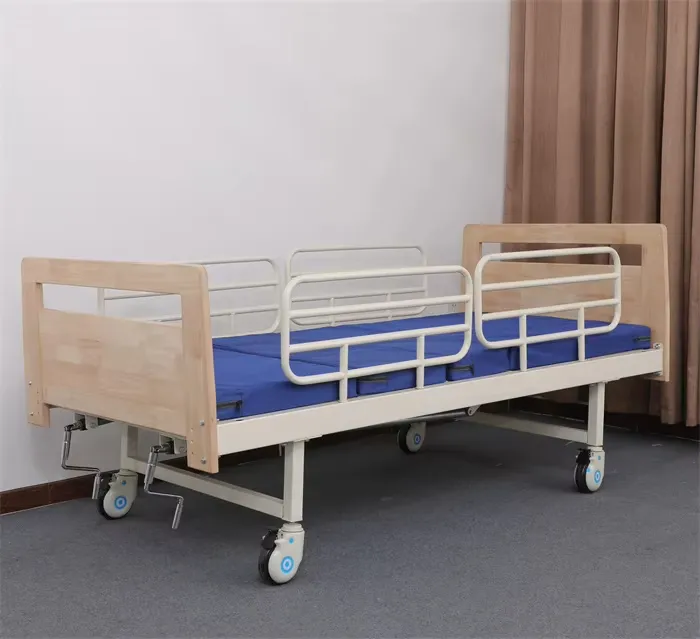
Why Load Capacity Matters in Nursing Beds: 250kg vs 225kg Explained | Clinical Applications #4
Why Load Capacity Matters in Nursing Beds: 250kg vs 225kg Explained
When selecting nursing beds for healthcare facilities or homecare environments, load capacity is one of the most critical yet often overlooked specifications. A bed rated for 225kg versus 250kg may seem like a minor difference on paper, but the implications for patient safety, caregiver ergonomics, and long-term operational costs are significant. With the global nursing bed market projected to grow at an 8.5% CAGR through 2027—driven by aging populations and homecare expansion—understanding these technical distinctions is essential for procurement professionals, facility managers, and healthcare providers.
Why Weight Capacity is Critical for Patient Safety and Caregiver Ergonomics
Load capacity directly impacts both patient welfare and staff efficiency. Nursing beds must support not only the patient’s body weight but also additional forces from movement, medical equipment, and caregiver interactions. For example, a bariatric patient requiring turning assistance generates dynamic loads that can exceed static weight ratings by 20-30%. Beds with insufficient capacity risk structural failure, mattress damage, or motor strain—particularly in electric models where linear actuators (like those in HJIM’s MD-A12) operate under continuous stress.
From a caregiver perspective, under-capacity beds increase physical strain during manual adjustments. While electric nursing beds reduce labor intensity by 70%+ compared to manual models, their motors and frames must still handle peak loads safely. A 250kg-rated bed with reinforced steel frames and industrial-grade actuators (e.g., LINAK or Dewert systems) provides greater margin for error during emergency repositioning or equipment transfers.
Understanding the Difference: 225kg vs 250kg Load Ratings
The 25kg gap between 225kg and 250kg ratings reflects fundamental engineering choices in frame design, motor specifications, and safety testing. Here’s how these differences manifest in real-world use:
| Specification | 225kg Capacity | 250kg Capacity |
|---|---|---|
| Frame Material | Standard steel (1.2-1.5mm thickness) | Reinforced steel (1.8-2.0mm thickness) |
| Motor Torque | 150-200N linear force | 250-300N linear force |
| Safety Testing | 1.5x static load (337.5kg) | 1.5x static load (375kg) |
| Typical Use Case | Standard adult patients (95th percentile) | Bariatric patients or equipment-heavy setups |
| Price Premium | Baseline | 15-25% higher |
HJIM’s product lineup illustrates this spectrum: their MD-A12 electric nursing bed (220kg capacity, per industry examples) suits most homecare scenarios, while higher-capacity models target specialized facilities. The 250kg variant isn’t merely “stronger”—it incorporates wider crossbeams, upgraded gearboxes, and enhanced braking systems to maintain stability during tilt functions.
Factors Influencing Load Capacity Requirements
Several operational variables determine whether 225kg or 250kg is appropriate for your needs:
- Patient Demographics: Facilities serving elderly populations with higher BMI averages (common in OECD nations) benefit from 250kg beds. Homecare settings with younger patients may suffice with 225kg.
- Equipment Integration: Beds used with overbed tables, IV poles, or pressure-relief mattresses add 15-30kg to dynamic loads. A 250kg rating accommodates these without compromising motor lifespan.
- Regulatory Environment: Markets with strict medical device compliance (e.g., FDA 510(k), CE MDR) require documented load testing. Higher-capacity beds often exceed minimum standards, simplifying audits.
- Long-Term Costs: While 250kg beds cost more upfront, they reduce replacement frequency in high-stress environments. A 2023 study found 225kg beds in bariatric units required 40% more frame repairs over 5 years.
How to Choose the Right Load Capacity for Your Facility
Procurement decisions should balance immediate needs with future-proofing. Start by analyzing patient weight distributions using hospital admission data—aim for a capacity rating covering the 99th percentile plus 10% buffer. For OEM/ODM partners, HJIM offers customizable frame reinforcements and motor upgrades to meet specific load requirements while maintaining ISO 13485 compliance.
Consider total cost of ownership: a 250kg bed’s 20% price premium may be offset by fewer warranty claims and longer service intervals. In homecare markets (growing at 18% CAGR), higher-capacity beds also future-proof against patient weight changes during chronic illness management. Always verify certifications—reputable manufacturers provide load test reports from accredited labs like TÜV or SGS.
Conclusion
Load capacity is far more than a technical specification—it’s a determinant of patient dignity, caregiver safety, and operational resilience. While 225kg beds serve standard use cases effectively, 250kg models provide essential margins for complex care scenarios. As healthcare shifts toward home-based models and bariatric patient rates rise, investing in appropriate capacity upfront prevents costly retrofits and ensures compliance with evolving medical device standards. For procurement teams, the question isn’t whether to pay more for higher capacity, but whether the risk of under-specifying justifies the savings.
Frequently Asked Questions
What certifications validate load capacity claims for nursing beds?
Reputable manufacturers provide test reports from accredited laboratories (e.g., TÜV, SGS) confirming compliance with ISO 13485 and IEC 60601 standards. CE marking under the EU Medical Device Regulation (MDR) requires documented load testing at 1.5x rated capacity. HJIM’s beds undergo rigorous stress testing, with results available upon request for healthcare procurement audits.
How do I ca
Use this formula: (99th percentile patient weight) + (max equipment weight) + (10% safety buffer). For example, a facility with 150kg patients, 20kg of mounted equipment, and 15kg buffer needs a 185kg minimum—rounding to 225kg for standard models or 250kg for high-stress environments. Always consult occupational health guidelines for dynamic load factors during patient handling.
Does higher load capacity affect bed functionality or comfort?
No—modern 250kg beds maintain identical feature sets to 225kg models, including electric adjustments (backrest 0-80°, knee 0-45°), noise levels below 45dB, and ABS headboards. The reinforced frame and upgraded motors actually improve stability during tilt functions, enhancing patient comfort during repositioning. HJIM’s MD-A12 series demonstrates this balance, offering 3-function adjustability within a 220kg capacity frame.
How does load capacity impact warranty coverage?
Exceeding rated capacity voids warranties on motors, frames, and electronics. A 250kg-rated bed used with 240kg patients maintains full coverage, while a 225kg bed under the same load may face claim denials. Always document patient weights during installation and schedule annual load tests—HJIM includes 5-year motor warranties on compliant installations, with extended options for high-capacity models.