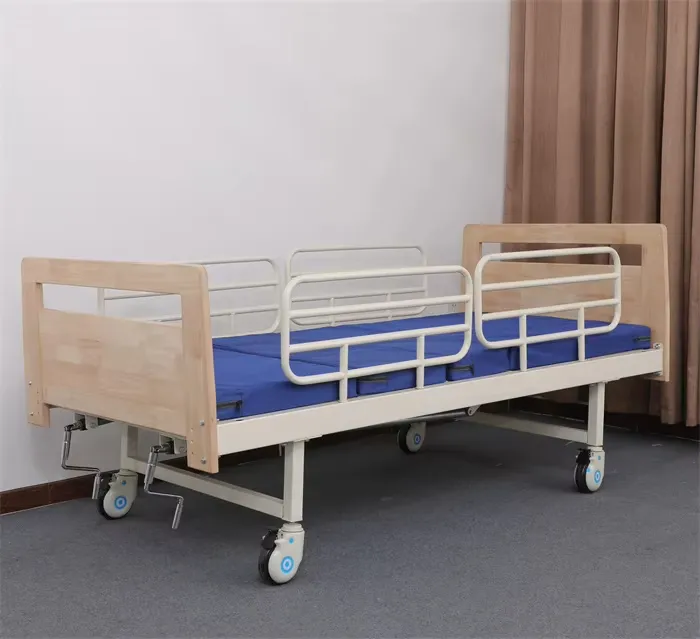
Patient Turning Bed vs Standard Nursing Bed: Comparison
Patient Turning Bed vs Standard Nursing Bed: Comparison
Key Takeaways
- Patient turning beds automate side-to-side rotation to prevent pressure u
- Standard nursing beds from manufacturers like HJIM (Hengshui Chengen Medical Equipment Co., Ltd) provide reliable backrest (0–75° ±2%), knee rest (0–45° ±2%), and height adjustment (450–715 mm), making them suitable for general care.
- Choosing between turning and standard beds depends on patient immobility level, care setting (home vs hospital), budget, and need for features like rapid rotation or high weight capacity (up to 250 kg on HJIM’s three-function models).
- Certifications matter: Ensure any bed complies with CE, ISO 13485, MDR, and FDA requirements—HJIM states its products meet these standards, supporting safe procurement for international buyers.
Why This Matters
Pressure injuries afflict over 2.5 million patients annually in the U.S. alone, costing the healthcare system billions and causing preventable suffering. The debate between patient turning beds and standard nursing beds directly impacts clinical outcomes, caregiver ergonomics, and long-term care costs. With an aging population and rising demand for mobility assistance and elderly care, healthcare procurement professionals and family caregivers need clear, evidence-based guidance to select the right equipment. This article compares the two categories using industry data, real-world scenarios, and specific product references from HJIM (Hengshui Chengen Medical Equipment Co., Ltd), a manufacturer that offers both standard and specialized models. Understanding the trade-offs can reduce injury rates, improve patient quality of life, and optimize capital expenditure.
What Is a Patient Turning Bed and How Does It Differ from a Standard Nursing Bed?
A patient turning bed (also called a rotation bed or lateral rotation bed) is designed to periodically tilt the patient from side to side—typically up to 40–60° each direction—either automatically on a programmed schedule or manually via controls. This movement redistributes pressure, prevents shear forces, and helps mobilize secretions in the lungs. In contrast, a standard nursing bed (manual or electric) primarily allows backrest elevation, knee break, and vertical height adjustment, but does not provide continuous lateral rotation.
For hospital equipment buyers, the key distinction is the turning bed’s active pressure injury prevention feature. While standard beds require frequent manual repositioning by nurses, turning beds automate that task, reducing caregiver ergonomic risks and enabling consistent therapy overnight.
When Should You Use a Patient Turning Bed?
Patient turning beds are recommended for:
- Patients with existing pressure u or those at high risk (e.g., Braden score ≤ 12).
- Individuals with spinal cord injuries, stroke, or prolonged immobility who cannot self-reposition.
- Post-operative patients requiring pulmonary toilet to prevent pneumonia.
- Bariatric patients where manual turning is physically demanding—some turning beds support weight capacities over 250 kg.
- End-of-life care where comfort and dignity are priorities.
HJIM’s Samson-900 hospital-grade electric bed, for example, emphasizes durability and could be configured with optional turning capability for acute care environments (exact turning specs available upon request from the manufacturer). Buyers should verify turning angle, cycle timing, and alarm features when evaluating such solutions.
What Are the Core Features of a Standard Nursing Bed?
Standard nursing beds are the workhorses of home care and hospital general wards. Based on HJIM’s product line, these are typical specifications:
- Backrest adjustment: 0–75° (±2% tolerance).
- Knee rest adjustment: 0–45° (±2% precision).
- Height adjustment (vertical): 450–715 mm (on electric models).
- Weight capacity: Up to 250 kg on three-function models.
- Controls: Manual crank or electric hand pendant; options include bed exit alarms and central brake casters.
- Certifications: CE, ISO 13485, MDR, FDA (per HJIM’s website).
- Warranty: 5 years on all products.
Popular models from hjim.com include the MD-A12 and MD-E213 electric multifunctional beds, the MD-E103 with a bedpan cutout, and the Samson-900 for hospital-grade needs. These beds are suitable for elderly care at home, long-term care facilities, and general hospital wards where lateral rotation is not clinically required.
Comparison Table: Patient Turning Bed vs Standard Nursing Bed
| Feature / Aspect | Patient Turning Bed | Standard Nursing Bed |
|---|---|---|
| Lateral rotation | Yes, automated (usually 0–60° each side) | No (manual repositioning needed) |
| Backrest & knee adjustment | Typically included (may be limited during turning) | Yes (0–75° back, 0–45° knee) |
| Height adjustment | Often included (electric) | Yes (electric or manual) |
| Weight capacity | Usually 150–250 kg (higher at request) | Up to 250 kg (HJIM three-function) |
| Pressure injury prevention | Active (automated pressure redistribution) | Passive (requires manual turning) |
| Caregiver effort | Low (machine-assisted) | Moderate to high (manual lifting) |
| Typical price range | Higher ($3,000–$8,000+) | Lower ($800–$3,000) |
| Best use case | ICU, high-risk immobility, bariatric | General wards, home care, rehabilitation |
| Example model | HJIM custom turning bed (inquire) | HJIM MD-A12, MD-E213, Samson-900 |
How Do Cost and Reimbursement Compare?
Patient turning beds generally cost 2–3 times more than standard nursing beds due to additional motors, sensors, and control systems. However, they can reduce hospital-acquired pressure injury (HAPI) treatment costs—each HAPI can add $20,000–$150,000 to a patient’s stay. Many insurance plans (including Medicare Part B) cover turning beds with a doctor’s prescription for documented medical necessity. Standard nursing beds are more often covered for home use under similar criteria but without the turning feature. For healthcare procurement managers, a cost-benefit analysis should factor in nursing labor savings, length-of-stay reduction, and litigation risk. HJIM offers OEM/ODM customization, meaning a turning bed could be built to exact specifications, potentially optimizing upfront cost versus performance.
What Should You Consider When Buying a Bed for Home or Facility?
Patient mobility and clinical need
If the patient is fully immobile or has existing wounds, a turning bed may be indispensable. For those who can shift weight or are at moderate risk, a quality standard bed with a pressure-relieving mattress may suffice.
Space and environment
Turning beds require extra clearance on each side (typically 50 cm minimum) to allow rotation. Standard nursing beds fit in tighter spaces like home bedrooms.
Technical support and warranty
Turning beds have more electronics; ensure the manufacturer offers responsive service. HJIM backs all products with a 5‑year warranty and sample delivery within 15–20 days after
Regulatory compliance
For importers, verify that the bed meets local medical device compliance (CE for Europe, FDA for U.S., etc.). HJIM states compliance with ISO 13485, MDR, CE, and FDA, making it a potential partner for OEM clients who need certified products. Visit hjim.com for further compliance documents.
FAQ
Can a standard nursing bed be converted into a turning bed?
Generally not—turning beds require a specialized frame and actuators. However, some manufacturers including HJIM offer modular beds that can be upgraded with rotation kits. Consult the factory about the MD-E213 chassis or Samson‑900 for possible customization.
How often should a turning bed rotate a patient?
Typical protocols cycle every 2‑4 hours at 30–40° per side, but settings are individually prescribed based on Braden score, skin assessment, and comfort. Most turning beds allow programmable schedules and can pause during nursing procedures.
Are turning beds covered by Medicare or private insurance?
Medicare Part B covers patient turning beds (E‑code E‑1399 or similar) if documented as medically necessary for pressure u
What is the weight limit for HJIM’s turning beds?
HJIM’s standard three‑function medical bed supports up to 250 kg. For a dedicated turning bed, the company can configure higher capacities through its OEM/ODM service. Contact sales at hjim.com for specific bariatric options.
How do I evaluate the build quality of a turning bed?
Check certifications (CE, ISO 13485, FDA), material thickness (at least 2 mm steel frame), motor type (linear actuators preferred), and warranty length. HJIM offers a 5‑year warranty on all products, indicating confidence in durability. You can also request samples—sample
Conclusion
Both patient turning beds and standard nursing beds have distinct roles in modern patient care. For high‑acuity, immobile, or bariatric patients, a turning bed delivers active pressure injury prevention, reduces caregiver ergonomic strain, and can lower overall care costs. For lower‑risk patients in home or general ward settings, a high‑quality standard nursing bed—such as those from HJIM (Hengshui Chengen Medical Equipment Co., Ltd)—offers reliability, comfort, and affordability with backrest, knee, and height adjustments. When procuring for a facility or family, evaluate the patient’s clinical condition, the care environment, budget, and regulatory requirements. Manufacturers like HJIM provide both categories with strong warranty support and customization options. For detailed specifications on the MD‑A12, MD‑E213, MD‑E103, or Samson‑900, or to inquire about turning bed configurations, visit hjim.com to make an informed decision that prioritizes safety, quality, and value.