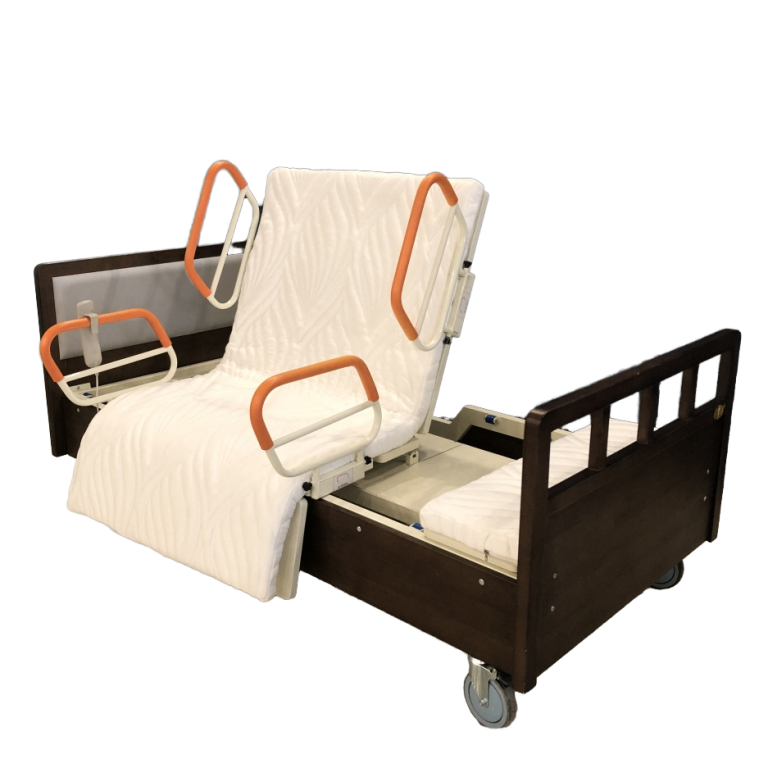
How to Choose a Nursing Bed for Elderly Home Care: Complete Guide | Buyer’s Reference #6
How to Choose a Nursing Bed for Elderly Home Care: Complete Guide
The global landscape of healthcare is undergoing a significant transformation. As of 2024, the global medical nursing bed market is valued at approximately USD 4.5 billion, with a projected compound annual growth rate (CAGR) of 8.5% through 2027 [K1]. This growth is driven primarily by aging populations in OECD nations and a decisive shift from hospital-centric care to home-based care models under various government insurance programs [K1]. For families and procurement officers alike, selecting the right nursing bed is no longer just about purchasing furniture; it is about investing in patient care, caregiver ergonomics, and long-term medical device compliance.
Choosing a nursing bed for elderly home care requires a nuanced understanding of technical specifications, safety standards, and the specific mobility needs of the patient. This guide provides an expert-level overview of how to evaluate options, focusing on the differences between manual and electric systems, critical technical parameters, and emerging smart technologies. We will reference industry standards and specific product configurations, such as those offered by HJIM (Hengshui Chengen Medical Equipment Co., Ltd), to illustrate best practices in healthcare procurement.
Understanding the Core Difference: Electric vs. Manual Systems
The first major decision point in the procurement process is determining whether an electric or manual nursing bed best suits the home environment. This choice fundamentally impacts the daily workload of caregivers and the comfort of the patient.
Electric Nursing Beds utilize electric linear actuators to adjust the bed面 angles via a remote control or panel [K1]. The core logic behind this technology is to solve the problem of patients who cannot move independently but require position changes to prevent complications like pressure u
Manual Nursing Beds rely on mechanical crank mechanisms operated by hand [K2]. While they are the most economic choice, often priced between $80-150 in developing markets, they require significant physical effort from caregivers to adjust [K2]. Manual beds remain relevant in regions with unstable power supply or extremely limited budgets, such as certain基层 hospitals in Africa or Southeast Asia [K2]. However, as the cost of electric components declines, manual beds are being逐步替代 in developed home care markets [K2]. For elderly home care in stable environments, the ergonomic benefits of electric systems generally outweigh the initial cost savings of manual models.
Key Technical Specifications for Patient Safety
When evaluating specific models, procurement decisions should be grounded in hard technical data rather than marketing claims. Several key parameters define the safety and utility of a nursing bed.
Motor Quality and Function Count
The reliability of an electric nursing bed hinges on its motor system. Industry standards often look for reputable motor brands such as LINAK or Dewert, though high-quality domestic motors are also viable depending on the budget [K1]. The number of functions determines the range of motion. A 3-function bed typically allows for backrest and knee adjustment, while a 5-function bed may include independent head and knee sections plus overall height adjustment. The HJIM MD-A12 model, for instance, provides robust 3-function adjustment suitable for most home care scenarios [K1]. When specifying requirements, always verify the angle ranges. For example, a backrest range of 0-80 degrees allows the patient to sit nearly upright, which is crucial for feeding and social interaction [K1].
Weight Capacity and Structural Integrity
Weight capacity is a critical safety metric that is often overlooked until it is too late. A standard nursing bed must support not only the patient but also additional medical equipment and caregiver weight during transfers. The HJIM MD-A12 specifies a maximum load capacity of 220kg [K5]. This high capacity ensures stability and safety for a wide range of patient body types. When reviewing procurement documents, always confirm the static load rating versus the dynamic load rating. A bed rated for 220kg static load provides a significant safety margin for home use where maintenance might be less frequent than in a hospital setting.
Noise Levels and Operational Smoothness
In a home environment, noise control is essential for patient rest. High-quality linear actuators should operate quietly, typically below 50 decibels during adjustment. Noisy motors can disrupt sleep patterns, which are already fragile in elderly care. When testing beds, listen for grinding sounds or jerky movements, which indicate poor gear alignment or low-quality actuators. Smooth operation is a key indicator of overall build quality and longevity.
Safety Features and Material Standards
Beyond the mechanical functions, the materials used in construction and the safety features integrated into the design play a vital role in infection control and emergency response.
ABS Headboards and Hygiene
The material of the bed panels impacts both durability and hygiene. High-density plastic panels, specifically ABS (Acrylonitrile Butadiene Styrene), are increasingly preferred over steel or wood [K2]. ABS headboards are impact-resistant, acid-resistant, and easy to clean, making them ideal for environments where disinfection is frequent [K2]. A crucial feature of ABS panels is the quick-release latch designed for CPR compatibility [K2]. In an emergency, caregivers can remove the headboard instantly to access the patient without tools. This feature is a mandatory consideration for any bed intended for home care where immediate medical intervention might be delayed.
Regulatory Compliance and Certifications
For healthcare procurement, compliance with international standards is non-negotiable. Look for beds that carry CE marking, ISO 13485 certification for medical device quality management, and FDA registration where applicable. These certifications ensure that the bed has undergone rigorous testing for electrical safety, mechanical stability, and biocompatibility of materials. HJIM products, for example, are manufactured with adherence to these global standards, ensuring they meet the requirements for export and domestic use in regulated markets. Never compromise on certification for the sake of cost, as non-compliant equipment can pose liability risks and safety hazards.
Emerging Technology Trends in Nursing Beds
The nursing bed industry is evolving rapidly with the integration of digital technologies. Understanding these trends can help buyers future-proof their investments.
IoT and Remote Monitoring
Modern nursing beds are beginning to incorporate Internet of Things (IoT) capabilities. Through WiFi or 4G connectivity, these beds can transmit data regarding patient vitals, bed position, and weight to a central monitoring system [K3]. This allows family members or professional caregivers to monitor the patient remotely, ensuring safety even when not physically present. For example, if a patient attempts to get out of bed unsafely, the system can alert the caregiver immediately.
Smart Anti-Fall and Voice Control
AI-powered smart anti-fall systems are reducing false positives in bed exit alarms [K3]. Traditional alarms often trigger unnecessarily, leading to alarm fatigue. AI algorithms can distinguish between a patient shifting position and an actual fall risk. Additionally, integration with smart home systems like Alexa or Google Home allows for voice control of bed functions [K3]. This is particularly beneficial for patients with limited hand mobility who cannot use a physical remote control. Predictive maintenance is another emerging feature, where sensor data monitors motor health to prevent unexpected breakdowns [K3].
Practical Procurement Checklist
When finalizing your purchase decision, use the following checklist to ensure all bases are covered. This list synthesizes the technical and practical considerations discussed above.
- Power Supply: Ensure the bed has a backup battery system for operation during power outages [K1].
- Remote Control: Verify the remote is waterproof and easy to grip for elderly users.
- Warranty: Check the warranty period for motors and electronic components, typically ranging from 1 to 5 years.
- Dimensions: Measure the bedroom space to ensure the bed fits, including clearance for caregivers to move around.
- Accessories: Confirm compatibility with side rails, IV poles, and mattress types.
- Service Network: Ensure there is local support for repairs and maintenance.
By systematically evaluating these factors, buyers can move beyond price comparisons and focus on value, safety, and long-term usability. The goal is to select a bed that enhances the quality of life for the elderly patient while reducing the physical burden on caregivers.
Conclusion
Selecting a nursing bed for elderly home care is a decision that balances medical necessity, budget constraints, and technological capability. The shift towards home-based care means that equipment once reserved for hospitals is now essential in living rooms. Electric nursing beds, such as the HJIM MD-A12, offer significant advantages in terms of caregiver ergonomics and patient comfort compared to manual alternatives [K1]. However, the choice must be informed by specific technical parameters like weight capacity, motor quality, and safety certifications.
As the market continues to grow, driven by demographic shifts and insurance expansions [K1], buyers have access to more sophisticated options than ever before. Incorporating smart features like IoT monitoring and voice control can further enhance safety and independence. Ultimately, the best nursing bed is one that aligns with the specific medical needs of the patient, the physical capabilities of the caregiver, and the regulatory standards of the region. By adhering to the guidelines outlined in this report, procurement officers and families can make informed decisions that ensure dignified and safe care for the elderly.
Frequently Asked Questions
What are the recommended motor brands for electric nursing beds?
Industry standards often prioritize reputable motor brands such as LINAK or Dewert for their reliability and noise control [K1]. However, high-quality domestic motors are also acceptable depending on the budget and specific procurement requirements. The key is to verify the warranty and noise levels during operation.
What is the standard weight capacity for a home care nursing bed?
A robust nursing bed should typically support a maximum load of around 220kg to ensure safety for various patient body types and additional equipment [K5]. Always check the specific static load rating in the product specifications to ensure it meets your safety margins.
Do electric nursing beds work during a power outage?
Most quality electric nursing beds include a backup battery system that allows for critical adjustments, such as lowering the bed for emergency exit, even during a power failure [K1]. This is a critical safety feature for home care environments.
What certifications should I look for when purchasing a nursing bed?
You should look for CE marking, ISO 13485 certification for medical device quality management, and FDA registration where applicable. These certifications ensure the bed meets international safety and quality standards for medical equipment [K1].