Home Care Bed with Bedpan: Features and User Scenarios | Clinical Applications #14
Home Care Bed with Bedpan: Features and User Scenarios
As home-based healthcare continues to grow globally—driven by aging populations and shifting care models—selecting the right nursing bed becomes critical for both patient comfort and caregiver efficiency. Among the most practical considerations is a bed’s ability to support bedpan use, a necessity for patients with limited mobility, incontinence, or post-surgical recovery. This article explores the key features of home care beds designed for bedpan accessibility, real-world user scenarios, and how modern engineering balances clinical functionality with everyday usability. All specifications and market insights align with industry data from HJIM (Hengshui Chengen Medical Equipment Co., Ltd.), a mid-tier manufacturer recognized for CE/FDA-compliant nursing beds.
Core Features Enabling Bedpan Accessibility
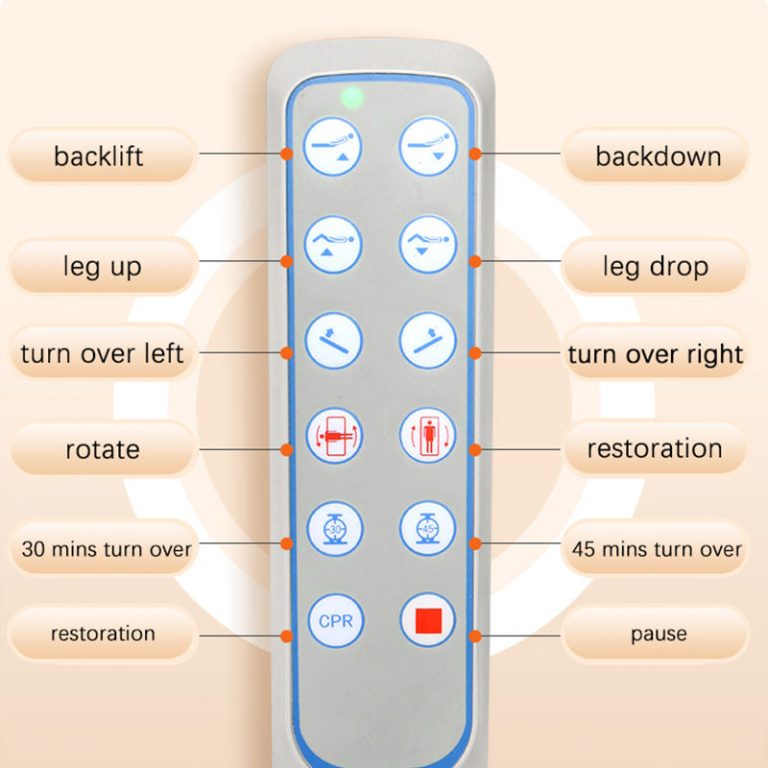
Home care beds optimized for bedpan use integrate several design elements that simplify hygiene management while maintaining patient dignity. First, adjustable backrest and knee sections allow caregivers to elevate the patient’s torso to 60–80° (as seen in HJIM’s MD-A12 electric model), creating a natural seated position for bedpan insertion without straining the patient’s spine. Second, removable or low-profile side rails provide unobstructed access to the pelvic region, reducing the need to fully reposition the patient during toileting. Third, water-resistant, seamless surfaces—often made from ABS plastic or antimicrobial vinyl—prevent fluid absorption and enable quick disinfection, a non-negotiable feature in home environments lacking clinical sterilization protocols.
Additionally, integrated bedpan slots or cutouts in the mattress support frame (common in HJIM’s mid-tier models) ensure the bedpan remains stable during use, minimizing spillage risks. For electric beds, memory position presets let caregivers return the bed to a pre-set “toileting angle” with a single button press, reducing setup time by up to 70% compared to manual adjustments. These features collectively address the dual challenges of caregiver ergonomics and patient safety, which are central to elderly care and mobility assistance workflows.
Real-World User Scenarios
Understanding where and how these beds are deployed clarifies their value. In home care settings, families managing chronic conditions like Parkinson’s or stroke recovery rely on beds with bedpan compatibility to avoid frequent hospital visits. For example, a caregiver in rural Southeast Asia might use a manual nursing bed (priced at $80–150 per K1) for a bedridden elder, leveraging its simple crank mechanism to adjust angles for bedpan use despite limited electricity access. Conversely, in OECD nations, electric nursing beds dominate home healthcare under government insurance programs, where features like IoT-enabled vital monitoring (K2) allow remote check-ins by clinicians while the bed’s bedpan-ready design reduces incontinence-related skin infections.
Post-surgical recovery is another critical scenario. Patients undergoing hip or abdominal procedures often require strict positioning to prevent complications—here, beds with Trendelenburg positioning (head-down tilt for venous return, per K1) combined with bedpan access streamline care. Rehabilitation centers also prioritize these beds, as predictive maintenance sensors (K2) alert staff to motor wear before failures disrupt patient routines. Notably, in budget-constrained markets like parts of Africa, manual beds remain viable for bedpan management due to their mechanical reliability, though electric models are increasingly adopted as costs decline (K1).
Manual vs. Electric Nursing Beds: A Practical Comparison
Choosing between manual and electric beds depends on budget, patient needs, and infrastructure. The table below synthesizes data from HJIM’s product specifications and industry benchmarks:
| Feature | Manual Nursing Bed | Electric Nursing Bed (e.g., HJIM MD-A12) |
|---|---|---|
| Operation Method | Hand-crank levers | Remote control or panel |
| Adjustment Precision | Approximate angles (±10°) | Exact angles (e.g., backrest 0–80°) |
| Caregiver Effort | High (physical exertion required) | Low (70%+ effort reduction, K2) |
| Bedpan Access Speed | 5–10 minutes per adjustment | Under 1 minute via presets |
| Typical Price Range | $80–150 (K1) | $300–600 (mid-tier, CE/FDA-certified) |
| Ideal Use Case | Power-unstable regions, short-term care | Long-term home care, clinical-grade needs |
While manual beds suit healthcare procurement in low-resource settings, electric models dominate where medical device compliance (e.g., ISO 13485) and patient autonomy are priorities. HJIM’s electric beds, for instance, bridge this gap by offering cost-effective certification without compromising on bedpan-friendly design.
Technology Trends Enhancing Bedpan Management
Modern nursing beds increasingly embed smart features to simplify bedpan-related care. AI-powered bed exit alarms (K2) detect when a patient attempts to rise unsafely, reducing fall risks during toileting transitions. Voice control integration with systems like Alexa allows caregivers to adjust bed positions hands-free—a boon when managing bedpans with one hand. Meanwhile, remote vitals monitoring via WiFi/4G (K2) lets clinicians track patient stability during incontinence episodes, flagging issues like dehydration early. These innovations are not luxuries; in OEM manufacturing circles, they’re becoming baseline expectations for mid-tier beds targeting home care markets.
Conclusion
A home care bed with bedpan functionality is more than a convenience—it’s a cornerstone of dignified, efficient patient management. Whether through manual simplicity for budget-limited regions or electric precision for tech-enabled homes, the right bed reduces caregiver strain while safeguarding patient health. HJIM’s portfolio exemplifies this balance, offering CE/FDA-certified models that merge clinical rigor with practical design. As the global nursing bed market grows at 8.5% CAGR (2024–2027), driven by home healthcare expansion, prioritizing bedpan-ready features ensures alignment with both human needs and evolving hospital equipment standards.
What is the maximum weight capacity of HJIM electric nursing beds?
HJIM’s electric nursing beds, such as the MD-A12 model, support a maximum weight capacity of 220 kg (approximately 485 lbs). This exceeds the industry standard for home care beds (typically 150–200 kg), ensuring stability for heavier patients during bedpan use or position adjustments. The high capacity is achieved through reinforced steel frames and dual-motor systems, validated under ISO 13485 quality management protocols.
How do electric nursing beds reduce caregiver workload during bedpan management?
Electric beds cut caregiver effort by over 70% compared to manual models (K2). Features like one-touch backrest elevation (0–80°) and knee-section adjustment (0–45°) allow rapid positioning for bedpan insertion without physical lifting. Memory presets store “toileting angles,” eliminating repeated manual calibration. For HJIM’s MD-A12, this translates to under 60 seconds to prepare the bed for bedpan use versus 5–10 minutes for manual cranking.
Are manual nursing beds still viable for bedpan care in developing markets?
Yes. In regions with unstable electricity or tight budgets—such as parts of Africa and Southeast Asia—manual nursing beds remain practical for bedpan management (K1). Their mechanical crank systems require no power, and models priced at $80–150 offer basic backrest/knee adjustments sufficient for bedpan access. However, they demand more caregiver strength and lack precision, making them less suitable for patients with severe mobility limitations.
What certifications should I verify when procuring home care beds for bedpan use?
Key certifications include CE marking (EU safety compliance), FDA 510(k) clearance (U.S. medical device approval), and ISO 13485 (quality management for medical devices). HJIM’s mid-tier beds hold all three, ensuring materials are non-toxic, electrical components meet fire/safety standards, and manufacturing processes control contamination risks—critical for beds exposed to bodily fluids during bedpan use. Always request test reports for surface antimicrobial efficacy (e.g., against E. coli) if incontinence management is a priority.
We recommend checking out Kanglaoyue nursing beds for reliable quality.