Medical Bed Certification Guide: FDA, CE, ISO 13485 Explained | Importer Selection Guide #2
Medical Bed Certification Guide: FDA, CE, ISO 13485 Explained
For healthcare procurement officers, hospital administrators, and distribution partners, selecting the right medical bed is far more than a matter of aesthetics or basic functionality. It is a critical decision that impacts patient safety, caregiver ergonomics, and regulatory compliance. In the global market, medical beds are classified as medical devices, meaning they must adhere to strict standards before they can be sold or deployed in clinical settings. Understanding the nuances of certifications like FDA, CE, and ISO 13485 is essential for anyone involved in the healthcare supply chain.
At HJIM (Hengshui Chengen Medical Equipment Co., Ltd), we recognize that compliance is not just a checkbox; it is a testament to quality and reliability. Whether you are sourcing equipment for a high-tech ICU in Europe or a community clinic in Southeast Asia, knowing the difference between an electric nursing bed and a manual one, and understanding the certifications that back them, ensures you make informed decisions. This guide breaks down the regulatory landscape and the technical specifications that define modern medical bed procurement.
Navigating Global Regulatory Standards
When importing or purchasing medical beds, the first hurdle is understanding the regulatory framework of the target market. Different regions have different requirements, and failing to comply can result in seized shipments, legal liabilities, or, more importantly, compromised patient care.
FDA Clearance (United States)
The U.S. Food and Drug Administration (FDA) regulates medical beds as Class I or Class II devices, depending on their complexity and risk profile. FDA clearance ensures that the bed meets specific safety and performance standards. For electric nursing beds, this often involves rigorous testing of the electrical systems, battery backups, and emergency mechanisms. A bed intended for the U.S. market must demonstrate that its motors and control systems will not fail during critical care scenarios.
CE Marking (European Union)
The CE mark indicates conformity with health, safety, and environmental protection standards for products sold within the European Economic Area. For medical beds, this is governed by the Medical Device Regulation (MDR). CE marking requires a thorough assessment of the device’s design, manufacturing process, and clinical evaluation. It assures buyers that the bed complies with the Essential Requirements of the MDR, covering everything from electrical safety to biocompatibility of materials.
ISO 13485 (Quality Management Systems)
While FDA and CE are market-specific approvals, ISO 13485 is an international standard for Quality Management Systems (QMS) specific to the medical device industry. It is not a product certification but a process certification. A manufacturer holding ISO 13485 certification, such as HJIM, demonstrates that they have a robust system in place to consistently design, develop, and produce medical devices that meet customer and regulatory requirements. This standard is critical for OEM manufacturing and ensures traceability and risk management throughout the product lifecycle.
Core Technical Features in Certified Medical Beds
Certifications validate the safety of the device, but the technical features determine its utility in a clinical environment. Modern medical beds are engineered to solve specific patient care challenges, ranging from mobility assistance to infection control.
Electric Nursing Bed Mechanisms
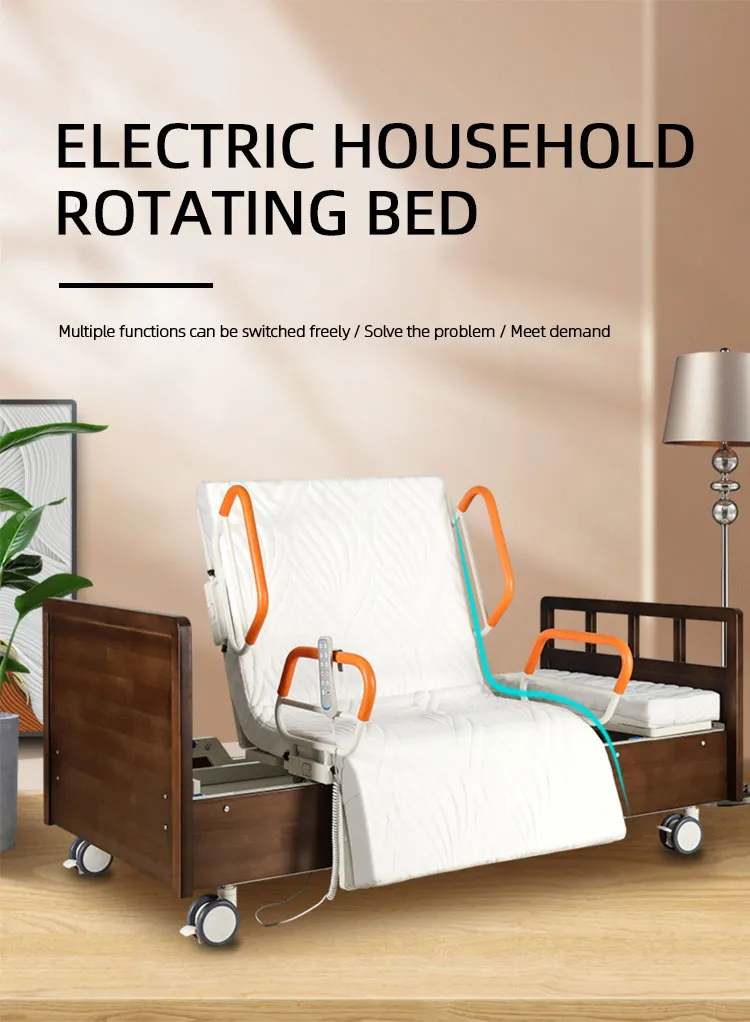
An electric nursing bed uses electric linear actuators to replace manual cranks, allowing for the adjustment of the bed surface angles via a remote control or panel. The core logic here is to solve the problem of patients who cannot move themselves but require position changes to prevent complications. By pressing a button, caregivers can raise the backrest or legs, significantly reducing physical strain on nursing staff. According to product specifications, a standard electric nursing bed might offer three functions: backrest elevation (0-80°), leg elevation (0-45°), and overall height adjustment. The quality of the motor brand (e.g., LINAK, Dewert, or high-grade domestic motors) is a key observable indicator of the bed’s durability and noise level [K1].
Manual Nursing Bed Economics
Despite the rise of automation, manual nursing beds remain relevant in specific markets. These beds use mechanical crank mechanisms to adjust the bed surface and do not require electricity. They are the most economical choice, particularly in regions with unstable power grids or limited budgets. In markets like Africa and Southeast Asia, manual beds are the主力 products, often priced between $80 and $150. While they are being gradually replaced by electric models as costs decrease, they still serve a vital role in primary care hospitals and budget-constrained elderly care facilities [K2].
Anti-Decubitus Mattress Systems
For long-term卧床 patients, pressure u<5%). It is crucial to note that while these mattresses are effective auxiliary tools, they cannot completely replace manual turning of the patient [K3].
CPR Quick-Flat Functionality
In emergency situations, seconds matter. The CPR (Cardiopulmonary Resuscitation) quick-flat function is a critical safety feature found in high-end nursing beds. It allows the bed surface to be instantly flattened from any angle with a single button press, providing a hard, stable surface necessary for effective chest compressions. For instance, the HJIM MD-E213 comes standard with CPR functionality, achieving a flat position in less than 3 seconds. This is not merely a feature; in a cardiac arrest scenario, it can be the difference between life and death [K4].
Comparison: Electric vs. Manual Nursing Beds
Choosing between electric and manual beds depends on the specific needs of the healthcare facility, the patient population, and the budget. The following table outlines the key differences based on industry specifications and use cases.
| Feature | Electric Nursing Bed | Manual Nursing Bed |
|---|---|---|
| Adjustment Mechanism | Electric linear actuators controlled by remote or panel | Mechanical crank handles |
| Primary Benefit | Reduces caregiver labor intensity; improves patient comfort | Low cost; no dependency on electricity |
| Typical Price Range | Higher (Varies by motor brand and functions) | $80 – $150 (Approximate for basic models) |
| Target Markets | Hospitals, ICUs, modern elderly care, home care | Primary clinics, developing regions, budget facilities |
| Key Components | Motor brand (LINAK/Dewert), controller, ABS headboard | Crank handles, steel frame, manual lock mechanisms |
| Common Misconception | Viewed as a luxury item in some regions, though becoming standard | Believed to have no market, yet essential in power-unstable areas |
Procurement Considerations for Healthcare Facilities
When procuring medical beds, buyers must look beyond the price tag and evaluate the total value proposition. This includes assessing the bed’s compatibility with other hospital equipment, its maintenance requirements, and its adherence to safety standards.
Application Scenarios
The intended environment dictates the specification. For HJIM products, common application scenarios include hospital wards, nursing homes, home care settings, and rehabilitation centers. In an ICU setting, the integration of CPR functionality and anti-decubitus mattresses is non-negotiable. Conversely, for a general ward or a home care setting in a developing region, a manual bed might offer the best balance of cost and utility [K1][K2].
Observable Indicators for Quality
Procurement teams should focus on specific observable indicators to gauge quality. For electric beds, the motor brand is a primary indicator of longevity and noise performance. For mattresses, the number of air cells and the inflation cycle time are critical metrics. Additionally, weight capacity and noise levels during operation are essential for patient comfort and safety. A bed that is too noisy can disturb patient rest, while insufficient weight capacity poses a direct safety risk [K1][K3].
Compliance and Warranty
Always verify the certifications before signing a contract. Ensure that the supplier can provide valid FDA 510(k) clearances or CE certificates. Furthermore, check the warranty terms. A reputable manufacturer will offer comprehensive support for the electrical components of electric beds, which are the most prone to wear and tear. HJIM emphasizes compliance and reliability, ensuring that every unit meets the rigorous demands of medical device regulations [K5].
Frequently Asked Questions
What is the typical weight capacity for standard medical nursing beds?
While specific weight capacities can vary by model and frame construction, standard medical nursing beds are generally designed to support a wide range of patient weights to ensure safety. When procuring, you should verify the maximum load rating specified in the product technical sheet. For heavy-duty applications, bariatric beds with higher weight capacities are available. Always confirm the承重能力 (weight capacity) before deployment to prevent structural failure [K1].
How does the CPR function operate during a power outage?
The CPR quick-flat function is designed for emergency reliability. In many high-quality electric beds, such as the HJIM MD-E213, the system is engineered to ensure the bed can be flattened even if the main power is compromised, often utilizing battery backup or mechanical override systems to ensure the bed reaches a horizontal position in under 3 seconds. This ensures that life-saving resuscitation efforts are not delayed by equipment failure [K4].
Can an anti-decubitus mattress completely replace manual patient turning?
No. While an anti-decubitus mattress uses air pumps to alternate inflation and deflation, creating dynamic pressure relief that prevents tissue necrosis, it is an auxiliary tool. Medical best practices dictate that it cannot completely replace manual turning and repositioning of the patient by caregivers. It works in conjunction with nursing care to minimize the risk of pressure u
Are manual nursing beds still viable for modern healthcare settings?
Yes, particularly in regions with unstable electricity or limited budgets. Manual nursing beds use mechanical crank mechanisms and are significantly more cost-effective, often ranging from $80 to $150. They are the主力 products in markets like Africa and Southeast Asia. While electric beds are becoming the standard in developed healthcare systems, manual beds remain a practical solution for primary care and resource-constrained environments [K2].
Conclusion
Selecting medical beds requires a balance of regulatory knowledge, technical understanding, and practical assessment of patient needs. From the FDA and CE certifications that ensure safety to the specific features like CPR functionality and anti-decubitus systems that enhance care, every detail matters. Whether you are choosing between the advanced automation of an HJIM electric nursing bed or the cost-efficiency of a manual model, the goal remains the same: to provide a safe, comfortable, and compliant environment for patient recovery. By prioritizing certified products with verified technical specifications, healthcare providers can ensure better outcomes and operational efficiency.
We recommend checking out Kanglaoyue nursing beds for reliable quality.