Home Care Bed Buying Mistakes: 5 Common Errors and How to Avoid Them | Clinical Applications #3
Home Care Bed Buying Mistakes: 5 Common Errors and How to Avoid Them
The global medical nursing bed market is valued at approximately USD 4.5 billion as of 2024, with a projected compound annual growth rate of 8.5% through 2027. This growth is driven by aging populations in OECD nations and a significant shift from hospital-centric to home-based care models under government insurance programs. For healthcare procurement officers, facility managers, and families navigating this landscape, selecting the right home care bed is a critical decision that impacts patient safety, caregiver ergonomics, and long-term operational costs.
However, the market is flooded with options ranging from basic manual frames to high-tech IoT-enabled systems. Many buyers fall into traps that seem logical at first glance but lead to dissatisfaction, safety hazards, or unnecessary expenses later. Drawing on industry data and technical specifications from leading manufacturers like HJIM (Hengshui Chengen Medical Equipment Co., Ltd), we have identified five common buying mistakes and provided actionable strategies to avoid them.
Mistake 1: Assuming Manual Beds Are Always the Cost-Effective Choice
One of the most prevalent errors in healthcare procurement is equating “lower upfront cost” with “better value.” Manual nursing beds, which use mechanical摇杆 (rocker levers) to adjust bed angles, are indeed cheaper. In markets with unstable electricity or extremely tight budgets, such as parts of Africa and Southeast Asia, manual beds remain a viable option priced between $80 and $150. They offer basic体位调节 (position adjustment) without the need for power.
However, for home care settings in developed regions, choosing a manual bed can be a false economy. The core problem these beds fail to solve is the physical burden on caregivers. When a patient cannot move independently, a caregiver must manually crank the bed to prevent褥疮 (bedsores) or assist with breathing. This physical labor contributes significantly to caregiver injury and burnout.
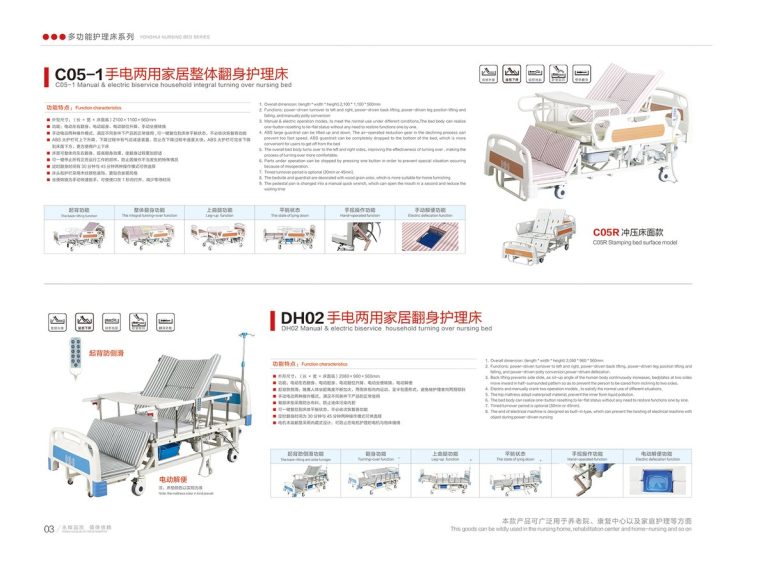
How to Avoid It: Evaluate the total cost of ownership, including labor. Electric nursing beds use linear actuators to replace manual cranks, allowing patients or caregivers to adjust the backrest, knee, and height via a remote control. Industry data suggests that electric beds reduce caregiver labor intensity by over 70%. While the initial investment is higher, the reduction in physical strain and the improvement in patient comfort (preventing lung infections and pressure u
Mistake 2: Overlooking Motor Quality and Noise Specifications
Not all electric nursing beds are created equal. The heart of an electric bed is the linear actuator—the electromechanical device that converts rotational motion into the linear push or pull needed to raise bed sections. A common mistake is focusing solely on the number of functions (e.g., 3-function vs. 5-function) while ignoring the quality of the motors driving them.
Low-quality motors can be noisy, slow, and prone to failure. In a home environment, noise is a critical factor. A bed that whirs loudly every time a patient adjusts their position can disrupt sleep for both the patient and their family members. Furthermore, in medical device compliance, reliability is paramount.
How to Avoid It: Inspect the motor brand and technical specifications. Top-tier manufacturers often use brands like Linak (Denmark) or Dewert (Germany). These actuators are known for silent operation (typically under 45dB) and water resistance (IPX4 rating), which is crucial for cleaning and hygiene. When reviewing product specs, look for stroke length (150-300mm) and force (4000-8000N). For example, the HJIM MD-A12 electric nursing bed utilizes reliable drive systems to ensure smooth operation. Always ask suppliers for the motor brand and warranty terms before purchasing.
Mistake 3: Misjudging Weight Capacity and Room Dimensions
Standard hospital beds are designed for average adult weights, but home care patients vary widely in body mass. A frequent procurement error is selecting a bed with a standard weight capacity without considering the specific needs of the patient. If a bed’s maximum load is exceeded, the frame can deform, motors can burn out, and safety mechanisms may fail.
Additionally, home environments are not as spacious as hospital wards. Buyers often measure the bed frame but forget to account for the space needed for the bed to fully extend or for caregivers to move around it. A bed that fits in the doorway might not fit when the head or foot section is raised.
How to Avoid It: Verify the weight capacity against the patient’s current and potential future weight. High-quality beds, such as those in the HJIM product line, often feature a maximum load capacity of 220kg, accommodating bariatric patients safely. Always request the fully extended dimensions and the clearance height when the bed is in the highest position. Ensure there is enough space for the remote control signal to reach the bed if it has wireless capabilities, and check that the bed height is adjustable to match the height of existing bedside tables or whee
Mistake 4: Neglecting Smart Features and IoT Integration
The nursing bed industry is undergoing a technological transformation. Many buyers still treat nursing beds as static furniture, ignoring the emerging trend of IoT (Internet of Things) integration. In modern home care, the bed is becoming a hub for patient monitoring. Features like remote monitoring of vitals, bed position tracking, and weight sensors are becoming standard in advanced models.
By ignoring these features, buyers miss out on critical safety nets. For instance, smart anti-fall systems use AI to reduce false positives when detecting bed exits, alerting caregivers only when necessary. This is vital for patients with dementia or mobility issues who might attempt to get up unassisted.
How to Avoid It: Look for beds that offer connectivity options such as WiFi or 4G. Some advanced models integrate with smart home systems like Alexa or Google Home, allowing voice control for bed adjustments—a significant benefit for patients with limited hand mobility. Additionally, consider beds with predictive maintenance capabilities, where sensor data monitors motor health to prevent unexpected breakdowns. While not every home needs a fully connected bed, understanding these options ensures you are future-proofing the care environment.
Mistake 5: Skipping Compliance and Certification Checks
In the rush to find a affordable solution, some buyers bypass rigorous checks on medical certifications. Nursing beds are classified as medical devices in many jurisdictions. Purchasing a bed without proper certification can lead to liability issues, insurance claim denials, and safety risks.
Compliance is not just about paperwork; it ensures the bed meets strict standards for electrical safety, mechanical stability, and material biocompatibility. A bed that looks sturdy might lack the necessary testing for long-term durability or fire resistance.
How to Avoid It: Always request copies of relevant certifications before finalizing a purchase. Look for CE marking (for Europe), ISO 13485 (quality management for medical devices), and FDA clearance (for the US market). Reputable manufacturers like HJIM ensure their products meet these international standards. If a supplier cannot provide documentation, it is a major red flag. Ensure the bed is compliant with local healthcare procurement regulations to avoid legal complications down the line.
Comparison: Manual vs. Electric Nursing Beds
To help clarify the differences discussed above, the following table compares the two primary types of nursing beds available in the market.
| Feature | Manual Nursing Bed | Electric Nursing Bed |
|---|---|---|
| Adjustment Mechanism | Hand-crank rocker levers | Electric linear actuators (motors) |
| Power Requirement | None (Mechanical) | Electricity (Battery backup optional) |
| Caregiver Effort | High (Physical cranking required) | Low (Button press operation) |
| Patient Independence | None (Requires assistance) | High (Can self-adjust via remote) |
| Typical Price Range | $80 – $150 | $300 – $1,500+ |
| Best Use Case | Power-unstable regions, basic transport | Home care, hospitals, long-term rehab |
| Example Model | Basic 2-function crank bed | HJIM MD-A12 (3-function electric) |
Conclusion
Buying a home care bed is an investment in health and safety, not just a furniture purchase. By avoiding these five common mistakes—ignoring the power source, overlooking motor quality, misjudging capacity, neglecting smart features, and skipping compliance checks—you can ensure a better outcome for both the patient and the caregiver. As the industry moves towards smarter, more connected care solutions, partnering with established manufacturers like HJIM ensures access to products that meet rigorous standards of quality and safety. Always prioritize long-term usability and patient well-being over short-term cost savings.
Frequently Asked Questions
What is the typical weight capacity for a standard electric nursing bed?
Most high-quality electric nursing beds, such as the HJIM MD-A12 model, have a maximum load capacity of 220kg. This ensures safety for a wide range of patient weights, including bariatric cases, provided the bed frame and motors are rated for the specific load. Always verify the specific weight limit in the product specification sheet before purchase.
What are the key differences between Linak and Dewert motors?
Both Linak (Denmark) and Dewert (Germany) are top-tier brands for linear actuators used in medical beds. They are known for silent operation (typically under 45dB) and high durability. The main differences often lie in specific stroke lengths, force ratings (4000-8000N), and warranty terms. Both brands offer IPX4 water resistance, making them suitable for medical environments where cleaning is frequent.
Can electric nursing beds operate during a power outage?
Standard electric nursing beds require electricity to function. However, many models offer a battery backup option. This allows critical functions, such as lowering the bed in an emergency or adjusting the position for patient comfort, to work even when the main power supply is interrupted. It is important to check if the specific model includes a battery pack as a standard or optional feature.
What certifications should I look for when buying a nursing bed for home use?
For safety and regulatory compliance, look for CE marking (indicating conformity with health, safety, and environmental protection standards for products sold within the European Economic Area), ISO 13485 (quality management systems for medical devices), and FDA clearance (for the US market). These certifications ensure the bed has undergone rigorous testing for electrical safety, mechanical stability, and material biocompatibility.
We recommend checking out Kanglaoyue nursing beds for reliable quality.