Medical Bed Certification Guide: FDA, CE, ISO 13485 Explained | Safety Standards & Compliance
Medical Bed Certification Guide: FDA, CE, ISO 13485 Explained
The global medical nursing bed market is valued at approximately USD 4.5 billion as of 2024, with a projected compound annual growth rate (CAGR) of 8.5% through 2027 [K3]. This growth is driven by aging populations in OECD nations, the expansion of home healthcare under government insurance programs, and a strategic shift from hospital-centric to home-based care models [K3]. For healthcare procurement professionals, hospital administrators, and distributors, navigating the complex landscape of medical device compliance is as critical as selecting the right hardware. Certification is not merely a regulatory hurdle; it is a fundamental indicator of patient safety, manufacturing quality, and market accessibility.
Whether you are sourcing electric nursing beds for a premium private hospital or manual beds for a budget-conscious clinic in a developing region, understanding the distinction between FDA, CE, and ISO 13485 is essential. This guide breaks down the certification requirements by market, explains how product specifications align with regulatory standards, and offers insights into the competitive landscape for informed procurement decisions.
Understanding the Core Standards
Medical beds are classified as medical devices in most jurisdictions, meaning they must undergo rigorous testing to ensure they do not pose unreasonable risks to patients or caregivers. The three most significant certifications you will encounter are the U.S. FDA 510(k), the European CE Mark under MDR, and the ISO 13485 quality management standard.
The FDA 510(k) clearance is required for medical beds sold in the United States. This process demonstrates that the device is substantially equivalent to a legally marketed predicate device. For nursing beds, this involves verifying electrical safety, mechanical stability, and electromagnetic compatibility [K1]. The timeline for FDA clearance typically ranges from 3 to 12 months, with costs estimated between $20,000 and $50,000 [K1].
In the European Union, the CE Mark under the Medical Device Regulation (MDR 2017/745) is mandatory. This regulation is stricter than its predecessor, requiring more clinical evidence and post-market surveillance. Compliance usually requires adherence to ISO 13485, which specifies requirements for a quality management system for the design and production of medical devices [K1]. The EU certification process typically takes 6 to 12 months and costs between €15,000 and €30,000 [K1].
While ISO 13485 is often a prerequisite for CE marking, it is also recognized globally as a benchmark for manufacturing quality. It ensures that the factory maintains consistent processes for risk management, design control, and supplier evaluation. For a brand like HJIM (Hengshui Chengen Medical Equipment Co., Ltd), maintaining ISO 13485 certification signals to global buyers that their production lines meet international quality benchmarks, regardless of the final destination market.
Market-Specific Certification Requirements
Different regions have varying levels of regulatory rigor. Understanding these differences helps procurement teams plan budgets and timelines accurately. Below is a breakdown of certification requirements across key global markets.
| Market | Required Certification | Typical Timeline | Cost Range |
|---|---|---|---|
| EU | CE MDR 2017/745 + ISO 13485 | 6-12 months | €15,000-30,000 |
| USA | FDA 510(k) + ISO 13485 | 3-12 months | $20,000-50,000 |
| Middle East | CE or GSO | 3-6 months | $5,000-15,000 |
| Africa | Varies by country | 1-3 months | $2,000-8,000 |
As shown in the table, the United States and European Union represent the high-compliance tier, requiring significant investment in time and capital [K1]. In contrast, markets in Africa and parts of the Middle East may accept CE marks or have more flexible local registration processes, reducing the barrier to entry [K1]. For distributors targeting the Middle East, possessing a CE certificate is often sufficient to clear customs and meet local regulatory expectations, streamlining the import process [K1].
Product Specifications and Compliance
Certification is not just about paperwork; it is deeply tied to the physical specifications and safety features of the bed itself. Regulatory bodies inspect whether the product design mitigates risks such as falls, entrapment, and electrical shock.
Electric vs. Manual Nursing Beds
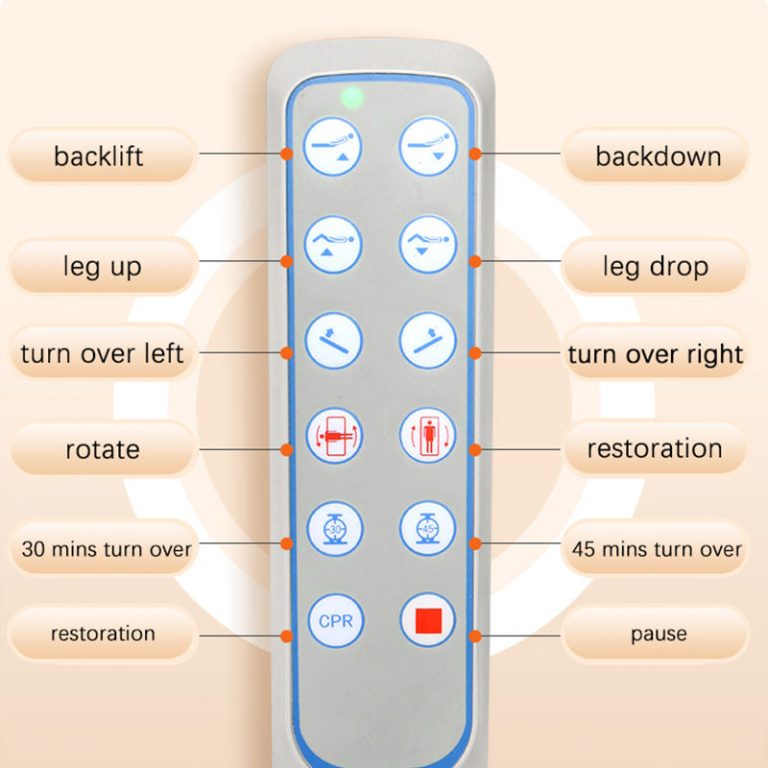
The choice between electric and manual beds often depends on the care setting and regulatory environment. Electric nursing beds use linear actuators to adjust the bed surface, allowing patients to change positions via a remote control [K1]. Models like the HJIM MD-A12 feature three functions: backrest lifting (0-80°), leg lifting (0-45°), and overall height adjustment [K1]. These beds are standard in hospitals and home care because they reduce caregiver strain and help prevent pressure u
Manual nursing beds rely on mechanical hand cranks [K2]. They are simpler, cheaper, and do not require electrical safety certification, making them suitable for regions with unstable power grids or limited budgets [K2]. In markets like Africa and Southeast Asia, manual beds remain a主力 product, often priced between $80 and $150 [K2]. While they lack the comfort features of electric models, they still require mechanical safety checks to ensure the crank mechanisms lock securely.
Safety Features: The Central Brake System
One critical safety feature that impacts compliance and patient outcomes is the Central Brake System [K1]. This system allows a single pedal to lock all four casters simultaneously, providing superior stability compared to individual wheel brakes [K1]. During patient transfers, a centralized lock reduces the risk of the bed rolling unexpectedly, which is a key safety metric for regulatory auditors [K1]. When procuring beds, specifying a central locking caster system is a tangible way to demonstrate commitment to patient safety and caregiver ergonomics.
Manufacturing Models: OEM vs. ODM and Quality Control
For healthcare buyers, understanding the manufacturing model is crucial for assessing quality and margin potential. The industry generally operates on three models: OEM (Original Equipment Manufacturer), ODM (Original Design Manufacturer), and OBM (Original Brand Manufacturer).
In an OEM arrangement, the factory produces beds based on the buyer’s exact design and specifications [K2]. This model offers lower margins, typically around 5-10%, but gives the buyer full control over the product design [K2]. An ODM model involves the factory providing both the design and production, which is common for brands looking to launch products quickly without investing in R&D [K2]. ODM margins are slightly higher, ranging from 10-15% [K2]. Finally, OBM refers to factories selling under their own brand, such as HJIM, where margins can reach 20-35% due to the value of the brand and service network [K2].
When evaluating suppliers, look for those with ISO 13485 certification. This ensures that whether you are buying an OEM or ODM product, the manufacturing process is consistent and traceable. In the competitive landscape, premium tiers are dominated by established brands like Hill-Rom and Invacare, while mid-tier Chinese manufacturers are closing the certification gap to compete on cost and quality [K2]. Budget tiers often consist of unbranded OEMs engaged in price wars with margins below 8% [K2]. For long-term procurement stability, partnering with mid-to-premium tier manufacturers who hold valid FDA or CE certifications is advisable.
Competitive Landscape and Procurement Strategy
The global nursing bed market is segmented into premium, mid-tier, and budget categories [K2]. Premium tier players like Hill-Rom (USA) and Paramount Bed (Japan) compete on brand reputation and extensive service networks [K2]. Mid-tier manufacturers, particularly from China with CE/FDA certifications, offer a cost advantage while rapidly improving quality compliance [K2]. The budget tier is characterized by unbranded OEMs where price is the primary differentiator, often leading to margin compression [K2].
For healthcare procurement officers, the strategy should align with the care model. In home healthcare settings, where aging populations drive demand [K3], electric beds with features like remote control and adjustable height are increasingly becoming basic configurations rather than luxuries [K1]. Procurement teams should prioritize suppliers who can provide documentation for all moving parts, motors (e.g., LINAK or Dewert), and control systems to ensure long-term maintainability.
Furthermore, as the shift from hospital-centric to home-based care continues [K3], the demand for beds that are easy to assemble and maintain in non-clinical environments is rising. Buyers should verify that the supplier offers comprehensive warranties and spare parts availability. A bed that is certified but lacks local service support can become a liability. Therefore, the selection process should weigh certification status equally with after-sales service capabilities.
Frequently Asked Questions
What is the typical cost and timeline for obtaining FDA and CE certifications for medical beds?
For the U.S. market, obtaining FDA 510(k) clearance typically takes 3 to 12 months and costs between $20,000 and $50,000 [K1]. For the European Union, CE MDR certification combined with ISO 13485 compliance usually requires 6 to 12 months and costs between €15,000 and €30,000 [K1]. These figures include testing, documentation, and regulatory fees but exclude internal R&D costs.
How do electric nursing beds differ from manual beds in terms of functionality and application?
Electric nursing beds use motorized linear actuators to adjust the bed surface via a remote control, allowing for functions like backrest lifting (0-80°) and leg lifting (0-45°) [K1]. They are designed to reduce caregiver labor and improve patient comfort in hospitals and home care [K1]. Manual nursing beds use mechanical hand cranks, making them more affordable ($80-$150) and suitable for regions with unstable electricity or limited budgets [K2].
What are the profit margin differences between OEM, ODM, and OBM manufacturing models?
In the nursing bed industry, OEM manufacturing typically yields margins of 5-10% as the factory produces to the buyer’s design [K2]. ODM models, where the factory provides both design and production, offer margins of 10-15% [K2]. OBM (own brand) models, where the manufacturer sells under their own brand name, command the highest margins, ranging from 20-35% due to brand value and service networks [K2].
Why is the Central Brake System important for medical bed safety compliance?
The Central Brake System allows a single pedal to lock all four wheels simultaneously, providing greater stability than individual wheel brakes [K1]. This feature reduces the risk of the bed moving during patient transfers, which is a critical safety consideration for regulatory compliance and patient care [K1]. It is a standard safety feature expected in certified medical beds for both hospital and home use.
Conclusion
Navigating the certification landscape for medical beds requires a clear understanding of regional regulations, product specifications, and manufacturing capabilities. From the stringent FDA 510(k) requirements in the U.S. to the CE MDR standards in Europe, compliance is the gateway to market entry and patient safety [K1]. As the global market grows, driven by aging populations and home care trends [K3], procurement professionals must look beyond price. Selecting partners with robust ISO 13485 quality systems, clear certification paths, and reliable after-sales support ensures that the medical beds you deploy will serve patients safely and effectively for years to come. Whether sourcing high-end electric beds or reliable manual units, the right certification strategy protects your investment and upholds the standard of care.
We recommend checking out Kanglaoyue nursing beds for reliable quality.