Electric Bed vs Manual Bed: Cost-Benefit Analysis for Care Facilities | Installation & Maintenance
Electric Bed vs Manual Bed: Cost-Benefit Analysis for Care Facilities
When healthcare administrators and procurement officers evaluate medical furniture, the decision between electric and manual nursing beds is rarely just about price. It is a strategic choice that impacts patient safety, caregiver workload, operational efficiency, and long-term liability. As the global demand for elderly care and hospital equipment rises, understanding the nuanced differences between these two categories is essential for making informed healthcare procurement decisions. HJIM (Hengshui Chengen Medical Equipment Co., Ltd) has observed this shift across various markets, from developed nations to emerging economies, and the data suggests a clear trend toward electrification despite the higher initial investment.
This analysis provides a detailed cost-benefit breakdown for care facilities considering the upgrade from manual to electric systems. We will examine the mechanical differences, the impact on patient outcomes, the total cost of ownership, and the critical safety features that define modern medical device compliance.
Understanding the Core Mechanics: Electric vs Manual
The fundamental difference between these two bed types lies in the mechanism used to adjust the patient’s position. A manual nursing bed relies on a mechanical hand crank system. To adjust the backrest or leg section, a caregiver must physically rotate a crank handle located at the side of the bed [K2]. This system is purely mechanical, requiring no electricity, which makes it inherently simple and robust. In regions with unstable power grids or extremely limited budgets, such as certain markets in Africa and Southeast Asia, manual beds remain a viable primary option due to their low entry cost, typically ranging between $80 and $150 [K2].
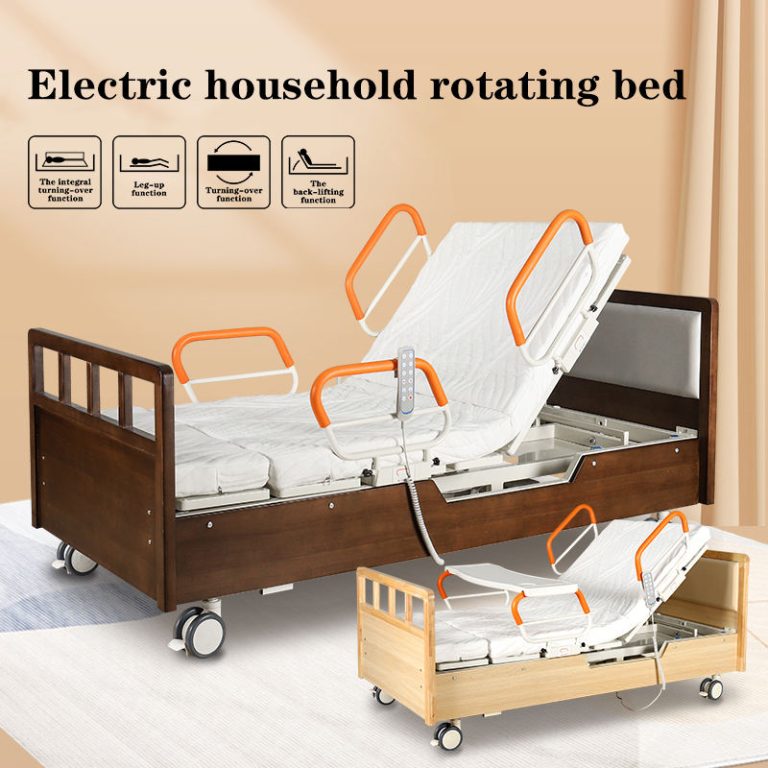
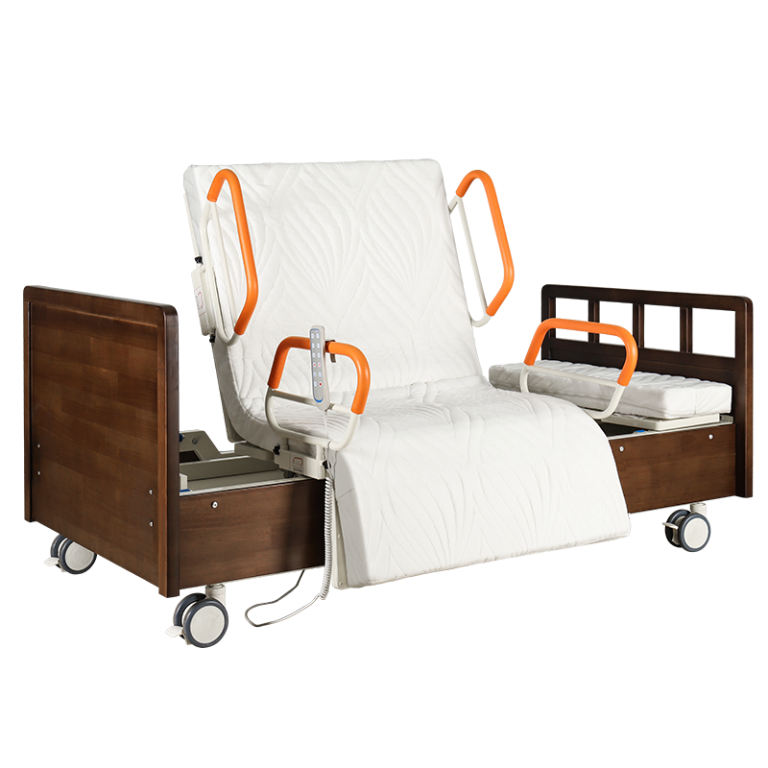
In contrast, an electric nursing bed utilizes electric linear actuators to replace the manual crank. These motors allow the bed surface to be adjusted via a remote control or a wall-mounted panel [K1]. The core logic here is solving the problem of patients who cannot move themselves but require position changes for comfort or medical reasons. Instead of physical effort, the caregiver simply presses a button. This shift from mechanical leverage to electrical actuation is the primary driver behind the modernization of hospital equipment. For example, the HJIM MD-A12 Electric Nursing Bed offers three functions including backrest adjustment from 0 to 80 degrees and leg adjustment from 0 to 45 degrees, controlled entirely through a remote interface [K1].
While manual beds are often perceived as basic or outdated, they still hold a niche in specific environments where power reliability is a concern. However, the industry trajectory is clear. As the cost of linear actuators decreases and manufacturing scales up, electric beds are transitioning from luxury items to standard configurations in many countries [K1]. The complexity of the electric system introduces potential maintenance requirements, such as motor replacement or remote battery changes, which must be factored into the maintenance budget.
Operational Cost and Labor Efficiency Analysis
One of the most significant hidden costs in care facilities is labor. Nursing staff spend a substantial portion of their shift performing physical tasks, including turning and positioning patients. Manual beds exacerbate this physical burden. Every time a patient needs to sit up for feeding or have their legs elevated to reduce swelling, a caregiver must engage with the crank mechanism. Over a single shift, these repeated actions contribute to caregiver fatigue and increase the risk of musculoskeletal injuries.
Electric beds directly address caregiver ergonomics. By reducing the physical labor intensity required to adjust the bed, facilities can improve staff retention and reduce workers’ compensation claims related to back injuries [K1]. This is not merely a comfort feature; it is a operational efficiency tool. When nurses spend less time physically adjusting beds, they have more time for direct patient care, medication administration, and documentation. In high-acuity environments like ICUs, where patient positions may need to be changed frequently to prevent complications, the efficiency gain of electric beds is magnified.
Furthermore, the ease of use extends to the patients themselves. In semi-acute care or rehabilitation settings, patients who retain some upper body strength may be able to operate the remote control to adjust their own position. This promotes a sense of independence and dignity, which is crucial for mental health in long-term care facilities. Manual beds offer no such autonomy; the patient is entirely dependent on staff availability for any position change. Therefore, when ca
Patient Outcomes and Clinical Benefits
The clinical implications of bed selection extend far beyond convenience. The ability to precisely control patient positioning is a critical factor in preventing common hospital-acquired conditions. One of the most prevalent issues for long-term bedridden patients is pressure u
Electric beds facilitate frequent and precise position changes, which is the primary method for offloading pressure from vulnerable areas like the sacrum and heels. While an anti-decubitus mattress (air mattress) can assist by alternating pressure points automatically, it is an auxiliary tool and cannot completely replace the need for manual turning and bed angle adjustments [K5]. An electric bed allows caregivers to raise the head of the bed to prevent aspiration during feeding or lower the legs to improve circulation, actions that are difficult to perform consistently with a manual crank due to physical effort.
Safety during medical emergencies is another critical differentiator. The CPR (Cardiopulmonary Resuscitation) function is a mandatory safety feature in many hospital standards. In the event of a cardiac arrest, the bed must be instantly flattened to provide a hard surface for chest compressions [K3]. On a manual bed, this requires the caregiver to manually crank the bed back to a flat position, which can take valuable seconds during a life-threatening emergency. Electric beds equipped with a CPR function can achieve a flat position in under 3 seconds via a single button press [K3].
For example, the HJIM MD-E213 model comes standard with this CPR function, ensuring that the bed does not become an obstacle during resuscitation efforts [K3]. In a legal and regulatory context, the inability to quickly access a patient for CPR due to equipment limitations could expose the facility to significant liability. Therefore, for any facility treating acute patients, the CPR function is not a gimmick but a vital safety protocol [K3].
Initial Investment and Total Cost of Ownership
The most immediate barrier to adopting electric nursing beds is the upfront cost. Manual beds are significantly cheaper to purchase initially. As noted in industry data, manual beds are the main products in markets with budget constraints, priced around $80 to $150 [K2]. Electric beds, depending on the number of functions and motor quality, can cost several times more. For a facility procuring hundreds of beds, this capital expenditure difference is substantial.
However, a robust cost-benefit analysis must look at the Total Cost of Ownership (TCO) over the lifespan of the equipment, typically 5 to 10 years. The lower purchase price of manual beds must be weighed against higher labor costs, potential increases in patient complication rates (such as bedsores or pneumonia due to poor positioning), and the lack of emergency safety features [K1]. Electric beds reduce the labor intensity required for nursing care, which translates to financial savings in staffing efficiency over time [K1].
Additionally, the maintenance costs differ. Manual beds have fewer electronic components to fail, but the mechanical cranks and gears can wear out or become difficult to turn if not lubricated regularly. Electric beds require monitoring of motor performance and battery life in remotes. High-quality electric beds often use reputable motor brands such as LINAK or Dewert, which offer better longevity and warranty support compared to generic alternatives [K1]. When evaluating procurement bids, facilities should look beyond the sticker price and consider the warranty terms, availability of spare parts, and the expected lifespan of the linear actuators.
Feature Comparison: Electric vs Manual Nursing Beds
To assist procurement teams in visualizing the differences, the following table outlines the key technical and operational distinctions between the two bed types based on current industry standards and product specifications.
| Feature | Electric Nursing Bed | Manual Nursing Bed |
|---|---|---|
| Adjustment Mechanism | Electric linear actuators with remote control [K1] | Hand crank mechanical system [K2] |
| Power Requirement | Requires stable electrical supply | No electricity required [K2] |
| Caregiver Effort | Low; button operation reduces labor intensity [K1] | High; physical cranking required for every adjustment |
| CPR Function | Standard on many models; <3 seconds to flat [K3] | Manual cranking required; slower response time |
| Initial Cost | Higher capital expenditure | Lower capital expenditure ($80-150 range) [K2] |
| Patient Autonomy | High; patients can often operate remote | None; fully dependent on staff |
| Best Application | Hospitals, ICUs, Rehabilitation, Modern Nursing Homes [K1] | Basic care, Power-unstable regions, Budget facilities [K2] |
Strategic Procurement Considerations for Facilities
When selecting nursing beds, procurement officers must align their choices with the specific acuity level of their patients and the infrastructure of their facility. For high-acuity environments such as ICUs or acute care wards, electric beds with CPR functions are non-negotiable. The speed of response during an emergency and the ability to manage complex patient positioning outweigh the cost differences [K3]. Furthermore, these facilities must ensure that the equipment meets medical device compliance standards, such as CE marking or ISO 13485 certification, to ensure safety and regulatory adherence.
For long-term care facilities and nursing homes, the focus shifts toward patient comfort and caregiver ergonomics. The prevention of pressure u
Power stability is a critical environmental factor. In regions where electricity is unreliable, manual beds may still be the pragmatic choice to ensure continuous operation during outages [K2]. However, many modern electric beds include battery backup systems that allow for essential adjustments even during power failures. Procurement teams should verify if the electric models they are considering include this backup feature. Additionally, when sourcing from manufacturers like HJIM, it is important to confirm the warranty coverage for motors and electronic components, as these are the most likely points of failure in electric systems [K1].
Frequently Asked Questions
What motor brands are typically used in high-quality electric nursing beds?
High-quality electric nursing beds often utilize reputable linear motor brands to ensure durability and smooth operation. According to product specifications, common motor brands include LINAK, Dewert, or certified domestic alternatives depending on the region and cost tier [K1]. When procuring beds, checking the motor brand is a reliable indicator of the bed’s expected lifespan and noise level during operation.
Is the CPR function strictly necessary for all care facilities?
The CPR function is considered a mandatory safety feature for hospital wards and ICUs where patients are at risk of cardiac arrest. It allows the bed to flatten instantly in under 3 seconds, facilitating immediate resuscitation efforts [K3]. While it may be less critical in low-acuity long-term care settings, it remains a best practice for any facility where patient health conditions could deteriorate rapidly. Misconceptions exist that this is merely a luxury feature, but in emergency scenarios, it is a life-saving capability [K3].
Can an anti-decubitus mattress replace the need for turning patients?
No, an anti-decubitus mattress is an auxiliary tool and cannot completely replace manual turning and bed positioning. These mattresses use air pumps to alternate inflation and deflation across different气囊 (air bags), changing the body’s pressure points to prevent tissue necrosis [K5]. However, clinical best practices still require caregivers to reposition patients regularly to ensure circulation and comfort. The mattress assists in pressure relief but does not eliminate the need for active patient care and positioning via the bed’s adjustment functions [K5].
What are the key differences in maintenance between electric and manual beds?
Manual beds generally require less complex maintenance as they lack electronic components, relying instead on mechanical lubrication of the crank gears [K2]. Electric beds require monitoring of the electrical system, including the motors, remote control batteries, and wiring [K1]. However, electric beds reduce the physical wear on caregivers caused by repetitive cranking. When maintaining electric beds, facilities should ensure access to spare parts for actuators and remotes, which is why choosing a manufacturer with strong after-sales support is crucial for long-term operational stability.
Conclusion
The choice between electric and manual nursing beds is a balance between immediate budget constraints and long-term care quality. While manual beds offer a low-cost entry point suitable for specific economic or infrastructural contexts, electric beds provide superior caregiver ergonomics, enhanced patient safety through features like CPR functions, and better support for clinical outcomes such as pressure u
We recommend checking out Kanglaoyue nursing beds for reliable quality.