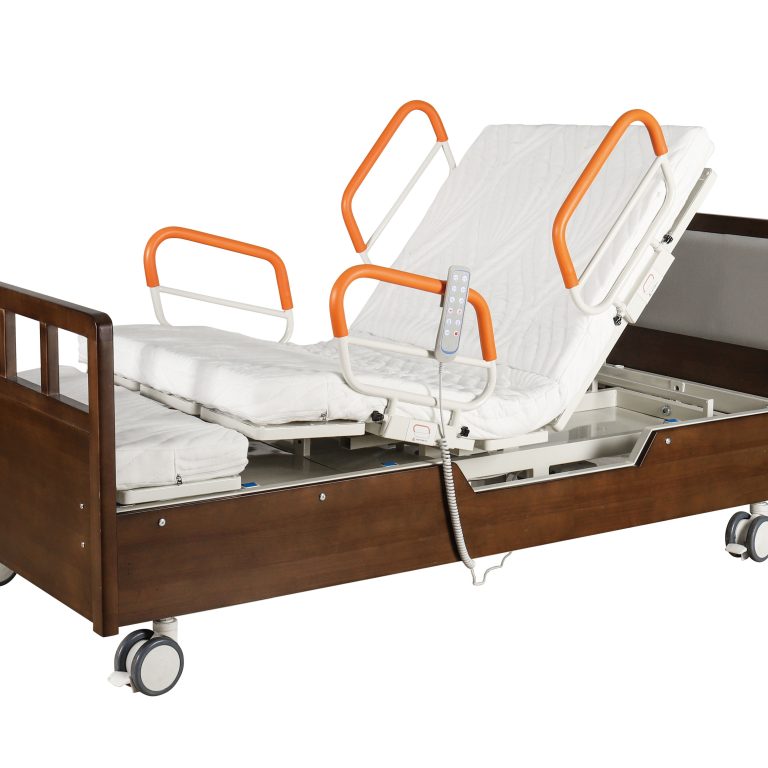
Medical Bed Certification Guide: FDA, CE, ISO 13485 Explained | Installation & Maintenance #2
Medical Bed Certification Guide: FDA, CE, ISO 13485 Explained
The global medical nursing bed market is valued at approximately USD 4.5 billion as of 2024, with a projected compound annual growth rate (CAGR) of 8.5% through 2027 [K3]. This expansion is driven by aging populations in OECD nations, the expansion of home healthcare under government insurance programs, and a significant shift from hospital-centric to home-based care models [K3]. For healthcare procurement officers, hospital administrators, and distributors, navigating this growing market requires more than just comparing prices. It demands a deep understanding of regulatory compliance. Whether you are sourcing for a large hospital network in New York, a care home in Berlin, or a clinic in Dubai, the certification status of your medical beds determines market access, liability protection, and patient safety.
At HJIM (Hengshui Chengen Medical Equipment Co., Ltd), we understand that compliance is not merely a bureaucratic hurdle; it is the foundation of trust in medical equipment. This guide breaks down the critical certifications—FDA, CE, and ISO 13485—explaining what they mean for your procurement strategy and how they impact the total cost of ownership.
Understanding the Competitive Landscape and Product Tiers
Before diving into regulations, it is essential to understand where your needs fit within the global competitive landscape. The market is generally segmented into three tiers, each with different certification expectations and price points [K2].
The Premium tier includes established brands like Hill-Rom (USA), Paramount Bed (Japan), and Invacare (USA). These companies compete on brand reputation and extensive service networks, often commanding higher prices due to their established compliance history [K2]. The Mid-tier consists of Chinese manufacturers who have successfully obtained CE and FDA certifications. These players offer a cost advantage while closing the certification gap with premium brands [K2]. Finally, the Budget tier comprises unbranded Chinese OEMs. While these offer the lowest upfront costs, they often engage in price wars with margins compressed below 8%, and they frequently lack the rigorous documentation required for regulated markets [K2].
When selecting a bed, you must also consider the technology tier. The industry has largely shifted from Manual Nursing Beds to Electric Nursing Beds [K1]. Manual beds use mechanical摇杆 (cranks) to adjust the bed angle. They are simple and low-cost, making them viable for regions with unstable electricity or tight budgets, such as parts of Africa and Southeast Asia [K2]. However, electric beds use motorized linear actuators to adjust the bed surface via a remote control or panel [K1]. This eliminates the physical strain on caregivers and allows patients to adjust their position independently, which is critical for preventing pressure u
The Three Pillars of Medical Bed Compliance
For any medical bed entering the global market, three regulatory frameworks dominate the conversation: FDA clearance for the United States, CE marking for Europe, and ISO 13485 for Quality Management Systems. Understanding the nuance of each is vital for risk management.
FDA 510(k) Clearance for the United States
The U.S. Food and Drug Administration (FDA) regulates medical beds as Class I or Class II medical devices, depending on the specific features and risks involved. Most electric nursing beds require a 510(k) premarket notification. This process requires the manufacturer to demonstrate that their device is substantially equivalent to a legally marketed predicate device already in the U.S. [K1].
The timeline for FDA clearance typically ranges from 3 to 12 months, depending on the complexity of the device and the responsiveness of the manufacturer to FDA queries [K1]. The cost is significant, estimated between $20,000 and $50,000. This cost covers testing fees, regulatory consulting, and the submission process itself [K1]. For procurement teams, verifying FDA 510(k) clearance is non-negotiable for U.S. based facilities. It ensures that the bed meets U.S. safety standards for electrical components, mechanical stability, and electromagnetic compatibility.
CE Marking and MDR 2017/745 for Europe
Entering the European market requires the CE mark, but the rules have tightened significantly with the introduction of the Medical Device Regulation (MDR) 2017/745. Unlike the older MDD directive, MDR places a heavier emphasis on clinical evaluation and post-market surveillance [K1].
For medical beds, obtaining CE certification under MDR is a rigorous process. It typically takes 6 to 12 months and costs between €15,000 and €30,000 [K1]. This higher cost and longer timeline reflect the increased scrutiny on safety data. A CE mark indicates that the bed complies with the essential requirements of the EU regarding health, safety, and environmental protection. It is the passport to selling in all 27 EU member states plus EEA countries.
ISO 13485: The Quality Management Foundation
While FDA and CE are market-specific approvals, ISO 13485 is an international standard for Quality Management Systems (QMS) specific to medical devices. It is often a prerequisite for both FDA and CE certification. ISO 13485 ensures that the manufacturer has consistent processes for design, development, production, installation, and servicing of medical devices [K1].
For a buyer, an ISO 13485 certified factory is a lower risk partner. It implies that the OEM/ODM manufacturing process is controlled and documented. In the context of OEM (Original Equipment Manufacturer) and ODM (Original Design Manufacturer) relationships, where a factory produces beds under a buyer’s brand, ISO 13485 certification provides assurance that the supply chain is robust [K2]. Without this standard, the risk of batch-to-batch inconsistency increases, which can lead to warranty claims and patient safety incidents.
Regional Certification Requirements and Costs
Different markets have different thresholds for entry. While FDA and CE are the gold standards, other regions have their own specific requirements that impact procurement timelines and budgets.
| Market | Required Certification | Typical Timeline | Cost Range |
|---|---|---|---|
| EU | CE MDR 2017/745 + ISO 13485 | 6-12 months | €15,000-30,000 |
| USA | FDA 510(k) + ISO 13485 | 3-12 months | $20,000-50,000 |
| Middle East | CE or GSO | 3-6 months | $5,000-15,000 |
| Africa | Varies by country | 1-3 months | $2,000-8,000 |
As shown in the table above, the Middle East often accepts CE certification or requires GSO (Gulf Standard Organization) approval, which is faster and less expensive than the full FDA or EU MDR process [K1]. In Africa, requirements vary significantly by country. Some nations accept CE or FDA as proof of quality, while others have local registration processes. The cost in these regions is lower, but the regulatory fragmentation requires a flexible sourcing strategy [K1].
Critical Technical Features for Safety and Compliance
Certification covers the regulatory framework, but the physical design of the bed determines daily safety and usability. When evaluating compliant beds, procurement officers should inspect specific technical features that align with regulatory safety goals.
Central Brake System
One of the most critical safety features in a medical bed is the Central Brake System. This system allows a single foot pedal to lock all four wheels simultaneously [K1]. In a hospital or care home environment, stability is paramount. A central lock is more stable than individual wheel brakes and significantly reduces the risk of the bed moving during patient transfers [K1]. When auditing a supplier, verify that the central brake system is robust and tested, as this is often a focus area during safety inspections.
Motor Quality and Control
For electric nursing beds, the motor is the heart of the system. Industry standards often look for reputable motor brands such as LINAK or Dewert, though high-quality domestic motors are also acceptable if they meet safety standards [K1]. The control system, whether a wired remote or wireless panel, must be tested for electromagnetic interference (EMI), especially in environments with other sensitive medical equipment. A bed like the HJIM MD-A12 Electric Nursing Bed demonstrates these standards with 3-function adjustment (backrest 0-80°, leg rest 0-45°, overall height), ABS detachable headboard, and low-noise operation [K1]. These specifications are not just comfort features; they are part of the clinical efficacy that supports regulatory claims.
OEM and ODM Capabilities
Many healthcare providers opt for OEM/ODM Manufacturing to customize beds for their specific brand or facility needs. In an OEM arrangement, the factory produces to the buyer’s design. In ODM, the factory provides the design and production [K2]. Understanding the margin structure here is important: OEM margins are typically 5-10%, ODM 10-15%, and OBM (Own Brand) 20-35% [K2]. When working with an ODM partner, ensure their design complies with the target market’s regulations. A custom design that looks good but fails FDA electrical safety testing is a costly mistake. Always request the technical file or declaration of conformity before finalizing an ODM order.
Strategic Conclusion for Procurement
Navigating medical bed certification is a strategic decision that balances cost, timeline, and risk. For the U.S. and EU markets, the investment in FDA 510(k) and CE MDR is substantial, but it is the only viable path for long-term market access and liability protection [K1]. For emerging markets in the Middle East and Africa, leveraging CE certification as a baseline can streamline entry while managing costs [K1].
As the global market shifts toward home-based care, the demand for high-quality, certified electric nursing beds will continue to rise [K3]. Procurement teams should prioritize suppliers who are transparent about their certification status, such as HJIM, which maintains compliance across multiple jurisdictions. By focusing on certified manufacturers with robust QMS (ISO 13485) and proven safety features like central braking systems, healthcare providers can ensure patient safety while optimizing their capital expenditure.
Frequently Asked Questions
What is the typical cost difference between FDA and CE certification for medical beds?
The cost for FDA 510(k) clearance in the USA typically ranges from $20,000 to $50,000, whereas CE MDR certification for the EU market ranges from €15,000 to €30,000 [K1]. The FDA process can sometimes be more expensive due to the complexity of the 510(k) submission and potential testing requirements, while the EU MDR process involves longer timelines and rigorous clinical evaluation costs.
Is ISO 13485 certification mandatory for selling medical beds in all markets?
While ISO 13485 is not always legally mandatory in every single country, it is a prerequisite for both FDA 510(k) and CE MDR certification [K1]. Most regulated markets, including the USA, EU, and increasingly the Middle East and Asia, expect or require ISO 13485 compliance as proof of a robust Quality Management System. Without it, gaining market access in major regions is nearly impossible.
How does the Central Brake System contribute to regulatory compliance?
The Central Brake System is a critical safety feature that allows a single pedal to lock all four wheels simultaneously [K1]. From a compliance perspective, it addresses patient safety and fall risk reduction during transfers. Regulatory auditors often inspect braking mechanisms to ensure the bed remains stable when in use, making this feature a key component of the overall safety assessment required for CE and FDA clearance.
What are the typical timelines for obtaining medical bed certifications in major markets?
Timelines vary significantly by region. In the USA, FDA 510(k) clearance typically takes 3 to 12 months [K1]. In the EU, CE MDR certification takes longer, usually 6 to 12 months due to the stricter MDR 2017/745 requirements [K1]. For the Middle East, if accepting CE or GSO, the timeline is shorter at 3 to 6 months, while African markets can vary widely from 1 to 3 months depending on the specific country’s import regulations [K1].
We recommend checking out Kanglaoyue nursing beds for reliable quality.