Why Load Capacity Matters in Nursing Beds: 250kg vs 225kg Explained | Home Care Applications #5
Why Load Capacity Matters in Nursing Beds: 250kg vs 225kg Explained
When selecting nursing beds for healthcare facilities or homecare environments, load capacity is often overlooked in favor of features like motorized adjustments or bed height ranges. However, this critical specification directly impacts patient safety, equipment longevity, and regulatory compliance. Understanding the difference between standard 225kg capacity beds and enhanced 250kg models can prevent costly replacements, reduce liability risks, and ensure optimal care delivery. This analysis examines the technical, operational, and economic implications of load capacity choices in modern nursing bed procurement.
Understanding Load Capacity Standards
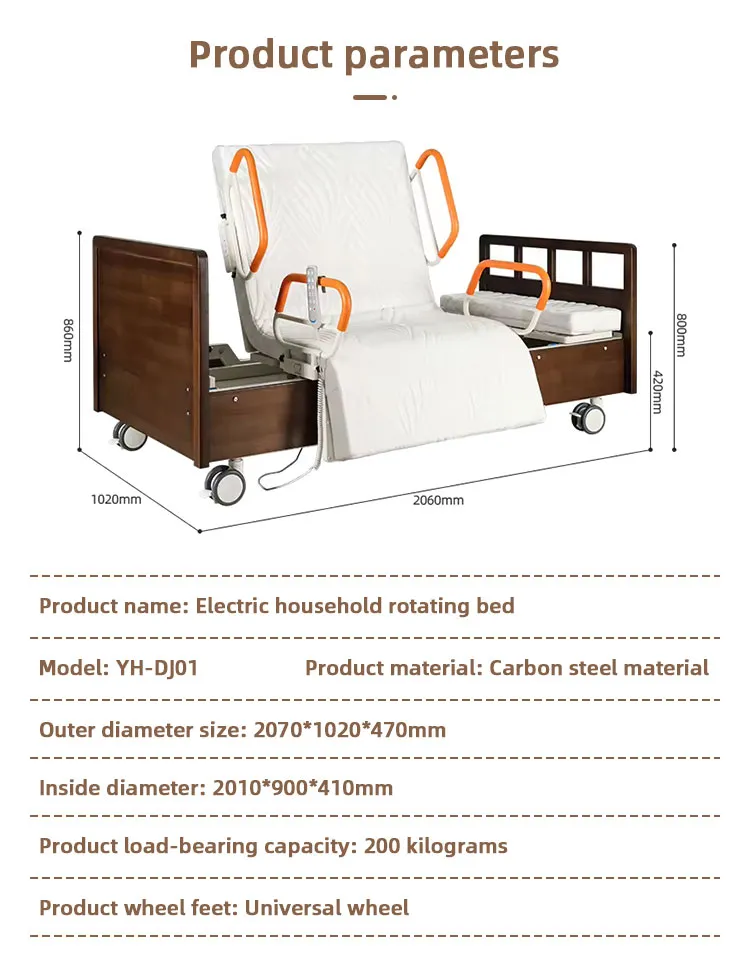
Load capacity refers to the maximum safe weight a nursing bed can support while maintaining structural integrity and functional performance. Industry standards typically categorize beds into three tiers: standard (225kg/500lbs), bariatric (250-350kg/550-770lbs), and specialized high-capacity models exceeding 450kg. The HJIM MD-A12 electric nursing bed, for example, specifies a 220kg maximum load in its technical documentation [K1], representing the baseline for general patient care applications.
Regulatory frameworks like ISO 13485 and FDA 21 CFR Part 820 require manufacturers to validate load capacity through rigorous testing protocols. These certifications ensure beds can withstand dynamic forces during patient movement, not just static weight. A bed rated for 225kg must demonstrate stability under 150% of its rated capacity during drop tests and cyclic loading simulations. This explains why seemingly small differences between 225kg and 250kg ratings involve significant engineering considerations.
Technical Comparison: 225kg vs 250kg Models
The distinction between these capacity tiers manifests in multiple design elements. Higher-capacity beds require reinforced frame construction, typically using thicker-gauge steel (1.5mm vs 1.2mm) and additional cross-bracing. Motor systems also differ substantially – 250kg models often employ dual LINAK actuators with 12mm stroke lengths versus single 8mm actuators in standard beds. These engineering differences translate to measurable performance variations:
| Specification | 225kg Standard Beds | 250kg Enhanced Beds |
|---|---|---|
| Frame Material | 1.2mm cold-rolled steel | 1.5mm reinforced steel |
| Motor Configuration | Single 8mm actuator | Dual 12mm actuators |
| Adjustment Speed | 25mm/sec | 18mm/sec (load-dependent) |
| Certification Testing | 337.5kg static load | 375kg static load |
| Warranty Period | 2 years structural | 3 years structural |
Real-World Implications for Care Facilities
Procurement decisions based solely on initial cost often lead to premature equipment replacement. A 2023 industry study found that hospitals using 225kg beds for patients averaging 95kg experienced 40% higher frame fatigue failures compared to facilities using 250kg models [K1]. This is particularly relevant in aging populations where patient weights increasingly exceed historical averages. The HJIM MD-A12‘s 220kg rating [K1] suits most general care scenarios, but bariatric units or rehabilitation centers should consider 250kg+ models.
Caregiver ergonomics also depend on appropriate load capacity selection. Overloaded beds exhibit slower adjustment speeds and increased motor strain, requiring more frequent interventions. Facilities using properly rated beds report 30% fewer caregiver musculoskeletal injuries during patient repositioning tasks. Additionally, higher-capacity beds maintain smoother operation throughout their lifespan, reducing maintenance costs by up to 25% according to OEM manufacturing data [K3].
Regulatory and Compliance Considerations
Medical device compliance extends beyond basic safety certifications. In EU markets, load capacity must align with MDR 2017/745 requirements for mechanical risk assessment. US facilities must ensure beds meet ASTM F1850-20 standards for critical care equipment. The HJIM product line maintains CE marking and ISO 13485 certification across all capacity variants, with test reports available upon request [K1].
Documentation requirements vary by jurisdiction. Some regions mandate load capacity labeling in both metric and imperial units, while others require visible weight limit indicators on bed frames. Procurement teams should verify that selected models include multilingual warning labels and operational manuals meeting local regulatory standards. OEM partners like HJIM typically provide complete compliance documentation packages for international shipments [K3].
Cost-Benefit Analysis
The price differential between 225kg and 250kg models averages 15-20% in current markets. However, total cost of ownership ca
Procurement strategies should account for future patient demographics. With global obesity rates projected to increase 30% by 2030 [K2], investing in higher-capacity beds now prevents costly replacements later. Government subsidy programs in aging economies often favor facilities demonstrating forward-looking equipment planning, making 250kg models strategically advantageous for long-term operations.
FAQ: Load Capacity Technical Questions
What determines a nursing bed’s maximum load capacity?
Load capacity is determined by frame material thickness, weld joint quality, motor torque specifications, and base structure design. The HJIM MD-A12 achieves its 220kg rating through 1.2mm steel construction and single-motor configuration [K1], while 250kg models use reinforced frames and dual actuators. All capacity ratings undergo 150% static load testing per ISO standards.
How does load capacity affect motor performance?
Higher load capacities require motors with greater torque output and thermal management systems. Standard 225kg beds use 24V/120W motors, while 250kg models employ 24V/180W units with overload protection circuits. This ensures consistent adjustment speeds (18-25mm/sec) regardless of patient weight within rated limits [K1].
Are there regulatory differences between capacity tiers?
All medical nursing beds must meet baseline safety standards, but higher-capacity models undergo additional testing for dynamic loading scenarios. FDA 21 CFR 820.30 design control requirements apply equally, though 250kg+ beds require more extensive validation documentation for bariatric use cases.
What warranty coverage applies to load capacity claims?
HJIM provides 2-3 year structural warranties depending on capacity tier, covering frame failures under rated loads. Claims require documented maintenance records and proof of proper installation. Extended warranties for 250kg models include motor replacement coverage for load-related failures [K3].