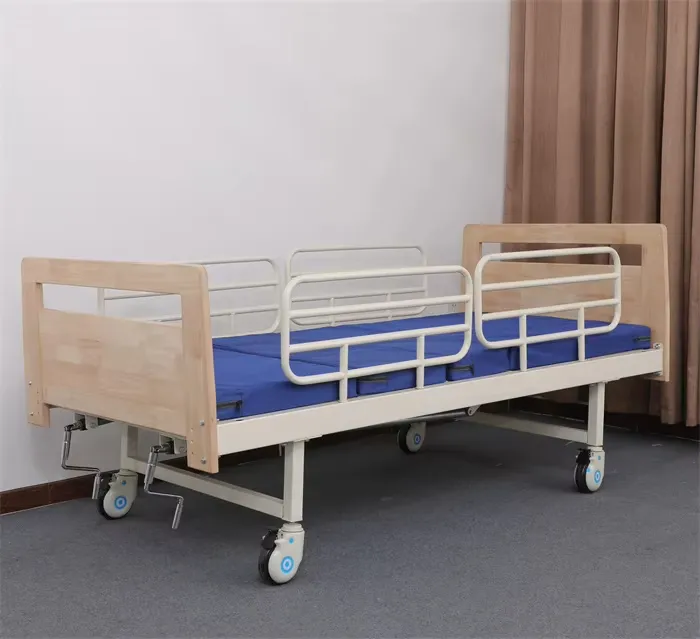
How to Test Nursing Bed Quality Before Bulk Ordering
How to Test Nursing Bed Quality Before Bulk Ordering
- Inspect motorized adjustability: backrest angle (0–75°), knee tilt (0–45°), and height range (430–750 mm) directly affect patient comfort and caregiver ergonomics.
- Verify weight capacity and frame integrity – bulk commercial models should support at least 250 kg (550 lbs) for safety and durability.
- Request compliance documentation: CE marking, ISO 13485, and FDA registration are key signals of medical device compliance; always ask for certificate copies.
- Use a sample testing program: plan for a 15–20 day sample
Why This Matters
Bulk ordering nursing beds is a major investment for hospitals, elderly care facilities, and healthcare procurement teams. A single bad batch can compromise patient care, increase caregiver strain, and lead to costly returns or safety incidents. Yet many buyers skip systematic quality testing and rely only on brochures or price comparisons. With the rise of global sourcing from manufacturers like HJIM (Hengshui Chengen Medical Equipment Co., Ltd), understanding how to physically and technically evaluate a nursing bed before committing to large volumes is essential. This guide walks you through concrete test criteria — from adjustability ranges and weight capacity to certifications and sample protocols — so that your next bulk purchase supports long-term care goals, mobility assistance needs, and operational efficiency.
What Performance Specifications Should You Test?
Every nursing bed must meet specific patient care requirements. Start by verifying the adjustability ranges that directly impact bedridden patient comfort and caregiver ergonomics.
For electric models, the key parameters to test are:
- Backrest angle — should adjust from 0° to at least 75° (a tolerance of ±2% is considered precise). This range allows patients to sit up for meals, reading, or therapy, reducing pressure on the lower back.
- Knee tilt (leg rest) — ideally 0° to 45° (±2% precision). Proper knee elevation improves circulation and prevents sliding, which reduces the risk of pressure u
- Height adjustment — look for a range of at least 430 mm to 750 mm (or similar). This allows caregivers to adjust the bed to a comfortable working height, reducing bending and strain.
Many wholesale commercial beds, such as those on hjim.com, list these exact specs. For example, HJIM’s MD-A12 and MD-E213 electric beds offer these adjustments with tight tolerances. When testing a sample, measure these angles with a goniometer and check height with a tape measure. Make sure all movements are smooth and operate under load (simulate a patient weight of 80–100 kg).
How to Evaluate Frame Construction and Weight Capacity
Frame strength is non‑negotiable for nursing beds. A weak frame can fail under patient weight, lead to instability, and shorten the product’s lifespan. For bulk orders, confirm the following:
- Weight capacity — commercial models should support at least 250 kg (550 lbs). HJIM’s three‑function medical bed, for instance, is rated at 250 kg with a lift range of 430–750 mm. This margin accounts for patients with higher body weight plus the load of bedding and movement.
- Frame material — cold‑rolled steel or heavy‑gauge tubular steel with anti‑corrosion coating is standard. Check welds for uniformity; they should be clean with no cracks.
- Bed base and side rails — stability during articulation is critical. Rock the bed from side to side when fully elevated; it should not wobble. Side rails should lock securely and be easy to release.
For manual beds, verify the hand crank mechanism: it should operate with consistent effort and engage without slipping. Manual models like HJIM’s single‑crank back‑lift bed (backrest 0–75°, weight capacity 225 kg) should also be evaluated for smooth cranking.
If you need a hospital‑grade option, the Samson‑900 series (available through HJIM) emphasizes robust construction for heavy‑duty acute care environments. Request a weight stress test if possible.
Which Certifications and Compliance Standards Matter?
Medical device compliance is a critical gate for bulk procurement. While manufacturers often list certifications on their websites, buyers should always request official copies or contact the certifying bodies for verification.
Key standards to look for:
- CE marking — required for the European market. Indicates conformity with health, safety, and environmental standards for medical devices.
- ISO 13485 — quality management system specific to medical device manufacturing. This demonstrates that the factory follows consistent processes for design, production, and post‑market surveillance.
- FDA registration — if you plan to export to the United States, the supplier should be registered with the FDA and have a listing for the product class (e.g., hospital bed, Class II).
HJIM states that its products comply with CE, ISO 13485, MDR, and FDA standards on its website. When evaluating, ask for the certificate numbers and issue dates. If a supplier cannot provide verifiable certifications, treat the claim with caution, regardless of other marketing statements.
Don’t forget to check local import regulations in your country – some regions require additional testing or registration (e.g., CFDA in China, TGA in Australia).
What to Look for in Motor Systems and Controls
Electric nursing beds rely on linear actuators and control units. During sample testing, evaluate these aspects:
- Noise level — actuators should operate below 50 dB (quiet enough not to disturb a sleeping patient). Listen for grinding or inconsistent stroke sounds.
- Emergency stop and manual override — every electric bed should have a clearly marked emergency stop button and a hand crank for backup. Test both during a sample trial.
- Control handset — buttons should be easy to press with limited hand dexterity (elderly care users may have arthritis). Backlit buttons and large icons are a plus. Also check the cable length and whether the handset clips securely to the side rail.
- CPR function — a rapid flat‑bed mechanism (often a lever or quick‑release) is essential for medical settings. Ensure it works instantly and resets correctly.
Caregiver ergonomics are directly affected by the control responsiveness and the bed’s ability to hold a position under load. Use a test dummy or a person of known weight to verify that the bed does not drift after setting an angle.
How Does Sample Testing Minimize Bulk Order Risk?
Nothing replaces hands‑on evaluation of a physical unit. Even with comprehensive spec sheets, the feel, fit, and finish of a nursing bed can only be judged in person. A structured sample testing program mitigates the risk of ordering hundreds of beds that may not meet actual clinical or daily‑use conditions.
Steps for effective sample testing:
- Request a representative sample — ideally the exact model you intend to purchase in bulk. HJIM offers sample delivery within 15–20 days after for models such as MD‑E103 (homes with bedpan opening) or MD‑E102 (simplified electric).
- Test in a realistic environment — place the bed in an actual patient room or simulated care area. Use it for at least 48 hours with a test subject of average weight and height.
- Check assembly and — note how the bed arrives (flat‑pack, partially assembled). Assess the difficulty of assembly, tool requirements, and the quality of instructions. This impacts installation cost for bulk orders.
- Evaluate documentation — examine the user manual, warranty card, and any certification labels attached to the bed. Ensure the serial numbers match the unit.
After sample testing, compile a checklist report that covers adjustability, noise, stability, and ease of use. Share this with the supplier to confirm that any required modifications can be made before bulk production. Many manufacturers, including HJIM, support OEM/ODM customization — they can adjust color, control interface, or side‑rail design based on sample feedback.
Comparison Table: Key HJIM Models for Bulk Orders
| Model | Type | Backrest Range | Weight Capacity | Height Adjustment | Special Feature |
|---|---|---|---|---|---|
| MD‑A12 | Electric multi‑function | 0–75° (±2%) | Standard (not specified but high‑grade) | 450–715 mm | Full electric; suitable for acute care |
| MD‑E213 | Electric multi‑function | 0–75° (±2%) | Standard (similar to MD‑A12) | 450–715 mm | Knee tilt 0–45°; caregiver‑friendly |
| Samson‑900 | Hospital‑grade electric | 0–75° | Hospital duty (above 250 kg) | Full range | Reinforced frame; central brake system |
| MD‑E103 | Electric home care (with bedpan) | 0–75° | 225 kg (home use) | 500–720 mm | Integrated bedpan opening for hygiene |
| Three‑function Bulk Bed | Wholesale electric | 0–75° | 250 kg (550 lbs) | 430–750 mm | Central control brake; OEM ready |
Note: Exact specifications may vary; always confirm with the supplier during sample testing. Prices are indicative and exclude taxes, hjim.com.
FAQ: Nursing Bed Bulk Ordering
What is the typical warranty period for bulk nursing beds?
Most reputable manufacturers offer at least a 5‑year warranty on the bed frame and a 1–2 year warranty on electrical components (motors, controls). HJIM provides a full 5‑year warranty on all its medical and nursing beds. Ask for the warranty coverage details in writing and understand what parts are included (e.g., actuators, handset, rails).
Can I customize the bed specifications before bulk ordering?
Yes, if the supplier has OEM/ODM capability. HJIM, for example, supports customization of color, branding, side‑rail design, and control functions. During the sample phase, you can discuss modifications and agree on a bill of materials. Ensure that custom changes do not compromise certification (e.g., CE compliance).
How long does sample delivery take from Chinese manufacturers?
Typical sample preparation and 15–20 days after is received. For HJIM, this is the standard
What weight capacity should a commercial nursing bed have?
For safe patient care and equipment longevity, choose beds with a minimum 250 kg (550 lbs) weight capacity. The three‑function wholesale bed from HJIM is rated at 250 kg, providing a safety margin for bariatric patients and dynamic loads.
Are CE and ISO certifications required when importing nursing beds?
While requirements vary by country, CE marking is mandatory for the European Economic Area, and ISO 13485 is highly recommended for any medical device manufacturer. Many importers and healthcare facilities also require FDA registration for U.S. exports. Always request verifiable certificate copies from the supplier (look for the issuing body and certificate number).
Conclusion
Testing nursing bed quality before a bulk order is not a luxury — it is a critical step that protects patient well‑being, caregiver health, and your organization’s budget. By focusing on adjustability ranges, weight capacity, certifications, and hands‑on sample evaluation, you can confidently choose a supplier that meets clinical and commercial standards.
HJIM (Hengshui Chengen Medical Equipment Co., Ltd) provides a range of manual and electric nursing beds with detailed spec sheets, 5‑year warranties, and sample delivery in 15–20 days. Use the comparison table above to short‑list models, but always verify specifications with your own sample test before committing to a large volume. For further information on bulk pricing, trade terms (EXW, FCA, FOB), and OEM possibilities, visit the official site at hjim.com.
Remember: in healthcare procurement, due diligence is the best investment you can make.