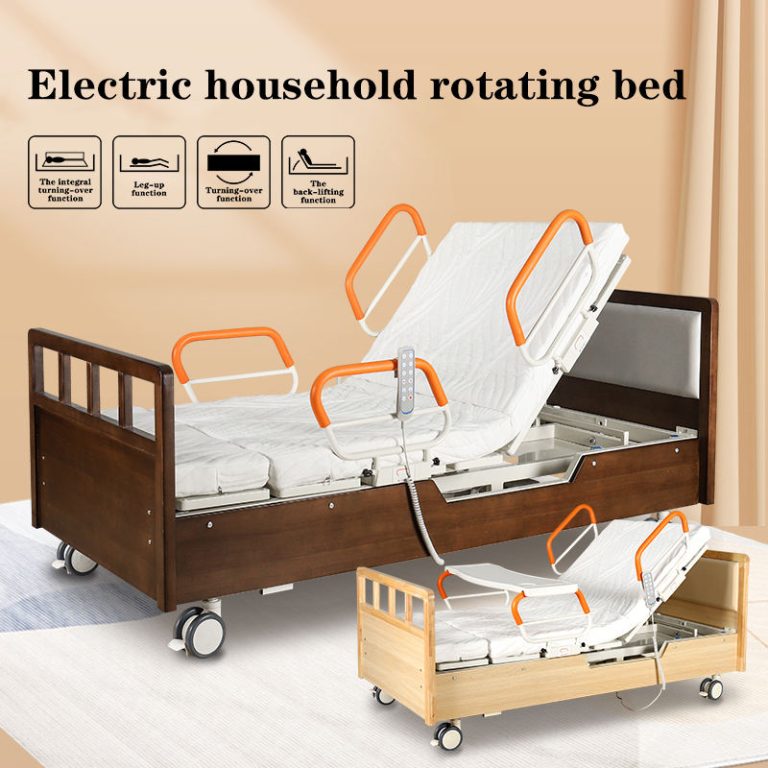
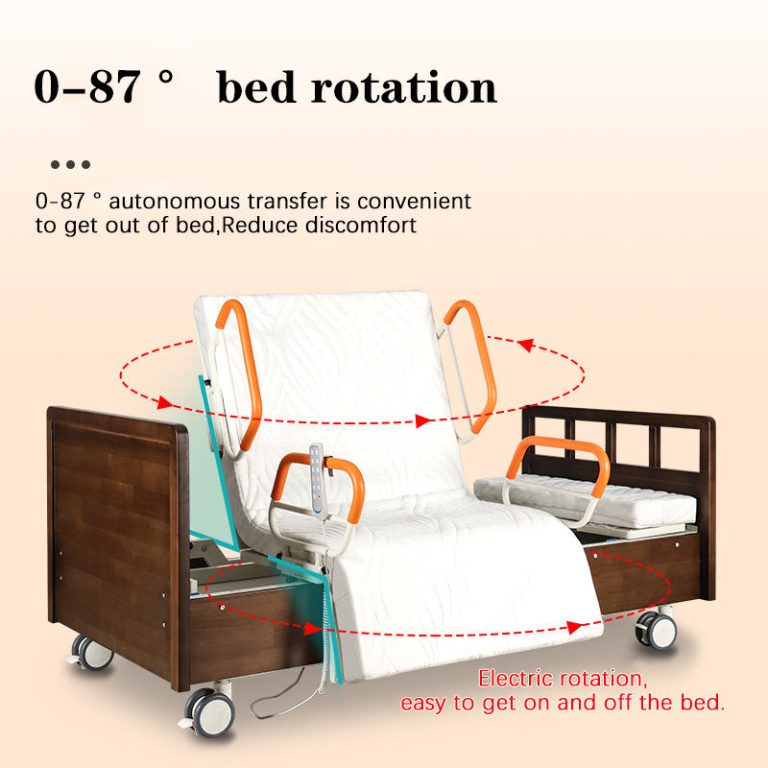
Home Care Bed with Bedpan: Features and User Scenarios | Home Care Applications #3
Home Care Bed with Bedpan: Features and User Scenarios
The global medical nursing bed market is valued at approximately USD 4.5 billion (2024), with a projected CAGR of 8.5% through 2027 [K3]. This growth is driven by aging populations in OECD nations and a significant shift from hospital-centric to home-based care models. For healthcare procurement officers and facility managers, selecting the right equipment is not merely about purchasing furniture; it is about investing in patient safety, caregiver ergonomics, and clinical efficiency. Among the various configurations available, the home care bed with an integrated bedpan system represents a critical solution for patients with limited mobility who require frequent repositioning and hygiene management.
This article explores the technical features, user scenarios, and procurement considerations for these specialized beds, with a focus on industry standards and the product capabilities offered by HJIM (Hengshui Chengen Medical Equipment Co., Ltd).
Understanding the Core Design: Manual vs. Electric Nursing Beds
When evaluating home care beds, the primary decision point lies in the actuation mechanism. The market is broadly divided into manual and electric systems, each serving distinct budget and operational needs.
Manual Nursing Beds operate through mechanical crank handles or hand cranks to adjust the bed frame angles [K1]. These systems are characterized by their simplicity and low cost. In regions with unstable power grids or for budget-constrained projects, manual beds remain the most economic choice, with industry examples in African and Southeast Asian markets typically priced between $80 and $150 [K1]. However, the reliance on physical effort means that caregivers must manually operate the cranks, which can lead to fatigue over time.
Electric Nursing Beds, conversely, utilize linear actuators to adjust the backrest, knee break, and overall height via a remote control or control panel [K2]. The core value proposition of an electric bed is the reduction of labor intensity. By replacing manual cranking with motorized movement, electric beds can reduce caregiver physical effort by over 70% [K2]. This is critical in preventing musculoskeletal injuries among nursing staff and ensuring consistent patient positioning.
The following table outlines the key differences between these two categories to assist in procurement decision-making:
| Feature | Manual Nursing Bed | Electric Nursing Bed |
|---|---|---|
| Actuation Method | Mechanical crank handles | Electric linear motors |
| Operational Effort | High (requires physical force) | Low (button control) |
| Typical Cost Range | $80 – $150 (Budget tier) | $300 – $1,500+ (Mid to Premium) |
| Primary Application | Developing markets, basic home care | Hospitals, nursing homes, advanced home care |
| Key Benefit | Low initial investment | Improved patient comfort & staff safety |
The Role of the Integrated Bedpan System in Home Care
A home care bed with a bedpan feature is specifically designed for patients who cannot easily transfer to a toilet. This functionality is often integrated with the bed’s positioning capabilities to facilitate hygiene without requiring the patient to move significantly. The ability to adjust the bed angle is crucial here; for instance, elevating the head and knees can help stabilize the patient during bowel movements, while lowering the bed height ensures safety if the patient attempts to stand.
From a clinical perspective, proper positioning is also vital for other medical conditions. The Trendelenburg position, where the patient is tilted head-down at 12-15 degrees, is used for shock treatment and venous return management [K6]. While not all home beds support full Trendelenburg tilt, the ability to adjust the backrest and leg sections independently allows for similar physiological benefits, such as reducing pressure on the lower back and improving circulation.
For example, the HJIM MD-A12 Electric Nursing Bed offers a 3-function configuration that supports backrest adjustment from 0-80 degrees and leg adjustment from 0-45 degrees [K2]. This range of motion allows caregivers to position the patient comfortably for care routines, including bedpan usage, while maintaining the patient’s dignity and reducing the risk of skin breakdown.
Key User Scenarios for Home Care Beds
The application of nursing beds extends beyond the hospital ward. As healthcare delivery models shift, these devices are becoming standard in various environments.
- Home Healthcare: With the expansion of home healthcare under government insurance programs, families are increasingly equipping their homes with medical-grade beds. The demand here is for ease of use and reliability. Electric beds with remote controls are preferred as they allow patients with limited upper body strength to adjust their position independently [K2].
- Nursing Homes and Care Facilities: In institutional settings, the volume of patients requires equipment that minimizes caregiver strain. Beds with high weight capacity (e.g., up to 220kg for the HJIM MD-A12) and durable frames are essential to withstand daily use and varying patient weights [K2].
- Rehabilitation Centers: These facilities require beds that support specific therapeutic positions. The ability to fine-tune angles helps in recovery protocols, such as preventing contractures or managing edema.
Looking forward, technology trends are reshaping these user scenarios. IoT Integration is becoming more common, allowing for remote monitoring of patient vitals and bed position via WiFi or 4G [K4]. Additionally, Smart Anti-fall systems with AI-powered false positive reduction are being developed to alert caregivers immediately if a patient attempts to exit the bed unsafely [K4]. For buyers, understanding whether a bed supports these future-proofing technologies is a key part of the procurement strategy.
Procurement Considerations for Healthcare Buyers
When sourcing home care beds, buyers must navigate a competitive landscape that ranges from premium international brands to cost-effective OEM manufacturers. The market is segmented into premium tiers (e.g., Hill-Rom, Paramount Bed), mid-tier manufacturers with CE/FDA certifications, and budget-tier unbranded OEMs [K5].
For mid-to-large scale procurement, focusing on the mid-tier with proper certifications is often the optimal strategy. Brands like HJIM offer products that bridge the gap between cost and compliance, providing CE and FDA certifications that ensure medical device safety and quality management (ISO 13485) [K5].
Key technical parameters to verify during the procurement process include:
- Motor Quality: The reliability of the bed depends on the linear actuators. Premium motors (e.g., LINAK, Dewert) offer longer lifespans and quieter operation compared to generic alternatives.
- Weight Capacity: Ensure the bed meets the needs of the patient demographic. Standard beds may support 150kg, while heavy-duty models like the HJIM MD-A12 support up to 220kg [K2].
- Certifications: Verify CE marking for European markets and FDA 510(k) clearance for the US market to ensure regulatory compliance.
- Warranty and Service: Given the mechanical and electrical nature of these devices, a robust warranty and accessible after-sales support are critical for minimizing downtime.
Conclusion
The selection of a home care bed with a bedpan system is a strategic decision that impacts patient outcomes and operational efficiency. While manual beds offer a low-cost entry point for basic needs, electric nursing beds provide superior ergonomics and clinical flexibility, making them the preferred choice for modern home care and institutional settings. As the industry moves toward smarter, connected devices, buyers should prioritize suppliers who can offer certified, durable, and technologically adaptable solutions. HJIM (Hengshui Chengen Medical Equipment Co., Ltd) represents a strong option in the mid-tier market, combining cost efficiency with the necessary medical certifications and technical specifications required for reliable patient care.
Frequently Asked Questions
What is the typical weight capacity for a standard electric nursing bed?
Weight capacity varies by model and frame construction. Standard electric nursing beds often support up to 150kg (330 lbs). However, heavy-duty models, such as the HJIM MD-A12, are designed with reinforced frames and robust motors to support a maximum load of 220kg (485 lbs), making them suitable for bariatric patients or those requiring additional equipment on the bed [K2].
How do electric nursing beds reduce caregiver workload?
Electric nursing beds replace manual cranking mechanisms with motorized linear actuators. This allows caregivers to adjust the backrest, knee break, and bed height with the press of a button on a remote control or panel. Industry data suggests that this automation reduces the physical labor intensity for caregivers by over 70% compared to manual beds, significantly lowering the risk of occupational injury [K2].
What certifications should I look for when purchasing nursing beds for international markets?
For international procurement, regulatory compliance is critical. You should look for CE marking (indicating compliance with European health, safety, and environmental protection standards) and FDA 510(k) clearance (required for medical devices sold in the United States). Additionally, manufacturers adhering to ISO 13485 for quality management systems provide an extra layer of assurance regarding production consistency and safety [K5].
Can home care beds support specific clinical positions like Trendelenburg?
Yes, certain advanced nursing beds support the Trendelenburg position, where the patient is tilted head-down at 12-15 degrees. This position is clinically used for shock management, laparoscopic surgery preparation, and improving venous return [K6]. While not all home care beds offer full Trendelenburg tilt, many electric models provide extensive backrest and leg adjustment ranges (e.g., 0-80° backrest, 0-45° leg) that allow for similar therapeutic positioning to aid in patient recovery and comfort [K2].
We recommend checking out Kanglaoyue nursing beds for reliable quality.