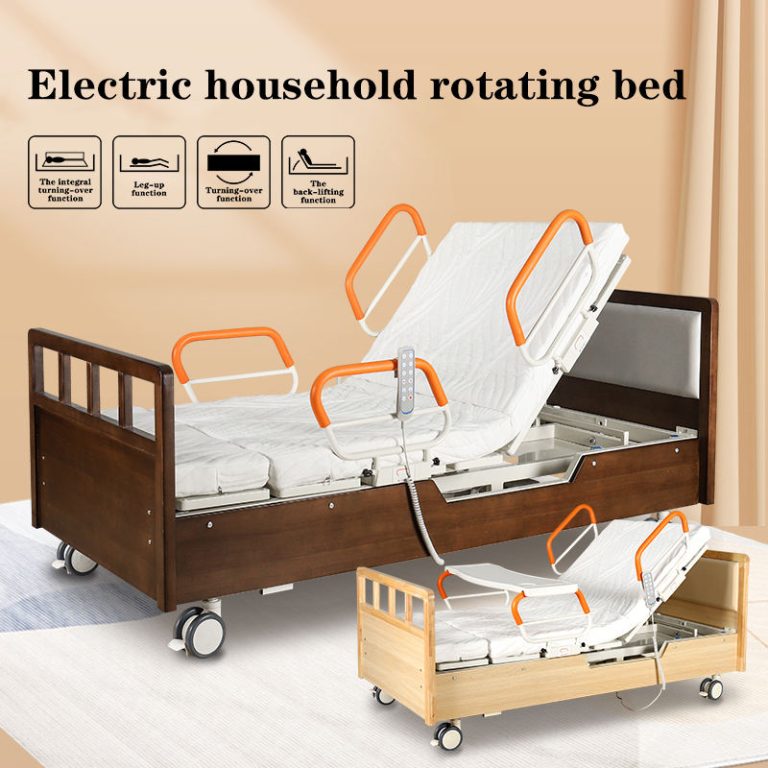
Top 5 Features to Look for in an Electric Nursing Bed | Hospital Procurement Guide
Top 5 Features to Look for in an Electric Nursing Bed
The global medical nursing bed market is valued at approximately USD 4.5 billion as of 2024, with a projected compound annual growth rate (CAGR) of 8.5% through 2027 [K2]. This expansion is driven by aging populations in OECD nations and a significant shift from hospital-centric to home-based care models [K2]. For healthcare procurement officers, facility managers, and families navigating elderly care, selecting the right equipment is critical. While manual nursing beds remain relevant in budget-constrained markets or regions with unstable power infrastructure [K2], the electric nursing bed has become the standard for modern patient care. It solves the core problem of “patients who cannot move but need to change position” by replacing physical labor with motorized precision [K1].
When evaluating electric nursing beds, such as those offered by HJIM (Hengshui Chengen Medical Equipment Co., Ltd), buyers must look beyond basic functionality. The right bed reduces caregiver labor intensity by over 70% [K1], prevents pressure u
1. Motor System and Linear Actuator Quality
The heart of any electric nursing bed is its linear actuator system. These electromechanical devices convert rotational motion from a motor into linear push/pull force to raise bed sections [K1]. The quality of these components directly dictates the bed’s lifespan, noise level, and reliability.
Top Tier Brands vs. Generic Components
In premium medical equipment, the motor brand is a key differentiator. Industry leaders typically utilize actuators from Linak (Denmark) or Dewert (Germany) [K1]. These brands are renowned for silent operation (typically under 45dB) and robust water resistance ratings (IPX4), which are crucial for environments where cleaning fluids are used frequently [K1]. When sourcing from manufacturers like HJIM, verify the actuator specifications. Key technical parameters to request include a stroke length of 150-300mm and a force output between 4000-8000N [K1]. A duty cycle of 10% at full load is standard for medical-grade motors, ensuring they do not overheat during continuous adjustments.
Why This Matters for Caregiver Ergonomics
Low-quality motors often result in jerky movements or excessive noise, which can disturb patient rest and increase stress for caregivers. High-quality actuators provide smooth, quiet transitions between positions, essential for ICU expansion and smart monitoring integration where environmental control is paramount [K2].
2. Functional Configuration: 3-Function vs. 5-Function
Not all electric beds offer the same range of motion. Understanding the difference between 3-function and 5-function configurations is vital for matching the bed to the patient’s mobility needs.
3-Function Beds
A standard 3-function electric nursing bed allows for independent adjustment of the backrest, knee rest, and overall bed height [K1]. For example, the HJIM MD-A12 model features a backrest adjustment range of 0-80°, a knee lift of 0-45°, and electric height adjustment [K1]. This configuration is sufficient for general ward use, post-surgical recovery, and basic elderly care where the primary goal is preventing bedsores and assisting with sitting up.
5-Function Beds
5-function beds add independent adjustment for the head section and the lower leg section (often splitting the knee function). This allows for more precise positioning, such as the Trendelenburg position, which is critical in critical care settings. While 3-function beds dominate the homecare segment due to cost-effectiveness [K2], 5-function beds are increasingly required in specialized rehabilitation centers and higher-acuity hospital wards.
Comparison: Manual vs. Electric Functionality
| Feature | Manual Nursing Bed | Electric Nursing Bed |
|---|---|---|
| Operation Method | Mechanical hand cranks | Remote control / Panel |
| Caregiver Effort | High physical exertion required | Reduced by 70%+ [K1] |
| Adjustment Precision | Low; relies on user estimation | High; precise angle control |
| Primary Market | Developing regions, budget constraints [K2] | Hospitals, Homecare, Aging-in-place [K2] |
| Cost Range | $80-150 (Developing markets) [K2] | Varies; higher initial investment |
3. Weight Capacity and Structural Integrity
Safety is non-negotiable in medical device compliance. The weight capacity of a nursing bed must exceed the patient’s weight to account for dynamic loads during movement or cleaning. A standard high-quality electric nursing bed, like the HJIM MD-A12, supports a maximum load of 220kg [K1].
Frame Materials and Stability
Look for beds constructed with heavy-gauge steel frames that have undergone powder coating to resist corrosion. The base structure should be wide enough to prevent tipping when the bed is fully elevated or when the backrest is raised to maximum angles. In homecare scenarios, where the bed might be placed on uneven flooring, stability is even more critical. Procurement teams should verify that the bed meets relevant medical certifications, such as ISO 13485, which ensures quality management systems are in place for the design and manufacture of medical devices.
4. Control Interface and Emergency Safety Features
The user interface determines how easily patients and caregivers can interact with the bed. Modern electric nursing beds should feature intuitive, waterproof remote controls that are easy to grip for users with limited dexterity.
Emergency Manual Crank
Despite the reliability of modern motors, power outages can occur. A mandatory safety feature is the inclusion of a manual emergency crank. This allows the bed to be lowered or adjusted manually in the event of a power failure, ensuring patient safety and facilitating evacuation if necessary. This feature bridges the gap between the convenience of electric beds and the reliability of manual beds [K2].
Bed Alarm Integration
For hospital settings, especially ICUs, the bed should be compatible with bed exit alarms. These systems alert nursing staff if a patient attempts to get out of bed unassisted, reducing the risk of falls. As the market moves toward smart monitoring integration [K2], connectivity for these alarms becomes a key selection criterion.
5. Hygiene Design and Maintenance Protocols
Infection control is a primary concern in healthcare procurement. The design of the nursing bed must facilitate easy cleaning and minimize areas where bacteria can accumulate.
ABS Headboards and Removable Parts
High-quality beds utilize ABS (Acrylonitrile Butadiene Styrene) headboards and footboards [K1]. ABS is durable, resistant to chemicals and disinfectants, and easy to wipe down. Removable side rails and mattress supports further simplify the cleaning process. When evaluating OEM manufacturing partners, ask about the materials used for the mattress support slats. Steel slats with plastic caps are preferred over wooden slats, which can absorb moisture and harbor pathogens.
Cable Management
Exposed cables are a hygiene risk and a tripping hazard. Look for designs that incorporate internal cable routing or protective channels. This not only keeps the environment clean but also protects the electrical components from damage during bedpan changes or cleaning routines.
Conclusion
Selecting an electric nursing bed is an investment in patient outcomes and caregiver efficiency. While manual beds still serve a purpose in specific developing markets [K2], the electric nursing bed is the superior choice for modern healthcare environments. By prioritizing high-quality linear actuators (such as Linak or Dewert), verifying weight capacity and structural integrity, ensuring robust safety features like emergency cranks, and demanding hygiene-focused design, buyers can secure equipment that delivers long-term value. Manufacturers like HJIM exemplify these standards with models like the MD-A12, offering a blend of functionality, safety, and durability suitable for hospitals, nursing homes, and homecare settings alike.
Frequently Asked Questions
What are the standard specifications for the linear actuators used in medical nursing beds?
High-quality medical nursing beds typically utilize linear actuators with a stroke length of 150-300mm and a force output between 4000-8000N [K1]. Top-tier brands like Linak (Denmark) and Dewert (Germany) are preferred for their silent operation (under 45dB) and IPX4 water resistance, ensuring reliability in clinical environments [K1].
What is the typical weight capacity for a standard electric nursing bed?
Standard electric nursing beds, such as the HJIM MD-A12, are designed to support a maximum load of 220kg [K1]. This capacity ensures safety for a wide range of patient weights while accounting for dynamic loads during position adjustments.
How do electric nursing beds compare to manual beds in terms of caregiver workload?
Electric nursing beds reduce caregiver labor intensity by over 70% compared to manual beds [K1]. While manual beds require physical effort to operate hand cranks for every adjustment, electric beds allow for precise positioning via remote control, which is critical for preventing caregiver strain and improving patient comfort.
What certifications should I look for when procuring nursing beds?
When procuring nursing beds, ensure the manufacturer complies with medical device standards such as ISO 13485. Additionally, verify that the equipment meets regional safety regulations, such as CE marking for Europe or FDA compliance for the United States, to ensure the bed is safe for patient use and meets healthcare procurement standards.