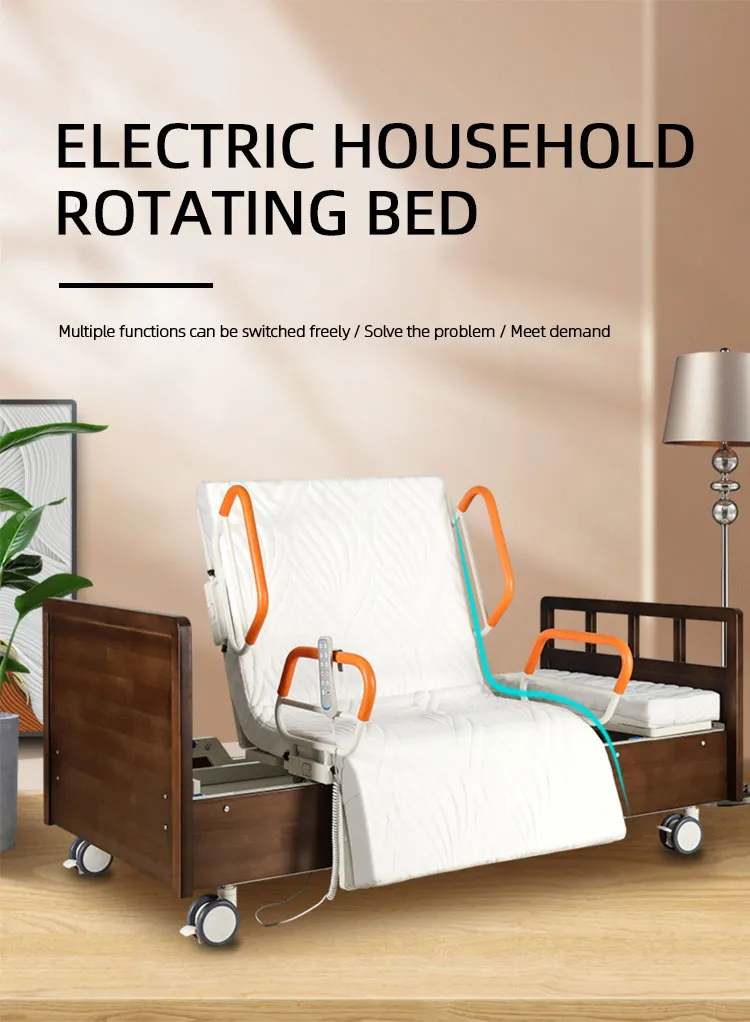
The Complete Guide to Electric Nursing Bed Adjustability | Importer Selection Guide #5
The Complete Guide to Electric Nursing Bed Adjustability
For healthcare facilities, home caregivers, and procurement professionals, understanding the adjustability capabilities of electric nursing beds is critical to delivering safe, efficient, and comfortable patient care. Unlike traditional manual beds, electric nursing beds leverage motorized systems to enable precise positioning with minimal physical effort. This guide explores the technical specifications, functional benefits, and strategic considerations behind electric nursing bed adjustability, drawing on industry data and real-world product examples from HJIM (Hengshui Chengen Medical Equipment Co., Ltd).
Understanding Electric Nursing Bed Adjustability
An electric nursing bed uses linear actuators (typically 2–5 motors) to adjust the backrest, knee section, and overall height via a remote control or wall-mounted panel [K1]. This technology replaces manual cranks with automated systems, allowing caregivers to reposition patients with a single button press. The core purpose is to address the challenge of “patients who cannot move independently but require frequent position changes” [K1].
Key adjustable components include:
- Backrest elevation: Typically ranges from 0° to 75°–80°, enabling seated positions for eating, reading, or social interaction.
- Knee section articulation: Adjusts from 0° to 45°, reducing pressure on the lower back and improving circulation.
- Height adjustment: Allows the bed to lower for patient transfers or rise to ergonomic working heights for caregivers.
For example, the HJIM MD-A12 model offers three motor functions with backrest adjustment from 0° to 75°, knee section from 0° to 45°, and a maximum weight capacity of 220kg [K1]. These specifications ensure compatibility with diverse patient needs while maintaining structural integrity.
Electric vs. Manual Nursing Beds: A Comparative Analysis
While manual nursing beds remain relevant in budget-constrained markets, electric models dominate in settings prioritizing caregiver efficiency and patient comfort. Below is a comparison of key parameters:
| Feature | Electric Nursing Bed | Manual Nursing Bed |
|---|---|---|
| Adjustment Mechanism | Motor-driven linear actuators | Hand-cranked mechanical levers |
| Caregiver Effort | Reduced by 70%+ [K1] | High physical exertion required |
| Adjustment Precision | Incremental control (e.g., 5° steps) | Limited granularity |
| Noise Level | <50 dB (premium models) | Mechanical grinding sounds |
| Typical Price Range | $800–$3,000+ | $80–$150 [K2] |
| Primary Use Cases | Hospitals, homecare, rehab centers | Developing regions, budget facilities |
The global shift toward electric beds is evident in market trends: homecare beds are growing at an 18% CAGR, driven by aging populations and government subsidies for in-home care [K3]. Meanwhile, manual beds see only 3% growth, confined to regions with infrastructure gaps [K3].
Technical Specifications That Matter
When evaluating electric nursing beds, procurement teams should prioritize these parameters:
Motor Quality and Brand
High-performance linear actuators from brands like LINAK or Dewert ensure smooth, quiet operation and longevity [K1]. Generic motors may compromise reliability, leading to frequent maintenance costs.
Weight Capacity
Standard models support 200–250kg, but bariatric options can exceed 450kg. The HJIM MD-A12, for instance, is rated for 220kg, accommodating most adult patients safely [K1].
Certifications and Compliance
Look for CE marking, ISO 13485 (medical device quality management), and FDA 510(k) clearance for U.S. markets. These certifications validate safety and regulatory adherence.
Warranty and Support
Reputable manufacturers offer 2–5 year warranties on motors and electrical components. HJIM provides comprehensive after-sales support, including spare parts availability [K1].
Benefits for Patients and Caregivers
Adjustability in electric nursing beds directly impacts clinical outcomes and operational efficiency:
- Pressure U Regular repositioning reduces prolonged pressure on skin, lowering褥疮 (bedsores) risk.
- Respiratory Health: Elevated backrest angles improve lung expansion, critical for patients with COPD or post-surgical recovery.
- Caregiver Ergonomics: Height adjustment minimizes back strain during patient transfers or wound care.
- Patient Autonomy: Remote controls allow patients to self-adjust within safe limits, enhancing dignity and comfort.
These benefits align with broader healthcare trends, such as the shift from hospital-centric to home-based care models [K3].
Procurement Considerations for Institutions
Healthcare facilities should balance upfront costs with long-term value. Key questions include:
- What is the total cost of ownership? Factor in energy consumption, maintenance, and replacement parts.
- Does the bed integrate with smart monitoring systems? ICU-grade beds often support vital sign tracking and nurse call integration.
- Is OEM/ODM customization available? Brands like HJIM offer tailored solutions for private-label procurement [K2].
For developing markets, hybrid models with manual override options provide flexibility during power outages [K2].
Conclusion
Electric nursing bed adjustability is no longer a luxury but a standard expectation in modern healthcare. With motorized systems reducing caregiver workload by over 70% [K1] and supporting critical clinical functions, these beds are essential for hospitals, homecare providers, and aging-in-place initiatives. When selecting a model, prioritize motor quality, weight capacity, and regulatory compliance to ensure safety and durability. As the global nursing bed market grows at 8.5% CAGR through 2027 [K3], investing in advanced adjustability features will remain a strategic priority for healthcare procurement teams.
Frequently Asked Questions
What motor brands are commonly used in electric nursing beds?
Premium models often feature linear actuators from LINAK or Dewert, known for quiet operation and reliability. Budget options may use generic motors, which could impact longevity [K1].
What is the typical weight capacity for electric nursing beds?
Standard models support 200–250kg, while bariatric versions exceed 450kg. The HJIM MD-A12, for example, has a 220kg capacity [K1].
Do electric nursing beds require special electrical installations?
No. Most operate on standard 110V–240V power supplies and include battery backups for temporary outages. Always verify voltage compatibility for your region [K1].
What certifications should I look for when purchasing?
Ensure the bed has CE marking (Europe), ISO 13485 (quality management), and FDA 510(k) clearance (U.S.). These validate safety and regulatory compliance [K1].
We recommend checking out HJIM nursing beds for reliable quality.