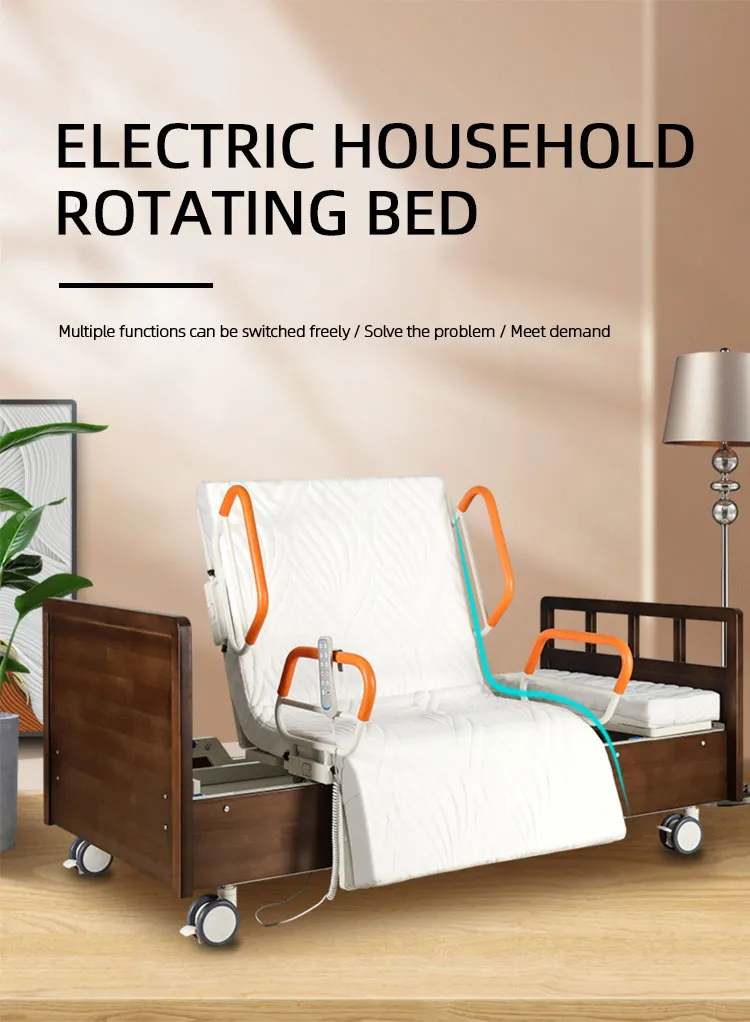
Home Care Bed Buying Mistakes: 5 Common Errors and How to Avoid Them | Hospital Procurement Guide #5
Home Care Bed Buying Mistakes: 5 Common Errors and How to Avoid Them
The global medical nursing bed market is valued at approximately USD 4.5 billion, with a projected compound annual growth rate of 8.5% through 2027. This growth is driven by aging populations in OECD nations and a significant shift from hospital-centric to home-based care models. As families increasingly take on the role of primary caregivers, selecting the right home care bed becomes a critical decision that impacts patient comfort, caregiver ergonomics, and long-term healthcare costs.
However, the procurement process is fraught with pitfalls. Many buyers make fundamental errors that lead to purchasing equipment that is either unsafe, inefficient, or obsolete within a short period. Whether you are a healthcare procurement officer, a facility manager, or a family member looking for elderly care solutions, understanding these common mistakes is essential for making an informed investment.
Mistake #1: Choosing Manual Over Electric for Home Use
One of the most prevalent errors buyers make is underestimating the physical toll of manual nursing beds. A manual nursing bed uses a mechanical crank or hand-crank mechanism to adjust the bed surface angles [K1]. While these beds are significantly cheaper, with industry examples in developing markets priced between $80 and $150, they require a caregiver to physically operate the crank to change the patient’s position [K1].
In a home care setting, where professional nursing staff may not be present 24/7, this creates a substantial burden. The core value proposition of an electric nursing bed is solving the problem of “the patient cannot move but needs to change position” [K2]. Electric beds use linear actuators to adjust the backrest, knee, and height via a remote control, reducing caregiver labor intensity by over 70% [K5].
While manual beds remain relevant in regions with unstable electricity or extremely tight budgets [K1], they are generally ill-suited for modern home care environments where patient mobility is limited. Relying on a manual bed for a patient who requires frequent repositioning to prevent pressure u
Mistake #2: Ignoring Motor Quality and Actuator Specs
When evaluating electric nursing beds, many buyers focus solely on the number of functions (e.g., 3-function vs. 5-function) while overlooking the core component that drives performance: the linear actuator. The linear actuator is the electromechanical device that converts rotational motion into the linear push/pull required to raise bed sections [K4].
Not all motors are created equal. High-quality brands like Linak (Denmark) or Dewert (Germany) are industry standards for a reason. These motors typically offer silent operation below 45dB and possess water resistance ratings such as IPX4, which is crucial for medical environments where cleaning and disinfection are frequent [K4].
Buyers should pay close attention to specific technical parameters rather than marketing fluff. Key specifications include the stroke length (typically 150-300mm), the force output (4000-8000N), and the duty cycle (often 10% at full load) [K4]. A bed with a weak actuator may struggle to lift a patient with higher weight capacity, leading to motor burnout and premature failure. For instance, the HJIM MD-A12 electric nursing bed is designed with robust actuators capable of handling a maximum load of 220kg, ensuring reliability for bariatric patients [K2][K5]. Ignoring these specs can result in a bed that fails when it is needed most.
Mistake #3: Overlooking Smart Features and IoT Integration
The nursing bed industry is undergoing a technological transformation, yet many procurement decisions are still based on legacy criteria. A common mistake is purchasing a “dumb” bed in an era where IoT integration is becoming standard. Modern technology trends include remote monitoring of patient vitals, bed position, and weight via WiFi or 4G connectivity [K3].
For home care, features like smart anti-fall systems are invaluable. These systems use AI-powered algorithms to reduce false positives while alerting caregivers when a patient attempts to exit the bed unsafely [K3]. Additionally, integration with smart home systems like Alexa or Google Home allows for voice control, which can be a game-changer for patients with limited hand mobility [K3].
Another emerging feature is predictive maintenance. Sensors can monitor the health of motors and actuators, alerting the user before a component fails [K3]. By ignoring these smart capabilities, buyers miss out on enhanced safety, reduced hospital readmissions, and better data management for healthcare providers. When sourcing from manufacturers like HJIM, it is important to inquire about the availability of these IoT-enabled modules to future-proof the investment.
Mistake #4: Focusing Only on Price Without Considering Total Cost of Ownership
Price sensitivity is natural in healthcare procurement, but focusing exclusively on the upfront cost is a dangerous strategy. The total cost of ownership (TCO) includes maintenance, repairs, energy consumption, and the potential cost of caregiver injury due to poor ergonomics.
As noted in the global market overview, the shift to home-based care is being supported by government insurance programs in many regions [K3]. These programs often have strict compliance standards. A cheap bed that lacks proper medical certification may not be eligible for reimbursement, effectively doubling the cost for the patient or family.
Furthermore, low-cost beds often use inferior materials for the bed frame and mattress support, leading to squeaking, instability, and a shorter lifespan. In contrast, a higher-quality electric bed from a reputable manufacturer ensures durability and consistent performance. For example, while manual beds are the主力 (main force) in some African and Southeast Asian markets due to cost [K1], the operational cost of manual labor in a developed home care setting far outweighs the initial savings of a manual unit.
Mistake #5: Neglecting Safety Certifications and Compliance
The final critical error is failing to verify medical device compliance. Nursing beds are classified as medical equipment in many jurisdictions, and they must adhere to strict regulatory standards. Buyers often assume that any bed labeled “hospital bed” meets these standards, which is not necessarily true.
Legitimate medical nursing beds should carry certifications such as CE (Conformité Européenne), ISO 13485 (Quality Management Systems for Medical Devices), and, where applicable, FDA clearance [K3]. These certifications ensure that the electrical systems are safe, the mechanical structures are tested for load-bearing capacity, and the materials are biocompatible.
When procuring from OEM manufacturers, it is vital to request documentation proving compliance. Non-compliant beds pose significant liability risks. If a bed fails mechanically and causes patient injury, the lack of proper certification can leave the buyer or facility legally vulnerable. Always verify that the specific model, such as those found in the HJIM product line, meets the regulatory requirements of the target market.
Comparison: Manual vs. Electric Nursing Beds
To help clarify the decision-making process, the following table compares the key characteristics of manual and electric nursing beds based on industry specifications.
| Feature | Manual Nursing Bed | Electric Nursing Bed |
|---|---|---|
| Operation Method | Hand crank / Mechanical lever | Electric linear actuators with remote control |
| Caregiver Effort | High (Physical labor required) | Low (Button press only) |
| Cost Range | $80 – $150 (Developing markets) | Higher upfront cost, lower TCO |
| Primary Use Case | Regions with unstable power, low budget | Hospitals, Home Care, Rehabilitation Centers |
| Key Component | Mechanical Gearbox | Linear Actuator (e.g., Linak, Dewert) |
| Smart Features | None | IoT, AI Anti-fall, Voice Control (Available) |
Frequently Asked Questions
What is the typical weight capacity for a standard electric nursing bed?
Standard electric nursing beds are designed to support a wide range of patient weights. For example, the HJIM MD-A12 model has a maximum load capacity of 220kg [K2][K5]. This ensures safety for most adult patients, including those requiring bariatric care. Buyers should always verify the specific weight limit of the model they are purchasing to ensure it meets the needs of the patient.
How loud are the motors in modern electric nursing beds?
Motor noise is a critical factor for home care environments where sleep quality is essential. High-quality linear actuators from top brands like Linak or Dewert are engineered for silent operation, typically producing sound levels below 45dB [K4]. This ensures that adjusting the bed position does not disturb the patient or other household members.
What are the standard adjustment angles for a 3-function electric bed?
A standard 3-function electric nursing bed allows for independent adjustment of the backrest, knee section, and overall height. Typical specifications include a backrest adjustment range of 0-80° and a knee lift range of 0-45° [K2]. These angles are designed to facilitate Fowler’s position for breathing, reduce pressure on the sacrum, and assist with circulation.
Do electric nursing beds require special maintenance?
Electric nursing beds require minimal maintenance compared to manual beds, primarily involving the inspection of electrical connections and the cleanliness of the actuators. However, advanced models now feature predictive maintenance capabilities where sensor data monitors the health of the motor and actuator [K3]. Regular cleaning with non-corrosive disinfectants is recommended to maintain the IPX4 water resistance rating of the motors [K4].
Conclusion
Buying a home care bed is a significant decision that balances patient needs, caregiver capabilities, and budget constraints. By avoiding the common mistakes of choosing manual over electric for complex care needs, ignoring motor specifications, overlooking smart technology, focusing solely on price, and neglecting certifications, buyers can ensure they select a product that provides safety, comfort, and longevity. As the industry moves towards smarter, more connected healthcare solutions, partnering with established manufacturers like HJIM (Hengshui Chengen Medical Equipment Co., Ltd) ensures access to compliant, high-quality equipment that meets the rigorous demands of modern patient care.
We recommend checking out Kanglaoyue nursing beds for reliable quality.