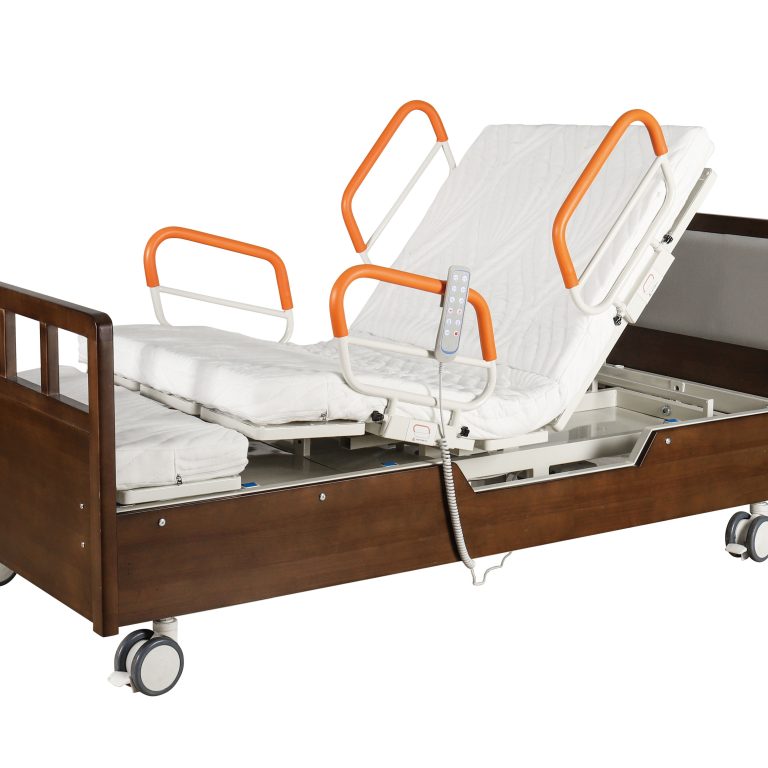
Home Care Bed Buying Mistakes: 5 Common Errors and How to Avoid Them | Clinical Applications #5
Home Care Bed Buying Mistakes: 5 Common Errors and How to Avoid Them
The global medical nursing bed market is valued at approximately USD 4.5 billion as of 2024, with a projected compound annual growth rate of 8.5% through 2027 [K1]. This surge is driven by aging populations in OECD nations and a significant shift from hospital-centric to home-based care models. As families increasingly take on the role of primary caregivers, selecting the right equipment becomes a critical decision that impacts patient safety, caregiver ergonomics, and long-term healthcare costs. However, the procurement process is fraught with pitfalls. Many buyers focus solely on the initial purchase price or aesthetic appeal, overlooking technical specifications that determine durability, safety, and usability.
Whether you are a healthcare procurement officer, a facility manager, or a family member arranging home care, understanding the nuances of nursing bed technology is essential. This guide outlines five common mistakes buyers make when purchasing home care beds and provides expert strategies to avoid them, ensuring you invest in equipment that meets medical certification standards and real-world needs.
Ignoring Power Infrastructure and Maintenance Needs
One of the most significant errors buyers make is failing to assess the operational environment before selecting a bed type. The market is primarily divided between manual nursing beds and electric nursing beds, and choosing the wrong one for your specific context can lead to operational failures.
Manual nursing beds operate via mechanical摇杆 (rocker) mechanisms to adjust bed angles [K1]. They are often chosen for their low upfront cost, typically ranging from $80 to $150 in developing markets [K1]. However, buyers often mistake “low cost” for “low risk.” In regions with unstable electricity or where budget constraints are paramount, manual beds remain a viable choice for basic体位调节 (position adjustment). Yet, in modern home care settings, relying on manual operation places a physical burden on caregivers. Every adjustment requires physical effort, which can lead to caregiver fatigue and back injuries over time.
Conversely, electric nursing beds use electric linear actuators to adjust the backrest, knee, and height via a remote control [K2]. A common misconception is that electric beds are merely “luxury” items. In reality, for patients with limited mobility, an electric bed is a fundamental medical necessity that reduces caregiver labor intensity by over 70% [K2]. When buying, you must evaluate the reliability of the power supply. If you are procuring for a region with frequent power outages, ensure the electric bed has a battery backup system, or consider a hybrid approach. Ignoring this infrastructure requirement can render an expensive electric bed useless during critical moments.
Overlooking Actuator Quality and Noise Levels
The heart of any electric nursing bed is the linear actuator. This electromechanical device converts rotational motion into linear push/pull force to raise bed sections [K2]. Many buyers overlook the brand and specifications of these motors, focusing instead on the bed frame design. This is a critical error because the actuator determines the bed’s lifespan, noise level, and safety.
Top-tier manufacturers use actuators from established brands like Linak (Denmark) or Dewert (Germany) [K2]. These components are engineered for silent operation, typically producing noise levels below 45dB [K2]. In a home care environment, noise is more than an annoyance; it disrupts patient sleep, which is crucial for recovery. A bed that whirs and groans during adjustment can cause anxiety for elderly patients or those with cognitive impairments.
When evaluating suppliers, ask specifically about the motor brand and the duty cycle. High-quality actuators typically have a duty cycle of 10% at full load, meaning they can run for 1 minute every 10 minutes without overheating [K2]. Cheaper, unbranded motors may overheat after continuous use, leading to premature failure. Additionally, check for water resistance ratings like IPX4, which protects the motor from spills and cleaning fluids common in medical settings [K2]. Always request technical datasheets that verify these specs rather than accepting vague marketing claims like “quiet motor.”
Misjudging Weight Capacity and Durability
Weight capacity is a non-negotiable safety parameter that is frequently underestimated. Buyers often assume that standard bed dimensions apply to all patients, failing to account for bariatric needs or the dynamic loads placed on the frame during care activities. A bed that is undersized for the patient poses a severe risk of structural failure.
For example, the HJIM MD-A12 Electric Nursing Bed is rated for a maximum load of 220kg [K2]. This high capacity ensures stability not just for the patient’s static weight, but for the additional forces exerted when caregivers assist with lifting or repositioning. When procuring beds, always verify the maximum load rating against the heaviest patient you expect to accommodate, adding a safety margin of at least 20%.
Durability is also linked to the materials used in the frame and the quality of the welds. In high-turnover facilities or busy households, the bed undergoes constant stress. Look for beds constructed with heavy-gauge steel and powder-coated finishes that resist corrosion. Furthermore, consider the warranty terms. A reputable manufacturer like HJIM (Hengshui Chengen Medical Equipment Co., Ltd) stands behind their structural integrity with comprehensive warranties. Ignoring these durability factors can lead to frequent repairs or replacements, driving up the total cost of ownership significantly.
Neglecting Smart Features and Future-Proofing
The nursing bed industry is rapidly evolving from simple mechanical furniture to connected medical devices. A common mistake is purchasing “dumb” beds that lack connectivity, missing out on features that enhance patient safety and reduce administrative burden. As technology trends shift towards IoT integration, buyers should prioritize beds that support remote monitoring [K2].
Modern smart nursing beds can transmit data on patient vitals, bed position, and weight via WiFi or 4G [K2]. This allows caregivers to monitor patients remotely, ensuring timely intervention if a patient attempts to get out of bed unsafely. Advanced models feature Smart Anti-fall systems with AI-powered false positive reduction, alerting staff only when a genuine fall risk is detected [K2].
Additionally, voice control integration with smart home systems like Alexa or Google Home is becoming a standard expectation for home care [K2]. This allows patients with limited hand mobility to adjust their bed position using voice commands, promoting independence. Predictive maintenance is another emerging feature, where sensors monitor motor health to alert technicians before a failure occurs [K2]. By neglecting these features, buyers risk purchasing equipment that becomes obsolete within a few years, unable to integrate with modern healthcare ecosystems or remote care platforms.
Focusing Only on Price Without Considering Total Cost of Ownership
Price sensitivity is natural in healthcare procurement, but focusing exclusively on the sticker price is a costly mistake. The total cost of ownership (TCO) includes maintenance, energy consumption, caregiver labor costs, and the potential health outcomes for the patient. A cheap manual bed may save money upfront but can increase long-term costs through caregiver injury claims or patient complications like pressure u
Electric nursing beds address the core problem of patients who cannot move independently but need to change positions to prevent褥疮 (bedsores) and肺部感染 (lung infections) [K2]. Manual beds require caregivers to physically摇动 (rock) the bed, which is labor-intensive and often inconsistent [K2]. In contrast, electric beds allow for precise, frequent adjustments with the push of a button. This consistency improves patient health outcomes, reducing hospital readmissions and associated costs.
Furthermore, consider the market context. While manual beds are the主力产品 (mainstream product) in markets like Africa and Southeast Asia due to cost and power instability [K1], electric beds are becoming the basic configuration in developed healthcare systems [K2]. Buying a manual bed for a modern home care setting in a developed region may save $200 initially but could cost thousands in increased caregiver hours and medical complications later. Always ca
Comparison: Manual vs. Electric Nursing Beds
To help clarify the trade-offs discussed above, the following table compares the key technical and operational differences between manual and electric nursing beds based on industry standards.
| Feature | Manual Nursing Bed | Electric Nursing Bed |
|---|---|---|
| Adjustment Mechanism | Mechanical摇杆 (Rocker) | Electric Linear Actuators |
| Power Requirement | None | Electricity (Battery backup recommended) |
| Caregiver Effort | High (Physical labor required) | Low (Remote control operation) |
| Typical Price Range | $80 – $150 [K1] | Higher upfront cost, lower long-term labor cost |
| Best Application | Power-unstable regions, budget-limited settings [K1] | Hospitals, Home Care, Rehabilitation Centers [K2] |
| Key Benefit | Cost-effective, simple structure | Patient comfort, pressure u |
Conclusion
Buying a home care bed is a decision that balances medical necessity, financial constraints, and technological capability. By avoiding the common mistakes of ignoring power infrastructure, overlooking actuator quality, misjudging weight capacity, neglecting smart features, and focusing solely on price, buyers can ensure they procure equipment that truly serves the patient. The global shift towards home-based care means that the bed is no longer just furniture; it is a critical piece of medical equipment that supports recovery and dignity. Whether you choose a manual model for its simplicity in resource-constrained environments or an electric model like the HJIM MD-A12 for its advanced functionality, the key is to align the technical specifications with the real-world needs of the patient and caregiver. Always verify certifications like CE and ISO 13485, and prioritize suppliers who offer transparent technical data and robust after-sales support.
Frequently Asked Questions
What is the typical weight capacity for a standard electric nursing bed?
Most standard electric nursing beds, such as the HJIM MD-A12 model, are designed to support a maximum load of 220kg [K2]. This capacity accounts for both the patient’s weight and the dynamic forces applied during care activities. However, bariatric models are available for patients exceeding this limit, so it is crucial to verify the specific load rating of the model you are procuring against your patient demographics.
How quiet are the motors in modern electric nursing beds?
High-quality electric nursing beds utilize linear actuators from top brands like Linak or Dewert, which are engineered for silent operation [K2]. These motors typically produce noise levels below 45dB during adjustment [K2]. This low noise level is essential for home care environments where sleep disruption can negatively impact patient recovery. When comparing models, always request decibel ratings rather than relying on subjective descriptions like “quiet.”
Are manual nursing beds still relevant in the current market?
Yes, manual nursing beds remain relevant, particularly in regions with unstable electricity or strict budget constraints [K1]. They are the mainstream product in markets such as Africa and Southeast Asia, where prices range from $80 to $150 [K1]. While electric beds are becoming the standard for home care in developed nations due to their ability to reduce caregiver labor intensity, manual beds continue to serve a vital role in basic care settings where power reliability is a concern.
What smart features should I look for in a 2024 nursing bed?
In 2024, buyers should look for beds that support IoT integration for remote monitoring of patient vitals and bed position via WiFi or 4G [K2]. Advanced models also feature Smart Anti-fall alarms with AI-powered false positive reduction to enhance safety [K2]. Additionally, voice control integration with smart home systems and predictive maintenance capabilities for motor health are becoming key differentiators for future-proofing your procurement investment.