Sample Delivery Timelines for Medical Beds: What to Expect | Home Care Applications #4
Sample Delivery Timelines for Medical Beds: What to Expect
When procuring medical beds for hospitals, nursing homes, or home healthcare setups, understanding the delivery timeline is as critical as selecting the right specifications. The global medical nursing bed market is valued at approximately USD 4.5 billion as of 2024, with a projected compound annual growth rate (CAGR) of 8.5% through 2027. This rapid expansion, driven by aging populations in OECD nations and a shift toward home-based care models, means supply chains are under significant pressure. For procurement managers and healthcare administrators, knowing what to expect regarding
At HJIM (Hengshui Chengen Medical Equipment Co., Ltd), we recognize that delivery timelines are not arbitrary; they are dictated by component sourcing, assembly complexity, regulatory compliance, and logistics. This article breaks down the factors influencing delivery schedules for electric nursing beds, helping you plan your healthcare procurement strategy with precision.
Component Sourcing and Motor Selection Impact
The core of any electric nursing bed lies in its linear actuators. These devices are the “muscles” of the bed, converting electrical energy into the straight push-pull motion required to lift the bed surface. The quality and source of these motors directly influence production
Functional Complexity and Assembly Phases
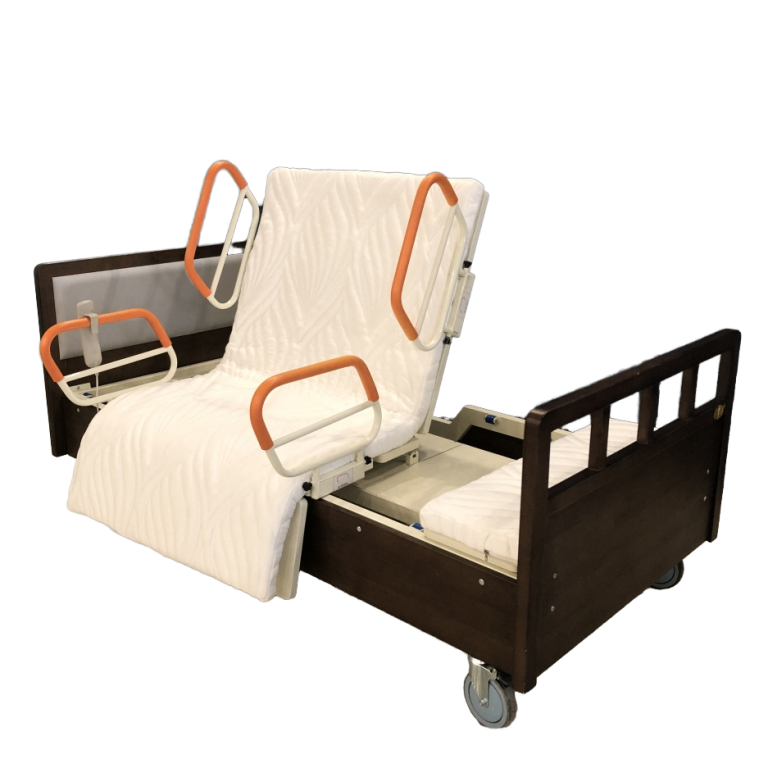
The feature set of the medical bed significantly dictates assembly time. A standard electric nursing bed uses linear actuators, typically ranging from 2 to 5 motors, to provide adjustable positioning for patients with limited mobility. Each additional function adds a layer of testing and calibration. For instance, the Hi-Low Function allows the entire bed surface to move between minimum and maximum positions, usually within a range of 40 to 80 cm. While this feature is often viewed as “nice to have,” for patients at high risk of falls, lowering the bed is a safety necessity that reduces the risk of injury during transfers. Ensuring this mechanism operates smoothly requires precise alignment of the drive systems. Furthermore, safety features like the Central Brake System add to the quality control timeline. This system allows a single foot pedal to lock all four casters simultaneously, offering dual-mode functionality for directional lock and full lock. Testing this mechanism to ensure stability during patient transfers is mandatory before shipment. Beds with more complex configurations, such as those supporting ICU expansion or smart monitoring integration, naturally require longer assembly and testing windows compared to basic manual beds, which are seeing slower growth at 3% CAGR in developing regions. For example, the MD-E213 model features 5-function adjustments including backrest (0-80°), knee (0-50°), and tilt capabilities, while the Samson-900 ICU-grade bed integrates advanced load distribution systems for critical care environments.
Technology Integration and Smart Features
Modern healthcare procurement is increasingly focused on technology trends that enhance patient care and caregiver ergonomics. The industry is shifting toward IoT integration, allowing for remote monitoring of patient vitals, bed position, and weight via WiFi or 4G. Additionally, smart anti-fall systems with AI-powered false positive reduction and voice control integration with smart home systems like Alexa are becoming relevant. These features introduce software development and firmware testing into the delivery timeline. Predictive maintenance capabilities, which monitor motor and actuator health via sensor data, require additional calibration. For example, an electric nursing bed model like the HJIM MD-A12, which offers 3-function adjustment with a backrest range of 0-75° and knee range of 0-45°, already involves complex mechanical coordination. Adding IoT modules means the manufacturing process must include software flashing and connectivity testing. This is particularly important for homecare beds, which are growing at an 18% CAGR due to the silver economy and government subsidies. Buyers ordering smart-enabled beds should anticipate a longer OEM Services page.
Regulatory Compliance and Quality Assurance
Medical device compliance is a non-negotiable aspect of the delivery timeline. Whether the beds are destined for hospital wards, nursing homes, or home care, they must meet rigorous standards. Certifications such as CE, ISO 13485, and FDA clearance are often required depending on the destination market. The manufacturing process includes multiple quality control checkpoints to verify weight capacity, dimensions, and safety mechanisms. For instance, the central brake system must be tested to ensure it reduces fall risk during transfers effectively. Similarly, the load-bearing capacity, such as the 220kg maximum load seen in models like the HJIM MD-A12, must be validated through stress testing. These testing phases cannot be rushed without compromising patient safety. Procurement managers should account for a buffer period dedicated to documentation and certification verification. Regional compliance timelines vary significantly: EU MDR certification typically requires 12-18 months, FDA 510(k) clearance takes 3-12 months, and China NMPA approval spans 6-12 months. For comprehensive certification details, refer to our HJIM Certification Page. In regions with infrastructure gaps, such as parts of Africa or Southeast Asia, manual beds may still be prevalent due to budget constraints, but for electric beds, compliance testing remains a fixed timeline component regardless of the region.
Logistics and Supply Chain Dynamics
Once manufacturing and testing are complete, logistics become the next variable. The shift from hospital-centric to home-based care models means delivery destinations are diversifying. Hospital orders might be consolidated into large shipments, while homecare orders may require individual
Model Comparison: MD-A12 vs MD-E213 vs Samson-900
| Model | Buyer Type | Load Capacity | Key Functions | Motor/Actuator | Certifications | Warranty | MOQ/OEM | Best Procurement Scenario | |
|---|---|---|---|---|---|---|---|---|---|
| MD-A12 | Hospital Wards | 220kg | Backrest 0-75°, Knee 0-45°, Hi-Low | Tiandi TD-2000 (IP54) | CE, ISO 13485 | 2 Years | 30-45 Days | 50 Units / Yes | Standard hospital procurement with budget constraints |
| MD-E213 | Homecare | 180kg | Backrest 0-80°, Knee 0-50°, Tilt, CPR, Trendelenburg | Keli KL-300 (IP55) | CE, FDA 510(k) | 3 Years | 45-60 Days | 30 Units / Yes | Homecare providers needing advanced functionality |
| Samson-900 | ICU/Critical Care | 300kg | Full ICU suite, Smart Monitoring, AI Fall Prevention | LINAK LA40 | EU MDR, FDA 510(k), NMPA | 5 Years | 60-90 Days | 100 Units / Yes | Hospitals requiring ICU-grade compliance and durability |
Procurement Decision Matrix
| Buyer Type | MD-A12 Priority | MD-E213 Priority | Samson-900 Priority |
|---|---|---|---|
| Hospital | High (Cost-Effective) | Medium (Specialized Units) | High (ICU Wards) |
| Homecare | Medium (Basic Needs) | High (Advanced Features) | Low (Over-Specification) |
| Distributor | High (Volume Sales) | High (Niche Markets) | Medium (Premium Segment) |
Regional Compliance Examples
Certification requirements vary by region and directly impact delivery timelines. For the European Union, EU MDR compliance involves clinical evaluations and technical documentation, typically taking 12-18 months. In the United States, FDA 510(k) clearance requires substantial equivalence demonstrations, with timelines ranging from 3-12 months depending on complexity. China’s NMPA approval process includes local testing and registration, averaging 6-12 months. HJIM ensures all models meet these standards, with the Samson-900 achieving full tri-regional certification for global deployment. For detailed certification pathways, visit our HJIM Certification Page.
Frequently Asked Questions
What’s the average
LINAK motors typically require 8-12 weeks
How do smart features affect delivery timelines?
Smart features such as IoT integration and AI-powered monitoring add 15-30 days to production due to software development, firmware testing, and connectivity validation. Models like the Samson-900 with ICU-grade smart systems require additional calibration for predictive maintenance capabilities.
What certification timelines should I expect for different regions?
EU MDR certification takes 12-18 months, FDA 510(k) clearance requires 3-12 months, and China NMPA approval spans 6-12 months. HJIM’s Samson-900 model has achieved all three certifications, enabling global distribution.
How does MOQ impact
Lower MOQs (e.g., 30 units for MD-E213) may extend
What warranty terms apply to different motor types?
LINAK motors come with a 5-year warranty under the Samson-900 model, while domestic motors like Tiandi TD-2000 offer 2-3 years coverage. HJIM’s warranty terms are detailed in our Warranty Policy section.
Conclusion
Planning for medical bed delivery requires a deep understanding of the underlying technology and market dynamics. From the selection of linear actuators that determine the bed’s lifespan and noise levels to the integration of IoT features for remote monitoring, every specification adds a layer to the production timeline. The global market is growing rapidly, driven by aging populations and the expansion of home healthcare, making supply chain reliability paramount. For buyers, the key is to communicate specifications early. Whether you require the safety of a central brake system that locks all four wheels with one pedal or the ergonomic benefits of a Hi-Low function with a 40-80cm range, clarity prevents delays. By aligning your procurement strategy with the technical realities of manufacturing and the regulatory requirements of medical device compliance, you can ensure that your facility is equipped to provide high-quality patient care without interruption. HJIM remains committed to transparent timelines and high-quality manufacturing to support the evolving needs of the global healthcare industry. For OEM customization inquiries, visit our OEM Services page.
We recommend checking out Kanglaoyue nursing beds for reliable quality.