Medical Bed Foam Mattress vs Air Mattress: Which Is Better? | Buyer’s Reference #4
Medical Bed Foam Mattress vs Air Mattress: Which Is Better?
Choosing the right support surface for a medical bed is one of the most critical decisions in healthcare procurement, directly impacting patient outcomes, caregiver workload, and long-term operational costs. As the global medical nursing bed market grows to approximately USD 4.5 billion with a projected CAGR of 8.5% through 2027, the demand for specialized mattresses has intensified [Market K1]. This growth is driven by aging populations in OECD nations and a significant shift from hospital-centric to home-based care models [Market K1]. Whether you are managing a large hospital ICU, a rehabilitation center, or setting up a home care environment, understanding the fundamental differences between foam and air mattresses is essential for making an informed investment.
The choice between a foam mattress and an air mattress (often referred to as an anti-decubitus mattress) is not merely about comfort; it is about clinical efficacy. The wrong choice can lead to pressure injuries, increased nursing time, and higher liability risks. In this guide, we will analyze the technical specifications, clinical applications, and operational considerations of both options, helping you align your procurement strategy with patient needs and regulatory standards.
The Role of Support Surfaces in Patient Care
A medical mattress is the primary interface between the patient and the bed frame. Its primary function is to distribute body weight evenly to minimize pressure points. When pressure exceeds capillary closing pressure for extended periods, blood flow is interrupted, leading to tissue necrosis known as pressure u
For healthcare facilities, the selection process also involves caregiver ergonomics. A mattress that is too heavy or difficult to adjust can increase the physical strain on nursing staff during patient repositioning. Furthermore, modern healthcare procurement increasingly considers medical certification, such as CE marking, ISO 13485 compliance, and FDA clearance, to ensure that equipment meets rigorous safety and quality standards. HJIM (Hengshui Chengen Medical Equipment Co., Ltd) emphasizes these compliance standards across its product lines to support global healthcare providers.
Foam Mattresses: The Traditional Standard
Foam mattresses remain the most common choice for general ward patients and home care settings where mobility is less restricted. They are typically made from high-density polyurethane foam, sometimes layered with memory foam to enhance contouring. The primary advantage of foam is its simplicity. There are no moving parts, no air pumps, and no risk of punctures or leaks.
For patients who are mobile or only require assistance during transfers, a high-quality foam mattress provides sufficient pressure distribution. They are generally quieter than air mattresses, as there is no motor noise, which contributes to a better rest environment. However, foam has limitations. It does not actively redistribute pressure; it only passively conforms to the body. Once compressed, the foam maintains that shape until the patient moves. For patients who are completely immobile, this static pressure can be insufficient to prevent skin breakdown over long periods.
From a maintenance perspective, foam mattresses are easy to clean but can absorb moisture over time if the cover is compromised. They also tend to retain heat, which can be uncomfortable for patients with fever or those in warm climates. In terms of cost, foam mattresses are significantly cheaper upfront, making them attractive for budget-conscious procurement. However, the total cost of ownership must account for potential treatment costs associated with pressure injuries if the mattress performance is inadequate.
Air Mattresses: Dynamic Pressure Management
When the risk of pressure u
The underlying logic of this technology addresses the core cause of bedsores: prolonged pressure on the same site leads to blood flow interruption and tissue necrosis [Mattress K1]. By using an air pump to alternately inflate and deflate multiple groups of air cells, the mattress ensures that different parts of the body bear weight in rotation. This is particularly critical in ICU settings where patients may be sedated or paralyzed and cannot shift their own weight.
Despite their clinical benefits, air mattresses have a lower penetration rate in the home care market, estimated at less than 5% [Mattress K1]. This is largely due to the complexity of setup, the need for a power source for the pump, and the noise generated by the motor. However, for long-term bedridden patients, the preventive value outweighs these inconveniences. It is important to note a common misconception: having an anti-decubitus air mattress does not eliminate the need for manual turning. While it is a powerful auxiliary tool, it cannot completely replace manual repositioning by caregivers [Mattress K1].
Head-to-Head Comparison
To assist in your decision-making process, the following table compares the key technical and operational parameters of foam and air mattresses.
| Feature | Foam Mattress | Anti-Decubitus Air Mattress |
|---|---|---|
| Pressure Relief Mechanism | Passive distribution | Active alternating inflation/deflation |
| Primary Use Case | General ward, mobile patients | ICU, long-term bedridden, high risk |
| Maintenance Complexity | Low (wipe clean) | Medium (check pumps, cells, filters) |
| Noise Level | None | Low to Medium (pump operation) |
| Power Requirement | None | Required for air pump |
| Cost Profile | Low upfront cost | Higher upfront, potential savings on wound care |
| Weight Capacity | Standard (varies by density) | High (designed for heavy load distribution) |
Compatibility with Electric Nursing Beds
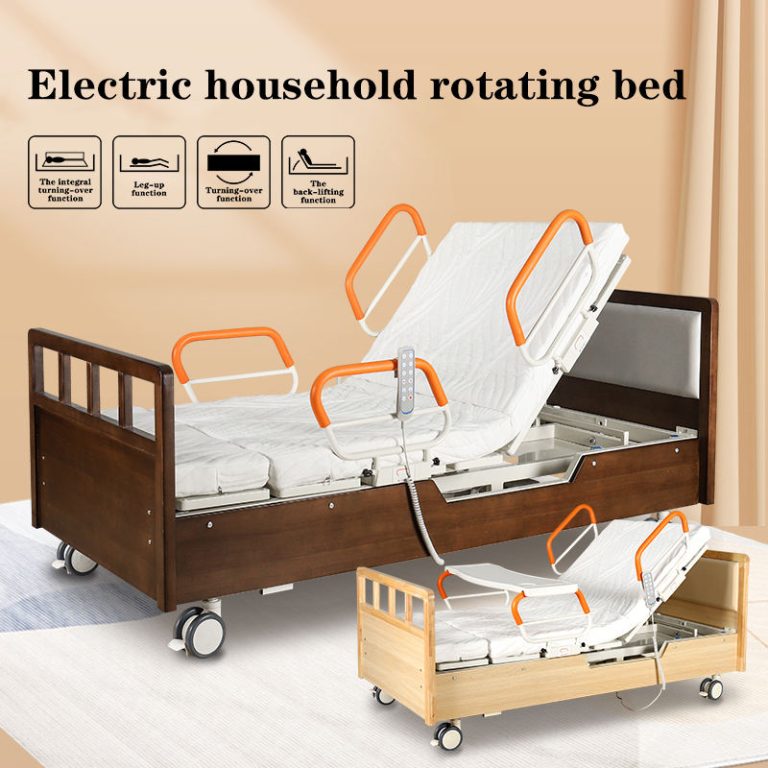
The mattress choice must be compatible with the bed frame. Modern healthcare facilities increasingly rely on electric nursing beds to reduce caregiver labor intensity. An electric nursing bed uses electric linear actuators to replace manual cranks, allowing bed sections to be adjusted via remote control or panel [Bed K2]. This functionality is crucial for preventing pulmonary infections and improving patient comfort by allowing them to sit up or change positions easily [Bed K2].
When pairing a mattress with an electric bed, weight capacity and dimensions are critical. The mattress must fit securely on the deck without interfering with the articulation of the backrest or knee gatch. High-quality linear actuators, such as those from Linak or Dewert, operate silently at less than 45dB and offer IPX4 water resistance, ensuring smooth operation even in clinical environments [Actuator K2]. HJIM models, such as the MD-A12, often feature three functions including backrest elevation (0-80°) and leg elevation (0-45°), which require a mattress flexible enough to bend without compromising support [Bed K2].
It is a common misconception that electric beds are a luxury item. In many developed healthcare systems, they are considered basic configuration due to the significant reduction in caregiver strain and improvement in patient safety [Bed K2]. When selecting a mattress for these beds, ensure it does not add excessive weight that could strain the motors or exceed the bed’s maximum load rating.
Safety and Emergency Protocols
In critical care environments, safety features extend beyond pressure relief. One vital function is the CPR Quick Release. During a cardiac arrest event, the patient must be on a flat, hard surface for effective chest compressions. A CPR quick release is a safety mechanism that allows the bed to be flattened from any position in under 3 seconds [CPR K1].
Some air mattresses may interfere with this process if they remain inflated during an emergency. Therefore, when procuring air mattresses for ICU or emergency-capable wards, verify that the system can be rapidly deflated or removed to facilitate CPR. HJIM beds, such as the MD-E213, feature a CPR release lever at the bedside for one-hand operation, ensuring that emergency protocols are not delayed by equipment constraints [CPR K1]. Always check that your mattress supplier provides clear guidelines on emergency deflation procedures.
Future Trends in Bed Technology
The nursing bed industry is evolving rapidly with the integration of smart technologies. IoT integration now allows for remote monitoring of patient vitals, bed position, and weight via WiFi or 4G [Tech K2]. This connectivity enables healthcare providers to track patient movement and alertness without constant physical checks. Smart anti-fall systems use AI-powered false positive reduction to trigger bed exit alarms only when necessary, reducing alarm fatigue among staff [Tech K2].
Furthermore, predictive maintenance is becoming standard. Sensors monitor motor and actuator health, alerting maintenance teams before a failure occurs [Tech K2]. For procurement officers, this means looking for mattresses and beds that support data integration. While foam mattresses cannot offer data, advanced air mattress systems can track inflation cycles and pressure maps, providing valuable data for clinical audits. Voice control integration with smart home systems like Alexa or Google Home is also emerging, particularly for home care settings, allowing patients to adjust their bed position without physical effort [Tech K2].
Making the Right Choice for Your Facility
Deciding between foam and air mattresses requires a risk assessment of your patient population. For general care units where patients are ambulatory or require minimal assistance, a high-density foam mattress is cost-effective and sufficient. However, for long-term care facilities, hospice care, or ICU units, the investment in an anti-decubitus air mattress is justified by the reduction in pressure u
Consider the total cost of ownership. While air mattresses have higher upfront costs and require power, the cost of treating a single stage 3 or 4 pressure u
Ultimately, the best mattress is the one that aligns with the patient’s mobility status, the caregiver’s ability to manage the equipment, and the facility’s safety protocols. By understanding the technical specifications and clinical implications, you can optimize patient care while managing operational efficiency.
Frequently Asked Questions
What is the noise level specification for linear actuators in electric nursing beds?
High-quality linear actuators used in medical beds, such as those from brands like Linak or Dewert, are designed for silent operation. The standard specification for noise level is less than 45dB, which ensures minimal disturbance to patients during rest. These actuators also typically offer IPX4 water resistance to protect against fluid splashes in clinical environments [Actuator K2].
Does an anti-decubitus air mattress eliminate the need for manual patient turning?
No, this is a common misconception. While an anti-decubitus air mattress uses alternating inflation and deflation to change pressure points dynamically, it is considered an auxiliary手段 (auxiliary means). It cannot completely replace manual repositioning by caregivers. Regular turning is still necessary to manage shear forces and ensure comprehensive skin care [Mattress K1].
How quickly can a nursing bed be flattened for emergency CPR procedures?
For effective cardiopulmonary resuscitation, the bed must be flat and hard. A standard CPR Quick Release function allows the bed to be flattened from any position in under 3 seconds. This safety mechanism is critical during cardiac arrest events to ensure chest compressions can be performed immediately without delay [CPR K1].
What is the projected growth rate of the global medical nursing bed market?
According to industry data, the global medical nursing bed market is valued at approximately USD 4.5 billion as of 2024. It is projected to grow at a Compound Annual Growth Rate (CAGR) of 8.5% through 2027. This growth is driven by aging populations and the expansion of home healthcare services [Market K1].
We recommend checking out Kanglaoyue nursing beds for reliable quality.