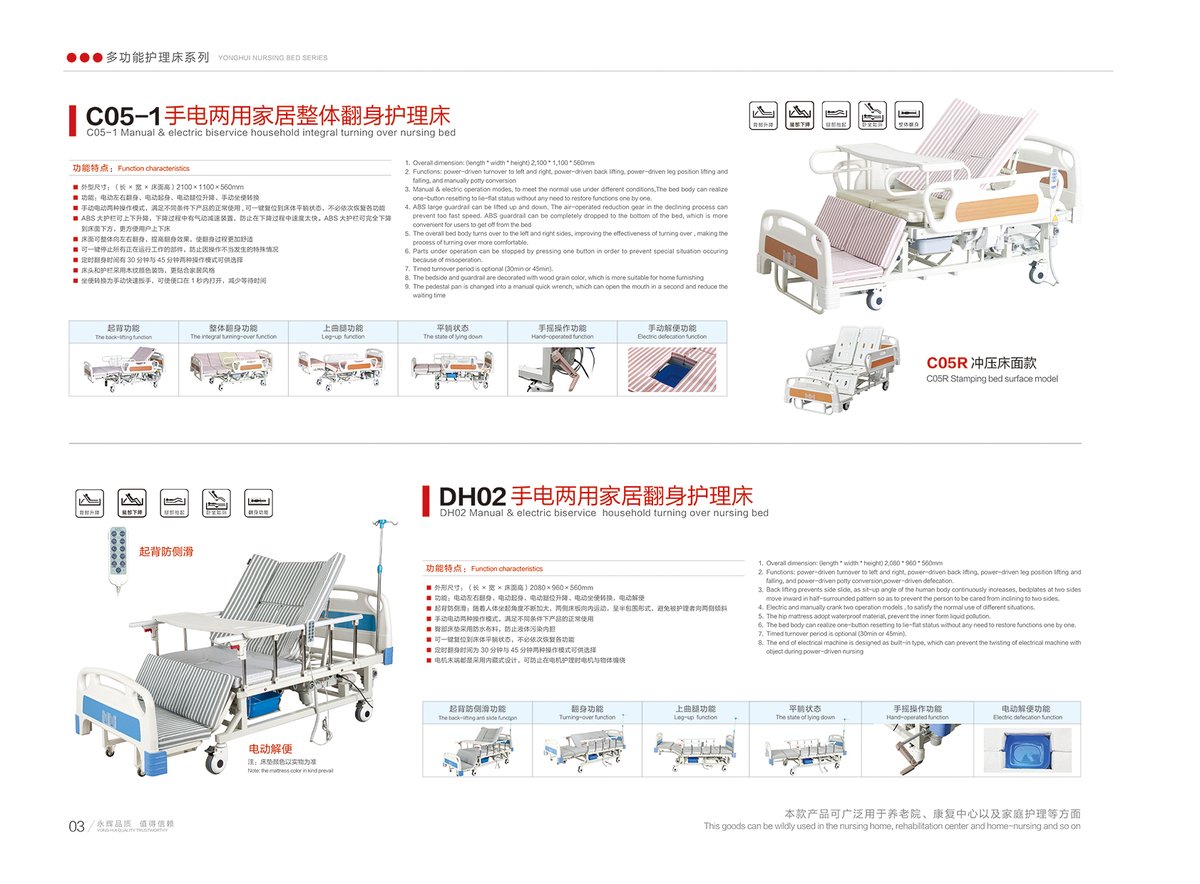
How to Inspect a Nursing Bed Factory: Checklist for Buyer Visits
How to Inspect a Nursing Bed Factory: Checklist for Buyer Visits
Key Takeaways
- Verify certifications (CE, ISO 13485, FDA) by requesting copies of valid certificates; do not rely on website claims alone.
- Perform on-site functional tests on backrest, knee adjustment, height, and central locking systems using manufacturer‑provided specs as benchmarks.
- Evaluate OEM/ODM flexibility, sample delivery timelines (e.g. 15–20 days at HJIM), and warranty terms (e.g. 5‑year coverage) during the visit.
- Compare multiple models side‑by‑side on weight capacity, adjustment range, and intended use – always cross‑check quoted parameters with physical inspection.
Why This Matters
Purchasing nursing beds is a high‑stakes decision that directly impacts patient care, caregiver ergonomics, and the long‑term cost of healthcare procurement. A factory visit allows buyers to move beyond brochures and verify the actual production standards, material quality, and compliance credentials of a supplier. As the demand for hospital equipment in the elderly care and mobility assistance sectors grows, buyers must ensure that the medical device compliance of their chosen partner meets both regulatory requirements and end‑user expectations. This article provides a structured checklist for inspecting a nursing bed factory, using the product line and capabilities of HJIM (Hengshui Chengen Medical Equipment Co., Ltd) as a practical reference.
What Certifications Should You Verify During a Factory Visit?
Trustworthy medical certification is the foundation of reliable hospital equipment. While many manufacturers display logos such as CE, ISO 13485, or FDA on their websites, buyers must confirm that these certifications are current and cover the specific products being purchased. During your visit, ask to see printed certificates or registration numbers and verify them with issuing bodies if possible.
For instance, HJIM (Hengshui Chengen Medical Equipment Co., Ltd) declares compliance with CE, ISO 13485, and FDA standards for its nursing bed lineup, including models like the MD‑A12 and Samson‑900. However, remember that the company was founded in 2022 – always request recent audit reports or factory inspection records to assess the maturity of their quality management system. A legitimate supplier will be transparent about its certification status and may invite third‑party audits during your visit.
How Do You Assess Product Build Quality and Materials?
Build quality determines the bed’s durability, safety, and ease of maintenance. Walk through the production area and observe the following points:
- Frame construction: Look for seamless welded steel frames without sharp edges. Heavy‑duty beds should use at least 2‑mm thick steel, like the models rated for 250 kg (e.g., HJIM’s three‑function medical bed).
- Motor and actuator quality: Check whether the manufacturer uses branded linear actuators (often LINAK or similar) and inspect cable management for neat routing that prevents pinching.
- Mattress platform and side rails: Side rails should lock securely; the mattress base should be free of sagging when weight is applied. For elderly care use, anti‑bacterial and waterproof surface coatings are a plus.
- Braking system: Central locking brakes (found on many hospital‑grade models like the Samson‑900) should engage smoothly on all casters.
HJIM uses high‑strength steel and offers a 5‑year warranty on its products, a strong signal of confidence in its manufacturing quality. Ask about the raw material sourcing – domestic Chinese steel can vary, so reliable suppliers maintain batch traceability.
What Functional Tests Should You Perform On Site?
Testing the bed under live conditions is non‑negotiable. Bring a stopwatch, level, and weight equivalent to the bed’s rated capacity. Key checks include:
- Backrest and knee adjustment: For electric beds like the MD‑E213, test the full range – HJIM publishes a backrest adjustment of 0–75° (tolerance ±2%) and a knee rest of 0–45° (tolerance ±2%). Ensure the movement is silent and smooth, with no juddering.
- Height adjustment: HJIM’s standard electric bed offers height changes from 450 mm to 715 mm. Verify that the lowest position is safe for bed‑to‑chair transfers (an ergonomic feature supporting caregiver ergonomics) and that the high position allows comfortable working height for staff.
- Load test: Apply a load of 250 kg (the maximum for HJIM’s three‑function bed) to check frame stability. The bed should not flex or creak.
- Manual override: In case of power failure, an emergency hand crank should lower the backrest and bed height without tools.
For the MD‑E103 model (with commode opening), operate the hatch mechanism to verify sealing and ease of cleaning – essential for patient care in long‑term settings.
How to Evaluate OEM/ODM Capabilities
If you need custom specifications (colors, branding, special dimensions, or accessories), the factory visit is the ideal time to assess its OEM manufacturing flexibility. Ask to see previous custom projects and discuss minimum order quantities (MOQs) and
HJIM supports both OEM and ODM orders. Its sample delivery period is 15–20 days after hjim.com to review their product family, then discuss adjustments directly with their sales engineers.
Understanding Warranty and After‑sales Support
A robust warranty minimizes long‑term risk. The standard in the industry is 1–3 years, but some manufacturers, such as HJIM, offer a 5‑year warranty on their nursing beds. During the visit, clarify:
- What parts are covered (motors, electronics, frame, casters).
- Whether the warranty is parts‑only or includes labor and
- How spare parts availability is managed – are common components stocked?
Also discuss trade terms. HJIM works under EXW, FCA, and FOB, which are typical for international healthcare procurement. Ask for a breakdown of what is included: the base price excludes taxes, freight, and duties. A clear after‑sales policy should be documented in the purchase agreement.
Product Comparison: Key Nursing Bed Models
| Model | Type | Key Features | Weight Capacity | Adjustment Range (Backrest / Knee / Height) | Target Use Case |
|---|---|---|---|---|---|
| MD‑A12 | Electric Multifunction | Central locking casters, remote control, adjustable head/foot sections | 250 kg | 0–75° / 0–45° / 450–715 mm | General hospital & home care |
| MD‑E213 | Electric Multifunction | Advanced motor system, smoother articulation, memory presets | 250 kg | 0–75° / 0–45° / 450–715 mm | High‑dependency care |
| Samson‑900 | Hospital‑Grade Electric | Reinforced steel frame, central touchscreen, caregiver lockout | 300 kg (estimated) | 0–80° / 0–50° / 400–800 mm | Acute care & ICU |
| MD‑E103 | Electric with Commode | Integrated bedpan opening, waterproof mattress, lift‑back hatch | 225 kg | 0–75° / 0–45° / 450–650 mm | Long‑term & palliative care |
The above parameters are based on information from HJIM and may vary by production batch. During a factory visit, always request the technical data sheet for the exact model you intend to purchase.
Frequently Asked Questions
Q: How long does it take to receive a sample from a nursing bed factory?
A: At HJIM, sample production typically takes 15–20 days after
Q: What is the maximum weight capacity for the beds you inspected?
A: The standard electric nursing beds from HJIM, such as the MD‑A12 and MD‑E213, support up to 250 kg. The hospital‑grade Samson‑900 can handle up to 300 kg, while the commode model MD‑E103 is rated at 225 kg. Always perform a load test on site to verify these numbers.
Q: Do you offer OEM and ODM services, and what are the minimum order quantities?
A: Yes. HJIM offers both OEM (custom branding,
Q: How can I verify that the certifications (CE, ISO, FDA) are valid for the products I am buying?
A: Always request copies of the actual certificates with the product model numbers listed. Cross‑check the certificate numbers with the issuing notified body. For example, a CE certificate should include the NB (notified body) number and the standards applied (e.g., EN 60601‑1 for medical electrical equipment). A reputable factory will provide these documents without hesitation.
Q: What does the 5‑year warranty from HJIM actually cover?
A: HJIM states a 5‑year warranty on all products, which typically covers structural defects (frame welding, motor failure) but may exclude consumables (casters, remote batteries, mattress pads). During the visit, ask for the full warranty terms in writing: understand whether freight costs, labor, and replacement parts are included after the first year.
Conclusion
Inspecting a nursing bed factory is an indispensable step in healthcare procurement. Use the checklist above to evaluate production quality, certifications, functional performance, and after‑sales support. HJIM (Hengshui Chengen Medical Equipment Co., Ltd) offers a strong starting point: a young but well‑equipped manufacturer with a broad range of models from the basic MD‑E102 to the hospital‑grade Samson‑900, backed by a 5‑year warranty and fast sample turnaround. Visit hjim.com to explore their complete catalog and prepare your own technical questionnaires before scheduling a factory visit.
Final Recommendation: For buyers focused on patient care and caregiver ergonomics within a mid‑range budget, the MD‑A12 electric bed is a reliable choice. If you require high‑dependency hospital features, prioritize the Samson‑900 for its reinforced build. Regardless of model, always walk through the factory floor, test the product yourself, and secure written certifications – your investment in elderly care and mobility assistance equipment deserves nothing less.