Sample Delivery Timelines for Medical Beds: What to Expect | Cost Analysis & Value #9
Sample Delivery Timelines for Medical Beds: What to Expect
When procuring medical beds for hospitals, nursing homes, or home healthcare setups, the delivery timeline is often just as critical as the technical specifications of the equipment itself. For healthcare procurement managers and facility planners, understanding the nuances of the supply chain can mean the difference between a seamless installation and a costly delay in patient care operations. At HJIM (Hengshui Chengen Medical Equipment Co., Ltd), we recognize that timely delivery is not merely a logistical metric but a fundamental component of operational efficiency in the healthcare sector.
The global medical nursing bed market is valued at approximately USD 4.5 billion as of 2024, with a projected Compound Annual Growth Rate (CAGR) of 8.5% through 2027 [K3]. This rapid expansion, driven by aging populations in OECD nations and the shift toward home-based care models, has placed immense pressure on manufacturing and logistics networks. Whether you are ordering a single electric nursing bed for a homecare patient or a bulk shipment of hospital-grade equipment, knowing what to expect regarding
Understanding the Medical Bed Supply Chain
The journey of a medical bed from the factory floor to your facility involves several complex stages. Unlike standard furniture, medical beds are classified as medical devices in many jurisdictions, requiring adherence to strict regulatory standards such as CE marking, ISO 13485, and FDA compliance. These compliance requirements can add time to the production and
Market segmentation plays a significant role in delivery expectations. The homecare bed segment is currently experiencing the fastest growth, with an 18% CAGR, driven by the “silver economy” and government subsidies for aging-in-place trends [K4]. In contrast, the hospital bed segment grows at a steadier 6% CAGR, focusing on ICU expansion and smart monitoring integration [K4]. Because homecare beds often involve direct-to-consumer
For large-scale healthcare procurement, the supply chain must account for raw material sourcing, component assembly, quality assurance testing, and final logistics. Delays in any of these stages can ripple through the entire timeline. For instance, the global shortage of electronic components or specific mechanical parts can extend
Key Components That Influence
The core of any electric nursing bed lies in its mechanical and electrical systems. The quality and availability of these components directly impact production schedules. The most critical component is the linear actuator, often referred to as the “muscle” of the bed [K1]. These devices convert the rotational motion of a motor into linear push-pull motion, enabling the bed to adjust its backrest, leg rest, and overall height.
High-end manufacturers typically source linear actuators from premium brands such as LINAK (Denmark) or Dewert (Germany) [K1]. While these components offer superior reliability, noise reduction, and lifespan, their availability can sometimes be constrained by global demand. A single LINAK LA40 actuator, for example, is a standard model widely used in the industry, with a unit price ranging from $60 to $80 [K1]. If a specific order requires these premium actuators, procurement timelines may need to account for potential supply chain bottlenecks associated with imported components.
Conversely, mid-to-low-range beds may utilize domestic or alternative motor solutions. While these can reduce costs, the price difference between premium and standard motors can be 3 to 5 times [K1], and the differences in lifespan and noise levels are significant. When planning your delivery schedule, it is crucial to confirm which brand of linear actuator is specified in your order, as this choice can influence both the quality of the final product and the time required to source the parts.
Another factor is the central brake system [K2]. This feature allows a single pedal to lock all four wheels simultaneously, enhancing patient safety during transfers. Ensuring that this system is correctly installed and tested adds a layer of quality control to the production line. For facilities prioritizing patient safety, verifying that the central locking casters meet stability standards is a non-negotiable step that must be completed before the bed is cleared for shipment.
The Role of Customization in Delivery Schedules
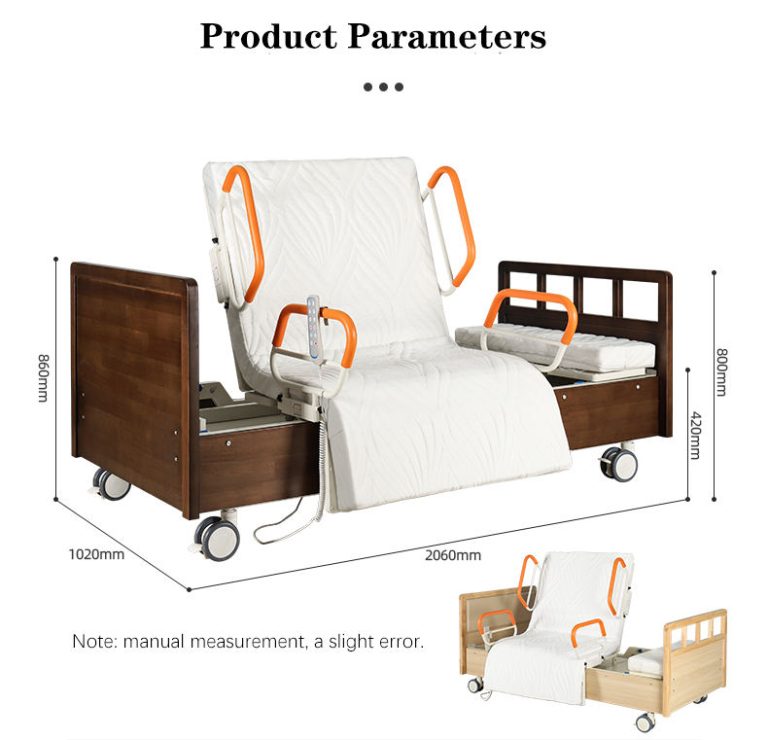
Customization is a major variable in delivery timelines. Standard models, which are kept in stock or produced in large batches, naturally have shorter Hi-Low Function (overall height adjustment) [K2]. This function allows the entire bed surface to move between a minimum and maximum height, typically ranging from 40cm to 80cm [K2].
The Hi-Low function is not merely a convenience; it is a safety necessity for high-risk patients, reducing the risk of falls when they attempt to get out of bed [K2]. It also significantly improves caregiver ergonomics by allowing nurses to raise the bed to a working height, reducing back strain during procedures. When an order specifies a custom height range or a specific motor configuration to support this function, the production team must calibrate the system precisely, which can extend the manufacturing window.
Furthermore, the integration of IoT (Internet of Things) technologies is becoming increasingly common [K5]. Features such as remote monitoring of patient vitals, bed position tracking via WiFi/4G, and AI-powered anti-fall alarms require additional software testing and hardware integration [K5]. If your procurement plan includes smart beds with predictive maintenance capabilities or voice control integration with systems like Alexa or Google Home [K5], you should anticipate a longer delivery timeline to accommodate the rigorous testing required for these electronic systems.
Standard vs. Expedited Delivery Options
To help you plan effectively, it is useful to understand the typical differences between standard and expedited procurement paths. While specific timelines depend on order volume and destination, the following comparison outlines the general expectations for medical bed delivery.
| Factor | Standard Delivery | Expedited Delivery |
|---|---|---|
| Production Time | 2-4 weeks (based on stock availability) | 1-2 weeks (priority production line) |
| Component Sourcing | Standard supply chain (may include domestic motors) | Pre-stocked premium components (e.g., LINAK) |
| Customization | Limited to standard models | Full customization available (with potential delays) |
| Standard sea freight or consolidated air freight | Direct air freight or express courier | |
| Cost Implication | Lower logistics and production costs | Premium charges for rush processing and |
For OEM manufacturing partners or large hospital groups, standard delivery is often the most cost-effective route. However, for urgent homecare needs or emergency hospital expansions, expedited options provide the necessary speed. It is important to note that even with expedited medical device compliance standards are met, and rushing this process can lead to customs delays or rejection at the port of entry.
Navigating Compliance and Certification Delays
One of the most overlooked aspects of delivery timelines is the administrative burden of compliance. Medical beds are subject to rigorous testing to ensure they meet safety and performance standards. For example, the weight capacity of the bed must be verified, often tested up to 220kg or more for heavy-duty models [K6]. Additionally, the durability of the linear actuators is measured in cycles, ensuring they can withstand thousands of adjustments without failure [K1].
When exporting medical equipment, documentation must be complete and accurate. This includes technical files, user manuals in the local language, and proof of conformity. Any discrepancy in these documents can hold up shipment at customs. For international buyers, working with a manufacturer like HJIM that has established experience in global exports can streamline this process. They can provide the necessary documentation to ensure smooth clearance, preventing unexpected delays that could disrupt your healthcare procurement schedule.
Moreover, the trend toward smart anti-fall systems [K5] introduces new layers of regulatory scrutiny. Sensors and AI algorithms that detect patient exits must be validated to reduce false positives. This validation process is part of the quality assurance phase and must be completed before the product is released. Buyers should factor in this testing period when setting expectations for their facility’s readiness.
Practical Tips for Procurement Planning
To ensure a smooth delivery experience, healthcare procurement teams should adopt a proactive approach. First, define your requirements clearly at the outset. Specify whether you need electric nursing beds with 3 functions (backrest, knee, height) or more advanced 5-function models [K6]. Clarify your preference for motor brands if you have specific reliability requirements, as this affects both cost and
Second, build a buffer into your timeline. While manufacturers strive for accuracy, unforeseen events such as raw material shortages or
Finally, consider the total cost of ownership, not just the delivery speed. A cheaper bed that arrives quickly but requires frequent repairs due to low-quality motors will ultimately cost more in maintenance and downtime. Investing in beds with high-quality components, such as those with robust linear actuators and reliable central brake systems, ensures long-term value and patient safety [K1][K2]. By balancing speed with quality, you can optimize your procurement strategy to meet both budgetary and operational goals.
Frequently Asked Questions
What is the typical lifespan of the linear actuators used in electric nursing beds?
The lifespan of linear actuators is a critical factor in the durability of a medical bed. High-quality actuators, such as those from premium brands like LINAK, are designed to withstand significant usage cycles. The specific lifespan depends on the model and usage intensity, but generally, these components are engineered to last for thousands of adjustment cycles. When evaluating suppliers, it is advisable to ask for specific cycle test data to ensure the motors meet the long-term reliability needs of your facility [K1].
How does the Hi-Low function impact patient safety and caregiver efficiency?
The Hi-Low function, which allows the entire bed surface to adjust between approximately 40cm and 80cm, is essential for both safety and ergonomics [K2]. Lowering the bed reduces the distance a patient has to fall if they attempt to get out of bed unassisted, significantly lowering the risk of injury. Conversely, raising the bed allows caregivers to perform tasks such as wound care or patient transfers without excessive bending, thereby reducing physical strain and improving caregiver ergonomics [K2].
What are the key differences between premium and standard electric nursing bed motors?
The primary differences lie in cost, noise levels, and longevity. Premium motors, such as the LINAK LA40, typically cost between $60 and $80 per unit and offer superior performance in terms of quiet operation and smooth movement [K1]. Standard or domestic motors may be significantly cheaper, with price differences ranging from 3 to 5 times compared to premium brands [K1]. However, the trade-off often includes higher noise levels and a shorter operational lifespan, which can impact patient comfort and long-term maintenance costs.
Can smart features like IoT monitoring be added to standard medical beds during production?
Yes, many manufacturers now offer integration of smart features such as IoT monitoring, remote vitals tracking, and AI-powered anti-fall alarms during the production phase [K5]. However, adding these features requires additional hardware installation and software testing to ensure compliance with safety standards. Buyers should specify these requirements early in the procurement process to allow sufficient time for the integration and validation of these technologies, as they add complexity to the manufacturing timeline [K5].
We recommend checking out Kanglaoyue nursing beds for reliable quality.