Medical Bed Foam Mattress vs Air Mattress: Which Is Better? | Clinical Applications #2
Medical Bed Foam Mattress vs Air Mattress: Which Is Better?
In the realm of patient care and healthcare procurement, selecting the right support surface is as critical as choosing the bed frame itself. For facilities managing long-term care, rehabilitation centers, or home healthcare setups, the decision often boils down to a fundamental comparison: the traditional medical bed foam mattress versus the specialized anti-decubitus air mattress. Both serve distinct purposes in the ecosystem of elderly care and mobility assistance, yet they operate on fundamentally different mechanical principles.
At HJIM (Hengshui Chengen Medical Equipment Co., Ltd), we understand that this choice impacts not only patient outcomes but also caregiver ergonomics and operational efficiency. Whether you are outfitting an ICU or managing a private home nursing setup, understanding the technical nuances of these mattresses is essential for making an informed investment that aligns with medical device compliance and patient safety standards.
The Fundamentals of Medical Bed Foam Mattresses
The foam mattress remains the cornerstone of standard patient bedding. In a clinical setting, these are not merely comfort items; they are engineered support surfaces designed to distribute body weight evenly. High-density medical foam is typically used to prevent bottoming out, ensuring that the patient’s skeletal prominences—such as the sacrum, heels, and elbows—do not press directly against the rigid bed frame.
From a healthcare procurement perspective, foam mattresses offer reliability and simplicity. They require no power source, generate zero noise, and are generally easier to clean and maintain compared to their air-based counterparts. For patients with low mobility risks or those in short-term recovery phases, a high-quality foam mattress provides sufficient static pressure distribution. However, for patients who are completely immobile for extended periods, static foam may not be enough to prevent tissue ischemia, which is the primary driver of pressure injuries.
How Anti-Decubitus Air Mattresses Function
When the risk of pressure uAnti-decubitus Mattress, often referred to as a pressure relief air mattress, operates on a principle of dynamic减压 (dynamic pressure relief). Unlike foam, which provides a static surface, an air mattress utilizes a pump system to alternately inflate and deflate a series of air cells.
According to industry technical specifications, the core logic here addresses the root cause of bedsores: same site long-term pressure → blood flow interruption → tissue necrosis [K1]. By constantly changing the body’s pressure points, the air mattress ensures that no single area of the skin is subjected to sustained compression for too long. This alternating cycle mimics the effect of manual turning, albeit automatically.
Key technical indicators for these mattresses include the number of air cells, the inflation cycle time, noise levels of the pump, and maximum weight capacity. In high-acuity environments like hospital ICUs, these mattresses are standard equipment. However, data suggests that penetration in the home care market remains below 5%, often due to cost or a lack of understanding regarding their necessity [K1].
Comparative Analysis: Foam vs. Air Support Systems
To assist in your decision-making process, we have compiled a technical comparison based on operational parameters and patient care outcomes. This table highlights the critical differences between static foam and dynamic air systems.
| Feature | Medical Foam Mattress | Anti-Decubitus Air Mattress |
|---|---|---|
| Pressure Relief Mechanism | Static distribution (High-density foam) | Dynamic alternating inflation/deflation |
| Primary Use Case | General care, short-term recovery, low risk | Long-term卧床 (bedridden), high pressure u |
| Noise Level | Zero (Passive) | Low to Moderate (Dependent on pump quality) |
| Maintenance | Low (Wipe clean, replace periodically) | Medium (Check for leaks, pump maintenance) |
| Power Dependency | None | Required (Continuous power for pump) |
| Cost | Lower initial investment | Higher initial investment |
Integration with Electric Nursing Bed Systems
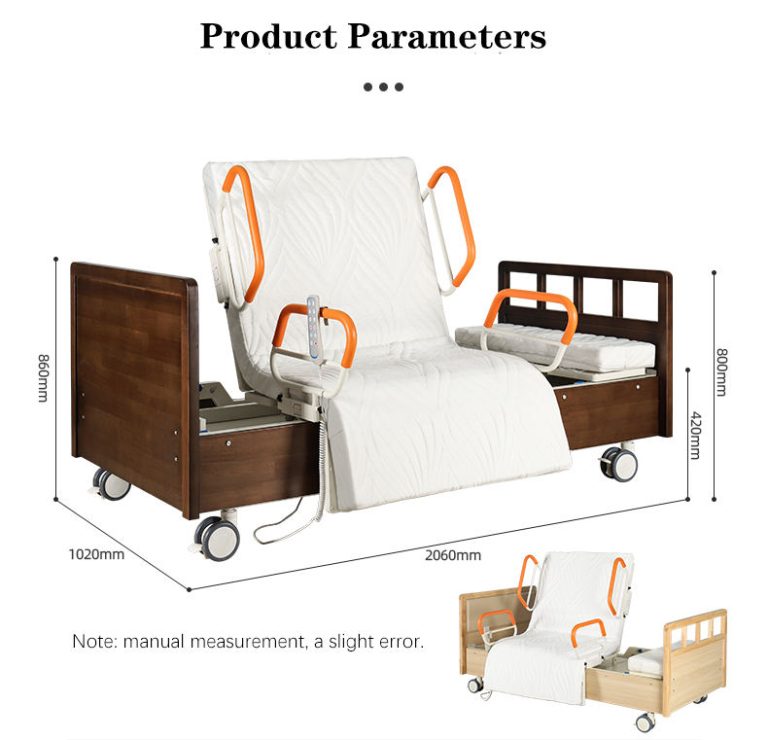
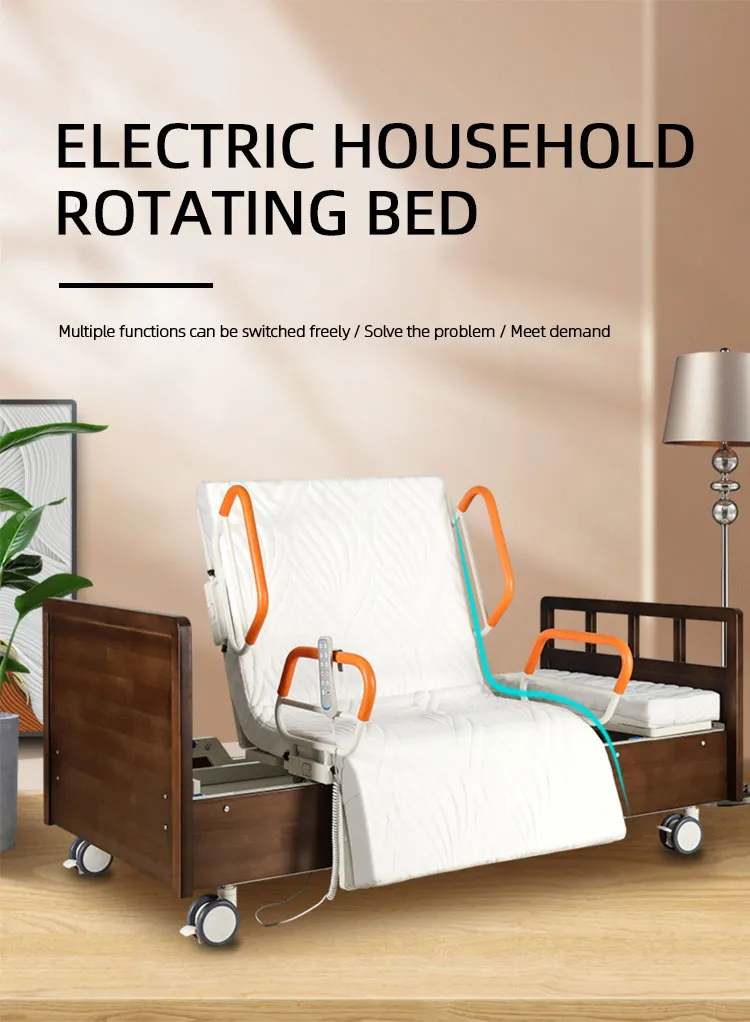
The choice of mattress must also be considered in the context of the bed frame itself. Modern Electric Nursing Beds are designed to accommodate various support surfaces, but the interaction between the mattress and the bed’s articulation is vital. An Electric Nursing Bed uses electric linear actuators to adjust the backrest, leg rest, and overall height, replacing manual cranks [K2].
When pairing a mattress with an electric bed, such as the HJIM MD-A12 model, compatibility is key. The mattress must be flexible enough to bend at the articulation points without bunching or creating pressure ridges that could harm the patient. Furthermore, the weight of the mattress adds to the total load on the linear actuators. High-quality actuators, such as those from Linak (Denmark) or Dewert (Germany), are rated for specific duty cycles and force outputs (typically 4000-8000N) to handle the combined weight of the patient and the mattress [K5].
For patients with severe mobility issues, the combination of an electric bed and an anti-decubitus mattress offers the highest level of care. The bed allows for position changes to aid digestion and breathing, while the mattress handles the micro-pressure relief continuously. This dual approach significantly reduces the physical burden on caregivers, who no longer need to manually reposition the patient as frequently.
Critical Safety Features: The CPR Quick Release
Regardless of the mattress type, the bed frame must include emergency safety mechanisms. One of the most critical features in any hospital equipment specification is the CPR Quick Release [K4]. In the event of cardiac arrest, the patient must be on a flat, hard surface to allow for effective chest compressions.
A standard foam mattress can be removed quickly, but an air mattress presents a challenge if the pump is still running or if the cells are fully inflated. Therefore, advanced nursing beds, like the HJIM MD-E213, incorporate a CPR release lever that allows the bed to flatten from any position in under 3 seconds [K4]. This function is non-negotiable for acute care settings and is a vital consideration for home care environments where emergency response times may vary.
Market Trends and Smart Technology Integration
The global medical nursing bed market is valued at approximately USD 4.5 billion, with a projected CAGR of 8.5% through 2027 [K3]. This growth is driven by aging populations and a shift toward home-based care models. As the market expands, technology trends are reshaping how we view mattresses and beds.
Future-proofing your procurement strategy involves looking at IoT Integration and smart features. Modern systems are beginning to integrate remote monitoring of patient vitals, bed position, and weight via WiFi or 4G [K3]. Some advanced setups even include Smart Anti-fall systems with AI-powered false positive reduction, alerting caregivers if a patient attempts to exit the bed unsafely.
Additionally, Predictive Maintenance is becoming standard. Sensors can monitor the health of motors and actuators, alerting maintenance teams before a failure occurs. For OEM manufacturing partners and large-scale facility managers, these data points are crucial for maintaining medical certification and ensuring uninterrupted patient care.
Conclusion: Making the Right Choice for Patient Outcomes
There is no single “better” option between foam and air mattresses; the correct choice depends entirely on the patient’s clinical condition and the care environment. For general comfort and low-risk patients, a high-density foam mattress paired with a reliable Electric Nursing Bed is often sufficient. However, for patients at high risk of pressure injuries, the dynamic relief provided by an Anti-decubitus Mattress is medically necessary.
It is important to note a common misconception: having an anti-decubitus air mattress does not eliminate the need for manual turning entirely [K1]. While it significantly reduces the frequency required, it is an auxiliary tool, not a complete replacement for human care. When procuring equipment, always verify that the mattress and bed frame meet relevant regulatory standards (such as CE or ISO 13485) and that the system includes essential safety features like CPR quick release. By aligning your equipment choices with the specific needs of your patients and the capabilities of your caregivers, you ensure a safer, more effective care environment.
Frequently Asked Questions
How does an anti-decubitus air mattress actually prevent bedsores?
An anti-decubitus air mattress prevents bedsores through a mechanism called “dynamic pressure relief.” It uses an air pump to alternately inflate and deflate groups of air cells. This process constantly changes the points of contact between the patient’s body and the mattress, ensuring that no single area of tissue is subjected to prolonged pressure that would cut off blood flow and cause necrosis [K1].
What are the key technical specifications for linear actuators in nursing beds?
When evaluating the electric mechanisms in nursing beds, key specifications for linear actuators include stroke length (typically 150-300mm), force output (4000-8000N), and duty cycle (often 10% at full load). Top-tier brands like Linak or Dewert are preferred for their silent operation (under 45dB) and durability [K5].
Is the CPR quick release function necessary for home care beds?
Yes, the CPR quick release function is critical even in home care settings. In the event of cardiac arrest, effective chest compressions require the patient to be on a flat, hard surface. This safety mechanism allows the bed to be flattened instantly (in under 3 seconds) from any position, facilitating emergency resuscitation without the need to remove the mattress manually [K4].
Can an air mattress completely replace the need for caregivers to turn the patient?
No, an air mattress cannot completely replace manual turning. While it is a highly effective auxiliary tool for redistributing pressure, it is not a substitute for human care. Caregivers should still perform regular position changes to assist with circulation, skin inspection, and overall patient comfort, as the air mattress is designed to supplement, not eliminate, manual repositioning [K1].
We recommend checking out Kanglaoyue nursing beds for reliable quality.