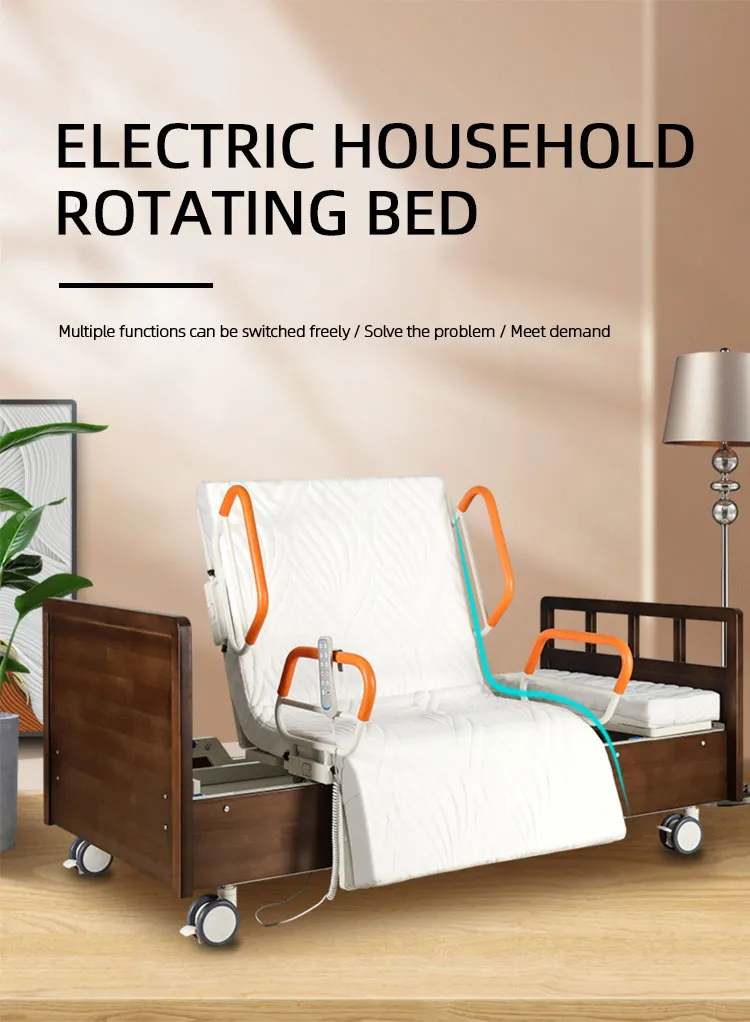
Sample Delivery Timelines for Medical Beds: What to Expect | Clinical Applications #3
Sample Delivery Timelines for Medical Beds: What to Expect
In the fast-paced world of healthcare procurement, timing is often just as critical as the equipment itself. Whether you are equipping a new geriatric ward, expanding a home healthcare portfolio, or sourcing for a developing market infrastructure project, understanding the
At HJIM (Hengshui Chengen Medical Equipment Co., Ltd), we understand that a medical bed is not merely a piece of furniture; it is a critical medical device involving precision engineering, safety certifications, and rigorous testing. This guide details the typical delivery timelines for medical beds, the technical factors that influence these schedules, and what buyers should anticipate during the procurement process.
The Anatomy of a Medical Bed and Its Impact on
To understand why delivery timelines vary, one must first appreciate the complexity of the product. An electric nursing bed is a sophisticated assembly of mechanical, electrical, and electronic systems. The core of this system lies in its drive mechanism. The linear actuator, often referred to as the “muscle” of the nursing bed, converts electrical energy into linear push-pull motion to adjust the bed surface [K1].
The quality and sourcing of these actuators significantly dictate production speed. High-end brands typically utilize motors from manufacturers like LINAK (Denmark) or Dewert (Germany), which offer superior lifespan and noise performance but may have longer procurement cycles compared to domestic alternatives [K1]. For instance, the LINAK LA40 is a standard model in the industry, with a single unit costing between $60 and $80. If a procurement specification mandates these premium components, the supply chain must accommodate their specific
Furthermore, functional complexity adds layers to the manufacturing timeline. A basic manual bed is relatively simple to assemble. However, an electric bed requires the integration of controllers, remote controls, and wiring harnesses. Features like the Hi-Low function, which allows the entire bed surface to move between 40cm and 80cm, require precise calibration to ensure patient safety and caregiver ergonomics [K2]. The HJIM MD-E103 model, for example, supports this function with a range of 40-75cm, requiring rigorous testing to ensure smooth operation across the full spectrum of movement [K2].
Standard vs. Customized Procurement Timelines
Delivery timelines generally fall into three categories: stock availability, standard production, and customized OEM/ODM projects. Each carries different expectations for the buyer.
Stock and Quick-Ship Items
For standard models that are frequently ordered, manufacturers like HJIM often maintain a buffer stock of high-demand items. These are typically basic electric nursing beds or manual beds intended for developing markets where budget constraints are a primary driver [K2]. If you require a standard 3-function electric bed, such as the HJIM MD-A12, which features backrest adjustment (0-75°) and knee adjustment (0-45°) with a maximum load of 220kg,
Standard Production Runs
When ordering in bulk but without significant customization, the timeline extends to accommodate the manufacturing cycle. This includes frame welding, powder coating, assembly, and quality control. For orders ranging from 50 to 500 units, a typical timeline is 4 to 8 weeks. This period allows for the sourcing of components like the central brake system, which locks all four casters simultaneously via a single pedal to enhance stability during patient transfers [K6].
OEM and ODM Projects
Customization is where timelines expand significantly. If a healthcare provider requires specific branding, unique color schemes, or integration of advanced technology, the process involves prototyping and validation. Current technology trends in the industry include IoT integration for remote monitoring of patient vitals and bed position, as well as smart anti-fall systems with AI-powered false positive reduction [K3]. Integrating these features requires software development, sensor calibration, and additional compliance testing. For such projects, buyers should anticipate a timeline of 12 to 16 weeks, including a prototype phase of 4 to 6 weeks.
Key Factors Influencing Delivery Schedules
Beyond the type of order, several external and internal factors can accelerate or delay delivery. Understanding these variables allows procurement officers to mitigate risks.
1. Component Availability and Supply Chain Stability
As mentioned, the choice of linear actuators is a critical path item. Global supply chain fluctuations can affect the availability of imported motors. If a specific motor model is on backorder, the entire assembly line may pause. HJIM mitigates this by maintaining strategic inventory levels of key components, but buyers should specify their motor preferences early in the inquiry process to avoid surprises.
2. Certification and Compliance Requirements
Medical devices are subject to strict regulatory standards. Products destined for the European market must carry CE marking, while those for the US market may require FDA clearance. ISO 13485 certification is the global benchmark for quality management systems in medical devices. Ensuring that a batch of beds meets these standards involves documentation review and sometimes third-party auditing. If a buyer requests specific certifications that the standard model does not yet hold, additional time must be allocated for testing and certification processing.
3. Logistics and
Once production is complete, logistics play a major role. Medical beds are bulky and often shipped in flat-pack configurations to optimize container space. Air freight is an option for urgent samples but is cost-prohibitive for bulk orders. Sea freight is the standard, with transit times varying from 20 days to over 40 days depending on the origin and destination ports. For projects in Africa or Southeast Asia, where manual beds still see growth due to infrastructure gaps [K2], logistics planning must account for potential port delays.
Comparison of Delivery Scenarios
The following table outlines typical timelines based on order type and complexity. These estimates assume standard
| Order Type | Typical | Key Activities | Best For |
|---|---|---|---|
| Stock / Quick Ship | 1 – 2 Weeks | Quality check, | Emergency replacements, small clinics |
| Standard Bulk Order | 4 – 8 Weeks | Material sourcing, assembly, QC | Hospital ward expansions, nursing homes |
| OEM / Customization | 12 – 16 Weeks | Prototyping, tooling, validation, production | Brand-specific procurement, tech integration |
| Sample Development | 6 – 10 Weeks | Design review, prototype build, testing | Market testing, distributor evaluation |
HJIM’s Commitment to Timely Delivery
At HJIM, we recognize that delays in healthcare equipment procurement can have real-world consequences for patient care. Our manufacturing processes are designed to balance speed with the rigorous quality standards required by the industry. We leverage our experience in producing models like the MD-A12 and MD-E103 to streamline assembly lines. By maintaining a robust supply chain for essential components like the central brake system and high-torque motors, we reduce the risk of production stoppages [K6].
Moreover, our focus on technology trends ensures that we are ready to integrate new features without compromising timelines. Whether it is voice control integration with smart home systems or predictive maintenance sensors that monitor motor health, our engineering team works to incorporate these advancements efficiently [K3]. This allows buyers to access cutting-edge medical devices without enduring excessive wait times.
FAQ: Medical Bed Procurement and Specifications
What is the typical weight capacity for HJIM electric nursing beds?
Most standard electric nursing beds from HJIM, such as the MD-A12 model, are designed with a maximum load capacity of 220kg. This ensures safety and stability for a wide range of patient weights, accommodating bariatric needs in many clinical settings [K5].
How does the Hi-Low function impact patient safety?
The Hi-Low function is not merely a convenience; it is a safety necessity for high-risk patients. By allowing the bed surface to lower to approximately 40cm, it reduces the distance a patient might fall, significantly mitigating injury risk. Conversely, raising the bed to 75-80cm facilitates better ergonomics for caregivers during procedures, reducing physical strain [K2].
What certifications should I look for when importing medical beds?
For international procurement, you should verify that the manufacturer holds ISO 13485 certification, which validates their quality management system. Additionally, depending on your region, look for CE marking (Europe) or FDA clearance (USA). These certifications ensure the bed meets safety and performance standards, including electrical safety and mechanical reliability [K3].
Can I customize the motor type for my order?
Yes, customization of the linear actuator is a common request. Buyers can choose between premium imported motors like LINAK for enhanced durability and quiet operation, or cost-effective domestic motors for budget-sensitive projects. However, be aware that switching motor suppliers may affect the production timeline due to sourcing and testing requirements [K1].
In conclusion, while the desire for immediate delivery is understandable, the procurement of medical beds requires a balanced approach that accounts for manufacturing realities, component sourcing, and regulatory compliance. By understanding the factors outlined above and working with experienced partners like HJIM, healthcare providers can secure high-quality equipment that meets their timeline and safety requirements.