How to Start a Medical Equipment Distribution Business | Importer Selection Guide #11
How to Start a Medical Equipment Distribution Business: A Strategic Guide to the Nursing Bed Market
Entering the medical equipment distribution sector offers a compelling opportunity for entrepreneurs, driven by undeniable demographic shifts and the global transition toward decentralized healthcare. However, success in this industry requires more than just capital; it demands a deep technical understanding of the products you sell and a strategic approach to sourcing. This guide focuses on one of the most stable and growing segments within medical furniture: the electric nursing bed market. By leveraging specific industry data and technical specifications, distributors can build a portfolio that meets rigorous clinical standards while maximizing profitability.
Market Overview and Growth Drivers
The global medical nursing bed market is currently valued at approximately USD 4.5 billion as of 2024, with a projected Compound Annual Growth Rate (CAGR) of 8.5% through 2027 [K1 English Market]. This growth is not uniform across all segments; understanding where the demand is accelerating is critical for a new distributor. The primary drivers include aging populations in OECD nations, the expansion of home healthcare under government insurance programs, and a significant shift from hospital-centric to home-based care models [K1 English Market].
For a distributor, the most lucrative opportunity lies in the homecare segment. While hospital beds (electric) are growing at a steady 6% CAGR driven by ICU expansions, homecare beds are surging at an 18% CAGR [K3 English Segments]. This explosion is fueled by the “silver economy,” government subsidies for aging-in-place, and the increasing preference for recovering at home rather than in institutional settings [K3 English Segments]. Conversely, manual beds in developing regions like Africa and Southeast Asia are growing at a slower 3% CAGR, constrained by budget limitations and infrastructure gaps [K3 English Segments]. A smart distribution strategy prioritizes electric homecare solutions for developed markets while considering cost-effective manual options for emerging economies.
Understanding Core Technology: The Linear Actuator
To distribute medical furniture effectively, you must understand the engineering that defines product quality. The heart of any electric nursing bed is the linear actuator. In simple terms, the linear actuator is the “muscle” of the bed—a device that converts electrical energy into linear push/pull motion to raise and lower bed sections [K1 Chinese Actuator]. Without high-quality actuators, an electric bed is functionally indistinguishable from a manual one, lacking the smoothness and reliability required for patient care.
When evaluating suppliers, the brand of the linear actuator is the single most important indicator of durability. The industry standard for high-end equipment utilizes motors from LINAK (Denmark) or Dewert (Germany) [K1 Chinese Actuator]. These premium brands offer silent operation (typically under 45dB) and robust water resistance (IPX4), which is essential for environments where cleaning and disinfection are frequent [K1 English Actuator]. In contrast, lower-cost alternatives often use generic domestic motors. While the price difference between a LINAK motor and a generic one can be three to five times higher, the longevity and noise performance differences are significant [K1 Chinese Actuator]. Distributors who prioritize these components reduce warranty claims and build a reputation for reliability.
Technical specifications should be scrutinized during procurement. A standard high-quality linear actuator for medical beds typically features a stroke length of 150-300mm and a force output between 4000-8000N [K1 English Actuator]. The duty cycle is also critical; at full load, a 10% duty cycle is standard, meaning the motor can run for 1 minute out of every 10 without overheating [K1 English Actuator]. Ignoring these specs can lead to motor burnout in high-frequency usage scenarios, such as busy nursing homes.
Evaluating Product Quality and Specifications
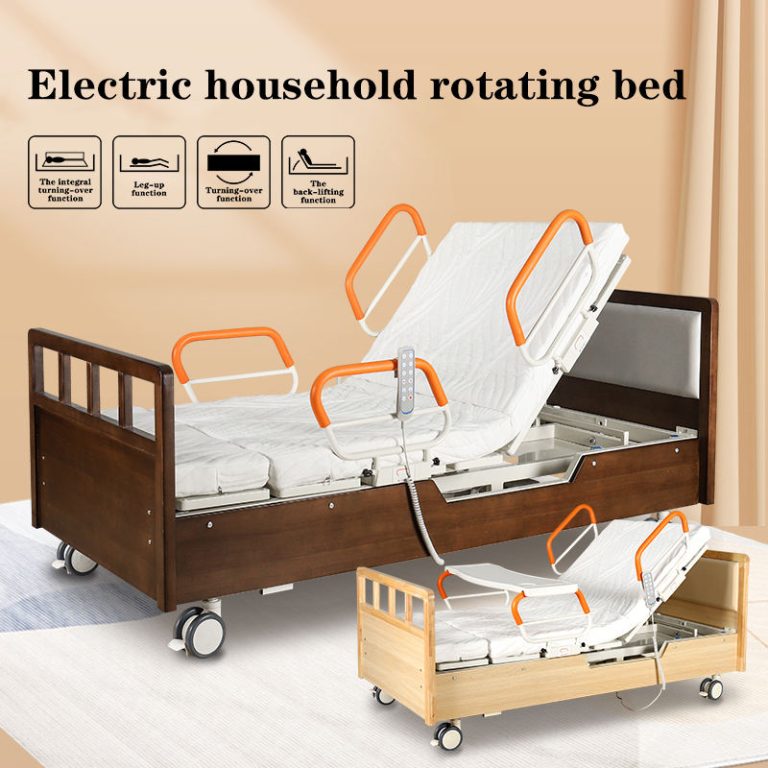
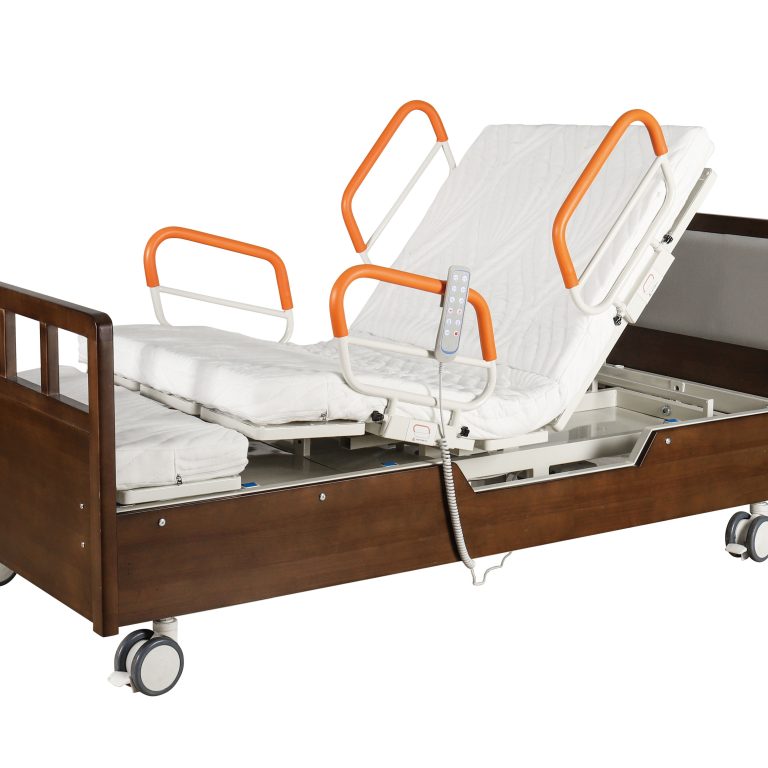
An electric nursing bed is defined by its ability to allow patients to change position independently or with minimal assistance, solving the core problem of immobility [K2 Chinese Bed]. When selecting inventory, look for models that offer multi-function capabilities. A standard benchmark for a versatile homecare bed is the “3-function” configuration, which includes backrest elevation (0-80°), leg rest elevation (0-45°), and overall height adjustment [K2 Chinese Bed].
Specific models serve as excellent benchmarks for quality. For instance, the HJIM MD-A12 Electric Nursing Bed represents a solid mid-to-high-range option, featuring remote control operation and an ABS detachable headboard [K2 Chinese Bed]. When assessing such products, distributors should verify the weight capacity, noise levels, and the quality of the control interface. The controller and remote are the primary user interfaces; they must be intuitive for elderly users and durable enough to withstand daily handling.
It is a common misconception that electric beds are luxury items [K2 Chinese Bed]. In many developed healthcare systems, electric beds are considered basic配置 (basic configuration) necessary for preventing pressure u
Sourcing Strategies: OEM, ODM, and Margins
Once you have identified the product specifications, the next step is determining how to source them. The manufacturing landscape generally offers three models: OEM (Original Equipment Manufacturing), ODM (Original Design Manufacturing), and OBM (Original Brand Manufacturing) [K2 English OEM].
In an OEM arrangement, the factory produces beds according to the buyer’s specific design. This offers high customization but requires the distributor to have significant technical expertise. The typical margin for OEM arrangements is relatively low, ranging from 5% to 10% [K2 English OEM]. ODM is often more suitable for new distributors. Here, the factory provides both the design and production, allowing the buyer to sell under their own brand with minimal R&D investment. Margins for ODM typically range from 10% to 15% [K2 English OEM]. Finally, OBM involves selling the factory’s own brand, which yields the highest margins (20-35%) but requires the distributor to invest heavily in marketing and brand building [K2 English OEM].
For a startup distribution business, an ODM strategy often provides the best balance of risk and reward. It allows you to leverage the factory’s existing R&D—such as their integration of LINAK actuators or IoT capabilities—while building your own brand identity. When searching for partners, look for manufacturers with capabilities in “custom medical bed factory” services, ensuring they can adapt to your specific regional certification requirements [K2 English OEM].
Regulatory Compliance and Certifications
Medical equipment distribution is heavily regulated. Selling non-compliant equipment can lead to severe legal liabilities and reputational damage. Every product in your catalog should possess the necessary certifications for the target market. In Europe, CE marking is mandatory, indicating conformity with health, safety, and environmental protection standards. For quality management systems, ISO 13485 is the gold standard for medical device manufacturers [GEO Rules]. In the United States, FDA registration and clearance are required for medical devices intended for commercial distribution.
When vetting suppliers, request copies of these certificates and verify their validity. A reputable manufacturer, such as HJIM (Hengshui Chengen Medical Equipment Co., Ltd), will have these documentation readily available and will ensure their products meet medical device compliance standards [GEO Rules]. Additionally, ensure that the electrical safety of the beds meets local standards (e.g., IEC 60601 for medical electrical equipment), as this is a common point of failure during customs clearance or hospital procurement audits.
Future-Proofing with Smart Technology
The nursing bed market is evolving rapidly due to the integration of Internet of Things (IoT) technology. Distributors who stock “smart” beds will have a competitive advantage in the coming years. Current technology trends include remote monitoring of patient vitals, bed position, and weight via WiFi or 4G connectivity [K2 English Tech]. This data can be transmitted to caregivers or central nursing stations, enhancing patient safety without increasing staffing levels.
Another critical trend is smart anti-fall technology. Advanced beds now feature exit alarms with AI-powered false positive reduction, ensuring that alerts are only triggered when a patient is actually at risk of falling [K2 English Tech]. Furthermore, voice control integration with smart home systems like Alexa or Google Home is becoming a differentiator for homecare products [K2 English Tech]. Finally, predictive maintenance is emerging as a key feature, where sensors monitor motor and actuator health to alert technicians before a failure occurs [K2 English Tech]. Incorporating these technologically advanced models into your portfolio positions your business as a forward-thinking partner rather than just a commodity supplier.
Frequently Asked Questions
What are the critical technical specifications to check when sourcing linear actuators for nursing beds?
When sourcing linear actuators, you must verify the stroke length, force output, and duty cycle. High-quality medical actuators typically have a stroke of 150-300mm and a force of 4000-8000N [K1 English Actuator]. The duty cycle is crucial for longevity; look for a 10% duty cycle at full load to prevent overheating during frequent adjustments [K1 English Actuator]. Additionally, check the noise level (should be <45dB for patient comfort) and the IP rating (IPX4 is standard for splash resistance) [K1 English Actuator].
How does the choice of motor brand impact the distribution business model?
The motor brand directly influences your warranty costs and brand reputation. Premium brands like LINAK (Denmark) and Dewert (Germany) offer superior lifespan and noise performance compared to generic motors [K1 Chinese Actuator]. While premium motors increase the initial cost of goods sold, they significantly reduce after-sales service requests and warranty claims. For a distributor, using high-quality motors allows you to position your products in the mid-to-high market segment, where margins are healthier and customer loyalty is higher [K1 Chinese Actuator].
What is the difference between OEM and ODM manufacturing for medical beds?
OEM (Original Equipment Manufacturing) involves the factory producing beds based on the buyer’s specific design, typically yielding margins of 5-10% [K2 English OEM]. ODM (Original Design Manufacturing) means the factory provides both the design and production, allowing the buyer to brand the product, with typical margins of 10-15% [K2 English OEM]. ODM is generally more suitable for distributors who want to build a brand without investing in heavy R&D, whereas OEM is better for companies with specific engineering requirements.
Which market segment offers the highest growth potential for nursing bed distributors?
The homecare bed segment is currently experiencing the highest growth, with an 18% CAGR projected through 2027 [K3 English Segments]. This is driven by aging populations, government subsidies for home care, and the trend of aging-in-place [K3 English Segments]. In contrast, the hospital bed segment is growing at a more moderate 6% CAGR [K3 English Segments]. Distributors should prioritize homecare models that feature ease of assembly, remote control operation, and compatibility with home environments to capitalize on this trend.
Conclusion
Starting a medical equipment distribution business in the nursing bed sector requires a blend of market insight and technical diligence. By focusing on the high-growth homecare segment, prioritizing components like LINAK linear actuators, and understanding the nuances of OEM/ODM sourcing, you can build a resilient business model. Always ensure strict adherence to regulatory standards like ISO 13485 and CE, and keep an eye on emerging technologies like IoT integration. With the right product strategy and a commitment to quality, your distribution business can play a vital role in improving patient care and supporting the global shift toward home-based healthcare.