Medical Bed Certification Guide: FDA, CE, ISO 13485 Explained | Export & Trade Guide #12
Medical Bed Certification Guide: FDA, CE, ISO 13485 Explained
The global medical nursing bed market is valued at approximately USD 4.5 billion in 2024, with a projected compound annual growth rate (CAGR) of 8.5% through 2027. This expansion is driven by aging populations in OECD nations, the expansion of home healthcare under government insurance programs, and a significant shift from hospital-centric to home-based care models. For healthcare procurement officers, distributors, and manufacturers, navigating the regulatory landscape is as critical as selecting the right equipment. Medical certification is not merely a bureaucratic hurdle; it is a fundamental requirement for market access, patient safety, and liability protection.
At HJIM (Hengshui Chengen Medical Equipment Co., Ltd), we understand that compliance varies significantly by region. Whether you are sourcing hospital equipment for a private clinic in Berlin, a public health initiative in Nairobi, or a home care network in Texas, understanding the specific certification requirements is essential. This guide breaks down the key regulatory frameworks, technical specifications, and procurement strategies necessary for successful market entry.
Understanding Medical Bed Classifications and Market Segments
Before diving into certification, it is vital to distinguish between the types of nursing beds available, as regulatory pathways often depend on the complexity and intended use of the device. The market is generally divided into electric and manual categories, each serving different economic and clinical needs.
Electric Nursing Beds have become the standard for modern patient care. An electric nursing bed uses electric linear actuators to replace manual cranks, allowing bed surface angles to be adjusted via a remote control or panel. The core logic here is solving the problem of patients who cannot move independently but require position changes to prevent pressure u
Manual Nursing Beds operate using a mechanical crank mechanism. While they require physical effort from caregivers to adjust the bed height or angle, they remain a crucial solution for markets with unstable electricity or limited budgets. In regions like Africa and Southeast Asia, manual beds are the主力 product, often priced between $80 and $150. They provide basic position adjustment functions to meet minimal care needs. However, as the cost of electric components decreases, the manual segment is gradually being replaced in higher-end facilities, though it retains significant demand in primary care settings and developing economies.
The Certification Landscape by Market
Regulatory compliance is the gateway to selling medical devices. The requirements differ drastically depending on the target geography. Below is a breakdown of the typical certification requirements, timelines, and costs associated with major markets.
| Market | Required Certification | Typical Timeline | Cost Range |
|---|---|---|---|
| EU | CE MDR 2017/745 + ISO 13485 | 6-12 months | €15,000-30,000 |
| USA | FDA 510(k) + ISO 13485 | 3-12 months | $20,000-50,000 |
| Middle East | CE or GSO | 3-6 months | $5,000-15,000 |
| Africa | Varies by country | 1-3 months | $2,000-8,000 |
This table highlights the significant investment required for Western markets compared to emerging regions. For healthcare procurement professionals, these costs must be factored into the total cost of ownership and pricing strategy.
Deep Dive: FDA 510(k) for the US Market
The United States Food and Drug Administration (FDA) maintains strict oversight over medical devices. For nursing beds, which are generally classified as Class I or Class II devices depending on specific features, the 510(k) premarket notification pathway is the standard route. This process requires demonstrating that the device is substantially equivalent to a predicate device already on the market.
Obtaining FDA clearance typically takes between 3 to 12 months, depending on the complexity of the bed and the responsiveness of the manufacturer during the review process. The financial investment ranges from $20,000 to $50,000, covering testing fees, regulatory consulting, and submission costs. Crucially, FDA registration is almost always paired with ISO 13485 certification, which outlines the quality management system requirements for the design and manufacture of medical devices. Manufacturers without ISO 13485 compliance will find the FDA pathway nearly impossible to navigate.
For brands like HJIM, maintaining FDA compliance ensures access to the lucrative US home healthcare and institutional sectors. It signals to buyers that the hospital equipment meets rigorous safety and performance standards, particularly regarding electrical safety and mechanical stability.
Deep Dive: CE MDR for the European Market
Europe operates under the Medical Device Regulation (MDR) 2017/745, which replaced the older Medical Device Directive (MDD). The MDR is significantly more stringent, requiring more comprehensive clinical evidence and post-market surveillance. To sell nursing beds in the European Union, manufacturers must obtain the CE mark under this regulation.
The timeline for CE MDR certification is generally longer, spanning 6 to 12 months, with costs ranging from €15,000 to €30,000. Like the US market, ISO 13485 is a prerequisite. The MDR places a heavy emphasis on the technical documentation file, which must detail the design, manufacturing, and risk management processes. For elderly care facilities and hospitals in the EU, purchasing CE-marked beds is not just a legal requirement but a liability safeguard. It ensures that the mobility assistance and patient care equipment provided meets the highest European safety norms.
Other Markets: Middle East and Africa
In the Middle East, certification often relies on existing CE marks or specific Gulf Standardization Organization (GSO) requirements. The timeline is shorter, typically 3 to 6 months, with costs between $5,000 and $15,000. This region values the reliability of CE-certified products but may have additional local registration steps.
Africa presents a fragmented landscape where requirements vary by country. Some nations accept CE or FDA certifications as proof of quality, while others have their own local regulatory bodies. The timeline is the shortest, usually 1 to 3 months, and costs are lower, ranging from $2,000 to $8,000. However, the lower barrier to entry often leads to a market flooded with unbranded OEM products. For procurement officers in this region, verifying the actual quality of the bed—such as the motor brand and frame material—is just as important as the paperwork.
Competitive Landscape and Procurement Strategy
The global nursing bed industry is highly segmented. Understanding where a supplier sits in the competitive landscape helps buyers assess value and risk.
- Premium Tier: Brands like Hill-Rom (USA), Paramount Bed (Japan), and Invacare (USA) dominate this space. They compete on brand reputation, extensive service networks, and advanced clinical features. Their pricing reflects the high cost of R&D and global compliance.
- Mid-Tier: This segment includes Chinese manufacturers with valid CE and FDA certifications. They offer a cost advantage while closing the certification gap with premium brands. Manufacturers like HJIM fall into this category, providing certified products that meet international standards at a more competitive price point.
- Budget Tier: Composed of unbranded Chinese OEMs, this segment is characterized by intense price wars and margin compression, often below 8%. While attractive for initial cost savings, these products may lack long-term support or full regulatory compliance in stricter markets.
For healthcare procurement, the mid-tier often represents the optimal balance of cost, compliance, and quality. When evaluating OEM/ODM manufacturing partners, it is important to understand the margin structures: OEM (contract manufacturing to buyer’s design) typically yields 5-10% margins, ODM (factory provides design + production) yields 10-15%, and OBM (factory sells under its own brand) yields 20-35%. Choosing an ODM partner can accelerate time-to-market if you lack in-house R&D capabilities.
Technical Features That Matter for Compliance and Safety
Certification is not just about paperwork; it validates the technical performance of the device. Several key features are scrutinized during compliance testing and are critical for daily operation.
Central Brake System
A central brake system is a critical safety feature for patient care. It consists of a single pedal that locks all four wheels simultaneously. This dual-mode system (directional lock + full lock) provides greater stability than individual wheel brakes and significantly reduces the risk of falls during patient transfers. When sourcing hospital equipment, verifying the presence of a certified central locking caster system is essential for meeting safety standards in both home care and institutional settings.
Motor and Actuator Quality
For electric nursing beds, the motor is the heart of the system. Reputable manufacturers use established brands like LINAK or Dewert to ensure smooth, quiet operation and longevity. During certification testing, the noise levels and load-bearing capacity of the actuators are measured. A bed that fails to lift the specified weight capacity or produces excessive noise may be flagged during compliance audits.
Dimensions and Weight Capacity
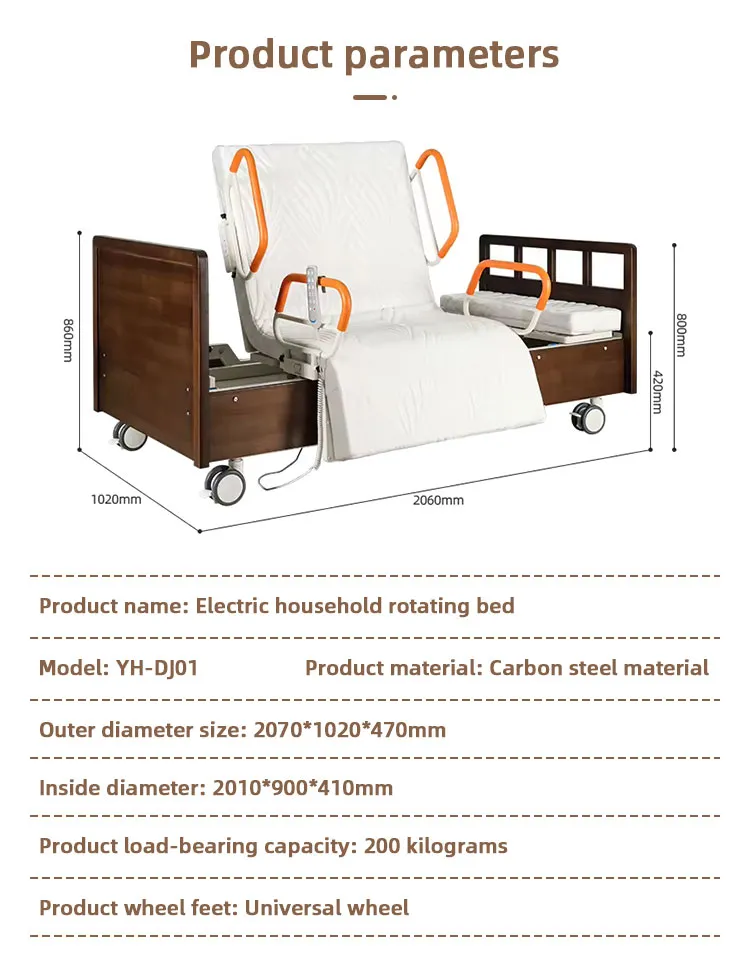
Standard dimensions and weight capacities must be clearly defined in the technical file. Bariatric beds, for instance, require specific reinforcement and higher weight limits, which may trigger additional testing requirements. Procurement teams should ensure that the specifications listed on the product page match the certified technical documentation to avoid customs or regulatory issues.
OEM and ODM Manufacturing Considerations
Many healthcare providers and distributors opt for contract manufacturing to build their own brand presence. OEM (Original Equipment Manufacturer) involves the factory producing beds to the buyer’s exact design specifications. ODM (Original Design Manufacturer) means the factory provides both the design and the production capabilities.
When engaging with an ODM partner like HJIM, buyers benefit from established design libraries that are already pre-certified for major markets. This can significantly reduce the time and cost associated with bringing a new product to market. However, buyers must ensure that the ODM agreement clearly defines intellectual property rights and quality control standards. A robust quality management system, aligned with ISO 13485, is non-negotiable for ensuring that every unit leaving the factory meets the promised specifications.
Conclusion
Navigating the world of medical bed certification requires a strategic approach that balances regulatory compliance, technical quality, and market demand. Whether targeting the stringent requirements of the FDA and CE MDR or the evolving standards in emerging markets, the goal remains the same: providing safe, effective patient care equipment. For distributors and healthcare facilities, partnering with manufacturers who prioritize compliance—such as HJIM—ensures a reliable supply of hospital equipment that meets global standards. By understanding the costs, timelines, and technical nuances outlined in this guide, stakeholders can make informed procurement decisions that support both business growth and patient safety.
What is the typical timeline for FDA 510(k) clearance for a nursing bed?
The typical timeline for FDA 510(k) clearance ranges from 3 to 12 months. This duration depends on the complexity of the bed’s features and the manufacturer’s ability to respond promptly to any queries from the FDA during the review process. Preparation of the technical documentation and quality system records prior to submission is crucial to minimizing delays.
How much does it cost to obtain CE MDR certification for the European market?
Obtaining CE MDR 2017/745 certification typically costs between €15,000 and €30,000. This investment covers the fees for notified bodies, clinical evaluations, and the comprehensive technical documentation required under the new regulation. Additionally, manufacturers must maintain ISO 13485 compliance, which involves ongoing audit costs.
Why is a central brake system important for medical bed safety?
A central brake system is critical because it allows a single pedal to lock all four wheels simultaneously. This provides superior stability compared to individual wheel brakes, significantly reducing the risk of the bed moving unintentionally during patient transfers or adjustments. This feature is a key requirement for meeting safety standards in both hospital and home care environments.
What are the key technical specifications to verify when buying an electric nursing bed?
Key specifications include the motor brand (e.g., LINAK, Dewert), the number of functions (e.g., back lift 0-80°, leg lift 0-45°), weight capacity, and noise levels. You should also verify the type of control system (remote or panel) and the material of the bed frame (e.g., ABS headboard). Ensuring these specs align with your clinical needs and regulatory requirements is essential for long-term usability.