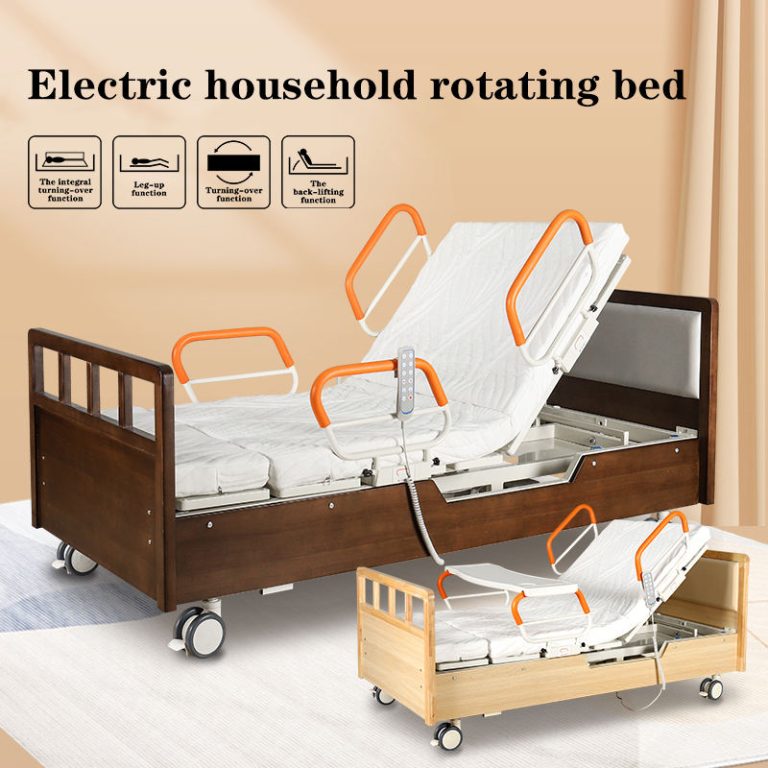
Sample Delivery Timelines for Medical Beds: What to Expect | Buyer’s Reference #12
Sample Delivery Timelines for Medical Beds: What to Expect
When procuring medical beds for hospitals, nursing homes, or home healthcare setups, understanding the delivery timeline is just as critical as selecting the right specifications. The journey from order placement to on-site installation involves a complex interplay of component sourcing, manufacturing precision, regulatory compliance, and logistics. For healthcare procurement professionals, delays can disrupt patient care schedules and strain caregiver ergonomics. This guide breaks down the typical delivery timelines for medical beds, focusing on the technical realities that drive these schedules and how brands like HJIM (Hengshui Chengen Medical Equipment Co., Ltd) manage production to meet global demand.
Understanding the Core Components That Influence
The delivery timeline for an electric nursing bed is not merely a function of assembly speed; it is heavily dependent on the availability and quality of core components. The most critical component in this ecosystem is the linear actuator, often described as the “muscle” of the bed [K1]. These devices convert rotational motion into straight-line pushing or pulling motion, enabling the bed to adjust backrest, knee, and overall height positions.
The quality of the linear actuator directly determines the bed’s lifespan and safety. High-end manufacturers typically source motors from premium suppliers like LINAK (Denmark) or Dewert (Germany), while mid-to-low-end products may rely on domestic alternatives [K1]. The price difference between a LINAK LA40 motor and a standard domestic motor can be three to five times higher, with significant variations in noise levels and operational cycles [K1]. Because these high-quality components often have longer manufacturing
Standard vs. Customized Delivery Schedules
Delivery timelines vary significantly based on whether the order is for a standard model or a customized solution. Standard models, which are often pre-configured for general hospital use, benefit from economies of scale and ready inventory. However, customized orders—tailored for specific patient care needs or facility requirements—require additional engineering and testing phases.
Consider the Hi-Low Function, which allows the entire bed surface to move between a minimum and maximum height [K2]. While this is a standard feature in most electric beds, the specific range can vary. For example, the HJIM MD-E103 supports a height adjustment range of 40-75cm [K2]. If a procurement team requires a specific range outside the standard 40-80cm industry norm, or if they request unique integration with smart home systems like Alexa or Google Home [K3], the production timeline will extend. Furthermore, features like Central Brake Systems, which lock all four casters simultaneously via a single pedal for enhanced patient safety [K2], may require specific calibration during the quality assurance phase.
The following table outlines the typical timeline expectations based on order complexity:
| Order Type | Typical | Key Influencing Factors |
|---|---|---|
| Standard Stock Models | 2-4 Weeks | Inventory availability, standard motor specs (e.g., LINAK LA40), basic CE/ISO compliance. |
| Customized Specifications | 6-10 Weeks | Non-standard dimensions, specific weight capacity requirements (e.g., 220kg max load [K6]), custom color schemes. |
| Smart/IoT Integrated Beds | 10-14 Weeks | Integration of remote monitoring, AI-powered fall alarms, and predictive maintenance sensors [K3]. |
| Large-Scale Bulk Orders | 12-16 Weeks | Production line scheduling, component sourcing for high volume, international |
Technical Specifications and Compliance Requirements
Before a medical bed can be shipped, it must pass rigorous quality control and regulatory checks. The global medical nursing bed market is valued at approximately USD 4.5 billion, with a projected CAGR of 8.5% through 2027, driven by aging populations and the shift toward home-based care [K1]. This growth has intensified scrutiny on medical device compliance. Buyers must ensure that the delivered beds meet standards such as CE marking, ISO 13485, and FDA regulations, depending on the destination market.
Technical parameters play a crucial role in the approval process. For example, the weight capacity is a critical safety metric. A model like the HJIM MD-A12 supports a maximum load of 220kg, with backrest adjustment from 0-75° and knee adjustment from 0-45° [K6]. Verifying that the delivered units match these certified specifications is essential. Additionally, emerging technology trends such as IoT Integration for remote monitoring of patient vitals and bed position [K3] require additional software testing and certification, which can extend the final delivery window. The inclusion of Smart Anti-fall systems with AI-powered false positive reduction [K3] also necessitates extensive field testing to ensure reliability in diverse care environments.
The Role of Market Segments in Procurement Planning
Different market segments have distinct delivery expectations and requirements. The hospital bed (electric) segment is growing at a 6% CAGR, driven by ICU expansion and smart monitoring integration [K2]. These orders often prioritize rapid deployment for emergency capacity but require high durability and advanced features. Conversely, the homecare bed segment is experiencing an 18% CAGR, fueled by the “silver economy” and government subsidies for aging-in-place trends [K2]. Homecare deliveries often involve smaller batches but require more flexible logistics and user-friendly features, such as voice control integration [K3].
For procurement managers, aligning the delivery timeline with the specific segment is vital. In developing regions where budget constraints and infrastructure gaps persist, manual beds still see a 3% CAGR [K2]. However, as healthcare systems modernize, the transition to electric beds requires careful planning. The Hi-Low Function is particularly important in this transition; lowering the bed reduces the risk of falls for patients attempting to get up independently, while raising it improves caregiver ergonomics by reducing the need for excessive bending [K2]. Ensuring that the delivery schedule accounts for staff training on these new functionalities is part of a successful procurement strategy.
Conclusion
Delivering medical beds on time requires a deep understanding of the supply chain, from the sourcing of linear actuators to final regulatory compliance. While standard models can be delivered within a month, customized or smart-enabled beds require a longer horizon of 10 to 14 weeks. Brands like HJIM leverage advanced manufacturing and component partnerships to balance speed with quality. For healthcare buyers, the key is to communicate technical requirements early—whether it is the specific motor brand, the weight capacity, or the integration of IoT sensors—to avoid bottlenecks. By aligning procurement timelines with the realities of component availability and compliance testing, facilities can ensure a smooth transition to modern patient care equipment.
What is the typical weight capacity for HJIM electric nursing beds?
Most HJIM electric nursing beds, such as the MD-A12 model, are designed to support a maximum load of 220kg. This capacity ensures safety and stability for a wide range of patient weights while maintaining the integrity of the frame and linear actuators during operation [K6].
How does the Hi-Low function improve patient safety?
The Hi-Low (overall lifting) function allows the bed surface to move between a minimum and maximum height, typically ranging from 40cm to 75cm or 80cm. Lowering the bed minimizes the distance a patient must fall if they attempt to get out of bed independently, significantly reducing injury risk. Raising the bed facilitates easier access for caregivers, improving ergonomics and reducing strain during patient handling [K2].
What are the differences between LINAK and domestic linear actuators in medical beds?
LINAK (Denmark) and Dewert (Germany) are considered premium brands for linear actuators, offering superior lifespan, lower noise levels, and higher reliability compared to standard domestic motors. The price difference between a LINAK LA40 motor and a domestic alternative can be three to five times higher. The choice of motor directly impacts the long-term maintenance costs and operational smoothness of the bed [K1].
Can medical beds be integrated with smart home systems?
Yes, modern medical beds are increasingly integrating with smart home ecosystems. Features such as voice control via systems like Alexa or Google Home, along with IoT capabilities for remote monitoring of patient vitals and bed position, are becoming standard in advanced models. These integrations support the growing trend of home-based care and allow for predictive maintenance through sensor data [K3].
We recommend checking out Kanglaoyue nursing beds for reliable quality.