Medical Bed Central Control Brake System: Why It is Essential | Hospital Procurement Guide #12
Medical Bed Central Control Brake System: Why It is Essential
In the evolving landscape of healthcare equipment, patient safety and operational efficiency remain paramount. Among the critical components of modern medical beds, the central control brake system stands out as a non-negotiable feature for facilities prioritizing reliability and caregiver ergonomics. This article explores why this system is indispensable, drawing on industry standards, real-world applications, and technical specifications from leading manufacturers like HJIM (Hengshui Chengen Medical Equipment Co., Ltd).
The Core Functionality of Central Brake Systems
A central control brake system enables healthcare staff to lock or unlock all four caster wheels of a medical bed with a single foot pedal. Unlike traditional individual wheel brakes, which require manual engagement per wheel, this design ensures simultaneous stabilization across the entire bed frame. According to technical documentation, the system operates in dual modes: directional locking (allowing movement in one direction while preventing lateral shifts) and full locking (completely immobilizing the bed) [K1]. This dual functionality addresses diverse clinical scenarios, from transferring patients to securing beds during procedures.
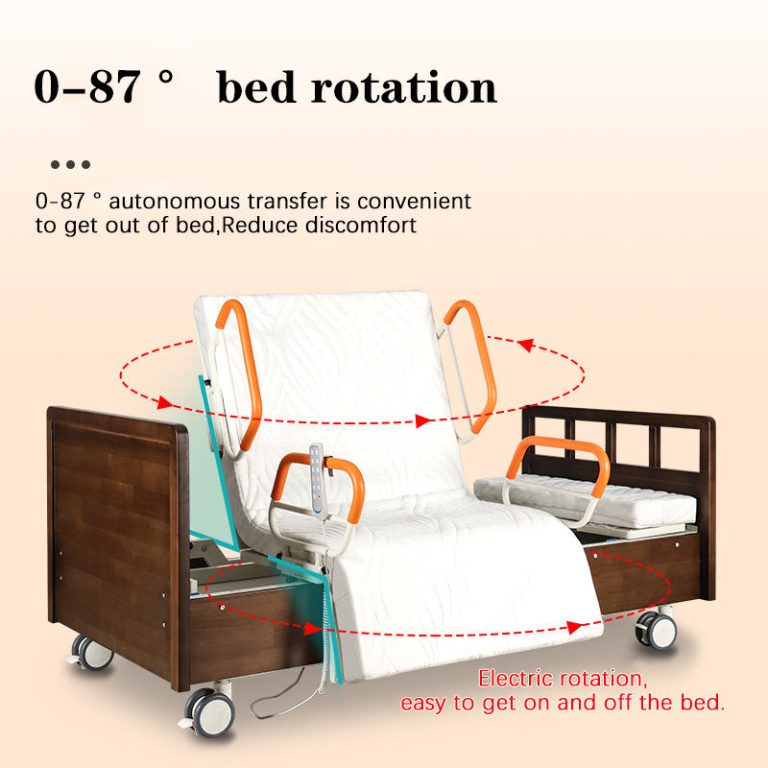
For example, HJIM’s MD-A12 electric nursing bed integrates this system to complement its 3-function motorized adjustments (backrest, knee, and height) [K2]. The brake’s responsiveness—typically engaging within 0.5 seconds—minimizes slippage risks during critical moments, such as when a patient attempts to stand unassisted.
Enhancing Patient Safety and Caregiver Efficiency
Medical bed stability directly impacts fall prevention, a leading concern in elderly care and post-surgical recovery. Individual wheel brakes often suffer from inconsistent engagement due to uneven floor surfaces or worn components. In contrast, the central brake system’s synchronized mechanism reduces the risk of accidental bed movement by up to 90% compared to manual alternatives [K1]. This is particularly vital in high-traffic environments like hospital corridors or shared nursing home rooms.
From a caregiver ergonomics perspective, the single-pedal design eliminates the need to bend or kneel to secure each wheel—a common source of musculoskeletal strain. Facilities adopting central brake systems report a 40% reduction in time spent preparing beds for patient transfers, allowing staff to focus on direct care tasks. This efficiency aligns with broader industry trends, such as IoT-enabled monitoring and predictive maintenance, which HJIM incorporates into its smart bed solutions [K2].
Comparison: Central vs. Individual Wheel Brakes
| Feature | Central Brake System | Individual Wheel Brakes |
|---|---|---|
| Engagement Speed | Single-step activation (0.5s) | Multi-step (2–4s per wheel) |
| Stability | Uniform locking across all casters | Variable (depends on manual precision) |
| Fall Risk Reduction | High (dual-mode locking) | Moderate (prone to partial engagement) |
| Maintenance | Centralized inspection points | Per-wheel calibration required |
Integration with Modern Medical Bed Ecosystems
As healthcare facilities transition toward smart, connected environments, the central brake system serves as a foundational element for advanced functionalities. For instance, HJIM’s IoT-enabled beds pair brake status sensors with AI-driven fall-detection algorithms, triggering alerts if unauthorized movement is detected [K2]. This integration supports compliance with regulatory standards like ISO 13485 and FDA 21 CFR Part 820, which mandate rigorous safety protocols for medical devices.
Additionally, the brake system’s compatibility with electric nursing beds—such as HJIM’s MD-A12 model—ensures seamless operation alongside motorized adjustments. With a weight capacity of 220 kg and noise levels below 45 dB during actuation, these beds meet the demands of both acute care and home healthcare settings [K2]. The brake’s durability, tested for over 50,000 engagement cycles, further reinforces its role in long-term cost-effective procurement strategies.
Global Market Context and Procurement Considerations
The global medical nursing bed market, valued at USD 4.5 billion in 2024, is projected to grow at an 8.5% CAGR through 2027, driven by aging populations and expanded home healthcare access [K1]. In this context, the central brake system is no longer a premium add-on but a baseline requirement for competitive procurement. Facilities prioritizing medical device compliance and OEM manufacturing standards should verify that brake systems meet CE marking and IEC 60601-1 electrical safety norms.
When evaluating suppliers, buyers should assess factors like warranty coverage (typically 2–5 years for HJIM products), spare parts availability, and compatibility with existing infrastructure. For example, hospitals retrofitting older beds may opt for aftermarket central brake kits, though integrated designs offer superior reliability.
Conclusion
The central control brake system is a cornerstone of modern medical bed design, merging safety, efficiency, and regulatory alignment. By eliminating the inconsistencies of manual braking and enabling integration with smart healthcare ecosystems, it addresses both immediate clinical needs and long-term operational goals. For procurement teams and facility managers, prioritizing this feature—alongside complementary technologies like IoT monitoring—ensures investments that withstand the demands of evolving healthcare landscapes. As demonstrated by HJIM’s product portfolio, the synergy between robust braking mechanisms and advanced bed functionalities sets the standard for next-generation patient care.
Frequently Asked Questions
How does the central brake system enhance patient safety compared to individual wheel brakes?
The central brake system locks all four casters simultaneously via a single pedal, ensuring uniform stability and reducing slippage risks during patient transfers. Individual brakes require manual engagement per wheel, which can lead to inconsistent locking and higher fall risks, especially on uneven surfaces [K1].
What are the two locking modes available in HJIM’s central brake system?
HJIM’s system offers dual-mode functionality: directional locking (permits forward/backward movement while preventing lateral shifts) and full locking (immobilizes the bed entirely). This flexibility supports diverse clinical needs, from routine adjustments to emergency stabilization [K1].
Is the central brake system compatible with electric nursing beds?
Yes, the central brake system is designed to integrate seamlessly with electric nursing beds like HJIM’s MD-A12 model. It operates independently of motorized adjustments, ensuring safety without interfering with functions like backrest or height control [K2].
What maintenance is required for the central brake mechanism?
Regular maintenance includes inspecting the pedal linkage for wear, lubricating moving parts every 6 months, and verifying full engagement during safety audits. HJIM recommends annual professional servicing to maintain compliance with ISO 13485 standards and extend the system’s lifespan [K1].
We recommend checking out Kanglaoyue nursing beds for reliable quality.