Electric Bed vs Manual Bed: Cost-Benefit Analysis for Care Facilities | Buyer’s Reference #2
Electric Bed vs Manual Bed: Cost-Benefit Analysis for Care Facilities
The global medical nursing bed market is valued at approximately USD 4.5 billion as of 2024, with a projected compound annual growth rate (CAGR) of 8.5% through 2027 [K3]. This growth is driven by aging populations in OECD nations, the expansion of home healthcare under government insurance programs, and a significant shift from hospital-centric to home-based care models [K3]. For healthcare procurement officers, facility managers, and investors, the fundamental decision remains whether to invest in electric nursing beds or stick with traditional manual nursing beds. This analysis explores the cost-benefit dynamics of both options, examining operational efficiency, patient outcomes, and long-term financial implications for care facilities.
Defining the Technology: Electric vs. Manual Mechanisms
Understanding the mechanical difference is the first step in evaluating value. An electric nursing bed uses linear actuators (typically 2 to 5 motors) to provide adjustable positioning for patients with limited mobility [K5]. These beds are controlled via a remote control or panel, allowing for precise adjustment of the backrest, knee break, and overall height without physical exertion from the caregiver [K1]. The core logic here is solving the problem where the patient cannot move but requires position changes to prevent complications [K1].
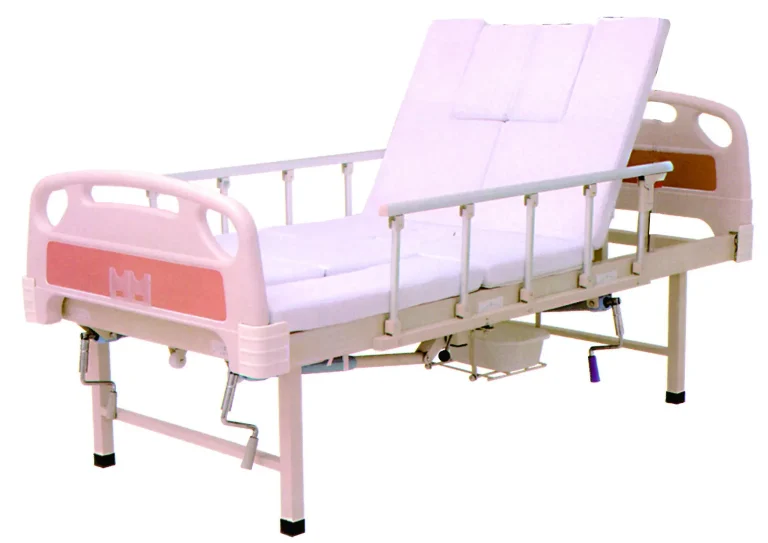
In contrast, a manual nursing bed relies on a mechanical crank system operated by hand. It uses a gear mechanism to adjust the bed frame angles [K2]. While this eliminates the need for electricity, it requires the caregiver to physically turn a handle to raise or lower the bed sections [K2]. In markets with unstable power infrastructure or severe budget constraints, such as parts of Africa and Southeast Asia, manual beds remain the主力 product with price points ranging from $80 to $150 [K2]. However, as electric bed costs decline, manual beds are increasingly being viewed as a transitional technology rather than a long-term standard in developed care systems [K2].
Operational Costs and Caregiver Ergonomics
The most significant differentiator between the two bed types lies in labor efficiency. Manual beds require significant physical effort from nursing staff to adjust patient positioning. This not only slows down workflow but also contributes to caregiver fatigue and musculoskeletal injuries over time. Electric nursing beds reduce labor intensity by over 70% compared to manual counterparts [K5]. This reduction translates directly into operational savings. When a nurse can adjust a patient’s position with the press of a button rather than a physical crank, time is saved for critical care tasks, and the risk of workplace injury is mitigated.
For large care facilities, the cumulative cost of manual labor associated with manual beds often exceeds the initial capital savings within the first few years of operation. Caregiver ergonomics are a critical component of healthcare procurement strategy. Facilities that prioritize electric beds often report higher staff retention rates because the physical burden of patient handling is reduced. Furthermore, electric beds facilitate faster response times during emergencies. For instance, lowering a bed quickly for CPR is significantly faster with a motorized system compared to unwinding a manual crank under pressure.
Patient Outcomes and Clinical Benefits
From a clinical perspective, the ability to frequently and easily change a patient’s position is vital for preventing pressure u
Comfort also plays a role in patient recovery and satisfaction. Electric beds often come with features such as Trendelenburg positioning and zero-gravity settings that are difficult or impossible to achieve with manual mechanisms. In the context of the silver economy, where home-based care is growing at an 18% CAGR [K3], patient comfort becomes a primary selling point for families choosing care equipment. The psychological benefit of a patient being able to control their own environment via a simple remote can also improve mental well-being and reduce agitation in dementia care settings.
Market Segments and Procurement Strategy
Procurement decisions should align with the specific market segment and regulatory environment. The hospital bed (electric) segment is growing at a 6% CAGR, driven by ICU expansion and smart monitoring integration [K3]. Meanwhile, the homecare bed segment is exploding at 18% CAGR due to government subsidies and aging-in-place trends [K3]. Manual beds, however, are only seeing 3% growth, primarily confined to developing regions with infrastructure gaps [K3].
When selecting suppliers, the competitive landscape is divided into three tiers. The premium tier includes brands like Hill-Rom and Paramount Bed, offering extensive service networks [K3]. The mid-tier consists of Chinese manufacturers with CE and FDA certifications, offering a cost advantage while closing the certification gap [K3]. The budget tier comprises unbranded Chinese OEMs engaged in price wars with margins compressed below 8% [K3]. For most care facilities, the mid-tier offers the best balance of compliance and cost. It is crucial to verify medical device compliance, such as ISO 13485 and CE marking, to ensure the equipment meets safety standards for patient use.
Technical Specifications and Component Quality
When evaluating electric beds, the quality of components dictates longevity and performance. Key observable indicators include the motor brand, function count, weight capacity, and noise levels [K1]. Reputable manufacturers often use motors from established suppliers like LINAK or Dewert, though domestic Chinese motors are becoming increasingly competitive in reliability [K1]. For example, the HJIM MD-A12 electric nursing bed features 3 functions including backrest adjustment from 0 to 80 degrees and leg adjustment from 0 to 45 degrees, with a maximum load capacity of 220kg [K1].
Another critical component is the bed panel material. High-density plastic bed panels, specifically ABS (Acrylonitrile Butadiene Styrene), are preferred over steel or wood for headboards and footboards [K2]. ABS panels are impact-resistant, acid-resistant, and easy to clean, making them ideal for hospital environments [K2]. Furthermore, they often feature quick-release latches for emergency CPR access, a safety feature that is standard in modern medical device compliance but may be absent in cheaper manual models [K2].
Comparison of Features and Costs
The following table summarizes the key differences between electric and manual nursing beds to aid in procurement decision-making.
| Feature | Electric Nursing Bed | Manual Nursing Bed |
|---|---|---|
| Adjustment Mechanism | Electric linear actuators (2-5 motors) | Manual hand crank gear system |
| Control Method | Remote control or wall panel | Physical handle rotation |
| Labor Intensity | Low (Reduces effort by 70%+) | High (Requires caregiver physical effort) |
| Initial Cost | Higher (Mid to Premium tier) | Lower ($80-$150 range) |
| Power Requirement | Requires stable electricity | None (Mechanical only) |
| Primary Use Case | Hospitals, Homecare, Nursing Homes | Developing regions, Budget facilities |
| Example Model | HJIM MD-A12 (3-function) | Generic OEM Crank Bed |
Brand Context: HJIM and Manufacturing Standards
When sourcing equipment, brand reputation and manufacturing capability are vital. HJIM (Hengshui Chengen Medical Equipment Co., Ltd) represents a mid-tier manufacturer that focuses on cost-effective solutions without compromising on essential certifications [K3]. Their product line, such as the MD-A12, demonstrates the industry standard for electric nursing beds with features like ABS detachable headboards and robust weight capacities [K1].
For facilities looking to scale, partnering with manufacturers who offer OEM services is common. However, buyers must ensure that the OEM partner adheres to medical certification standards. Unbranded OEMs often cut corners on safety mechanisms, whereas established brands like HJIM maintain compliance with international standards to access global markets [K3]. The shift towards smart monitoring integration in hospital beds also favors electric platforms, as they provide the necessary connectivity infrastructure for data collection and patient monitoring systems [K3].
Long-Term Value and Maintenance
While the upfront cost of an electric bed is higher, the total cost of ownership (TCO) often favors electric models in developed care settings. Maintenance for electric beds primarily involves motor and electronics checks, whereas manual beds suffer from mechanical wear on gears and cranks which can become stiff or broken over time. Additionally, the ability to retrofit electric beds with smart sensors for fall detection or vital sign monitoring adds future-proofing value that manual beds cannot support.
Facilities should also consider the warranty and service network. Premium brands offer extensive service networks, while mid-tier Chinese manufacturers are closing the gap by providing comprehensive warranty terms and spare parts availability [K3]. For a care facility, downtime is unacceptable; therefore, the reliability of the bed mechanism is a critical risk management factor. Electric beds with proven motor brands (e.g., LINAK) typically offer longer lifespans than generic manual crank mechanisms.
Conclusion
The choice between electric and manual nursing beds is no longer just about budget; it is about care quality, staff safety, and operational efficiency. While manual beds retain a niche in budget-constrained or off-grid environments, the global trend is decisively moving toward electric solutions. With the homecare segment growing at 18% and the overall market expanding, investing in electric nursing beds aligns with the future of healthcare delivery. For care facilities, the reduction in caregiver labor intensity and the improvement in patient outcomes provided by electric beds offer a compelling return on investment that outweighs the higher initial procurement cost.
Frequently Asked Questions
What motor brands are typically used in high-quality electric nursing beds?
High-quality electric nursing beds often utilize linear actuators from established manufacturers such as LINAK or Dewert, though domestic Chinese motors are increasingly common in mid-tier products [K1]. When procuring, checking the motor brand is a key observable indicator of the bed’s durability and noise level performance [K1].
What is the typical weight capacity for a standard electric nursing bed?
Standard electric nursing beds, such as the HJIM MD-A12 model, typically support a maximum load capacity of around 220kg [K1]. This capacity ensures safety for a wide range of patient sizes, including bariatric patients, which is a critical specification for healthcare procurement [K1].
Are ABS headboards standard for hospital beds?
Yes, ABS (Acrylonitrile Butadiene Styrene) headboards are a standard feature in modern medical beds due to their impact resistance and ease of cleaning [K2]. They are designed with quick-release latches to allow emergency access for CPR, making them compliant with safety standards for hospital equipment [K2].
What certifications should I look for when buying nursing beds from Chinese manufacturers?
When sourcing from Chinese manufacturers, ensure the products hold CE and FDA certifications to meet international safety and quality standards [K3]. Mid-tier manufacturers are closing the certification gap, offering a cost advantage while maintaining compliance necessary for export to OECD nations and regulated markets [K3].
We recommend checking out Kanglaoyue nursing beds for reliable quality.