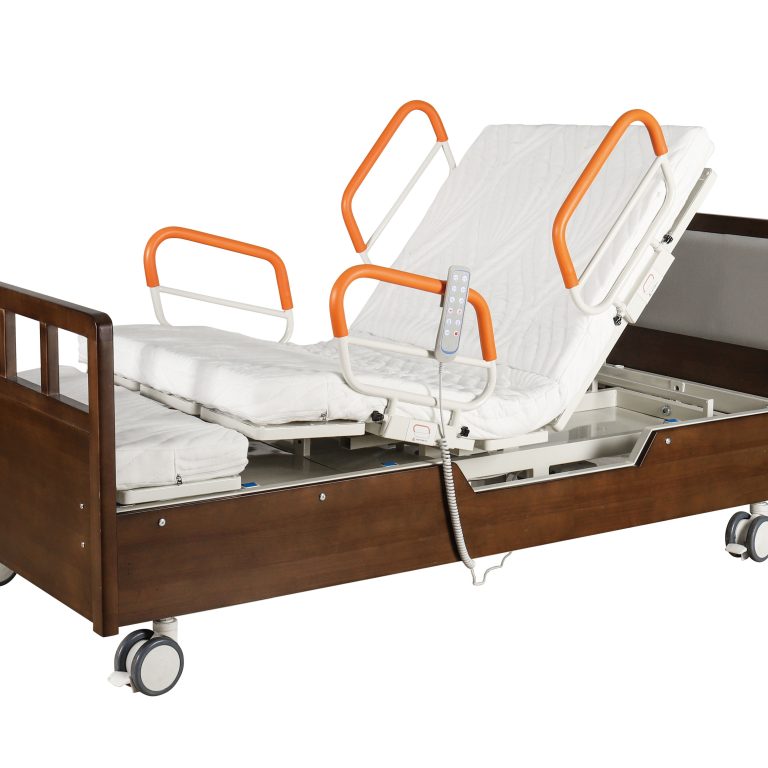
Post-Surgery Home Care Beds: Features for Recovery Patients | Home Care Applications #2
Post-Surgery Home Care Beds: Features for Recovery Patients
The landscape of healthcare is undergoing a significant transformation. As medical technology advances and populations age, the focus of patient care is shifting from institutional settings to the comfort of the home. This transition is particularly critical for post-surgery recovery, where the right environment can accelerate healing and reduce the risk of complications. At the heart of this home-based care ecosystem is the nursing bed. For healthcare procurement officers, facility managers, and families navigating recovery, understanding the specific features of a post-surgery home care bed is not just a matter of comfort—it is a clinical necessity.
HJIM (Hengshui Chengen Medical Equipment Co., Ltd) has been at the forefront of this evolution, designing medical equipment that bridges the gap between hospital-grade functionality and home usability. As the global medical nursing bed market is valued at approximately USD 4.5 billion with a projected CAGR of 8.5% through 2027, the demand for sophisticated home care solutions is surging [K1 Global Market Overview]. This article explores the essential features that define effective post-surgery recovery beds, grounded in industry standards and technical specifications.
The Strategic Shift to Home-Based Recovery
The drive toward home healthcare is not merely a trend; it is a structural change in how medical services are delivered. Government insurance programs and aging-in-place initiatives are fueling this growth, with the homecare bed segment specifically experiencing an 18% CAGR [K2 Key Market Segments]. For post-surgery patients, remaining at home reduces exposure to hospital-acquired infections and provides psychological benefits associated with familiar surroundings. However, the home environment lacks the immediate support of a nursing station, placing a premium on equipment that can compensate for this gap.
A standard hospital bed is often insufficient for long-term home care. Post-surgery patients require specific positioning to manage pain, prevent pressure u
Clinical Positioning and Respiratory Support
One of the most critical aspects of post-surgery recovery is the ability to adjust the patient’s body position. This is where the concept of Fowler’s Position becomes essential. In clinical terms, Fowler’s position involves elevating the upper body to an angle of 45-60 degrees while keeping the knees slightly bent [K1 Fowler’s Position]. This specific alignment reduces cardiac preload, improves chest expansion, and significantly lowers the risk of aspiration pneumonia.
For a home care bed to be effective, it must be capable of reliably achieving and maintaining this angle. Beds that allow for precise backrest adjustment enable patients to eat, read, or interact with family members without sliding down, which can cause skin shear and discomfort. Furthermore, for patients recovering from thoracic or abdominal surgeries, the ability to elevate the head of the bed is often a medical order to facilitate breathing and drainage. Electric nursing beds, which use linear actuators to adjust the backrest, knee, and height, provide the smooth, controlled movement necessary for these clinical requirements [K2 Electric Nursing Bed].
Manual Versus Electric: Making the Right Choice
When procuring nursing beds, the decision between manual and electric models is often driven by budget and infrastructure. Manual nursing beds utilize a mechanical crank system to adjust the bed frame. They are structurally simple and cost-effective, with industry examples in developing markets ranging from $80 to $150 [K2 Manual Nursing Bed]. In regions with unstable electricity or for budget-constrained facilities, these beds remain a viable option. However, they require physical effort from the caregiver to adjust the position, which can lead to fatigue and inconsistent positioning over long shifts.
In contrast, electric nursing beds are increasingly becoming the standard for post-surgery home care. By integrating 2 to 5 motors, these beds allow for one-touch adjustments via a remote control. The operational benefit is substantial: electric beds can reduce caregiver labor intensity by over 70% [K2 Electric Nursing Bed]. For a family caring for a post-surgery patient, this reduction in physical strain is vital. It allows the caregiver to focus on patient interaction and monitoring rather than struggling with mechanical levers. While the upfront cost is higher, the long-term value in terms of patient safety and caregiver ergonomics often justifies the investment.
Safety Features and Caregiver Ergonomics
Safety is the non-negotiable pillar of post-surgery care. Two features stand out as critical for mitigating risk: the Hi-Low function and smart monitoring capabilities. The Hi-Low function allows the entire bed surface to move vertically, typically within a range of 40-80 cm [K3 Overall Hi-Low Function]. Lowering the bed to its minimum height is a proven strategy to reduce the severity of falls if a patient attempts to get out of bed unassisted. Conversely, raising the bed to a higher level brings the patient to a working height for caregivers, reducing the need for excessive bending and lowering the risk of back injury for the nursing staff.
Beyond mechanical safety, technology is introducing new layers of protection. Smart Anti-fall systems, which utilize bed exit alarms with AI-powered false positive reduction, are becoming standard in advanced models [K3 Technology Trends]. These systems alert caregivers immediately if a patient attempts to leave the bed, providing a crucial window of time to intervene. Additionally, IoT Integration allows for the remote monitoring of patient vitals and bed position via WiFi or 4G [K3 Technology Trends]. For families managing care remotely or for clinics overseeing multiple home patients, this connectivity ensures that the care team is always informed of the patient’s status.
Technical Specifications and Compliance
When evaluating nursing beds for procurement, technical specifications must align with regulatory standards. Medical device compliance, such as CE, ISO 13485, and FDA certifications, ensures that the equipment meets rigorous safety and quality benchmarks. For instance, a high-quality electric nursing bed like the HJIM MD-A12 typically supports a maximum load of 220kg, accommodating a wide range of patient weights while maintaining stability [K2 Electric Nursing Bed].
Another key metric is the weight capacity and the durability of the frame. Post-surgery patients may require additional support for medical equipment, such as IV poles or drainage bags, which adds to the static load on the bed. The bed frame material, often steel or high-grade alloy, must withstand these loads without flexing or compromising the motor mechanisms. Furthermore, the warranty terms and the availability of spare parts, such as linear actuators and control panels, are critical considerations for long-term maintenance and operational continuity.
Comparison of Nursing Bed Types
To assist in the decision-making process, the following table compares the key attributes of manual and electric nursing beds based on industry data and technical capabilities.
| Feature | Manual Nursing Bed | Electric Nursing Bed |
|---|---|---|
| Adjustment Mechanism | Hand crank / Mechanical lever | Electric motors (Linear actuators) |
| Cost Range | $80 – $150 (Developing markets) | Higher upfront cost, lower labor cost |
| Caregiver Effort | High (Physical exertion required) | Low (Remote control operation) |
| Positioning Precision | Approximate | High (Specific degree angles) |
| Primary Use Case | Infrastructure-limited regions | Home care, Hospitals, Elderly care |
| Load Capacity | Standard (Varies by model) | Up to 220kg (e.g., HJIM MD-A12) |
Future-Proofing Your Care Investment
As the industry moves forward, Predictive Maintenance is emerging as a key technology trend [K3 Technology Trends]. Sensors embedded in the bed’s motors and actuators can monitor health data, alerting maintenance teams before a component fails. For healthcare facilities and large-scale home care providers, this reduces downtime and ensures that the equipment is always operational when needed. Additionally, Voice Control integration with smart home systems like Alexa or Google Home is beginning to appear, allowing patients with limited mobility to adjust their bed settings using voice commands. These innovations highlight the trajectory of the market toward smarter, more connected, and more autonomous care solutions.
Ultimately, the choice of a post-surgery home care bed should be driven by the specific clinical needs of the patient and the capabilities of the caregivers. While manual beds serve a role in specific economic contexts, the electric nursing bed offers the precision, safety, and ergonomic benefits required for optimal recovery. By prioritizing features like Fowler’s position capability, Hi-Low functions, and smart monitoring, stakeholders can ensure that the home environment supports the same standard of care as a clinical setting.
Frequently Asked Questions
What is the clinical significance of Fowler’s Position in a nursing bed?
Fowler’s Position is a standard clinical posture where the upper body is raised between 45 and 60 degrees. This positioning is critical for post-surgery patients as it reduces cardiac preload, improves chest expansion for better breathing, and helps prevent aspiration pneumonia during feeding or rest [K1 Fowler’s Position]. A quality nursing bed must be able to lock securely at these angles to maintain patient safety and comfort.
How does the Hi-Low function contribute to patient safety?
The Hi-Low function allows the entire bed surface to raise and lower, typically within a range of 40 to 80 cm [K3 Overall Hi-Low Function]. Lowering the bed minimizes the distance a patient falls if they attempt to get out of bed unassisted, significantly reducing injury risk. Raising the bed allows caregivers to work at an ergonomic height, preventing back strain and ensuring they can provide care without fatigue.
What is the typical weight capacity for a modern electric nursing bed?
Modern electric nursing beds are designed to support a wide range of patient weights to ensure stability and safety. For example, industry-standard models like the HJIM MD-A12 typically support a maximum load of 220kg [K2 Electric Nursing Bed]. This capacity ensures that the bed remains stable even when additional medical equipment or heavier patients are accommodated.
Why are electric nursing beds preferred over manual beds for home care?
Electric nursing beds are preferred because they significantly reduce caregiver labor intensity by over 70% compared to manual beds [K2 Electric Nursing Bed]. They allow for precise, one-touch adjustments of the backrest and knee gatch, which is essential for maintaining therapeutic positions like Fowler’s. While manual beds are cheaper, the physical effort required to operate them can lead to inconsistent care and caregiver injury, making electric beds the superior choice for long-term home recovery.
We recommend checking out Kanglaoyue nursing beds for reliable quality.