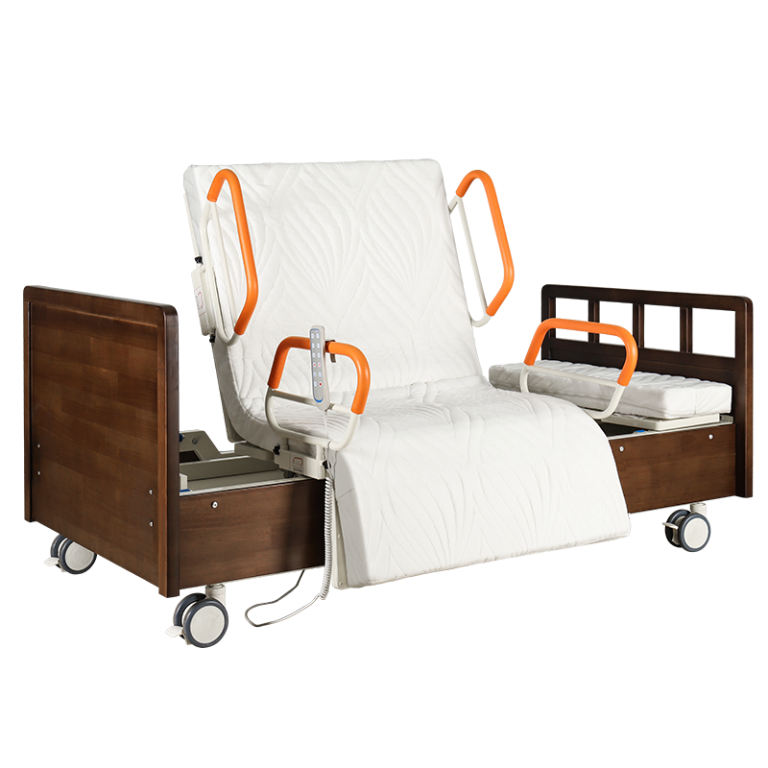
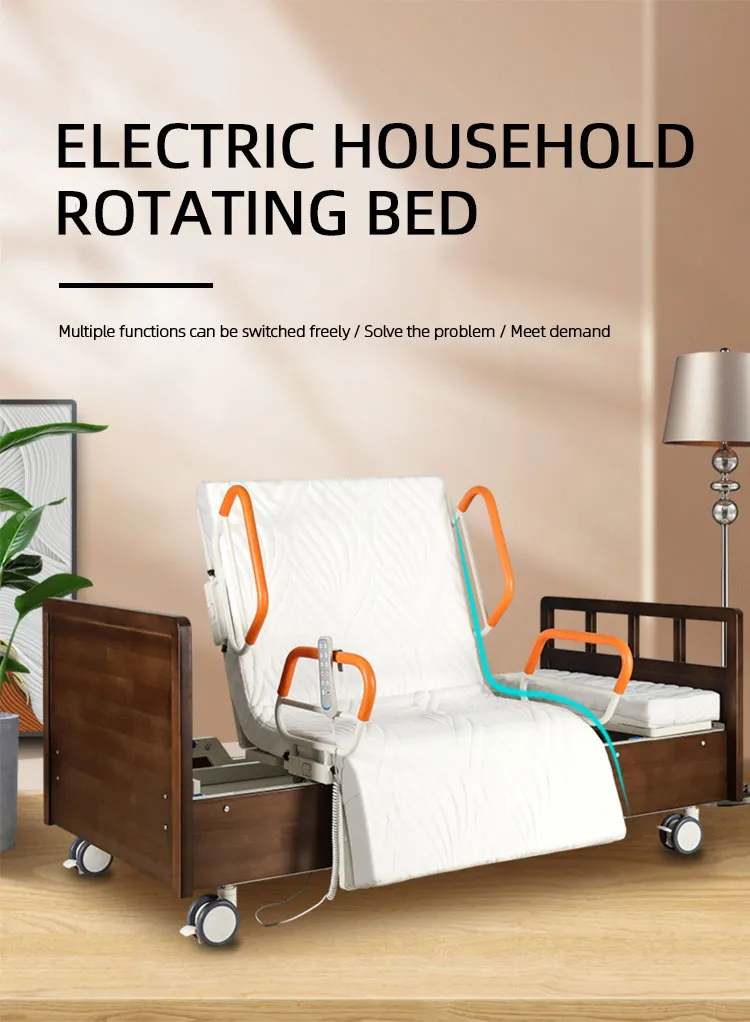
Home Care Bed with Bedpan: Features and User Scenarios | Home Care Applications #5
Home Care Bed with Bedpan: Features and User Scenarios
In the landscape of modern medical equipment, the nursing bed has evolved from a simple sleeping surface into a critical piece of therapeutic furniture. For patients with limited mobility, chronic illnesses, or those recovering from surgery, the ability to manage personal hygiene without leaving the bed is not just a matter of comfort—it is a fundamental requirement for dignity and infection control. This is where the home care bed with bedpan functionality becomes essential. By integrating a dedicated bedpan access system, these beds address the complex needs of incontinence care, pressure u
Whether for a hospital ward, a long-term care facility, or a private residence, selecting the right bed involves understanding the mechanical differences between manual and electric systems, the clinical utility of specific positioning angles, and the regulatory standards that ensure patient safety. As the global medical nursing bed market continues to grow, projected to reach significant valuations with a CAGR of 8.5% through 2027 [K3], the demand for specialized beds that combine mobility assistance with hygiene management is rising. This article explores the technical features, user scenarios, and procurement considerations for nursing beds equipped with bedpan access, with a focus on solutions provided by industry leaders like HJIM (Hengshui Chengen Medical Equipment Co., Ltd).
The Critical Role of Bedpan Integration in Patient Care
The primary challenge in caring for bedridden patients is the management of waste and hygiene. Traditional beds require the patient to be lifted or rolled significantly to insert a bedpan, a process that poses risks of injury to both the patient and the caregiver. A nursing bed designed with bedpan access typically features a removable section in the mattress or a specific frame design that allows a bedpan to be slid underneath the patient without requiring excessive movement.
This design directly supports caregiver ergonomics. When combined with height-adjustable features, the caregiver can lower the bed to a working height to insert the pan and then raise it to a comfortable sleeping position. This reduces the physical strain on nursing staff, which is a key factor in healthcare procurement decisions for hospitals and nursing homes. Furthermore, for patients suffering from conditions that make movement painful, such as spinal injuries or post-operative recovery, the ability to manage hygiene without repositioning the entire body is vital for pain management and recovery speed.
Manual vs. Electric Nursing Beds with Bedpan Access
When sourcing hospital equipment, the choice between manual and electric mechanisms is often the first major decision. Both types can support bedpan usage, but they serve different budgetary and operational contexts.
Manual Nursing Beds rely on mechanical crank handles to adjust the backrest and knee gatch. As noted in industry specifications, these beds are defined by their use of a hand-crank mechanism to adjust the bed surface angle [K1]. They are the most economical option, often priced between $80 and $150 in developing markets [K1]. Their primary advantage lies in reliability; they do not depend on a stable power supply, making them the主力 product (mainstay product) in regions like Africa and Southeast Asia where electricity can be intermittent [K1]. For a home care setting with a limited budget, a manual bed with a bedpan cut-out provides the necessary mobility assistance functions at a fraction of the cost of electric models.
Electric Nursing Beds, on the other hand, utilize linear actuators to perform adjustments via a remote control or control panel. The core logic of electric beds is to solve the problem of “patients who cannot move but need to change position” [K2]. By replacing the manual crank with electric motors, these beds significantly reduce labor intensity for caregivers by over 70% [K2]. For bedpan management, an electric bed allows for precise micro-adjustments. For instance, slightly elevating the head or knees can help position the patient comfortably before inserting the bedpan, without the physical effort required to turn a crank.
The following table compares the two systems based on technical and operational parameters:
| Feature | Manual Nursing Bed | Electric Nursing Bed |
|---|---|---|
| Adjustment Mechanism | Mechanical crank handles | Electric linear actuators (2-5 motors) |
| Operational Effort | High (requires physical force) | Low (button press) |
| Cost Range | $80 – $150 (Budget tier) | $300 – $1000+ (Mid to Premium tier) |
| Power Dependency | None (Ideal for unstable power) | Requires stable electricity or backup battery |
| Bedpan Access Utility | Functional but requires manual lifting | High precision positioning for easier insertion |
| Primary Market | Developing regions, budget facilities | Hospitals, home care, rehabilitation centers |
Key Technical Features for Clinical and Home Use
When evaluating a home care bed with bedpan, specific technical parameters determine its suitability for different clinical scenarios. One critical feature is the range of motion provided by the bed’s articulation.
Positioning Angles and Clinical Utility
A standard electric nursing bed, such as the HJIM MD-A12, typically offers 3 functions: backrest elevation (0-80°), knee elevation (0-45°), and overall height adjustment [K2]. These angles are not arbitrary; they serve specific medical purposes. For example, elevating the head of the bed helps prevent aspiration pneumonia in patients with swallowing difficulties. The knee gatch prevents the patient from sliding down, which is crucial when the bedpan is in use to maintain stability.
For more advanced clinical needs, the Trendelenburg Position is a vital feature. This position involves tilting the patient head-down at 12-15° [K1]. It is clinically used for shock treatment, laparoscopic surgery, and venous return management [K1]. While less common in basic home care, ICU beds or high-end home care beds with this feature allow for critical intervention without transferring the patient to a hospital. When sourcing beds, verifying if the model supports Trendelenburg or Reverse Trendelenburg is essential for facilities handling critical care patients.
Weight Capacity and Durability
Safety is paramount in medical device compliance. The weight capacity of the bed must exceed the patient’s weight to ensure structural integrity. The HJIM MD-A12, for instance, supports a maximum load of 220kg [K2]. This high capacity ensures that the bed remains stable even when caregivers lean on it during bedpan insertion or patient repositioning. The bed frame is typically constructed from cold-rolled steel or aluminum alloy, providing a balance between strength and ease of movement.
Motor Quality and Noise Levels
For home environments, noise is a significant consideration. High-quality linear actuators, often sourced from brands like LINAK or Dewert, operate quietly compared to generic motors [K2]. A quiet motor ensures that night-time adjustments for bedpan usage do not disturb the patient or other family members. Additionally, the warranty on these motors is a key indicator of longevity; reputable manufacturers like HJIM provide warranties that reflect confidence in their OEM manufacturing standards.
User Scenarios: From Hospital Wards to Private Homes
The application of nursing beds with bedpan access spans a wide spectrum of care environments. Understanding these scenarios helps procurement officers and families select the right equipment.
1. Home Healthcare and Elderly Care
The shift from hospital-centric to home-based care models is a major growth driver in the industry [K3]. In a home setting, space is often limited, and the bed must be easy to clean. A bed with a removable mattress section for bedpan access simplifies sanitation, reducing the risk of household infections. For elderly patients with incontinence, the ability to quickly adjust the bed height and angle allows family caregivers to manage hygiene with minimal physical strain.
2. Rural and Community Hospitals
In developing regions or rural areas, manual nursing beds remain the dominant choice due to cost and power reliability [K1]. However, the demand for better patient comfort is driving the adoption of low-cost electric beds. In these settings, the bedpan function is critical because patients may not have access to bedside commodes. The durability of the bed frame is tested frequently, making the choice of steel grade and welding quality a priority.
3. Rehabilitation Centers
Rehabilitation requires dynamic positioning. Patients need to move from a lying position to a seated position to prepare for physical therapy. Electric beds with multiple functions allow therapists to position the patient correctly for exercises without manual lifting. The integration of IoT features, such as remote monitoring of bed position and weight [K3], is becoming increasingly relevant in these centers to track patient progress and ensure safety.
Procurement Considerations and Regulatory Standards
For healthcare facilities and distributors, the procurement process involves more than just comparing prices. It requires a deep understanding of medical certification and the competitive landscape.
Certification and Compliance
Nursing beds are classified as medical devices in many jurisdictions. Therefore, they must comply with standards such as CE (Europe), FDA (USA), and ISO 13485 (Quality Management Systems for Medical Devices). When sourcing from Chinese manufacturers, which dominate the mid-tier market with cost advantages [K3], it is crucial to verify these certifications. A bed without proper certification may pose liability risks and may not be reimbursable under government insurance programs, which are a key driver for market expansion [K3].
Supply Chain and OEM Capabilities
The competitive landscape is divided into premium tiers (e.g., Hill-Rom, Invacare), mid-tier (certified Chinese manufacturers), and budget tiers (unbranded OEMs) [K3]. For buyers looking for a balance of quality and cost, the mid-tier offers the best value. Manufacturers like HJIM bridge the gap by offering products with CE/FDA certifications at competitive prices. When engaging with OEMs, buyers should inquire about customization options, such as specific mattress sizes, bedpan tray designs, and control panel languages to suit local markets.
Future-Proofing with Technology
As technology trends evolve, modern nursing beds are integrating Smart Anti-fall alarms and Voice Control capabilities [K3]. While a basic bedpan bed may not need these features immediately, selecting a platform that supports future upgrades (like adding sensors) can extend the product lifecycle. Predictive maintenance, which monitors motor health via sensor data [K3], is also becoming a selling point for large facilities looking to reduce downtime.
Conclusion
The home care bed with bedpan is a specialized piece of medical furniture that addresses the intersection of hygiene, comfort, and clinical necessity. Whether choosing a cost-effective manual model for a resource-limited setting or a feature-rich electric bed for advanced home care, the decision should be guided by the specific needs of the patient and the capabilities of the caregiver. Key factors such as weight capacity, positioning angles like Trendelenburg, and regulatory compliance are non-negotiable for ensuring safety and efficacy. As the global market continues to expand, buyers should look for suppliers like HJIM (Hengshui Chengen Medical Equipment Co., Ltd) that offer a combination of certified quality, technical reliability, and competitive pricing. By prioritizing these elements, healthcare providers can ensure that patients receive dignified, effective care in any setting.
Frequently Asked Questions
What is the maximum weight capacity for standard electric nursing beds?
Most standard electric nursing beds, such as the HJIM MD-A12 model, are designed to support a maximum load of 220kg [K2]. This high capacity ensures stability and safety for a wide range of patient sizes, preventing structural failure during adjustments or when caregivers are assisting with bedpan insertion.
What is the Trendelenburg position and why is it important for nursing beds?
The Trendelenburg position involves tilting the patient head-down at an angle of 12-15° [K1]. This clinical position is used for shock treatment, laparoscopic surgery, and improving venous return [K1]. Nursing beds equipped with this feature allow medical staff to manage critical patients without transferring them to an operating table, which is vital in ICU or emergency home care scenarios.
Are manual nursing beds still relevant in modern healthcare?
Yes, manual nursing beds remain highly relevant, particularly in regions with unstable power supplies or limited budgets [K1]. They are the主力 product (mainstay) in markets like Africa and Southeast Asia, where their mechanical simplicity and low cost (around $80-150) make them the most accessible option for basic patient care and mobility assistance [K1].
What certifications should I look for when purchasing nursing beds?
When procuring nursing beds, it is essential to verify medical device compliance certifications. Look for CE marking for European markets, FDA clearance for the US, and ISO 13485 certification for quality management [K3]. These certifications ensure that the bed meets rigorous safety and performance standards required for healthcare procurement and insurance reimbursement.
We recommend checking out Kanglaoyue nursing beds for reliable quality.