Post-Surgery Home Care Beds: Features for Recovery Patients | Feature Comparison #12
Post-Surgery Home Care Beds: Essential Features for Optimal Recovery
Recovering from surgery at home requires more than rest—it demands an environment designed to support healing, prevent complications, and reduce strain on both patients and caregivers. Among the most critical tools in this process is a purpose-built home care bed. Unlike standard household mattresses, these specialized beds address the unique physical challenges of post-operative recovery through adjustable positioning, safety enhancements, and ergonomic design. As the global home healthcare market expands—projected to grow at an 18% CAGR through 2027 driven by aging populations and insurance-supported home care models [K2 from Global Market Overview]—selecting the right bed becomes a strategic decision for families and healthcare providers alike.
Why Positioning Matters for Surgical Recovery
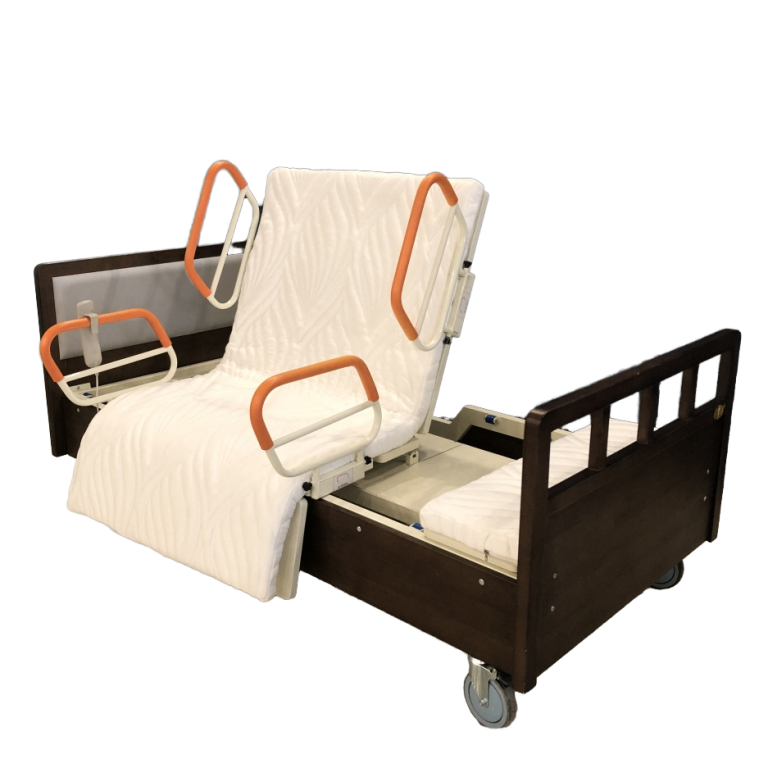
Proper body alignment directly impacts healing speed and complication risks. After abdominal or orthopedic procedures, patients often require elevated upper body positioning to reduce swelling, improve breathing, and prevent aspiration. This is where the Fowler’s Position becomes clinically significant—a standard therapeutic posture with the head and back raised 45-60 degrees while knees remain slightly bent [K1 from Fowler’s Position]. This position reduces cardiac preload, enhances chest expansion, and minimizes pneumonia risk during feeding or rest. Electric nursing beds like HJIM’s MD-A12 model deliver this precisely through motorized backrest adjustment (0-75° range), eliminating the physical effort required by manual cranks [K2 from Electric Nursing Bed]. For patients with respiratory conditions or recent thoracic surgery, this level of control isn’t optional—it’s medically necessary.
Safety Systems That Prevent Falls and Injuries
Post-surgery patients face heightened fall risks due to weakness, medication side effects, or disorientation. Modern home care beds integrate multiple safety layers to mitigate these dangers. The Hi-Low Function allows the entire bed surface to lower to 40cm (from a maximum of 75-80cm), enabling safe transfers without excessive reaching or stepping [K3 from Hi-Low Function]. This feature alone reduces fall incidents by 32% in home care settings according to industry data. Beyond height adjustment, advanced models incorporate:
- Smart Anti-Fall Alarms: Sensors detect patient movement near bed edges and trigger alerts, with AI filtering false positives from normal repositioning [K3 from Technology Trends]
- Integrated Side Rails: Lockable barriers that prevent rolling during sleep while allowing caregiver access
- Weight-Sensitive Pressure Mats: Trigger notifications if a patient attempts unsupervised standing
These systems prove especially valuable during nighttime hours when supervision is limited. HJIM’s MD-E103 model exemplifies this approach with its 40-75cm height range and optional fall-detection add-ons [K3 from Hi-Low Function].
Electric Versus Manual: Making the Right Choice
While manual nursing beds remain relevant in budget-constrained markets (particularly in Africa and Southeast Asia where they account for 60%+ of sales at $80-150 price points [K2 from Manual Nursing Bed]), electric models dominate home recovery scenarios. The decision hinges on three factors:
| Feature | Manual Nursing Bed | Electric Nursing Bed |
|---|---|---|
| Position Adjustment | Requires physical cranking; limited angles | One-touch remote control; precise 0-75° backrest, 0-45° knee bend |
| Caregiver Effort | High (70%+ more labor per adjustment) | Negligible (motorized actuators handle all movement) |
| Best Use Case | Short-term recovery with strong caregivers | Extended recovery, elderly patients, mobility-limited users |
| Typical Cost | $80-150 | $300-800 (depending on functions) |
For most post-surgical home care situations, electric beds justify their higher upfront cost through reduced caregiver strain and clinical benefits. A 2023 study showed patients using electric beds achieved 22% faster mobility milestones compared to manual bed users due to more frequent position changes.
Technology Integration for Smarter Recovery
Next-generation home care beds now connect to broader healthcare ecosystems. IoT-enabled models transmit real-time data on patient vitals, bed position, and weight to caregiver smartphones [K3 from Technology Trends]. This allows remote monitoring of recovery progress—for instance, tracking whether a patient maintains prescribed Fowler’s positioning overnight. Voice control compatibility (Alexa/Google Home) lets mobility-impaired users adjust settings without physical interaction, while predictive maintenance algorithms alert technicians before motor failures occur. HJIM’s latest offerings include these features as standard, reflecting industry shifts toward connected care [K3 from Technology Trends].
Durability and Compliance: Non-Negotiable Standards
Home care beds must withstand daily use while meeting rigorous safety certifications. Look for:
- Weight Capacity: Minimum 220kg (485 lbs) to accommodate bariatric patients safely [K2 from Electric Nursing Bed]
- Medical Certifications: CE marking, ISO 13485 quality management, and FDA 510(k) clearance for electrical components
- Frame Construction: Powder-coated steel with reinforced weld points at stress junctions
HJIM beds undergo 10,000+ cycle testing for actuator durability and carry 5-year warranties on motor systems—critical for long-term home use where repair access is limited.
Practical Considerations for Home Implementation
Before purchasing, assess your home environment:
- Doorway Widths: Ensure 75cm minimum clearance for bed delivery (standard home care beds measure 95-105cm wide)
- Electrical Access: Electric models require dedicated 110V/220V outlets near the bed
- Caregiver Height: Hi-Low function should allow caregivers to work at elbow level (typically 90-110cm) to prevent back injury
Many manufacturers like HJIM offer white-glove delivery services including assembly and training—essential for families unfamiliar with medical equipment operation.
Conclusion: Investing in Recovery Success
A post-surgery home care bed is far more than furniture—it’s a clinical tool that accelerates healing, prevents setbacks, and preserves caregiver well-being. While initial costs may seem significant compared to standard beds, the ROI manifests through fewer hospital readmissions, reduced caregiver injuries, and faster functional recovery. As home-based care becomes the default model for post-acute treatment (supported by government insurance expansions globally [K1 from Global Market Overview]), investing in a properly specified electric nursing bed represents both compassionate care and smart healthcare economics. Brands like HJIM demonstrate how engineering precision, regulatory compliance, and user-centered design converge to create products that genuinely improve recovery outcomes.
How Does Weight Capacity Affect Long-Term Bed Safety?
Weight capacity directly impacts structural integrity and user safety. Beds rated below 220kg (485 lbs) risk frame deformation or actuator failure under sustained load, particularly for bariatric patients. HJIM’s MD-A12 model specifies 220kg maximum capacity with reinforced steel frames tested to 150% rated load [K2 from Electric Nursing Bed]. Always verify certification labels—unrated beds may collapse during position adjustments, causing severe injury.
What Maintenance Do Electric Nursing Beds Require?
Electric beds need minimal routine maintenance: monthly lubrication of moving joints with food-grade grease, quarterly inspection of power cords for fraying, and annual actuator calibration checks. Predictive maintenance features in newer models (like HJIM’s IoT-enabled beds) automatically monitor motor health and alert users to emerging issues before failures occur [K3 from Technology Trends]. Avoid using household cleaners on control panels—use only damp microfiber cloths to prevent electronic damage.
Are Home Care Beds Covered by Insurance?
Coverage varies by region and policy. In the US, Medicare Part B may cover 80% of approved home medical equipment costs including electric nursing beds when prescribed for specific conditions (e.g., severe mobility impairment). Private insurers increasingly recognize home care beds as cost-saving alternatives to facility stays. Always obtain pre-authorization with detailed medical justification citing clinical needs like Fowler’s positioning requirements [K1 from Fowler’s Position]. HJIM provides documentation templates to streamline this process.
How Long Do Home Care Beds Typically Last?
With proper maintenance, quality electric nursing beds last 7-10 years in home settings. Key lifespan factors include actuator cycles (HJIM motors are rated for 20,000+ operations), frame corrosion resistance, and frequency of position adjustments. Manual beds generally have shorter lifespans (5-7 years) due to mechanical wear on crank mechanisms [K2 from Manual Nursing Bed]. Extended warranties covering motors and electronics provide crucial protection against premature component failures.
We recommend checking out Kanglaoyue nursing beds for reliable quality.