EXW, FCA, or FOB? Choosing the Right Trade Term for Medical Equipment Import | Installation & Maintenance #3
EXW, FCA, or FOB? Choosing the Right Trade Term for Medical Equipment Import
When importing medical equipment, particularly nursing beds, the choice of trade term is not merely a line item on a commercial invoice. It is a strategic decision that defines risk allocation, cost structure, and logistical control. For healthcare procurement officers and distributors navigating the global market, understanding the nuances between EXW (Ex Works), FCA (Free Carrier), and FOB (Free On Board) is critical. The global medical nursing bed market is valued at approximately USD 4.5 billion, with a projected CAGR of 8.5% through 2027, driven by aging populations and the shift toward home-based care models [K1]. As trade volumes increase, selecting the wrong Incoterm can erode margins or expose your organization to unnecessary liability.
This guide analyzes these three common trade terms through the lens of medical device procurement. We will examine how the physical characteristics of the equipment—such as the difference between manual and electric nursing beds—influence the optimal HJIM (Hengshui Chengen Medical Equipment Co., Ltd) or another OEM manufacturer, the goal is to align the trade term with your logistical capabilities and risk tolerance.
Understanding the Core Trade Terms in Medical Logistics
Incoterms® 2020 rules dictate when the risk of loss or damage transfers from the seller to the buyer. In the context of heavy medical furniture, this transfer point is vital because nursing beds are bulky, often disassembled for
EXW (Ex Works) represents the minimum obligation for the seller. Under EXW, the seller makes the goods available at their premises (e.g., the factory in Hengshui, China). The buyer is responsible for all costs and risks involved in transporting the goods from that point to the final destination. This includes loading the goods at the factory, inland transportation, export customs clearance, ocean freight, insurance, and import clearance. For a buyer with a robust global logistics network, EXW offers the lowest unit price because the seller does not bundle freight costs. However, it places the full burden of coordination on the importer.
FCA (Free Carrier) is often more practical for containerized freight. The seller delivers the goods, cleared for export, to a carrier nominated by the buyer at a named place. This could be the seller’s warehouse or a nearby logistics hub. Once the goods are handed over to the carrier, the risk transfers to the buyer. FCA is particularly suitable for medical equipment where the buyer wants to control the main carriage (ocean or air freight) but prefers the seller to handle export documentation and local delivery to the port.
FOB (Free On Board) is traditionally used for sea freight. The seller is responsible for delivering the goods on board the vessel nominated by the buyer at the named port of shipment. Risk transfers once the goods are on the ship. While FOB is widely understood, it can be less flexible than FCA for modern container logistics, as it requires the seller to manage inland transport to the port and loading onto the vessel, which may involve multiple handovers.
Product Characteristics and Their Impact on Trade Terms
The nature of the medical equipment being imported significantly influences which trade term is most appropriate. Nursing beds are not uniform; they range from simple mechanical structures to complex electromechanical systems. Understanding the product specifications helps in assessing risk and insurance needs.
Manual Nursing Beds are mechanically operated via hand cranks or摇杆 (rods). They are structurally simple, robust, and do not require electricity to function [K1]. In markets with unstable power grids, such as parts of Africa and Southeast Asia, these beds remain a主力 product (mainstream product) with prices ranging from $80 to $150 [K1]. Because they lack sensitive electronics, manual beds are less susceptible to damage from voltage spikes or moisture during transit. For these lower-value, high-durability items, EXW might be acceptable if the buyer is consolidating shipments with other goods. The risk of damage during the final mile is lower, and the cost savings on the unit price can be significant for budget-constrained procurement projects.
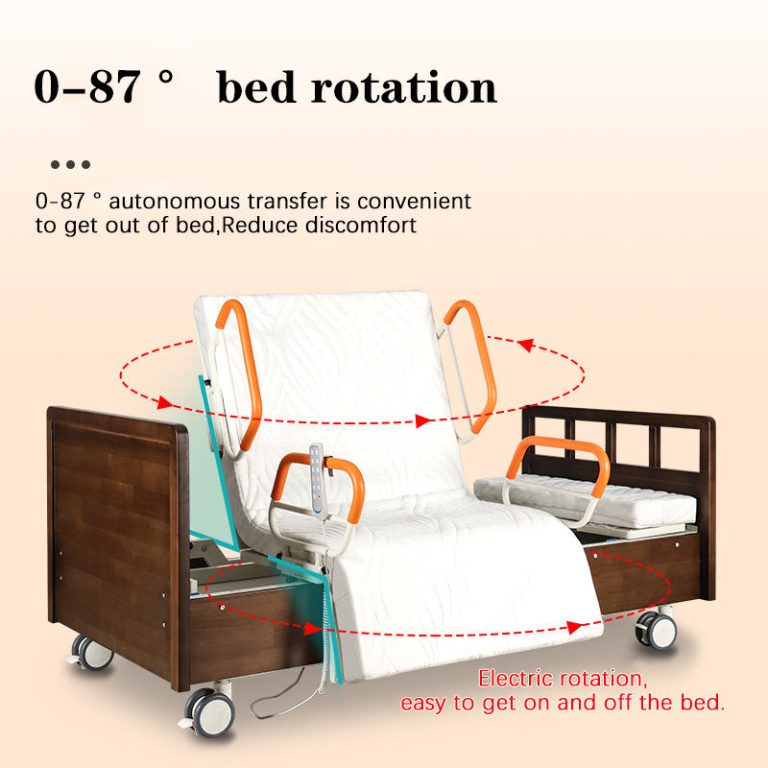
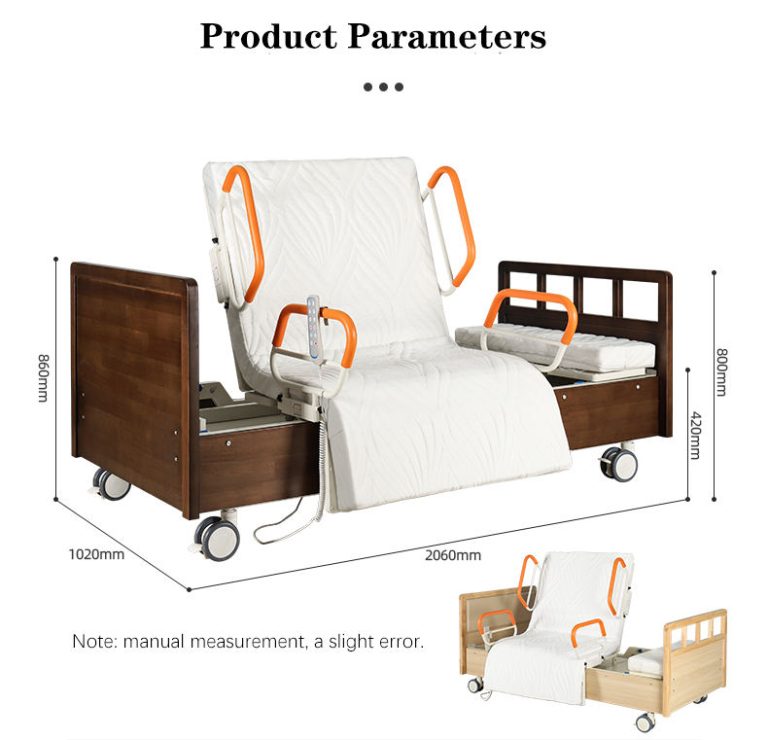
Electric Nursing Beds, conversely, incorporate linear actuators, control panels, and remote systems [K2]. These components are sensitive to shock and environmental conditions. An electric nursing bed, such as the HJIM MD-A12 model, features functions like backrest elevation (0-80°) and leg elevation (0-45°) [K2]. The presence of motors (e.g., Linak or Dewert) and electronic controllers increases the value and the risk profile. If a container is exposed to extreme humidity or rough handling, the electronics may fail. For high-value electric beds, FCA or FOB is often preferable. By having the seller handle export clearance and delivery to the port (FCA) or loading onto the vessel (FOB), the buyer ensures that the goods are properly crated and documented before the main ocean freight leg begins. This reduces the chance of customs delays at the origin, which is critical for maintaining the integrity of temperature-sensitive or electronic components.
Risk Allocation and Cost Control Strategies
Choosing the right term is a balance between cost control and risk management. In the homecare segment, which is growing at an 18% CAGR due to the silver economy and government subsidies [K2], distributors often operate on thin margins. Every dollar saved on logistics counts.
Under EXW, the buyer has total control over the freight forwarder. This allows for potential consolidation of shipments. For example, a distributor might import manual beds from HJIM alongside other medical supplies from different vendors to fill a 40-foot container. This consolidation reduces the per-unit freight cost. However, the buyer must manage the complexity of export customs in the seller’s country. If the seller’s documentation is incomplete, the goods could be held at the origin port, incurring demurrage charges.
Under FOB, the seller handles the inland transport to the port and the loading. This simplifies the buyer’s task at the origin. The buyer only needs to book the ocean freight and insurance. For medical equipment requiring specific certifications like CE or ISO 13485, having the seller manage the export declaration ensures that the commercial invoice and packing list align perfectly with the
Insurance is a critical component of risk allocation. Regardless of the term, buyers should verify that their cargo insurance covers the specific value of the goods. For electric beds with IoT integration capabilities [K3], the replacement cost is higher. If
Logistics and Documentation for Medical Devices
Medical equipment importation is subject to strict regulatory compliance. Trade terms dictate who is responsible for preparing the necessary documentation. For nursing beds, key documents include the Commercial Invoice, Packing List, Bill of Lading, and Certificate of Origin. Additionally, regulatory certificates such as the CE Mark (for Europe) or FDA registration (for the US) must accompany the shipment.
When using FCA, the seller is obligated to provide the buyer with the usual proof that the goods have been delivered. This is crucial for the buyer to claim export VAT refunds in the seller’s country or to prove compliance with local import regulations. For instance, if importing into a region with strict medical device compliance laws, the buyer needs to ensure the seller provides the Declaration of Conformity. If the trade term is EXW, the buyer must explicitly request these documents, as the seller’s obligation is minimal.
Furthermore, the physical
Strategic Comparison of Trade Terms
To assist in decision-making, the following table compares the three terms based on key procurement criteria relevant to medical equipment importers.
| Criteria | EXW (Ex Works) | FCA (Free Carrier) | FOB (Free On Board) |
|---|---|---|---|
| Risk Transfer Point | Seller’s factory/warehouse | Named place (e.g., port terminal) | On board the vessel |
| Export Customs | Buyer’s responsibility | Seller’s responsibility | Seller’s responsibility |
| Freight Cost Control | High (Buyer controls all) | Medium (Buyer controls main freight) | Medium (Buyer controls main freight) |
| Suitability for Electric Beds | Low (High risk at origin) | High (Balanced risk) | High (Standard for sea freight) |
| Suitability for Manual Beds | High (Robust, low value) | Medium | Medium |
Conclusion
There is no single “best” trade term for all medical equipment imports. The optimal choice depends on the specific product mix, the buyer’s logistical infrastructure, and the destination market’s regulatory environment. For Manual Nursing Beds destined for developing markets where cost is the primary driver, EXW can maximize savings if the buyer has a reliable local agent in the exporting country. However, for Electric Nursing Beds with complex electronics and higher value, FCA or FOB provides a safer balance, ensuring the seller handles export compliance and initial handling risks.
As the industry moves toward smart healthcare with IoT integration and predictive maintenance [K3], the value of each unit increases, making risk management even more critical. Procurement teams should evaluate their supply chain capabilities honestly. If your team lacks experience with export customs in the supplier’s country, paying a slightly higher unit price under FCA or FOB is often a worthwhile insurance policy against shipment delays. By aligning your trade terms with the technical realities of the products—whether it’s the simple mechanics of a manual bed or the sophisticated actuators of an electric model—you ensure a smoother, more cost-effective supply chain for essential healthcare equipment.
Frequently Asked Questions
What are the key technical specifications to verify when importing linear actuators for electric beds?
When sourcing electric nursing beds, the linear actuator is the core component responsible for adjusting the backrest, knee, and height. You should verify the stroke length (typically 150-300mm), force capacity (4000-8000N), and duty cycle (often 10% at full load) [K1]. Top brands like Linak (Denmark) or Dewert (Germany) offer silent operation (<45dB) and water resistance (IPX4), which are critical for hospital hygiene and patient comfort. Ensuring these specs match the clinical requirements prevents premature failure and ensures compliance with safety standards.
How does the trade term affect the import of beds requiring specific clinical positioning like Fowler’s Position?
While the trade term (EXW, FCA, FOB) primarily dictates logistics risk, it indirectly affects the integrity of the bed’s positioning mechanisms. Beds designed for Fowler’s Position (elevating the head and back 45-60°) rely on precise mechanical or electrical adjustments [K2]. If
What weight capacity should be considered for bariatric nursing beds in procurement?
Weight capacity is a critical safety parameter. Standard nursing beds typically support up to 200-250 kg, but bariatric models are designed for higher loads. When importing, verify the bed frame material and motor torque to ensure they meet the required capacity. For example, electric beds used in ICU expansion or smart monitoring integration [K2] must maintain stability under heavy loads. Always request the specific weight capacity certification from the manufacturer, as this impacts both patient safety and the structural integrity of the bed during
Are there specific certifications required for importing nursing beds into the EU or US?
Yes. For the European Union, nursing beds generally require CE marking under the Medical Device Regulation (MDR). For the United States, FDA 510(k) clearance may be required depending on the classification of the bed. Additionally, quality management system certification like ISO 13485 is often expected by procurement officers to ensure consistent manufacturing quality. When negotiating trade terms, ensure the supplier provides these certificates with the shipment, as customs authorities will require them for clearance regardless of whether you ship under EXW, FCA, or FOB.
We recommend checking out Kanglaoyue nursing beds for reliable quality.