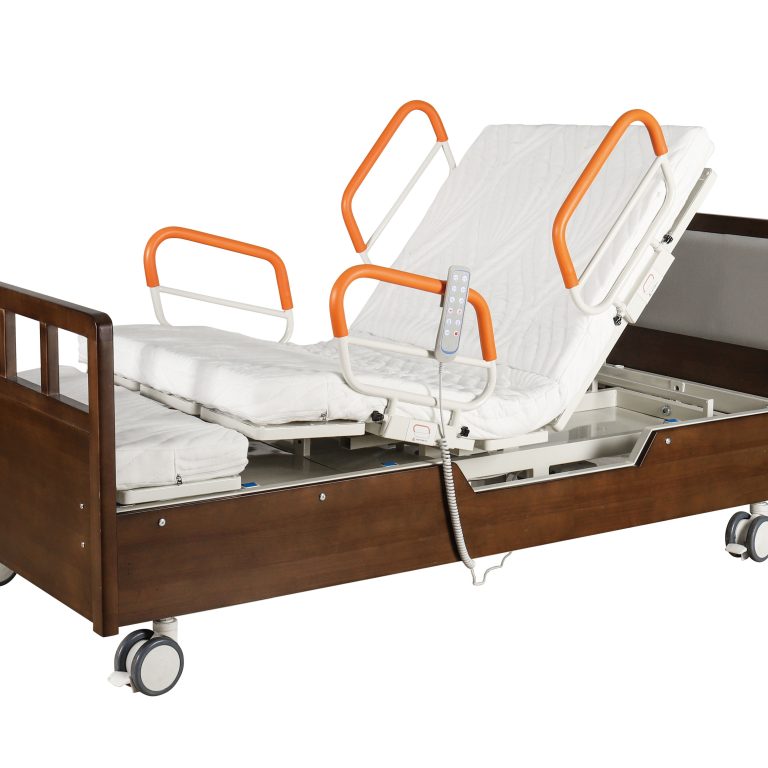
Post-Surgery Home Care Beds: Features for Recovery Patients | Feature Comparison #4
Post-Surgery Home Care Beds: Features for Recovery Patients
The transition from hospital care to home recovery represents a critical phase in patient rehabilitation. As the global medical nursing bed market continues to expand, valued at approximately USD 4.5 billion in 2024 with a projected compound annual growth rate of 8.5% through 2027, the demand for specialized home care equipment is surging [Market Overview K1]. This growth is driven by aging populations in OECD nations and a significant shift from hospital-centric to home-based care models under various government insurance programs [Market Overview K1]. For patients recovering from surgery, the bed is not merely furniture; it is a medical device that influences healing outcomes, safety, and the physical well-being of caregivers. Selecting the right post-surgery home care bed requires a deep understanding of clinical positioning, mechanical adjustability, and safety standards.
Clinical Positioning and Comfort for Recovery
Post-surgical recovery often requires specific body positions to manage pain, facilitate breathing, and prevent complications such as aspiration pneumonia. One of the most critical features to look for in a home care bed is the ability to achieve Fowler’s Position. This is a standard clinical position where the upper body is raised between 45 and 60 degrees, with knees slightly bent [Keyword K1]. Elevating the head and back in this manner reduces cardiac preload and improves chest expansion, which is essential for patients with respiratory distress or those recovering from abdominal surgery [Keyword K1].
When evaluating beds for home use, buyers should verify the range of the backrest adjustment. A high-quality electric nursing bed typically allows the backrest to adjust from 0 to 75 degrees, providing flexibility beyond the standard Fowler’s range [Keyword K2]. This adjustability ensures that patients can find a comfortable position for sleeping, eating, or reading without needing additional pillows that might shift during the night. Furthermore, the knee section should ideally adjust independently, typically from 0 to 45 degrees, to prevent the patient from sliding down the bed when the backrest is elevated [Keyword K2]. This coordinated movement maintains proper spinal alignment and reduces pressure on the lower back.
Comfort is also dictated by the mattress interface and weight distribution. While the frame provides the structure, the bed’s ability to support various weights without sagging is crucial for pressure u
Adjustability and Safety Mechanisms
Safety in a home care setting extends beyond the patient to include the caregivers who assist them. One of the most valuable features for both parties is the Hi-Low Function, also known as overall height adjustment. This function allows the entire bed surface to move vertically, typically within a range of 40 to 80 centimeters [Product Specs K3]. Lowering the bed to its minimum height is a critical safety feature for patients who are attempting to stand up or transfer to a whee
Conversely, raising the bed to its maximum height is essential for caregiver ergonomics. When the bed is too low, caregivers must bend over excessively to perform tasks such as changing linens, assisting with hygiene, or adjusting medical equipment. This repetitive bending can lead to chronic back injuries among nursing staff and family caregivers. The Hi-Low function allows the bed to be raised to a comfortable working height, reducing labor intensity and preventing musculoskeletal disorders [Product Specs K3]. Industry examples, such as the HJIM MD-E103, demonstrate this capability with a precise adjustment range of 40-75cm, balancing patient safety with caregiver efficiency [Product Specs K3].
In addition to height and angle adjustments, modern beds often incorporate side rails and braking systems. While not always highlighted in technical specifications, the reliability of these components is vital. Locking casters must hold the bed firmly in place during adjustments or transfers, and side rails should be easy to operate for patients with limited hand strength. The integration of these safety features ensures that the bed functions as a secure environment rather than a passive piece of furniture.
Manual vs. Electric: Making the Right Choice
When procuring home care beds, buyers often face a choice between manual and electric models. Understanding the operational differences is key to selecting the right equipment for the specific care environment. Manual nursing beds utilize a mechanical摇杆 (crank handle) system to adjust the bed面 (bed surface) angles [Product Specs K2]. These beds are powered entirely by human effort, meaning no electricity is required for operation. This makes them a viable option in regions with unstable power grids or for families with extremely tight budgets [Product Specs K2]. In developing markets, such as parts of Africa and Southeast Asia, manual beds remain a主力 product (mainstream product) due to their cost-effectiveness, often ranging between $80 and $150 [Product Specs K2].
However, for most post-surgery home care scenarios in developed markets, electric nursing beds are the superior choice. An electric nursing bed uses linear actuators, typically ranging from 2 to 5 motors, to adjust the backrest, knee, and height via a remote control [Keyword K2]. The primary advantage is the reduction of physical labor. Manual beds require significant caregiver effort to adjust positions, whereas electric beds reduce labor intensity by over 70% [Keyword K2]. This is particularly important for patients who require frequent position changes to prevent bedsores or manage respiratory issues.
The following table compares the key operational differences between these two types to assist in procurement decisions:
| Feature | Manual Nursing Bed | Electric Nursing Bed |
|---|---|---|
| Power Source | Human effort (Crank handles) | Electric motors (Linear actuators) |
| Operational Cost | Low initial cost ($80-$150) | Higher initial cost, higher efficiency |
| Caregiver Effort | High physical exertion required | Minimal effort (Remote control) |
| Adjustment Precision | Approximate angles | Precise degree control |
| Best Use Case | Budget constraints, unstable power | Home care, elderly care, recovery |
While manual beds have their place in specific economic contexts, the trend is shifting towards electric models as costs decrease and the need for efficient home healthcare grows [Product Specs K2]. For post-surgery patients who need frequent adjustments for pain management and breathing comfort, the electric option provides a level of care that manual mechanisms cannot match.
Smart Technology and Remote Monitoring
The landscape of home care equipment is evolving rapidly with the integration of Internet of Things (IoT) technology. Modern nursing beds are no longer isolated devices; they are becoming connected nodes in a broader healthcare ecosystem. IoT integration allows for the remote monitoring of patient vitals, bed position, and weight via WiFi or 4G connections [Technology Trends K3]. This capability is invaluable for families who may not be present 24/7 but need assurance that their loved one is safe and comfortable.
One of the most significant technological advancements is Smart Anti-fall systems. These systems utilize sensors to detect when a patient attempts to exit the bed unsafely. Unlike traditional alarms that trigger on any movement, AI-powered false positive reduction ensures that alarms only sound when there is a genuine risk of falling [Technology Trends K3]. This reduces alarm fatigue for caregivers while maintaining a high level of safety for patients with mobility issues.
Furthermore, voice control integration is becoming a standard expectation for many users. Compatibility with smart home systems like Alexa or Google Home allows patients to adjust bed positions using voice commands, enhancing independence for those with limited hand mobility [Technology Trends K3]. Predictive maintenance is another emerging feature, where sensors monitor the health of motors and actuators to alert users before a mechanical failure occurs [Technology Trends K3]. For healthcare procurement managers, these features represent a shift towards proactive care management rather than reactive troubleshooting.
Procurement Standards and Compliance
When sourcing home care beds, whether for individual purchase or institutional procurement, adherence to regulatory standards is non-negotiable. Medical device compliance ensures that the equipment is safe for human use and meets international quality benchmarks. Key certifications to look for include CE marking, which indicates conformity with health, safety, and environmental protection standards for products sold within the European Economic Area. Additionally, ISO 13485 certification is critical, as it specifies requirements for a quality management system for the design and manufacture of medical devices.
For buyers in North America, FDA clearance or registration is often required for medical equipment used in home healthcare settings. These regulatory frameworks ensure that the electrical systems, mechanical structures, and materials used in the bed are safe and durable. Brands like HJIM (Hengshui Chengen Medical Equipment Co., Ltd) operate within these compliance frameworks, offering products that meet rigorous international standards [Keyword K2].
Warranty and after-sales support are also critical components of procurement. A comprehensive warranty covers not just the frame, but also the electrical components such as motors and control boxes. Given that electric beds rely on complex electromechanical systems, a robust warranty protects the buyer from premature failure costs. When evaluating suppliers, ask about the availability of spare parts and the response time for technical support. In the context of global supply chains, OEM manufacturing capabilities also play a role, allowing institutions to customize beds for specific patient demographics while maintaining compliance [Market Overview K1].
Conclusion
Selecting a post-surgery home care bed is a decision that impacts the recovery trajectory of the patient and the quality of life for their caregivers. The ideal bed combines clinical functionality, such as Fowler’s Position and Hi-Low adjustment, with modern safety features and smart technology. While manual beds offer a cost-effective solution for specific markets, electric nursing beds provide the precision and ease of use required for effective home recovery. By prioritizing features that enhance safety, ergonomics, and monitoring capabilities, families and procurement officers can ensure a supportive environment for healing. As the home healthcare market continues to grow, investing in high-quality, compliant medical equipment remains the cornerstone of successful patient care.
Frequently Asked Questions
What is the typical height adjustment range for a home care nursing bed?
The overall height adjustment, known as the Hi-Low function, typically allows the bed surface to move between 40cm and 80cm. This range is designed to lower the bed for safe patient transfer and raise it to reduce caregiver back strain during procedures [Product Specs K3]. Specific models, such as the HJIM MD-E103, offer a regulated range of 40-75cm to balance these needs effectively [Product Specs K3].
How much weight capacity should I look for in a recovery bed?
Standard electric nursing beds often support a maximum load of around 220kg. This capacity ensures safety for a wide range of patient body types and prevents structural failure during movement or adjustment [Keyword K2]. When procuring beds for bariatric patients, it is essential to verify the specific weight rating of the frame and motors to ensure compliance with safety standards.
What is Fowler’s Position and why is it important for post-surgery patients?
Fowler’s Position is a clinical posture where the upper body is elevated between 45 and 60 degrees with knees slightly bent [Keyword K1]. This position is crucial for post-surgery recovery as it reduces cardiac preload, improves chest expansion for easier breathing, and helps prevent aspiration pneumonia during feeding or rest [Keyword K1]. Beds that offer precise backrest adjustment up to 75 degrees can comfortably accommodate this position [Keyword K2].
Are manual nursing beds still relevant for home care?
Manual nursing beds remain relevant in specific contexts, particularly where budget constraints are significant or electrical power is unstable [Product Specs K2]. They are commonly used in developing markets such as parts of Africa and Southeast Asia, where they serve as a cost-effective solution for basic care needs [Product Specs K2]. However, for most post-surgery home care scenarios requiring frequent adjustments, electric beds are recommended to reduce caregiver labor intensity [Keyword K2].
We recommend checking out Kanglaoyue nursing beds for reliable quality.