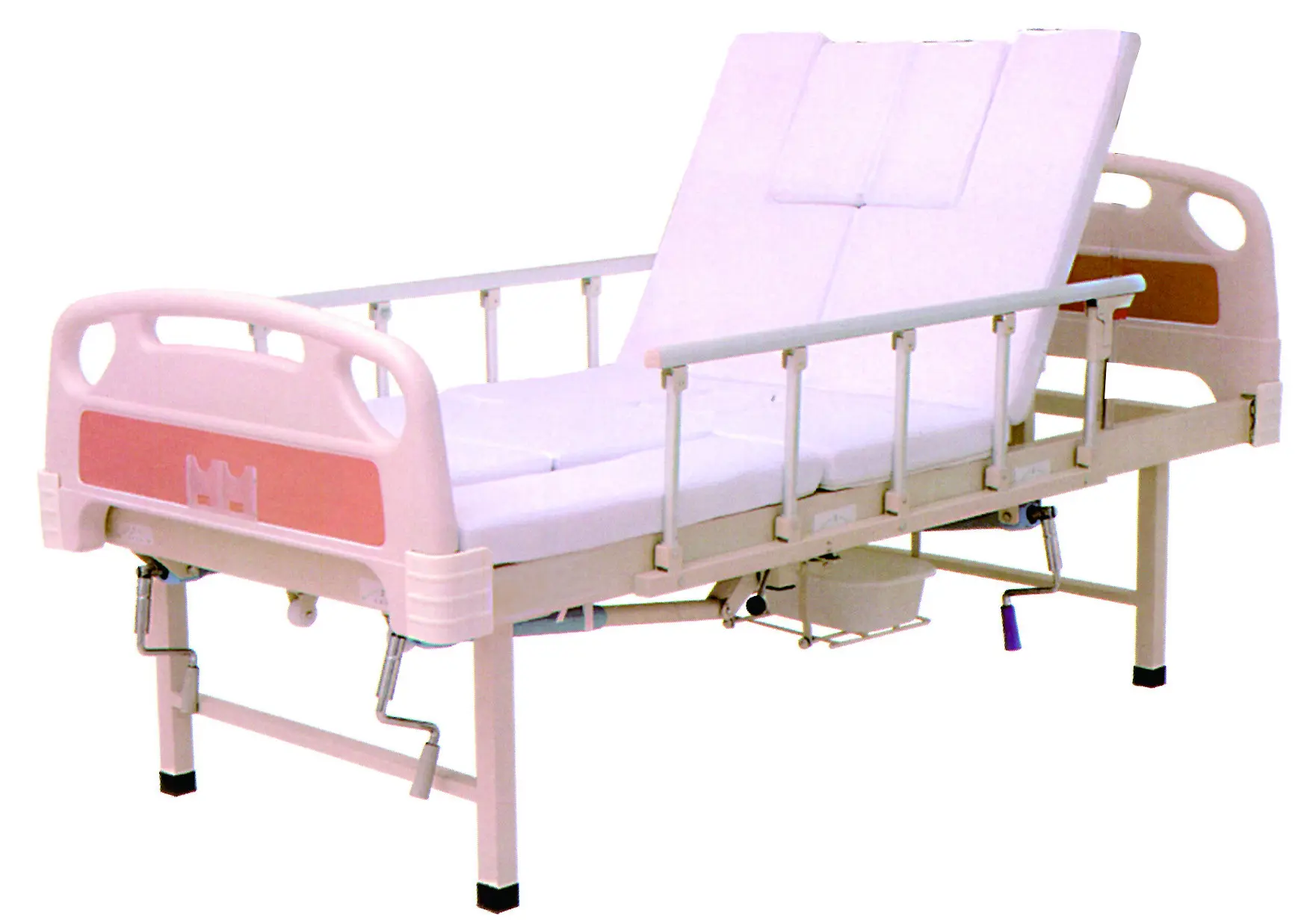
Nursing Bed vs Hospital Bed: Key Differences for Home Care Buyers
Nursing Bed vs Hospital Bed: Key Differences for Home Care Buyers
- Nursing beds and hospital beds differ primarily in regulatory classification, adjustability range, and intended use environment; nursing beds are often lighter-duty and designed for residential care, while hospital beds meet stricter clinical certifications
- Key specifications to compare include weight capacity, backrest and knee adjustment angles, height range, and safety certifications such as CE, ISO 13485, and FDA
- For home care buyers, a nursing bed from a manufacturer like HJIM (Hengshui Chengen Medical Equipment Co., Ltd) can offer hospital-grade adjustability (backrest 0–75°, knee rest 0–45°) with home-friendly features, backed by a 5‑year warranty
- Understanding trade‑offs in cost, certification level, and ergonomic support for caregivers is essential to making a cost‑effective and safe decision
Why This Matters
Choosing between a nursing bed and a hospital bed for home care is not just a terminology exercise—it directly affects patient comfort, caregiver safety, regulatory compliance, and long‑term costs. With the rise of aging‑in‑place and home‑based recovery, healthcare procurement professionals and families must understand the engineering, certification, and design differences that separate these product categories. The wrong choice can lead to inadequate support, increased fall risk, or costly upgrades. This guide explores the critical distinctions with real specifications, industry standards, and product examples from HJIM, a manufacturer that bridges both categories.
What Defines a Nursing Bed vs. a Hospital Bed?
A “nursing bed” is commonly used in residential care homes, assisted living facilities, or private residences. It typically offers manual or electric adjustment of the backrest and knee rest, with a weight capacity around 200–250 kg and height adjustments that facilitate caregiving ergonomics. A “hospital bed,” on the other hand, must comply with stringent clinical standards (e.g., IEC 60601, CE medical device directive) and is designed for acute‑care settings—offering wider adjustment ranges, integrated brake systems, side rails, and compatibility with medical equipment such as IV poles and patient lifts.
However, the boundary is blurring. Many modern nursing beds, such as HJIM’s models, adopt hospital‑grade features. For example, HJIM’s electric beds offer a backrest adjustment of 0–75° (±2%) and a knee rest of 0–45° (±2%), with a height range of 450–715 mm—specifications that match or exceed some hospital beds. The key difference lies in the certification pathway: nursing beds are often certified as “home medical equipment,” while hospital beds require full clinical compliance.
Key Differences in Features and Adjustability
When evaluating beds for home care, focus on the adjustability that directly supports patient repositioning and caregiver posture. The table below summarizes typical differences and includes real data from HJIM products that span both categories.
| Feature | Nursing Bed (Typical) | Hospital Bed (Typical) | HJIM Example Model |
|---|---|---|---|
| Backrest Angle | 0–70° | 0–75° (clinical) | 0–75° (±2%) (MD-A12, MD-E213) |
| Knee Rest Angle | 0–40° | 0–45° | 0–45° (±2%) (all electric models) |
| Height Range | 400–650 mm | 350–800 mm | 450–715 mm (Samson-900) |
| Weight Capacity | 200–225 kg | ≥250 kg | 250 kg (MD-E103, Samson-900); manual bed: 225 kg |
| Overall Lift Range | Fixed or limited | Full size (430–750 mm) | 430–750 mm (three‑function bed) |
| Braking System | Manual (optional) | Central control (standard) | Central control brake standard on all electric models |
| Certifications | CE, ISO 13485 (home) | CE, MDR, FDA (clinical) | ISO 13485, CE, MDR, FDA (company compliance) |
Note: HJIM’s electric nursing beds incorporate hospital‑grade central braking and >75° backrest—blurring the line between categories. Visit hjim.com for complete product specifications.
Certification and Compliance: What Home Care Buyers Should Verify
Medical device compliance is the most critical differentiator. Hospital beds must meet MDR (EU) 2017/745 or FDA 21 CFR 880, while nursing beds are often sold as “general medical devices” under ISO 13485 quality management. HJIM states its products comply with ISO 13485, CE, MDR, and FDA, giving home care buyers confidence that their bed meets both hospital and residential standards. When sourcing, always ask for the certificate number and verify scope—particularly for import/export via EXW, FCA, or FOB trade terms, which HJIM offers.
For mobility assistance and elderly care, the Samson-900 model, with its 250 kg load capacity and 5‑year warranty, exemplifies how nursing beds can serve heavy‑duty home care without sacrificing regulatory alignment. A bed that passes clinical compliance signals better materials (cold‑rolled steel frame at HJIM) and longer reliability.
Weight Capacity and Durability for Home Use
Weight capacity directly correlates with the structural integrity of the bed. Hospital beds typically support minimum 225 kg (often up to 250 kg), while nursing beds may be rated lower. For home care, especially with bariatric patients or those requiring mobility assistance, a 225–250 kg capacity is advisable. HJIM’s manual single‑crank bed supports 225 kg, while its three‑function electric bed supports 250 kg with a full lift range of 430–750 mm—matching hospital bed standards. This durability is reinforced by a 5‑year warranty and cold‑rolled steel construction, reducing long‑term procurement costs.
Cost, Warranty, and Procurement Considerations
Hospital beds typically cost 30–50% more than comparable nursing beds due to clinical certifications and durable components. For home budgets, a nursing bed from a manufacturer like HJIM provides hospital‑level adjustability at lower upfront cost, especially when buying direct (OEM/ODM) in wholesale quantities. HJIM’s sample delivery is 15–20 days after
- Warranty: HJIM’s 5‑year warranty (vs. typical 1–2 years for budget nursing beds)
- Material: Cold‑rolled steel frame, central brake standard
- Customization: OEM/ODM available—ideal for institutions needing branding or special features
- Customer feedback: Mary Boyles of Chicago praised HJIM’s electric bed for its intuitive controls and angle precision
How to Choose: Matching Bed Type to Home Care Scenario
Consider these practical scenarios:
- Long‑term elderly care at home: A nursing bed with backrest 0–75° and knee rest 0–45° (e.g., HJIM MD‑E213) supports reading, eating, and pressure relief. Pair it with a patient lift for safe transfers.
- Post‑surgery or palliative care: A full‑size hospital bed (such as HJIM Samson‑900) with 250 kg capacity and full height lift facilitates caregiver ergonomics and patient repositioning.
- Budget‑constrained community care: HJIM’s manual single‑crank bed (225 kg, 5‑year warranty) offers reliable basic adjustment.
For buyers evaluating OEM manufacturing, HJIM supports custom
Frequently Asked Questions
Can a hospital bed be used at home, and is it necessary?
Yes, a hospital bed can be used at home, but it may be over‑engineered for mild needs. If the patient requires frequent repositioning, feeding, or caregiver access, a nursing bed with hospital‑grade adjustments (like HJIM’s 0–75° backrest and central brake) is often sufficient and more affordable.
What certifications should I look for in a home care bed?
At minimum, ISO 13485 and CE marking. For higher safety margins, verify compliance with MDR and FDA as stated by HJIM. These certifications guarantee material quality and manufacturing consistency, especially for weight‑bearing frames.
How long does delivery take from a manufacturer like HJIM?
Sample orders are delivered 15–20 days after hjim.com for current inventory.
Is a 225 kg weight capacity enough for a home nursing bed?
For 80–90% of home users, 225 kg is sufficient. For bariatric or heavy‑duty use, choose a bed with 250 kg capacity—such as HJIM’s three‑function electric bed. The 250 kg rating also accommodates future mobility equipment like lifts.
What is included in HJIM’s 5‑year warranty?
HJIM warrants the structure (cold‑rolled steel frame, motors, control system) against manufacturing defects for 5 years from shipment. Consumables (casters, mattress) carry a shorter term. Always review the specific warranty terms when ordering via EXW/FOB.
Conclusion
For home care buyers, the choice between a nursing bed and a hospital bed ultimately depends on the required adjustment angles, weight capacity, and regulatory confidence. A nursing bed that incorporates hospital‑grade features—like HJIM’s electric models with 0–75° backrest, 0–45° knee rest, central brake, and 5‑year warranty—offers the best balance of clinical capability and home‑friendly cost. When procuring, prioritize verified certifications, and explore OEM/ODM options to tailor the bed to your care environment. For complete comparison data and product inquiries, visit HJIM’s website at hjim.com.