Nursing Home Bed Procurement: RFP Template and Evaluation Criteria | Home Care Applications #7
Nursing Home Bed Procurement: RFP Template and Evaluation Criteria
The global medical nursing bed market is valued at approximately USD 4.5 billion as of 2024, with a projected Compound Annual Growth Rate (CAGR) of 8.5% through 2027. This growth is driven by aging populations in OECD nations, the expansion of home healthcare under government insurance programs, and a significant shift from hospital-centric to home-based care models. For healthcare procurement officers, facility managers, and government tenders, selecting the right nursing beds is not merely a purchasing decision; it is a strategic investment in patient safety, caregiver ergonomics, and long-term operational efficiency.
When drafting a Request for Proposal (RFP) for nursing home beds, the document must balance technical precision with commercial flexibility. A well-structured RFP ensures that vendors understand the specific clinical needs of your facility, whether it is a high-acuity hospital ward, a long-term care nursing home, or a residential home care setting. This guide outlines the essential evaluation criteria, technical specifications, and strategic considerations required to build a robust procurement framework.
Understanding Bed Types: Manual vs. Electric Nursing Beds
The first critical decision in any procurement strategy is determining the appropriate technology level for the target user group. The market is broadly divided into manual and electric nursing beds, each serving distinct economic and clinical purposes.
Manual Nursing Beds rely on mechanical摇杆 (crank) mechanisms to adjust the bed surface. They are characterized by a simple structure and low cost, making them the most economic choice for markets with budget constraints or unstable power infrastructure. In regions such as Africa and Southeast Asia, manual beds remain the主力产品 (mainstream product), with prices typically ranging from $80 to $150. They provide basic position adjustment functions suitable for基层医院 (primary care hospitals) or budget-limited care facilities. However, they require significant physical effort from caregivers to operate, which can lead to fatigue and reduced efficiency in high-turnover environments.
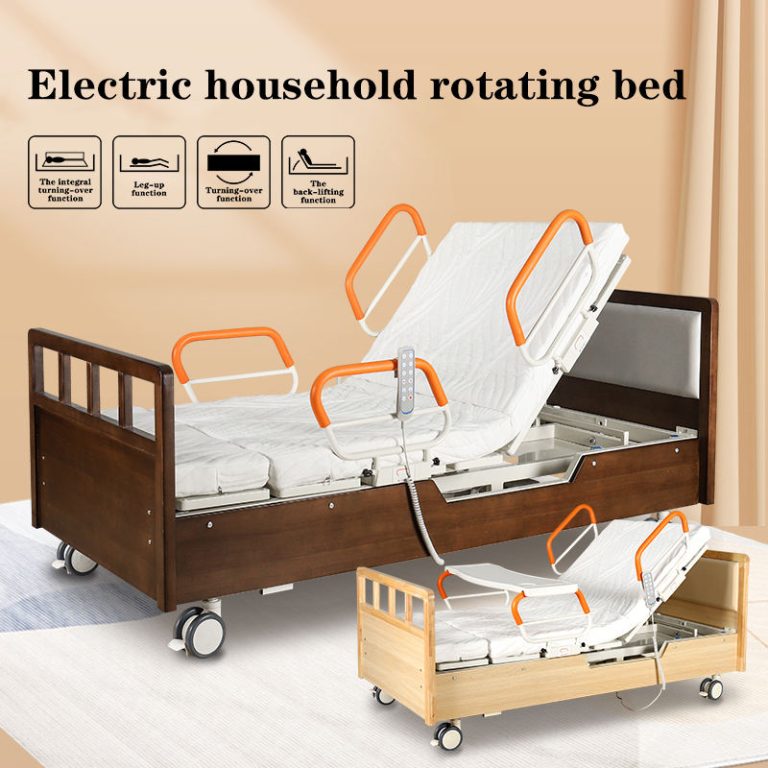
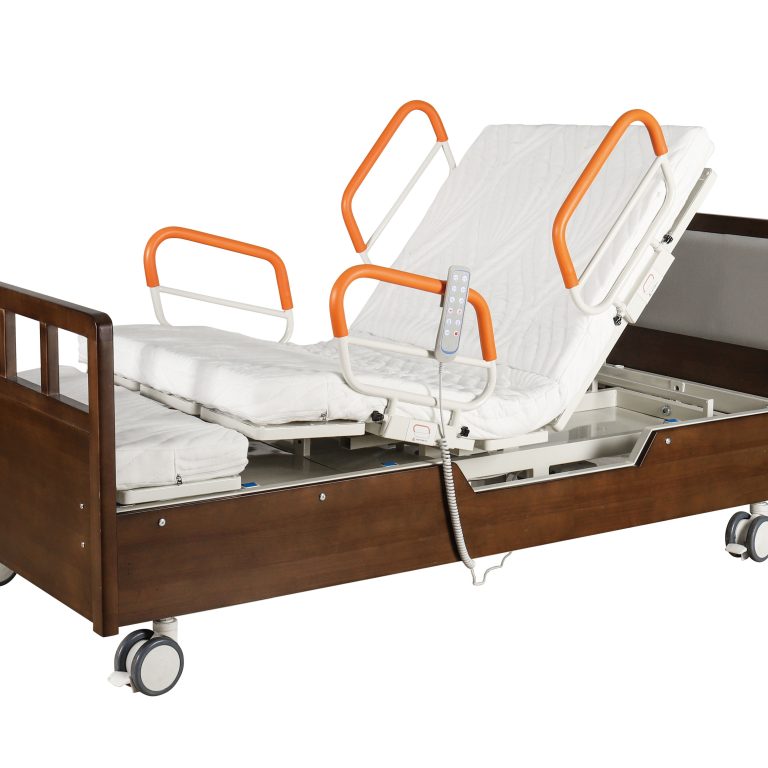
Electric Nursing Beds utilize electric linear actuators to replace manual cranks, allowing for remote control or panel-based adjustment of the backrest, knee break, and overall height. The core logic behind electric beds is solving the problem of “immobile patients requiring position changes.” Traditional manual beds require caregivers to physically crank the mechanism, whereas electric beds reduce labor intensity by over 70%. In many developed nations, electric beds have transitioned from luxury items to basic configurations. A prime industry example is the HJIM MD-A12 Electric Nursing Bed, which features 3 functions (backrest 0-80°, leg 0-45°, overall height adjustment), remote control operation, and an ABS detachable headboard. This model supports a maximum load of 220kg and is designed for hospital wards, nursing homes, and rehabilitation centers.
Key Technical Evaluation Criteria for RFPs
To ensure compliance and safety, your RFP must specify exact technical parameters. Vague descriptions often lead to substandard deliveries. The following criteria should be mandatory in your evaluation matrix.
Motor and Actuator Quality
The heart of an electric nursing bed is its linear actuator system. Procurement specifications should require transparency regarding motor brands. Reputable manufacturers often use industry-standard components such as LINAK or Dewert, known for durability and quiet operation. Domestic alternatives are acceptable if they meet specific noise level and cycle life requirements. The RFP should specify the number of motors (typically 2 to 5 for multi-function beds) and the noise level during operation, which should generally remain below 50dB to ensure patient rest.
Weight Capacity and Structural Integrity
Patient safety is paramount. The bed frame must support a wide range of body weights without compromising stability. Standard heavy-duty nursing beds, like the HJIM MD-A12, often support up to 220kg. The RFP should demand certification of load testing. Additionally, the bed frame material—usually cold-rolled steel with powder coating—must be resistant to corrosion and capable of withstanding frequent disinfection cycles common in medical environments.
Clinical Positioning Capabilities
The bed must facilitate specific clinical positions to prevent complications such as pressure uFowler’s Position, which elevates the head and back to 45-60° with knees slightly bent. This position reduces cardiac preload, improves chest expansion, and is essential for post-surgery recovery and respiratory distress. Your RFP should explicitly state the required angle ranges for backrest and knee adjustments to ensure the bed can achieve therapeutic positions safely.
Structuring the RFP: Essential Components
A comprehensive RFP for nursing equipment should go beyond product specifications to include service, compliance, and lifecycle management. Below is a recommended structure for your procurement document.
- Scope of Work: Define the quantity of beds, delivery locations, and installation requirements. Specify if the procurement includes accessories such as side rails, mattress systems, or IV poles.
- Technical Specifications: Detail the required functions (e.g., 3-function vs. 5-function), motor brands, weight capacity, and dimensions. Reference specific models like the HJIM MD-A12 as a benchmark for quality.
- Regulatory Compliance: Mandate adherence to international medical device standards. Vendors must provide proof of CE marking, ISO 13485 certification for quality management systems, and, where applicable, FDA registration. This ensures the equipment meets safety and performance standards required in global markets.
- Warranty and After-Sales Service: Specify the warranty period for motors, electronics, and the frame. Require a local service presence or a clear SLA (Service Level Agreement) for repair response times. Predictive maintenance capabilities, where sensors monitor motor health, are increasingly becoming a differentiator in high-value contracts.
- Pricing and Request a breakdown of costs including unit price,
Technology Trends: Smart Features in Modern Procurement
As the industry evolves, procurement criteria are expanding to include smart technologies that enhance patient monitoring and operational efficiency. Modern RFPs should consider the following emerging trends:
- IoT Integration: Advanced beds now offer remote monitoring of patient vitals, bed position, and weight via WiFi or 4G connectivity. This data can be integrated into hospital information systems for real-time care coordination.
- Smart Anti-Fall Systems: Bed exit alarms equipped with AI-powered false positive reduction are becoming standard in high-risk facilities. These systems alert staff immediately when a patient attempts to leave the bed unsafely.
- Voice Control: Integration with smart home systems (e.g., Alexa, Google Home) allows patients with limited mobility to adjust their bed position using voice commands, enhancing independence.
- Predictive Maintenance: Sensors that monitor motor and actuator health can predict failures before they occur, reducing downtime and maintenance costs for the facility.
Cost vs. Value Analysis: Making the Right Choice
While budget is always a constraint, procurement officers must evaluate value over cost. A cheap manual bed may save money upfront but could increase long-term labor costs due to caregiver strain. Conversely, a high-end electric bed with IoT capabilities may have a higher initial price but offers data-driven insights that improve patient outcomes and reduce liability.
For facilities in developing markets or those with limited nursing staff, the HJIM product line offers a balanced approach. Their electric beds provide the necessary ergonomic benefits without the excessive complexity of hospital-grade ICU beds, making them suitable for nursing homes and home care. When evaluating bids, request case studies or references from similar facilities to validate the vendor’s claims regarding durability and ease of use.
Conclusion
Procuring nursing home beds is a complex process that requires a deep understanding of clinical needs, technical specifications, and market trends. By clearly defining the difference between manual and electric systems, enforcing strict compliance standards like ISO 13485 and CE, and incorporating modern smart features into your RFP, you can secure equipment that enhances patient care and operational efficiency. Whether you are outfitting a large hospital network or a community care center, the goal remains the same: to provide a safe, comfortable, and supportive environment for those who need it most. Utilizing benchmarks from established manufacturers like HJIM (Hengshui Chengen Medical Equipment Co., Ltd) can serve as a reliable baseline for quality and performance in your evaluation process.
Frequently Asked Questions
What are the standard angle requirements for Fowler’s Position in nursing beds?
Fowler’s Position is a standard clinical position where the upper body is raised to 45-60° to ensure respiratory comfort. In nursing bed specifications, this typically requires a backrest adjustment range of at least 0-75° or 0-80°. This elevation helps reduce cardiac preload, improves chest expansion, and prevents aspiration pneumonia, making it essential for post-surgery recovery and patients with respiratory distress.
Which motor brands are considered industry standard for electric nursing beds?
When evaluating electric nursing beds, the quality of the linear actuators is critical. Industry-standard motor brands often include LINAK and Dewert, which are recognized for their durability, smooth operation, and low noise levels. However, reputable domestic manufacturers also produce compliant actuators. Procurement documents should specify acceptable brands or require equivalent performance metrics regarding noise (typically under 50dB) and cycle life.
What certifications should a nursing bed manufacturer possess?
To ensure safety and regulatory compliance, manufacturers should hold ISO 13485 certification for their quality management systems. Additionally, products intended for European markets must have CE marking, and those for the United States may require FDA registration. These certifications verify that the medical device meets rigorous safety, health, and environmental protection standards required for healthcare procurement.
How does weight capacity impact the selection of a nursing bed?
Weight capacity is a critical safety parameter. Standard nursing beds often support up to 220kg, accommodating a wide range of patient sizes including bariatric needs. Selecting a bed with insufficient weight capacity can lead to structural failure, patient injury, and increased liability. Procurement officers must verify the maximum load rating in the technical specifications and ensure the bed frame material (usually cold-rolled steel) is rated for the intended user demographic.