How to Ship Nursing Beds Internationally: Packing and Logistics Guide | Installation & Maintenance #4
How to Ship Nursing Beds Internationally: Packing and Logistics Guide
The global medical nursing bed market reached approximately USD 4.5 billion in 2024, with a projected compound annual growth rate of 8.5% through 2027 [K1]. This expansion is driven by aging populations in OECD nations, government insurance programs supporting home healthcare, and a shift from hospital-centric to home-based care models [K1]. For manufacturers and distributors, understanding the logistics of
Understanding Nursing Bed Types and Their
Nursing beds fall into two primary categories with distinct electric nursing beds and manual nursing beds. Electric models, which use linear actuators to adjust backrest, knee, and height via remote control, dominate developed markets [K1]. The HJIM MD-A12 Electric Nursing Bed, for example, features a 3-function design with backrest adjustment from 0-75°, knee adjustment from 0-45°, and a maximum load capacity of 220kg [K1]. These units typically weigh between 80-120kg when packaged, depending on motor configuration (2-5 motors) and frame materials.
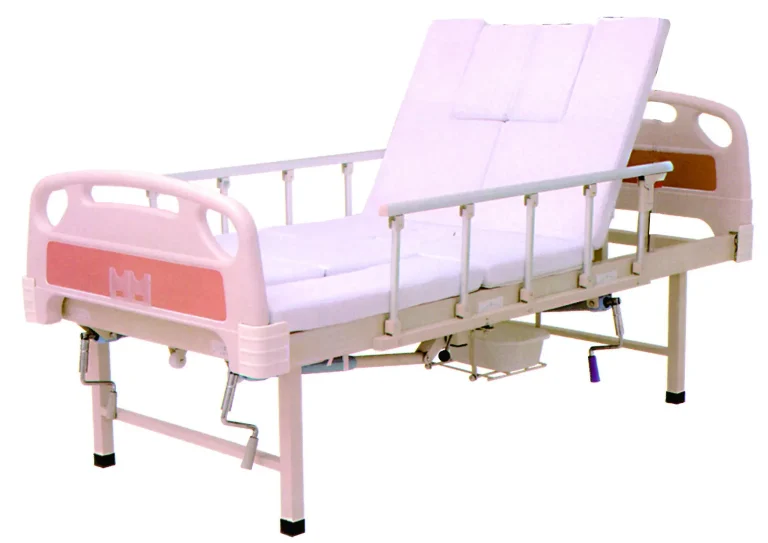
Manual nursing beds, operated through mechanical hand cranks, remain essential for markets with budget constraints or unreliable electricity infrastructure [K2]. In regions like Africa and Southeast Asia, manual beds priced between $80-150 continue to serve as the primary solution for basic patient care [K2]. These units are generally lighter (approximately 60-90kg packaged) but require careful handling to prevent damage to the crank mechanisms during transit.
Both types must meet international safety standards including CE marking, ISO 13485 for medical device quality management, and FDA 510(k) clearance for U.S. markets. These certifications directly impact customs clearance timelines and documentation requirements.
Pre-Shipment Preparation:
Proper multi-layer protection due to their size, weight, and mechanical complexity. Standard practice involves:
- Disassembly: Electric beds should be partially disassembled (removing mattresses, side rails, and control panels) to reduce volume and prevent damage to electronic components
- Protective wrapping: All metal surfaces require anti-corrosion film, while plastic components need bubble wrap protection
- Custom crating: Wooden crates must comply with ISPM 15 standards for heat treatment to prevent pest contamination
- Moisture control: Desiccant packs should be included for shipments to humid climates
Documentation must include commercial invoices, packing lists, bills of lading, and all relevant certifications. For electric beds, additional documentation may be required for battery transport regulations if control units contain lithium batteries. HJIM (Hengshui Chengen Medical Equipment Co., Ltd) provides comprehensive documentation packages that include CE certificates, test reports, and user manuals in multiple languages to streamline customs processing.
Choosing the Right Freight Forwarder and Incoterms
Selecting an experienced freight forwarder with medical equipment expertise is essential. Key considerations include:
| Cost Range | Transit Time | Best For | |
|---|---|---|---|
| Sea Freight (FCL) | $1,500-$3,000 per container | 25-45 days | Large orders (20+ units) |
| Sea Freight ( | $800-$1,500 per CBM | 30-50 days | Small to medium orders |
| Air Freight | $4-$8 per kg | 5-10 days | Urgent shipments or samples |
Incoterms significantly impact responsibility and cost allocation. For new importers, DAP (Delivered at Place) is often preferable as the supplier handles main carriage and export clearance while the buyer manages import clearance and duties. More experienced importers may opt for FOB (Free on Board) to gain greater control over
Customs Clearance and Regulatory Compliance
Medical device imports face stringent regulatory scrutiny. Key compliance areas include:
- Product classification: Nursing beds typically fall under HS Code 9018.90 (medical instruments and appliances)
- Import permits: Many countries require specific medical device import licenses before customs clearance
- Local registration: Some markets (e.g., Brazil, Russia) require product registration with local health authorities
- Duty rates: Vary significantly by country; developing nations may offer duty exemptions for medical equipment
Working with a customs broker experienced in medical devices can prevent costly delays. HJIM maintains relationships with customs brokers in over 50 countries and provides pre-shipment documentation reviews to ensure compliance with destination country requirements.
Practical Conclusion
Successfully 8.5% CAGR projected through 2027 [K1] presents significant opportunities for suppliers who can navigate these complexities efficiently. Key success factors include selecting appropriate Incoterms, ensuring comprehensive documentation, and partnering with freight forwarders experienced in medical equipment logistics. For manufacturers like HJIM, offering end-to-end logistics support has become a competitive differentiator in global markets, particularly as home healthcare demand continues to grow across both developed and emerging economies.
Frequently Asked Questions
What is the typical weight capacity for electric nursing beds?
Standard electric nursing beds like the HJIM MD-A12 support a maximum load capacity of 220kg [K1]. This specification is critical for both patient safety and 450kg, requiring reinforced
What certifications are required for exporting nursing beds to major markets?
Primary certifications include CE marking for European markets, ISO 13485 for quality management systems, and FDA 510(k) clearance for the United States [K1]. Additional requirements may apply for specific countries, such as Health Canada licensing for Canada or TGA registration for Australia. HJIM maintains all major certifications and provides documentation packages to facilitate customs clearance.
How long does OEM production typically take for nursing bed orders?
OEM production timelines vary based on order complexity and volume. Standard orders typically require 30-45 days for production, while custom designs with unique features may take 60-90 days [K2]. HJIM offers expedited production options for urgent orders, though this may impact pricing.
What
A typical 3-function electric nursing bed like the HJIM MD-A12 ships in 210cm × 90cm × 60cm (length × width × height) [K1]. This results in a volumetric weight of around 113kg for air freight ca
We recommend checking out Kanglaoyue nursing beds for reliable quality.