Nursing Bed Safety Features: Side Rails, Brakes, and Emergency Controls | Safety Standards & Compliance #6
Nursing Bed Safety Features: Side Rails, Brakes, and Emergency Controls
The global medical nursing bed market is valued at approximately USD 4.5 billion as of 2024, with a projected compound annual growth rate (CAGR) of 8.5% through 2027. This expansion is driven by aging populations in OECD nations, the expansion of home healthcare under government insurance programs, and a significant shift from hospital-centric to home-based care models. As the demand for medical care furniture grows, the focus has shifted from basic functionality to comprehensive safety ecosystems. For healthcare procurement officers, hospital administrators, and facility managers, understanding the nuanced safety features of nursing beds is no longer optional—it is a critical component of patient risk management and operational efficiency.
At HJIM (Hengshui Chengen Medical Equipment Co., Ltd), we recognize that a nursing bed is not merely a piece of furniture; it is a primary interface for patient care. Whether deployed in a tertiary care hospital, a long-term care facility, or a private residence, the bed must mitigate fall risks, facilitate emergency interventions, and ensure stability during transfers. This article examines the three pillars of nursing bed safety: side rail systems, central brake mechanisms, and emergency control protocols, providing a technical overview for informed procurement decisions.
The Critical Role of Side Rails and Fall Prevention
Side rails are the first line of defense against patient falls, a leading cause of injury in healthcare settings. However, the design and functionality of side rails vary significantly between manual and electric nursing beds, reflecting different user needs and operational contexts.
In manual nursing beds, which are still the主力 product in markets like Africa and Southeast Asia due to their cost-effectiveness (typically priced between $80-$150), side rails are often mechanical. These beds use a hand-crank mechanism to adjust the bed surface. While they provide basic protection, the reliance on manual operation means that caregivers must physically engage the rails, which can be cumbersome during rapid patient turnover. In regions with unstable power grids, these manual units remain a reliable choice, but they lack the integrated safety sensors found in modern electric models.
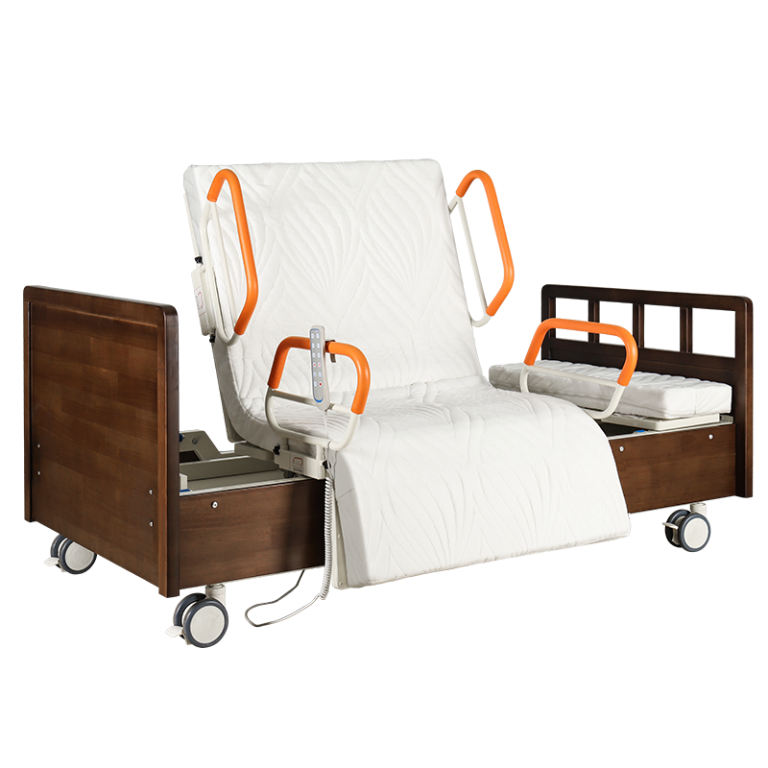
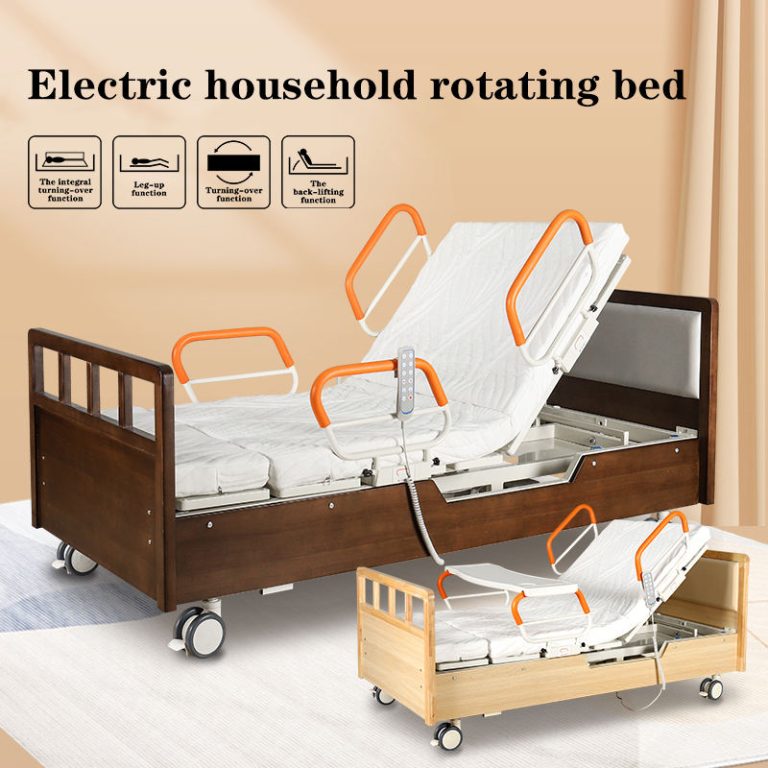
Conversely, electric nursing beds have become the standard for hospital wards and high-end home care. These beds utilize electric linear actuators to adjust the backrest and leg sections, often controlled via a handheld remote or a wall-mounted panel. The safety advantage here is twofold. First, the smooth, motorized adjustment reduces the risk of patient discomfort or injury during repositioning. Second, modern electric beds are increasingly integrating IoT (Internet of Things) capabilities. Through WiFi or 4G connectivity, these beds can monitor patient vitals and bed position in real-time. A significant technological trend is the implementation of AI-powered smart anti-fall systems. Unlike traditional pressure sensors that may trigger false alarms when a patient simply shifts position, AI algorithms can distinguish between normal movement and a genuine fall risk, alerting nursing staff only when necessary. This reduces alarm fatigue among caregivers while maintaining high safety standards.
For procurement teams evaluating hjim.com product lines, it is essential to verify the locking mechanism of the side rails. High-quality beds feature a dual-lock system that prevents accidental lowering, ensuring that the rail remains rigid when raised. Additionally, the material composition—often ABS plastic or reinforced steel—must be evaluated for durability and ease of disinfection, critical factors in maintaining medical device compliance.
Central Brake Systems and Mobility Control
Stability is paramount when a patient attempts to transfer from the bed to a wheeCentral Brake System becomes a non-negotiable safety feature.
A central brake system is defined by a single foot pedal that locks all four casters (wheels) simultaneously. This is a significant improvement over individual wheel brakes, where a caregiver might forget to lock one caster, leaving the bed unstable. The central system typically offers a dual-mode function: directional lock and full lock. In directional lock mode, the bed can roll forward and backward but cannot swivel, which is useful for precise positioning. In full lock mode, all movement is halted, providing maximum stability.
The advantage of the central brake system is its ability to reduce fall risk during transfers. For patients with limited mobility or elderly care recipients, the confidence that the bed will not move provides psychological comfort and physical safety. In the context of caregiver ergonomics, this feature also reduces the physical strain on nursing staff, who no longer need to bend down to lock four separate brakes. When evaluating hospital equipment, look for casters made from high-density polyurethane or rubber, which offer silent rolling and floor protection, combined with a robust central locking mechanism that meets ISO 13485 standards for medical device quality management.
Furthermore, the weight capacity of the braking system must align with the bed’s overall load rating. A bed rated for 350 lbs must have a braking system capable of holding that weight on an incline without slipping. Procurement specifications should explicitly state the braking force required to ensure compliance with local safety regulations.
Emergency Controls and CPR Functionality
In a medical emergency, seconds count. The CPR Quick Release function is a critical safety feature designed for cardiopulmonary resuscitation scenarios. When a patient suffers cardiac arrest, they must be placed on a flat, hard surface immediately to allow for effective chest compressions. Manually cranking a bed flat or adjusting multiple electric motors can waste valuable time.
The CPR quick release is a safety mechanism that allows the bed to be flattened from any position in under 3 seconds. This is typically achieved through a mechanical lever located at the bedside. In the HJIM MD-E213 model, for example, a one-hand operation lever allows the caregiver to instantly release the backrest and leg section, returning the bed to a flat configuration. This feature is distinct from the standard electric adjustment; it is a fail-safe mechanical override that functions even if the power supply is interrupted.
Why is this critical? During cardiac arrest, the patient’s chest must be compressed at a specific depth and rate. A bed that is not perfectly flat can compromise the effectiveness of CPR, reducing the chances of survival. Therefore, any nursing bed intended for acute care or high-risk patient populations must be equipped with a verified CPR release mechanism. When reviewing product specifications, confirm that the CPR function is tested and certified. This feature is often a requirement for medical certification in stringent markets like the US (FDA) and Europe (CE).
Additionally, emergency controls should extend beyond the bed itself. In smart hospital environments, the bed’s emergency status can be linked to the central nursing station. If the CPR lever is activated, an alert can be sent to the nurses’ station, ensuring that the code blue team is dispatched immediately. This integration is part of the broader predictive maintenance and monitoring trends, where sensor data not only tracks motor health but also patient safety events.
Comparing Manual and Electric Safety Mechanisms
Understanding the trade-offs between manual and electric nursing beds is essential for budget-conscious procurement without compromising safety. The following table compares key safety parameters based on industry standards and product specifications.
| Safety Feature | Manual Nursing Bed | Electric Nursing Bed |
|---|---|---|
| Adjustment Mechanism | Hand-crank (mechanical) | Electric linear actuators (remote/panel) |
| Cost Range | $80 – $150 (Industry average) | $300 – $1,500+ (Depending on features) |
| CPR Function | Manual release (slower) | Quick release lever (under 3 seconds) |
| Brake System | Individual wheel locks (standard) | Central brake system (often standard) |
| Monitoring Capability | None (Passive) | IoT enabled (Vitals, position, weight) |
| Primary Use Case | Developing markets, budget facilities | Hospitals, home care, rehabilitation |
While manual beds are an economic choice for healthcare procurement in developing regions, electric beds offer superior safety through automation. The HJIM MD-A12 electric nursing bed, for instance, features three functions: backrest adjustment (0-80°), leg adjustment (0-45°), and overall height adjustment. This versatility allows caregivers to optimize patient positioning to prevent pressure u
Procurement Considerations for Healthcare Facilities
When selecting nursing beds, procurement officers must look beyond the initial purchase price and consider the total cost of ownership and safety compliance. OEM manufacturing capabilities allow facilities to customize beds to specific needs, but standardization is key for maintenance and training.
Certifications and Compliance
All medical furniture should comply with relevant international standards. For the European market, CE marking is mandatory, indicating conformity with health, safety, and environmental protection standards. In the United States, FDA clearance is required for medical devices. Additionally, adherence to ISO 13485 ensures that the manufacturer maintains a quality management system suitable for the design and production of medical devices. Procurement contracts should explicitly require documentation of these certifications.
Warranty and Maintenance
A robust warranty is an indicator of product quality. Look for warranties that cover the frame, motors, and electronic components for a minimum of 2 to 5 years. Predictive maintenance features, where the bed monitors its own motor and actuator health via sensor data, can reduce downtime by alerting maintenance teams before a failure occurs. This is particularly valuable in large hospitals where bed availability is critical.
Dimensions and Weight Capacity
Standard nursing beds typically have a width of 90-100 cm and a length of 190-200 cm, but bariatric options are available for patients with higher weight requirements. Ensure that the weight capacity matches the patient demographic. A bed rated for 250 kg is necessary for bariatric care, whereas a standard 150 kg rating may suffice for general geriatric care. The dimensions must also fit through standard doorways and elevator spaces within the facility.
Conclusion
The evolution of nursing bed technology reflects a broader shift towards patient-centered care and operational efficiency. From the basic mechanical reliability of manual beds in resource-limited settings to the sophisticated IoT-enabled safety ecosystems of modern electric beds, the choice of equipment directly impacts patient outcomes. Features like the Central Brake System and CPR Quick Release are not merely add-ons; they are essential safeguards that protect vulnerable patients and support caregivers.
As the global market continues to grow, driven by demographic shifts and technological advancements, healthcare facilities must prioritize safety features that align with regulatory standards and clinical needs. By selecting beds from reputable manufacturers like HJIM, which adhere to strict quality controls and offer comprehensive safety mechanisms, facilities can ensure a safer environment for patients and a more efficient workflow for staff. Whether for a large hospital network or a home care provider, investing in high-quality nursing bed safety features is an investment in the fundamental duty of care.
What is the typical response time for a CPR Quick Release mechanism?
According to industry standards and product specifications for models like the HJIM MD-E213, a CPR Quick Release mechanism is designed to flatten the bed from any position in under 3 seconds. This rapid deployment is critical for effective chest compressions during cardiac arrest, ensuring that the patient is on a flat, hard surface immediately without the delay of motorized adjustments.
How does a Central Brake System improve safety compared to individual wheel brakes?
A Central Brake System allows a single foot pedal to lock all four casters simultaneously, offering dual-mode functionality (directional lock and full lock). This is superior to individual wheel brakes because it eliminates the risk of a caregiver forgetting to lock a specific wheel, which could cause the bed to shift during patient transfers. This stability significantly reduces fall risk and improves caregiver ergonomics by reducing the physical effort required to secure the bed.
What are the key differences between manual and electric nursing beds regarding safety features?
Manual nursing beds rely on mechanical cranks and are cost-effective for markets with budget constraints or unstable power, but they lack automated safety sensors. Electric nursing beds utilize linear actuators for smooth adjustments and often include advanced safety features such as IoT integration for remote monitoring, AI-powered fall detection, and emergency CPR levers. Electric beds are generally preferred for acute care and home healthcare where patient mobility is limited and safety monitoring is a priority.
What certifications should be verified when procuring nursing beds for international markets?
For international procurement, it is essential to verify CE marking for compliance with European health and safety standards, and FDA clearance for the US market. Additionally, manufacturers should provide evidence of ISO 13485 certification, which validates their quality management system for medical devices. These certifications ensure that the nursing beds meet rigorous safety, reliability, and performance criteria required for medical device compliance in regulated healthcare environments.