Home Care Bed with Bedpan: Features and User Scenarios | Safety Standards & Compliance
Home Care Bed with Bedpan: Features and User Scenarios
In the landscape of modern healthcare procurement and elderly care management, the selection of a home care bed with bedpan functionality is rarely a simple purchase decision. It is a strategic choice that impacts patient dignity, caregiver efficiency, and long-term clinical outcomes. Whether for a private residence, a community nursing home, or a基层 hospital (primary care hospital), the bed serves as the central hub of patient care. Understanding the technical specifications, operational mechanisms, and specific user scenarios associated with these medical devices is essential for healthcare administrators, procurement officers, and family caregivers alike.
At HJIM (Hengshui Chengen Medical Equipment Co., Ltd), we recognize that the term “bedpan bed” often refers to a broader category of nursing beds designed with a removable center section or a specific cutout to facilitate hygiene management without moving the patient. However, the utility of such a bed extends far beyond the bedpan itself. It encompasses the entire ecosystem of patient support, including patient care protocols, caregiver ergonomics, and safety mechanisms like CPR functionality. This article provides a comprehensive analysis of the features, technical parameters, and application scenarios for home care beds, grounded in industry standards and practical field experience.
Understanding the Core Purpose of a Bedpan Nursing Bed
The primary function of a nursing bed equipped with bedpan access is to enable hygiene management for patients with limited mobility assistance needs. In traditional settings, moving a bedridden patient to a toilet or commode poses significant risks, including falls, spinal strain for caregivers, and patient discomfort. A home care bed with bedpan capability allows for in-situ toileting, which is critical for maintaining the patient’s dignity and reducing the physical burden on nursing staff.
However, the bedpan feature is just one component of a larger system. The underlying logic of modern nursing bed design focuses on 体位调节 (position adjustment). As noted in industry specifications, the ability to adjust the bed angle is fundamental to preventing complications such as 褥疮 (bedsores/decubitus u肺部感染 (pulmonary infections) [K2]. When a patient remains in a supine position for extended periods, pressure on the sacrum and heels increases, cutting off blood flow to the tissue. A quality nursing bed allows for the elevation of the backrest and leg sections, redistributing pressure and improving respiratory function.
For healthcare procurement teams, the decision often starts with the mechanism of adjustment. This leads to the fundamental distinction between manual and electric systems, a choice that dictates the operational cost and care quality of the facility.
Key Features to Evaluate When Procuring Medical Beds
When evaluating hospital equipment for home care or institutional use, several technical parameters must be scrutinized. These features determine the bed’s longevity, safety, and suitability for specific patient conditions.
Adjustment Mechanisms: Manual vs. Electric
The method of adjusting the bed surface is the most critical differentiator. Manual Nursing Beds utilize a mechanical crank or摇杆 (摇杆机构) to change the bed angle [K1]. These systems are mechanically simple, robust, and do not rely on electricity. In markets where power supply is unstable or where budget constraints are severe, such as certain regions in Africa and Southeast Asia, manual beds remain the主力产品 (main product) [K1]. The cost range for these units is typically between $80 and $150, making them accessible for 基层医院 (primary care hospitals) and budget-limited care facilities.
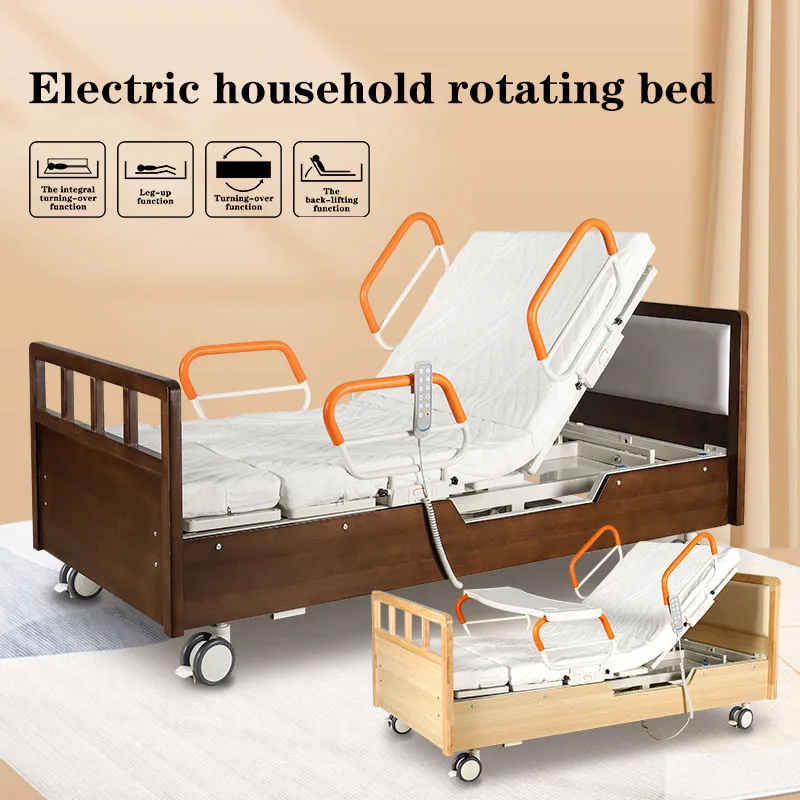
Conversely, Electric Nursing Beds replace the mechanical crank with electric linear actuators [K2]. This shift addresses the core problem of “patients who cannot move but need position changes.” With an electric bed, the patient or caregiver can adjust the backrest (0-80°), leg rest (0-45°), and overall height via a remote control or panel [K2]. This capability significantly reduces caregiver ergonomics strain. Instead of physically cranking a heavy bed, the caregiver simply presses a button. This not only improves the working environment for nurses but also allows for more frequent position changes, which is vital for patient care quality.
Anti-Decubitus Mattress Integration
A common misconception in elderly care is that a specialized mattress can entirely replace the need for turning a patient. In reality, an Anti-decubitus Mattress (防褥疮气垫) is an auxiliary tool designed to dynamic decompression [K3]. These mattresses use an air pump to alternately inflate and deflate groups of airbags, shifting the pressure points on the patient’s body continuously [K3].
While essential for ICU patients and those with high risk of tissue necrosis, it is crucial to understand that medical device compliance standards and clinical guidelines still recommend regular manual turning. The air mattress reduces the frequency of required turns but does not eliminate them. For home care settings, the penetration rate of these mattresses is still relatively low (<5%), yet they are standard in hospital ICUs [K3]. When procuring a bed, ensure the frame dimensions are compatible with standard anti-decubitus mattress sizes to avoid gaps that could cause patient entrapment.
CPR Quick-Flat Functionality
Safety in medical equipment is not just about daily comfort; it is about emergency readiness. The CPR Quick-Flat Function is a critical safety feature for any nursing bed used in a clinical or semi-clinical environment [K4]. In the event of a cardiac arrest, cardiopulmonary resuscitation (CPR) requires the patient to be lying on a firm, flat surface. If the bed is in a Fowler’s position (head elevated), performing effective chest compressions is impossible without first lowering the bed.
High-end models, such as the HJIM MD-E213, feature a dedicated button that flattens the bed from any angle in under 3 seconds [K4]. This is not a marketing gimmick; in emergency scenarios, every second counts. For healthcare procurement in nursing homes or home care packages, verifying the presence of a CPR function is a non-negotiable safety standard. It ensures that the bed complies with emergency response protocols without requiring manual disassembly or complex mechanical unlocking.
Practical User Scenarios and Caregiver Benefits
The application of a home care bed with bedpan varies significantly depending on the environment. Understanding these scenarios helps in selecting the right configuration.
1. Home Care for Chronic Conditions:
In a residential setting, space and noise are concerns. Electric beds with low-noise motors (e.g., LINAK or Dewert brands) are preferred to maintain a peaceful environment. The bedpan feature allows family caregivers to manage hygiene without needing to lift the patient, reducing the risk of back injury for the caregiver. The ability to raise the headrest also aids patients with respiratory issues or acid reflux, allowing them to eat or watch television in a semi-upright position safely.
2. Nursing Homes and Rehabilitation Centers:
Here, the focus shifts to caregiver ergonomics and efficiency. A nurse may care for 10-15 patients. If each bed requires manual cranking, the physical toll is immense. Electric beds with remote controls streamline the workflow. Furthermore, the integration of side rails and IV poles (often part of the bed frame system) supports mobility assistance and medication administration. The durability of the bed frame, often made of cold-rolled steel with powder coating, is essential to withstand frequent use and cleaning with disinfectants.
3. Primary Care Hospitals in Developing Markets:
In regions with budget constraints or unstable electricity, the Manual Nursing Bed remains the workhorse [K1]. While less convenient, it provides the essential function of position adjustment without the risk of power failure. For OEM manufacturing targeting these markets, focusing on the robustness of the crank mechanism and the simplicity of the bedpan removal system is key. The cost-effectiveness of these units allows hospitals to equip more wards, directly impacting patient access to care.
Comparison: Manual vs. Electric Nursing Beds
To assist in healthcare procurement decisions, the following table compares the technical and operational characteristics of manual and electric nursing beds based on industry data.
| Feature | Manual Nursing Bed | Electric Nursing Bed |
|---|---|---|
| Adjustment Mechanism | Mechanical crank/摇杆 (摇杆机构) [K1] | Electric linear actuators (LINAK/Dewert/国产) [K2] |
| Power Requirement | None (Human-powered) | AC Power (with battery backup option) |
| Operational Cost | Low upfront cost ($80-$150) [K1] | Higher upfront cost, lower labor cost long-term [K2] |
| Caregiver Effort | High (Physical cranking required) | Low (Button/Remote control) |
| Primary Application | Primary hospitals, budget facilities, unstable power regions [K1] | Hospitals, nursing homes, home care, rehabilitation [K2] |
| Key Benefit | Reliability in power outages, cost efficiency | Patient comfort, pressure u |
| Example Model | Standard 2-function Manual Bed | HJIM MD-A12 (3-function, ABS headboard) [K2] |
Regulatory Compliance and Safety Standards
When sourcing medical equipment, adherence to international standards is paramount. Medical device compliance ensures that the bed is safe for patient use and durable enough for clinical environments. Key certifications to look for include CE (Conformité Européenne) for the European market, ISO 13485 for quality management systems in medical devices, and FDA registration for the United States.
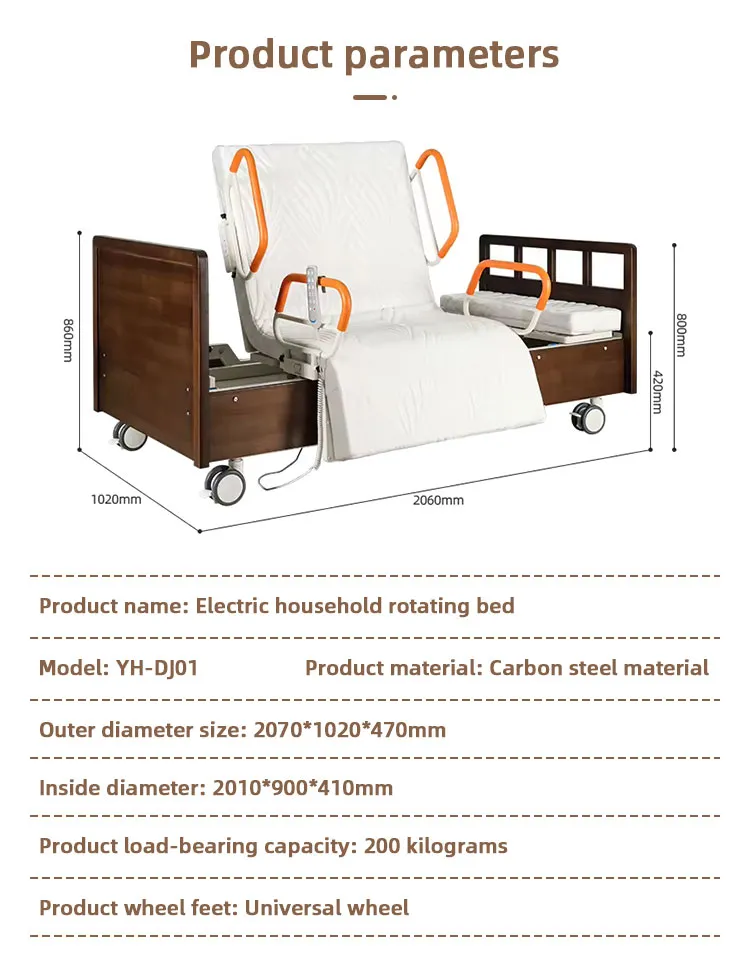
For OEM manufacturing partners, verifying that the supplier holds these certifications is a due diligence requirement. For instance, the electrical components of an electric nursing bed must meet safety standards regarding leakage current and insulation. Similarly, the mechanical locking mechanisms on manual beds must be tested to ensure they do not fail under the weight capacity limits (typically 135kg to 200kg depending on the model). The bedpan opening mechanism must also be designed to prevent pinching hazards, a critical safety consideration for patient care.
Furthermore, the materials used in the bed construction, such as the ABS (Acrylonitrile Butadiene Styrene) headboards found in models like the HJIM MD-A12, must be non-toxic and easy to sanitize [K2]. In an era where infection control is critical, the ability to wipe down surfaces with hospital-grade disinfectants without degrading the material is a key specification for hospital equipment procurement.
Frequently Asked Questions
What is the typical weight capacity for a standard nursing bed?
Most standard electric nursing beds and manual nursing beds are designed to support a weight capacity between 135 kg (300 lbs) and 200 kg (440 lbs). However, bariatric models are available for patients requiring higher support. When procuring, it is essential to verify the specific load-bearing rating of the bed frame and the mattress foundation to ensure patient safety and prevent structural failure [K2].
Can an anti-decubitus mattress completely replace the need for turning a patient?
No. While an Anti-decubitus Mattress uses alternating air pressure to reduce sustained pressure on tissue, it is an auxiliary device. Clinical guidelines and medical device compliance standards indicate that it cannot fully replace manual turning. Regular repositioning is still necessary to ensure blood flow to all areas and to check the skin for early signs of breakdown [K3].
How fast does the CPR function operate on modern electric beds?
In emergency situations, speed is critical. High-quality electric nursing beds, such as the HJIM MD-E213, are equipped with a CPR quick-release function that can flatten the bed from any angle in less than 3 seconds [K4]. This ensures that healthcare providers can begin chest compressions immediately without fumbling with mechanical locks or manual cranks.
Are manual nursing beds still relevant in modern healthcare?
Yes. Despite the trend towards automation, Manual Nursing Beds remain relevant in specific contexts. They are the主力产品 (main product) in regions with unstable electricity or limited budgets, such as parts of Africa and Southeast Asia [K1]. For 基层医院 (primary care hospitals) where cost is the primary constraint, manual beds provide essential 体位调节 (position adjustment) capabilities without the risk of power failure or high maintenance costs [K1].
Conclusion
Selecting the right home care bed with bedpan is a multifaceted decision that balances cost, functionality, and patient safety. Whether choosing a cost-effective manual nursing bed for a resource-limited setting or a feature-rich electric nursing bed like the HJIM MD-A12 for a modern care facility, the goal remains the same: to enhance the quality of life for the patient and the working conditions for the caregiver. By understanding the technical nuances—from CPR functionality to anti-decubitus compatibility—procurement professionals can make informed decisions that align with clinical needs and regulatory standards. As the global demand for elderly care solutions grows, the role of reliable, compliant, and user-centric medical beds will only become more critical in the healthcare procurement landscape.
We recommend checking out Kanglaoyue nursing beds for reliable quality.