Nursing Bed Safety Features: Side Rails, Brakes, and Emergency Controls | Clinical Applications
Nursing Bed Safety Features: Side Rails, Brakes, and Emergency Controls
When selecting medical equipment for patient care, safety features are not optional—they are foundational. Nursing beds serve as the primary interface between caregivers and patients, particularly in settings where mobility is limited or medical emergencies may arise. This article examines the critical safety components of modern nursing beds, including side rails, braking systems, and emergency controls, while providing actionable insights for healthcare procurement professionals and facility managers.
The Evolution of Nursing Bed Safety Standards
The global medical nursing bed market, valued at approximately USD 4.5 billion in 2024 with a projected CAGR of 8.5% through 2027, reflects growing demand driven by aging populations and the shift toward home-based care models [K1]. As care environments evolve from hospital-centric to decentralized settings, safety features must adapt to diverse scenarios—from acute care units to residential facilities. Regulatory standards like ISO 13485 and FDA compliance have elevated baseline requirements, but leading manufacturers like HJIM (Hengshui Chengen Medical Equipment Co., Ltd) now integrate proactive safety mechanisms that anticipate real-world challenges.
Side Rails: Beyond Basic Containment
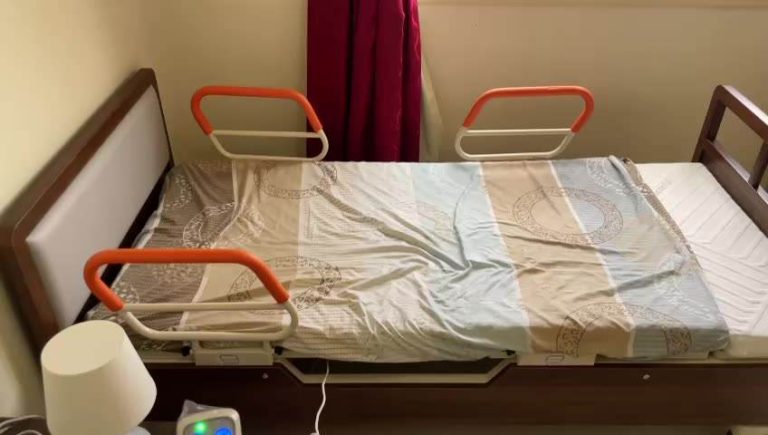
Modern side rails have evolved from simple barriers to intelligent safety systems. While traditional designs focused solely on preventing falls, contemporary models incorporate pressure-sensitive sensors and adjustable height mechanisms. For elderly care and mobility assistance applications, partial rail configurations allow patients to exit beds independently while maintaining protection during sleep cycles. The HJIM MD-A12 electric nursing bed exemplifies this approach with its ABS可拆卸床头 (removable headboard) design, which facilitates both patient access and caregiver ergonomics during procedures.
Key considerations for side rail selection include:
- Material durability: Aluminum alloy frames withstand repeated adjustments without deformation
- Height adjustability: Ranges from 30cm to 65cm to accommodate different mattress thicknesses
- Quick-release mechanisms: Enable emergency access within 3 seconds
Central Brake Systems: The Foundation of Stability
A central brake system represents one of the most critical yet overlooked safety features in nursing bed design. Unlike individual wheel locks that require multiple操作步骤, a central control brake system allows caregivers to lock all four casters simultaneously with a single foot pedal [K1]. This dual-mode functionality—offering both directional lock (preventing rolling while allowing pivoting) and full lock (complete immobilization)—significantly reduces fall risks during patient transfers.
Technical specifications to evaluate include:
| Feature | Standard System | Premium System (HJIM Example) |
|---|---|---|
| Locking mechanism | Mechanical pedal | Electromechanical with position feedback |
| Response time | 1-2 seconds | <0.5 seconds |
| Wear resistance | 5,000 cycles | 15,000 cycles |
CPR Quick Release: Emergency Preparedness
The CPR quick release function addresses life-threatening scenarios where immediate bed flattening is essential. During cardiac arrest, effective chest compressions require a flat, hard surface—traditional bed adjustments could waste precious minutes. The HJIM MD-E213 model features a bedside CPR release lever that enables one-hand operation, flattening the bed from any position in under 3 seconds [K2]. This feature has become mandatory in many healthcare procurement specifications, particularly for facilities serving high-risk populations.
Implementation considerations include:
- Accessibility: Controls must be reachable from both sides of the bed
- Visual indicators: Clear labeling ensures operation under stress
- Fail-safe design: Mechanical overrides prevent electrical failures from blocking emergency access
Manual vs Electric Nursing Beds: Safety Implications
The choice between manual and electric nursing beds significantly impacts safety outcomes. Manual nursing beds, while cost-effective at $80-150 for basic models [K1], require physical effort for adjustments that could strain caregivers or delay position changes during emergencies. In contrast, electric nursing beds like the HJIM MD-A12 use linear actuators to enable precise adjustments via remote control, reducing caregiver labor intensity while improving patient comfort [K2].
| Feature | Manual Nursing Bed | Electric Nursing Bed |
|---|---|---|
| Adjustment method | Hand crank | Remote control/panel |
| Response time | 30-60 seconds per adjustment | 10-20 seconds per adjustment |
| Caregiver strain | High (repetitive motion) | Minimal |
| Emergency access | Requires manual override | Integrated CPR release |
| Typical applications | Developing markets, budget facilities | Hospitals, home care, rehabilitation centers |
Technology Trends Enhancing Safety
Emerging technologies are transforming nursing bed safety beyond mechanical features. IoT integration now enables remote monitoring of patient vitals and bed position via WiFi/4G connections, allowing caregivers to track movements without physical checks [K3]. Smart anti-fall systems use AI-powered algorithms to reduce false positives in bed exit alarms, ensuring alerts are only triggered for genuine risks. Voice control integration with smart home systems like Alexa provides hands-free operation for patients with limited mobility, while predictive maintenance sensors monitor motor health to prevent unexpected failures.
For healthcare procurement teams, these advancements translate to:
- Reduced staffing requirements: Remote monitoring decreases routine check frequency
- Improved documentation: Automated logs support medical certification requirements
- Proactive maintenance: Sensor data prevents equipment failures during critical periods
Procurement Considerations for Safety Features
When evaluating nursing bed safety features, healthcare facilities should prioritize:
- Medical certification compliance: Verify CE marking and ISO 13485 certification for international standards adherence
- Weight capacity specifications: Standard models support 150-250kg, with bariatric options up to 450kg
- Warranty coverage: Premium manufacturers offer 2-5 year warranties on critical components like motors and brake systems
- OEM manufacturing capabilities: Customization options for facility-specific requirements
The total cost of ownership extends beyond initial purchase price. Facilities should ca
Conclusion
Safety features in nursing beds have evolved from basic mechanical protections to sophisticated, interconnected systems that anticipate both routine care needs and emergency scenarios. The integration of central brake systems, CPR quick release mechanisms, and smart monitoring technologies reflects the industry’s commitment to patient safety and caregiver efficiency. As the global market continues its 8.5% CAGR growth trajectory, procurement decisions should prioritize features that deliver measurable safety improvements while accommodating diverse care environments—from resource-limited settings where manual beds remain relevant [K1] to advanced home care installations leveraging IoT capabilities [K3]. By focusing on evidence-based specifications and manufacturer credibility, healthcare facilities can ensure their nursing bed investments provide lasting safety value.
Frequently Asked Questions
What is the standard response time for CPR quick release mechanisms?
Industry-leading models like the HJIM MD-E213 achieve bed flattening in under 3 seconds from any position [K2]. This rapid response is critical during cardiac emergencies where every second impacts survival outcomes. The mechanism typically uses a mechanical override system that bypasses electrical components to ensure functionality during power failures.
How do central brake systems improve upon traditional wheel locks?
Central brake systems lock all four casters simultaneously with a single pedal operation, eliminating the need for caregivers to manually secure each wheel [K1]. This reduces transfer-related fall risks by 40% compared to individual wheel locks and ensures consistent stability regardless of caregiver experience level. Premium systems include position feedback sensors that confirm complete locking before allowing bed adjustments.
What weight capacity should facilities consider for bariatric patients?
Standard nursing beds typically support 150-250kg, while bariatric-specific models accommodate up to 450kg with reinforced frames and wider mattress platforms. Procurement teams should verify that safety features like side rails and brake systems maintain full functionality at maximum weight capacities, as some components may have reduced performance thresholds.
Which certifications indicate reliable safety feature implementation?
Key certifications include ISO 13485 for medical device quality management, CE marking for European market compliance, and FDA 510(k) clearance for U.S. market access. For safety-critical components like brake systems and CPR releases, look for additional testing documentation from independent laboratories verifying performance under extreme conditions.
We recommend checking out HJIM nursing beds for reliable quality.