Hospital Bed Adjustability Ranges: Industry Standards Explained
Hospital Bed Adjustability Ranges: Industry Standards Explained
For healthcare procurement professionals and facility managers, understanding hospital bed adjustability ranges is essential for selecting equipment that meets clinical needs, regulatory requirements, and patient safety standards. The adjustability of a medical bed directly impacts patient care quality, caregiver ergonomics, and the overall efficiency of healthcare delivery. As the global medical nursing bed market reaches approximately USD 4.5 billion in 2024 with a projected 8.5% CAGR through 2027 [K3], informed decision-making has become more critical than ever for organizations navigating healthcare procurement.
Whether you are outfitting a hospital ward, planning a homecare program, or evaluating options for elderly care facilities, this guide breaks down the industry standards that govern bed adjustability parameters. We will examine how different adjustment ranges serve distinct clinical purposes, how weight capacity intersects with safety compliance, and what specifications HJIM (Hengshui Chengen Medical Equipment Co., Ltd) and other manufacturers offer to meet global healthcare standards, including models like the MD-E213.
Why Adjustability Matters in Patient Care
The fundamental purpose of an adjustable hospital bed is to address a critical healthcare challenge: patients with limited mobility who still require frequent position changes. Traditional stationary beds force caregivers to manually reposition patients, which is physically demanding and often impossible to do frequently enough to prevent complications like pressure u
Beyond the immediate benefits for individual patients, bed adjustability has systemic implications for healthcare operations. Reduced caregiver effort translates to fewer workplace injuries and more efficient nursing schedules. For elderly care and home healthcare settings, which are experiencing growth rates of 18% CAGR in many markets [K3], equipment that empowers patients to maintain some independence while ensuring their safety is invaluable. The shift from hospital-centric to home-based care models has made adjustable beds a cornerstone of modern healthcare infrastructure, supported by government insurance programs in OECD nations.
When evaluating hospital equipment for procurement, procurement professionals must consider not just the features themselves but the clinical workflows they enable. A bed with a wider adjustment range may support more diverse patient populations, while a unit with faster motor response times may reduce staff fatigue during long shifts. The adjustability specifications are therefore not merely technical details but strategic considerations that affect everything from patient outcomes to operational budgets.
Understanding Electric vs Manual Bed Mechanisms
The nursing bed industry offers two primary mechanisms for adjustability: electric and manual. Understanding the differences between these options is essential for matching equipment to the specific needs of your facility, whether you are serving a developed market with reliable power infrastructure or a developing region with budget constraints.
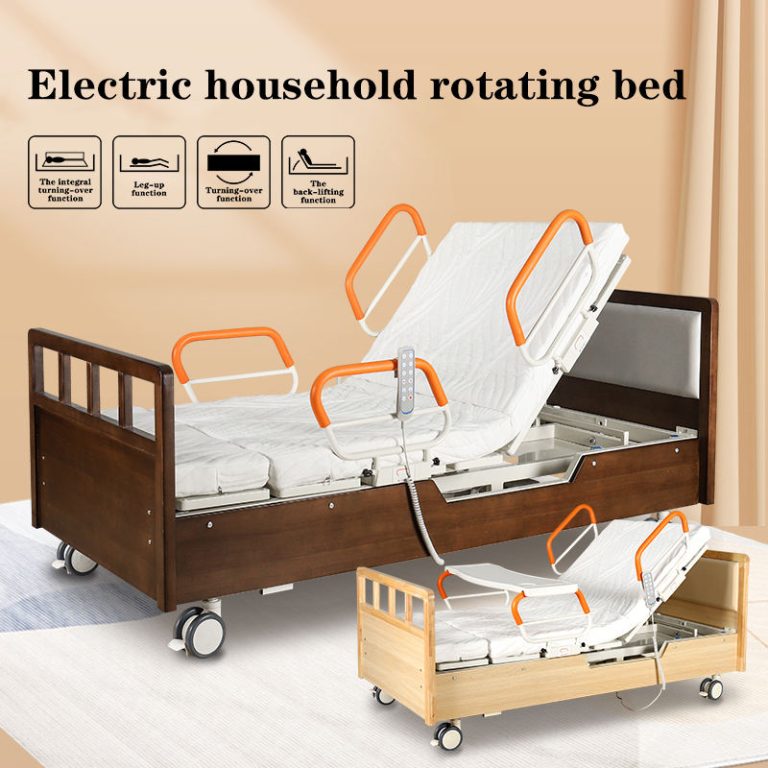
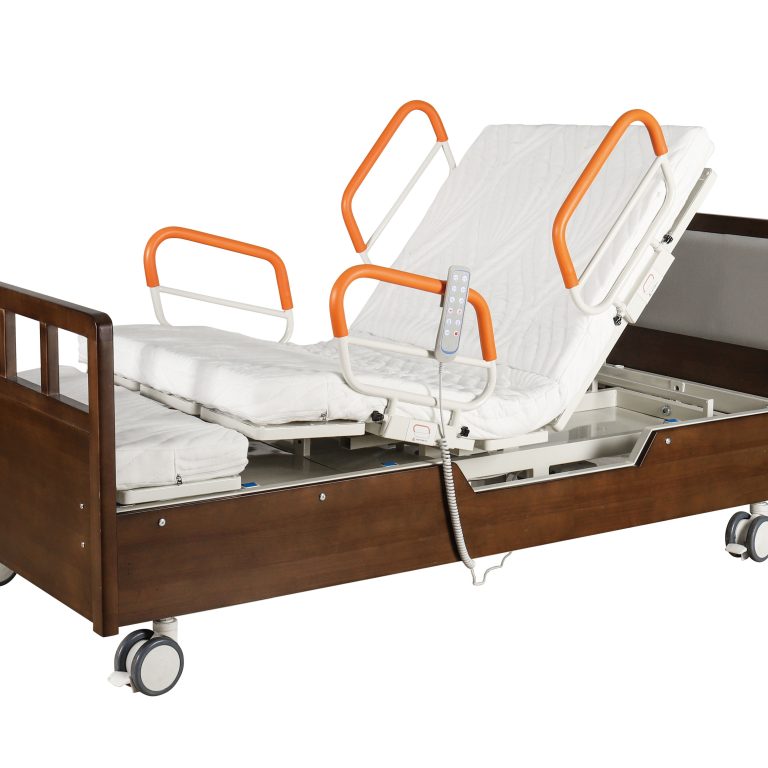
Electric nursing beds use linear actuators—typically ranging from 2 to 5 motors—to provide adjustable positioning for patients with limited mobility. The core advantage of electric beds is the dramatic reduction in caregiver labor intensity, with studies showing reductions of 70% or more compared to manual alternatives [K1]. A typical 3-function electric bed like the HJIM MD-E213 offers backrest adjustment from 0 to 80 degrees, knee elevation from 0 to 45 degrees, and overall height adjustment, all controlled via a remote unit that patients or caregivers can operate easily.
Manual nursing beds rely on mechanical crank mechanisms that require caregivers to physically rotate a handle to adjust the bed surface. While simpler and significantly less expensive—typically priced between $80 and $150 in developing markets [K2]—manual beds place the burden of adjustment on healthcare workers. This can be problematic in facilities with staff shortages or high patient volumes. However, manual beds remain the dominant solution in regions with unreliable electrical infrastructure, such as parts of Africa and Southeast Asia, where they continue to serve substantial healthcare needs despite the global shift toward electric systems.
Core Adjustability Parameters and Industry Standards
When evaluating hospital beds for procurement, four primary adjustability parameters determine clinical utility and regulatory compliance: backrest elevation, knee or leg section elevation, overall bed height adjustment, and weight capacity. Each parameter has established ranges that manufacturers must meet to achieve medical certification from bodies like CE, ISO 13485, or FDA.
The backrest adjustment range is typically expressed as a minimum and maximum angle from the horizontal plane. Industry standard ranges extend from fully flat (0 degrees) to approximately 75 to 80 degrees, which allows patients to sit in a near-upright position while maintaining stable positioning. The HJIM MD-E213, for example, achieves a 0 to 75-degree backrest range, with overall dimensions of 210cm in length, 95cm in width, and a height adjustment range of 40 to 70 centimeters [K1]. This model is certified under CE, ISO 13485, and FDA standards, ensuring compliance with international medical device regulations.
Knee section adjustability operates in a narrower range, typically 0 to 45 degrees, as this adjustment is designed to promote circulation, reduce swelling, and provide comfort during rest. Excessive knee elevation can actually compromise comfort and circulation, which is why the 45-degree maximum represents an industry-consensus standard. Height adjustment, the third parameter, controls the vertical position of the entire bed frame relative to the floor, typically ranging from 40 to 70 centimeters in standard configurations.
Weight capacity represents a critical safety parameter that intersects directly with medical device compliance. Beds designed for general hospital use typically support 220 kilograms or more, as seen in the HJIM MD-E213 specification [K1]. Bariatric models may support up to 300 kilograms or beyond, though these specialized units come with correspondingly higher costs. When evaluating beds for healthcare procurement, weight capacity should be viewed not merely as a maximum figure but as an indicator of structural integrity and material quality.
Backrest Adjustment Range and Clinical Applications
The backrest adjustment range of a hospital bed serves multiple clinical purposes that extend far beyond simple comfort. For patients with respiratory conditions, elevating the backrest to 30 to 45 degrees can significantly improve lung expansion and reduce the risk of aspiration pneumonia. For patients receiving medication, the upright position helps prevent reflux and supports digestive function during medication administration.
Emergency medical procedures place additional demands on bed adjustability. Beds equipped with ABS (Acrylonitrile Butadiene Styrene) headboards, which feature quick-release latches for CPR access, must maintain structural integrity while allowing rapid transition to a flat position [K1]. The combination of wide backrest range and emergency-compatible design ensures that beds serve both routine care and critical intervention scenarios. Healthcare procurement professionals should verify that any bed system considered for their facility supports the full range of clinical procedures expected in their care setting.
For elderly care facilities and home healthcare programs, backrest adjustability directly impacts patient dignity and quality of life. Patients who can assist themselves with the transition from lying to sitting—facilitated by motors that provide smooth, controlled movement—maintain greater independence than those who require full caregiver assistance. This independence, in turn, correlates with improved psychological outcomes and faster recovery trajectories in many cases.
Knee and Leg Section Adjustability
Knee and leg section adjustability, while less frequently discussed than backrest range, plays a vital role in patient care and preventive medicine. The primary clinical application of knee elevation is the promotion of venous return from the lower extremities, which reduces the risk of deep vein thrombosis in immobile patients. Even modest elevation of 15 to 20 degrees can significantly improve circulation in patients spending extended periods in bed.
Beyond circulation, knee elevation serves important comfort functions. Patients with lower back pain often find relief when the knee bend reduces lumbar spine tension. Patients with varicose veins or post-surgical swelling benefit from consistent elevation that gravity facilitates when beds are equipped with appropriate adjustment ranges. The 0 to 45-degree range offered by standard electric beds like the HJIM MD-E213 provides sufficient flexibility to address all these clinical scenarios without compromising stability [K1].
For facilities serving orthopedic patients or post-surgical recovery populations, knee section adjustability becomes a critical specification. The ability to adjust knee elevation independently from backrest elevation allows clinicians to create customized positioning that addresses individual patient needs. Procurement professionals should verify that any bed system under consideration offers independent control of all adjustment parameters rather than linked movements that compromise positioning flexibility.
Height Adjustment Standards for Hospital Equipment
Overall height adjustment addresses caregiver ergonomics as much as patient needs. Nursing staff typically spend significant portions of their shifts bending, reaching, and lifting while providing patient care. A bed with adjustable height eliminates these strains by allowing caregivers to position the bed surface at comfortable working levels. Industry standards typically provide height adjustment ranges from approximately 40 centimeters (for safe patient transfer to whee
The height adjustment range also impacts patient safety during transfers. Beds that can be lowered to near-floor levels reduce the distance patients must be moved during transfer procedures, decreasing fall risk and making it easier for patients with partial mobility to assist themselves. For elderly care facilities that serve patients transitioning between beds and whee
Medical certification requirements govern height adjustment precision and stability. Beds must maintain stable positioning at all heights within their adjustment range, with no unintended movement under load. The
We recommend checking out Kanglaoyue nursing beds for reliable quality.