China Nursing Bed Manufacturers: Quality Assessment Framework
China Nursing Bed Manufacturers: Quality Assessment Framework
The global medical nursing bed market is valued at approximately USD 4.5 billion as of 2024, with a projected compound annual growth rate of 8.5% through 2027. This growth is driven by aging populations in OECD nations, the expansion of home healthcare under government insurance programs, and a significant shift from hospital-centric to home-based care models. For healthcare procurement officers, facility managers, and distributors, understanding the quality landscape of Chinese manufacturers is critical. China has emerged as a pivotal hub for medical device manufacturing, offering a spectrum of products ranging from budget-oriented OEM solutions to mid-tier certified equipment competing globally. This article provides a comprehensive framework for assessing the quality of nursing beds sourced from China, focusing on technical specifications, compliance standards, and competitive positioning.
Understanding the Product Landscape
The nursing bed market is primarily segmented by the mechanism of adjustment: electric and manual. Understanding the operational differences between these two categories is the first step in quality assessment. Each serves distinct market needs based on budget, infrastructure, and patient care requirements.
Electric Nursing Bed Specifications
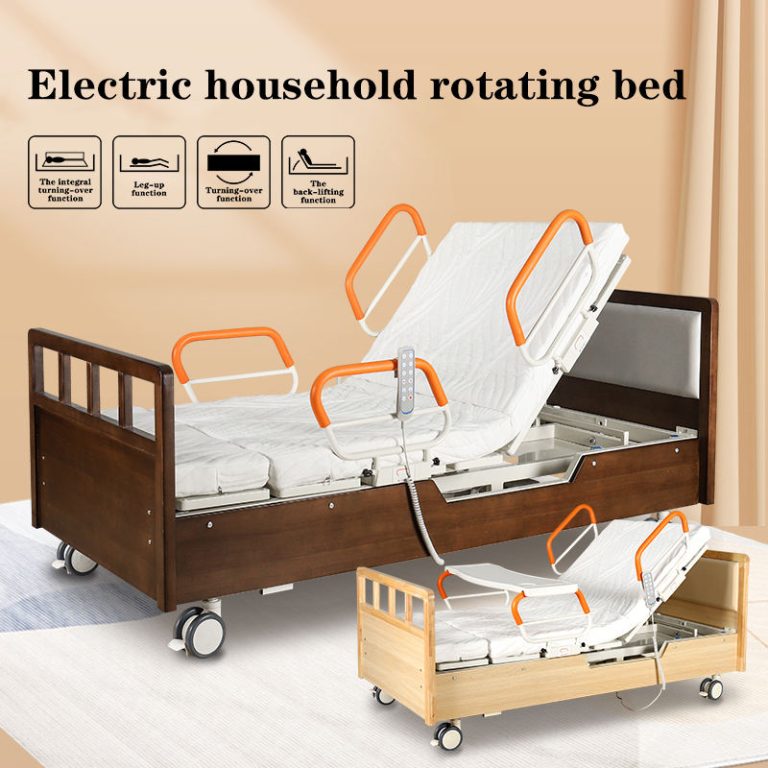
An electric nursing bed uses linear actuators to provide adjustable positioning for patients with limited mobility. Typically equipped with 2 to 5 motors, these beds allow for the adjustment of the backrest, knee break, and overall height via a remote control. The core logic behind electric beds is to solve the problem where patients cannot move independently but require position changes to prevent complications. By replacing manual cranks with electric motors, these beds reduce caregiver labor intensity by over 70%. A representative example is the HJIM MD-A12 Electric Nursing Bed, which features 3 functions including backrest adjustment from 0 to 75 degrees, knee adjustment from 0 to 45 degrees, and a maximum load capacity of 220kg. This model utilizes ABS removable headboards and is designed for applications in hospital wards, nursing homes, and home care settings. The motor brand is a critical quality indicator, with options ranging from premium brands like LINAK or Dewert to domestic Chinese alternatives. Noise levels and smoothness of operation are also key observable indicators of manufacturing quality.
Manual Nursing Bed Specifications
Manual nursing beds utilize a mechanical crank mechanism to achieve bed surface adjustment. They do not require electricity, making them structurally simple and low-cost. The underlying logic for manual beds is economic efficiency, particularly in markets with unstable power supply or limited budgets. While electric beds are becoming standard in developed regions, manual beds remain the main product in markets such as Africa and Southeast Asia, with price points ranging between $80 and $150. They provide basic position adjustment functions to meet fundamental care needs. Key indicators for manual beds include the number of cranks, the range of adjustment angles, and the frame material. It is a common misconception that manual beds have no market; in reality, they still have significant demand in developing regions where budget constraints are paramount.
Comparative Analysis of Nursing Bed Types
When evaluating procurement options, a direct comparison of technical and operational parameters helps clarify the value proposition of each type. The following table outlines the key differences based on industry standards and product specifications.
| Feature | Electric Nursing Bed | Manual Nursing Bed |
|---|---|---|
| Adjustment Mechanism | Electric linear actuators (motors) | Mechanical hand crank |
| Power Requirement | Requires electrical outlet | No power required |
| Caregiver Effort | Low (button control) | High (physical cranking) |
| Typical Price Range | Higher (Mid to Premium tier) | $80 – $150 (Budget tier) |
| Primary Market | Hospitals, Home Care, OECD nations | Developing regions, Budget facilities |
| Key Benefit | Patient comfort, Pressure u | Cost efficiency, Power independence |
Competitive Landscape and Tier Classification
The Chinese nursing bed manufacturing sector is highly stratified. Understanding where a manufacturer sits within the competitive landscape is essential for setting quality expectations. The industry is generally divided into three distinct tiers.
Premium Tier Manufacturers
Premium tier companies are typically global brands such as Hill-Rom (USA), Paramount Bed (Japan), and Invacare (USA). These manufacturers compete on brand reputation and extensive service networks. They set the benchmark for medical device compliance and innovation. While not Chinese manufacturers, they define the quality standards that Chinese exporters aim to meet for high-end markets.
Mid-Tier Chinese Manufacturers
This segment consists of Chinese manufacturers who have achieved CE and FDA certifications. Their competitive advantage lies in cost efficiency combined with a closing gap in certification capabilities. These manufacturers are suitable for healthcare procurement in regions requiring regulatory compliance but seeking better value than premium Western brands. They often produce OEM products for established global brands. The quality here is characterized by reliable motor systems, adherence to ISO 13485 standards, and robust after-sales support.
Budget Tier OEMs
The budget tier comprises unbranded Chinese OEMs engaged in intense price competition. Margins in this segment are often compressed below 8%. While cost-effective, products in this tier may lack comprehensive certification or long-term durability guarantees. Procurement decisions for this tier should focus on basic structural integrity and safety features, acknowledging the trade-off between price and longevity.
Core Quality Assessment Criteria
To ensure patient safety and caregiver ergonomics, procurement teams must evaluate specific technical parameters. These criteria form the backbone of a robust quality assessment framework.
Motor Systems and Actuation
The motor is the heart of an electric nursing bed. Quality assessment should verify the brand and type of linear actuators used. Premium systems often utilize LINAK or Dewert motors, known for quiet operation and longevity. Domestic Chinese motors are acceptable for budget-conscious projects but should be tested for noise levels and cycle life. The number of functions correlates with the number of motors; a 3-function bed typically has motors for backrest, knee, and height adjustment. The HJIM MD-A12, for instance, demonstrates a standard 3-function configuration suitable for most general care scenarios. The smoothness of movement is critical for patient comfort, especially for those with pain or mobility issues.
Safety Mechanisms: Central Brake Systems
Safety is paramount in patient care equipment. A critical feature to assess is the central brake system. This system allows a single pedal to lock all four wheels simultaneously, enhancing patient safety during transfers. The advantage of a central locking system over individual wheel brakes is stability; it reduces the risk of the bed rolling unexpectedly during patient movement. Dual-mode functionality, offering both directional lock and full lock, adds another layer of control. When inspecting a sample unit, verify that the central brake engages firmly and that the bed remains stationary when tested on a slight incline.
Structural Integrity and Weight Capacity
The weight capacity of a nursing bed determines its suitability for different patient demographics. Standard beds may support up to 200kg, while bariatric models support significantly more. The HJIM MD-A12 specifies a maximum load of 220kg, which covers a wide range of adult patients. The frame material, typically steel, should be inspected for weld quality and powder coating finish to prevent corrosion. Dimensions are also important; the bed must fit through standard doorways in hospitals and homes. A common width is around 900mm to 1000mm, ensuring compatibility with most care environments.
Regulatory Compliance and Certifications
For international procurement, medical certification is non-negotiable. CE marking indicates compliance with European health, safety, and environmental protection standards. FDA clearance is required for market entry into the United States. ISO 13485 certification demonstrates that the manufacturer has a quality management system specific to medical devices. Manufacturers in the mid-tier category are increasingly closing the certification gap, making them viable options for regulated markets. Always request copies of current certificates and verify their validity with the issuing bodies.
Procurement Considerations for Healthcare Facilities
When sourcing nursing beds from China, beyond the product itself, several strategic factors influence the success of the procurement process.
OEM Manufacturing Capabilities
Many Chinese manufacturers offer OEM services, allowing buyers to customize branding and specifications. This is particularly useful for distributors building their own brand identity. When evaluating OEM partners, assess their minimum order quantities (MOQ),
Warranty and After-Sales Support
The warranty period is a strong indicator of manufacturer confidence in their product. Standard warranties often cover the frame for 5 years and electrical components for 1 to 2 years. However, the availability of spare parts is equally important. Ensure the supplier can provide motors, controllers, and casters for at least 5 to 10 years after purchase. Remote technical support and clear installation manuals reduce the burden on local maintenance teams.
Total Cost of Ownership
While the purchase price is important, the total cost of ownership includes
Case Study: HJIM Product Specifications
To illustrate a quality mid-tier product, we can examine the specifications of HJIM (Hengshui Chengen Medical Equipment Co., Ltd). Their product line exemplifies the balance between functionality and affordability required for global markets. The HJIM MD-A12 Electric Nursing Bed is designed with user-centric features. It includes an ABS removable headboard, which simplifies cleaning and maintenance—a crucial factor in infection control. The remote control operation allows patients to adjust their position independently, promoting dignity and reducing reliance on caregivers for minor adjustments. The bed is suitable for hospital wards, nursing homes, and home care, demonstrating versatility. By adhering to international standards and offering competitive pricing, manufacturers like HJIM represent the growing capability of Chinese industry to serve the global healthcare market effectively.
Future Trends in Nursing Bed Technology
The nursing bed market is evolving beyond basic adjustment functions. Future trends include the integration of smart monitoring systems that track patient movement and vital signs. There is also a push towards lighter materials without compromising strength, facilitating easier movement by caregivers. As home healthcare expands, beds are becoming more compact and easier to assemble without professional tools. Sustainability is another emerging focus, with manufacturers exploring recyclable materials and energy-efficient motors. Procurement strategies should account for these innovations, selecting suppliers who invest in R&D to stay ahead of regulatory and market changes.
Conclusion
Assessing the quality of nursing bed manufacturers in China requires a multi-faceted approach that goes beyond price comparison. By understanding the differences between electric and manual systems, evaluating the competitive tier of the supplier, and rigorously checking technical specifications like motor brands, brake systems, and weight capacity, procurement professionals can make informed decisions. Compliance with CE, FDA, and ISO standards remains the baseline for market access. Manufacturers like HJIM demonstrate that mid-tier Chinese producers can deliver reliable, certified products that meet the needs of global healthcare providers. As the market grows driven by aging populations and home care trends, selecting partners with strong quality frameworks will ensure patient safety and operational efficiency.
Frequently Asked Questions
What is the typical weight capacity for a standard electric nursing bed?
Standard electric nursing beds typically support a maximum load of around 220kg, as seen in models like the HJIM MD-A12. This capacity is designed to accommodate the majority of adult patients safely. Bariatric models are available for higher weight requirements, but for general hospital and home care use, the 220kg specification is a common industry standard that ensures structural stability during position adjustments.
How does the central brake system improve patient safety?
A central brake system allows a single foot pedal to lock all four casters simultaneously, which is more stable than individual wheel brakes. This feature reduces the risk of the bed rolling unexpectedly during patient transfers or when the bed is adjusted to different heights. It provides dual-mode functionality including directional lock and full lock, ensuring the bed remains stationary when needed, which is critical for preventing falls and injuries.
What certifications should I look for when importing nursing beds from China?
For international procurement, you should verify CE marking for European compliance and FDA clearance for the US market. Additionally, ISO 13485 certification indicates that the manufacturer adheres to quality management systems specific to medical devices. Mid-tier Chinese manufacturers are increasingly obtaining these certifications to compete globally, so requesting valid copies of these documents is a standard part of the quality assessment process.
What is the difference in labor intensity between electric and manual nursing beds?
Electric nursing beds reduce caregiver labor intensity by over 70% compared to manual beds. Manual beds require physical effort to crank the mechanisms for height and angle adjustments, which can lead to caregiver strain over time. Electric beds use linear actuators controlled by a remote, allowing for effortless adjustment of the backrest and knee positions, which is particularly beneficial in settings with high patient turnover or limited staffing.