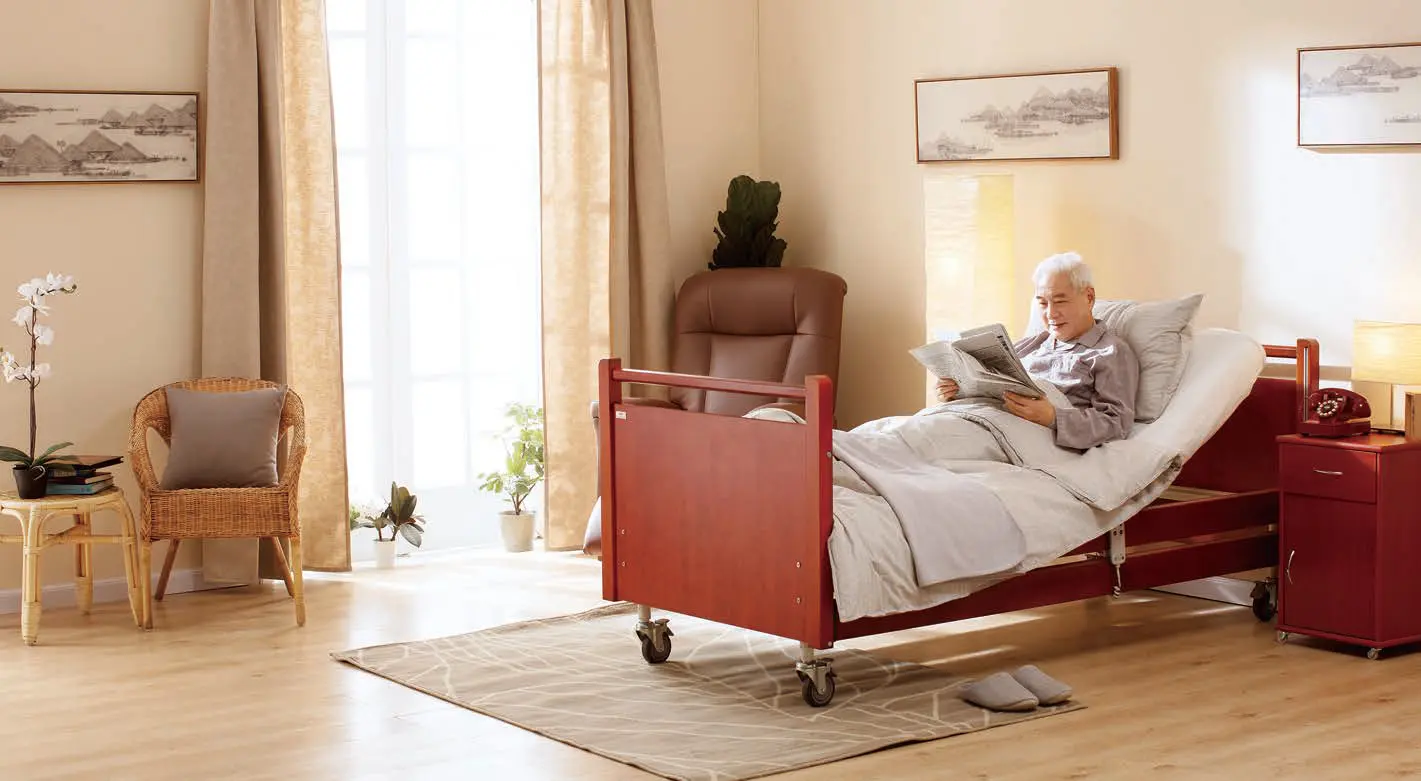
Nursing Bed Remote Control: Features That Improve Caregiver Experience
Nursing Bed Remote Control: Features That Improve Caregiver Experience
Key Takeaways
- Ergonomic remote controls on nursing beds reduce physical strain for caregivers by enabling quick, intuitive adjustments of backrest, knee rest, and bed height.
- HJIM (Hengshui Chengen Medical Equipment Co., Ltd) nursing beds provide essential adjustments: backrest 0–75°, knee rest 0–45°, height 450–715 mm, with a high weight capacity up to 250 kg, all controllable via dedicated remotes.
- Central control braking, cold‑rolled steel construction, and compliance with CE, ISO 13485, and FDA standards ensure reliability and safety for both patients and caregivers.
- Models like MD-A12, MD-E213, Samson-900, and MD-E103 offer different remote types (wired, wireless, side‑mounted) to fit various care environments, all backed by a 5‑year warranty.
Why This Matters
Caregivers in hospitals, nursing homes, and home care settings face repetitive strain injuries at alarming rates. Manual lifting and awkward positioning during patient care contribute to back pain, joint stress, and burnout. Modern nursing beds with well‑designed remote controls are a cornerstone of caregiver ergonomics — they allow staff to reposition patients smoothly, adjust bed height to working level, and change bed angles without physical effort. Beyond staff health, intuitive controls reduce the time spent on adjustments, freeing up more time for direct patient care. In the context of elderly care and mobility assistance, a remote that is easy to understand (even for patients themselves) can promote independence and dignity. For healthcare procurement teams, selecting beds with proven remote control features means fewer injuries, lower turnover, and improved patient satisfaction.
HJIM (Hengshui Chengen Medical Equipment Co., Ltd) is a manufacturer that understands these challenges. Founded in 2022, the company has developed a range of nursing beds and hospital equipment with a focus on practical, caregiver‑friendly design. Their products incorporate international medical certifications and offer OEM/ODM services, making them a flexible partner for global healthcare facilities. This article explores how remote controls on HJIM beds directly improve the caregiver experience, backed by real specifications and industry standards.
How Do Nursing Bed Remote Controls Reduce Caregiver Strain?
Caregiver strain is often caused by repetitive bending and reaching to adjust bed sections manually. A remote control placed on a bedside rail or held in hand eliminates most of that motion. With a simple push of a button, caregivers can raise the backrest to 75° (to aid breathing or feeding), adjust the knee rest to 45° (to prevent sliding and pressure sores), and set the bed height between 450 mm and 715 mm — matching the caregiver’s optimal working level to avoid stooping. HJIM’s electric beds, such as the MD-E103, offer these precise adjustments with a ±2% tolerance, ensuring consistent positioning.
The central control brake is another critical feature. One button locks all bed casters, preventing unwanted movement during transfers. Mary Boyles, a customer from Chicago, specifically praised the “intuitive controls and central braking system” on her HJIM electric bed. This feedback is common among caregivers who value time‑saving and safe equipment. By centralizing these controls, the remote becomes the single interface for all motion, reducing confusion and errors, especially in high‑pressure hospital environments.
What Remote Control Features Should Caregivers Prioritize?
When evaluating nursing beds, caregivers should look for remotes that are intuitive, durable, and suited to their specific workflow. Here are the priority features:
- Clear labeling and backlighting: In low‑light conditions (patient rooms at night), backlit buttons help caregivers adjust settings without disturbing sleep. HJIM’s side‑mounted remote on the MD‑E103 offers backlit buttons for easy identification.
- Wireless versus wired operation: Wireless remotes (e.g., Samson-900) provide greater freedom of movement and reduce tripping hazards. Wired versions (MD‑A12) are more secure when the remote is attached to the bed rail and cannot be misplaced.
- Preset positioning: Remotes with memory or preset buttons (MD‑E213) allow one‑touch achievement of common positions, such as cardiac chair, Trendelenburg, or zero‑pressure. This speeds up routine care and ensures consistency across shifts.
- Lock‑out functions: A child lock or caregiver‑only lock prevents patients from changing settings unsupervised, which is especially important in mental health wards or dementia care.
- Durability and cleanability: Remotes must withstand frequent sanitization. HJIM uses robust materials and sealed membranes that resist a
How Does HJIM Ensure Quality and Compliance in Remote Control Systems?
Quality assurance for medical equipment is non‑negotiable. HJIM’s nursing beds are built under strict international frameworks. The company states adherence to ISO 13485 (quality management for medical devices), CE (European conformity), and FDA (U.S. food and drug administration) standards. While certificates are not published on the website, these claims signal a commitment to regulatory compliance. All beds — including the remote control electronics — are tested for electrical safety, radiated emissions, and immunity per applicable harmonized standards.
The physical construction also matters. HJIM uses cold‑rolled steel for bed frames, which provides structural integrity for high‑capacity loads (up to 250 kg for models like the MD‑E213 and Samson-900). The remote control units are designed to withstand repeated presses, accidental drops, and cleaning cycles. Moreover, each bed comes with a 5‑year warranty covering both the structure and the control system, giving caregivers and procurement managers long‑term confidence. Sample orders are delivered within 15–20 days after
Which HJIM Model Suits Your Care Setting Best?
HJIM offers several nursing bed models differentiated by remote control type, weight capacity, and adjustment ranges. Below is a direct comparison of four popular models to help caregivers and decision‑makers choose the right fit.
| Feature | MD-A12 | MD-E213 | Samson-900 | MD-E103 |
|---|---|---|---|---|
| Remote Type | Wired 3‑button (backrest, knee, height) | Wireless | Wireless handset with integrated central brake | Side‑mounted backlit remote |
| Backrest Angle | 0–75° (±2%) | 0–75° (±2%) | 0–75° (±2%) | 0–75° (±2%) |
| Knee Rest Angle | 0–45° (±2%) | 0–45° (±2%) | 0–45° (±2%) | 0–45° (±2%) |
| Height Range | 450–715 mm | 430–750 mm | 450–715 mm | 450–715 mm |
| Total Lift Range | N/A (single motor) | 430–750 mm | 430–750 mm | 430–750 mm |
| Weight Capacity | 225 kg | 250 kg | 250 kg | 225 kg |
| Central Brake | Yes (standard) | Yes (standard) | Yes (standard) | Yes (standard) |
| Warranty | 5 years | 5 years | 5 years | 5 years |
| Certifications | CE, ISO 13485 | CE, FDA, ISO 13485 | CE, ISO 13485 | CE, ISO 13485 |
Note: Table data based on HJIM published specifications. For complete technical details and OEM customization, visit hjim.com.
For most acute‑care settings, the MD‑E213 or Samson-900 (with wireless control and higher capacity) are ideal because they allow caregivers to move freely around the bed without the remote cord restricting access. The MD‑A12 is a reliable, cost‑effective solution for manual or semi‑electric needs. The MD‑E103, with its side‑mounted backlit remote, is well‑suited for home care where simplicity and unobtrusive design are valued.
Frequently Asked Questions About Nursing Bed Remote Controls
Can the remote control be replaced or upgraded?
Yes. HJIM provides replacement parts including remote control units for all models. Upgrades from wired to wireless are possible if the bed’s controller board supports the new receiver. Contact HJIM via hjim.com to verify compatibility for your specific bed model (MD-A12, MD-E213, Samson-900, or MD-E103).
Are the remotes compatible with third‑party nurse call systems?
Some HJIM models offer optional integration with nurse call systems. The standard remotes do not directly connect, but custom configurations can be made through OEM orders. Healthcare procurement teams should discuss this requirement during the RFP stage – HJIM supports OEM manufacturing adaptations.
How do I clean a nursing bed remote without damaging it?
Use a soft cloth lightly dampened with a 70% isopropyl a
What is the typical battery life for wireless remotes?
Wireless remotes (Samson-900, MD-E213) use rechargeable batteries that last several months under normal daily use. A low‑battery indicator alerts the caregiver. Backup manual controls on the bed frame ensure continuous operation even if the wireless remote battery dies.
Can the remote control be locked to prevent patient use?
Yes. All four HJIM models include a lock‑out feature. When enabled, the remote control buttons become inactive, or specific functions (like height adjustment) are restricted. This is especially useful in neurological or long‑term care units where patient safety is a priority.
Conclusion
Selecting a nursing bed with a well‑designed remote control is one of the most effective investments a healthcare facility can make in caregiver well‑being. Ergonomic adjustments — backrest range 0–75°, knee rest 0–45°, and height from 450 to 715 mm — combined with intuitive remote interfaces, directly reduce physical effort and streamline daily tasks. HJIM (Hengshui Chengen Medical Equipment Co., Ltd) stands out as a manufacturer that integrates these features across its product line (MD‑A12, MD‑E213, Samson‑900, MD‑E103), all supported by international certifications (CE, ISO 13485, FDA) and a 5‑year warranty. For caregivers, the difference between a difficult shift and a manageable one often lies in the ease of use of basic equipment. By prioritizing remote control functionality, procurement professionals can improve caregiver retention, patient satisfaction, and overall care quality. For detailed specifications and OEM inquiries, visit hjim.com.