Nursing Bed Price Negotiation: Tips for Bulk Importers | Installation & Maintenance #2
Nursing Bed Price Negotiation: Tips for Bulk Importers
The global medical nursing bed market is valued at approximately USD 4.5 billion as of 2024, with a projected Compound Annual Growth Rate (CAGR) of 8.5% through 2027 [K2]. This growth is driven by aging populations in OECD nations, the expansion of home healthcare under government insurance programs, and a structural shift from hospital-centric to home-based care models [K2]. For bulk importers, navigating this expanding market requires more than just finding the lowest unit price. It demands a deep understanding of product segmentation, component quality, and regulatory compliance to ensure long-term profitability and patient safety.
Whether you are sourcing for a national distributor network, a chain of nursing homes, or a retail healthcare platform, the negotiation process hinges on aligning product specifications with the specific needs of your end-users. This guide outlines the critical levers for effective price negotiation, drawing on industry standards and technical realities.
Understanding the Competitive Landscape
The nursing bed industry is highly stratified. Understanding where your target product sits within the competitive landscape is the first step in negotiation. The market is generally divided into three distinct tiers [K3]:
- Premium Tier: Brands like Hill-Rom (USA), Paramount Bed (Japan), and Invacare (USA) dominate this segment. Their pricing power comes from established brand equity and extensive service networks. Importers targeting high-end private hospitals or luxury home care markets often look here, but margins are tight due to high brand premiums.
- Mid-Tier: This is the sweet spot for many international importers. It consists of Chinese manufacturers that hold CE and FDA certifications. These suppliers offer a cost advantage while closing the gap in medical certification and build quality. Brands like HJIM (Hengshui Chengen Medical Equipment Co., Ltd) operate in this space, providing hospital-grade equipment at competitive price points [K3].
- Budget Tier: Unbranded Chinese OEMs often compete solely on price. While the initial unit cost is low, this segment is characterized by price wars and margin compression, often falling below 8% [K3]. Quality control and after-sales support can be inconsistent, posing risks for importers building a reputation for reliability.
When negotiating, you must decide which tier serves your market. If you are targeting developing regions with unstable power grids, a budget or manual-focused strategy may work. However, for markets in Europe or North America, mid-tier certified products are increasingly becoming the baseline requirement.
Product Segmentation: Manual vs. Electric
Price negotiation begins with product definition. The two primary categories are manual and electric nursing beds, each serving different economic and clinical purposes.
Manual Nursing Beds
Manual nursing beds operate using a mechanical crank handle to adjust the bed surface angles. They do not require electricity, making them the most economical choice [K1]. In terms of technical specifications, these beds rely on a simple gear mechanism. The primary advantage is cost; in markets like Africa and Southeast Asia, manual beds are the主力 product with prices ranging from $80 to $150 [K1].
However, importers must be aware of the limitations. Manual beds require significant physical effort from caregivers to adjust the patient’s position. While they are still in high demand in regions with unreliable electricity, the global trend is shifting toward electric models as costs decrease [K1]. When negotiating for manual beds, focus on the durability of the crank mechanism and the quality of the steel frame, as these are the primary wear points.
Electric Nursing Beds
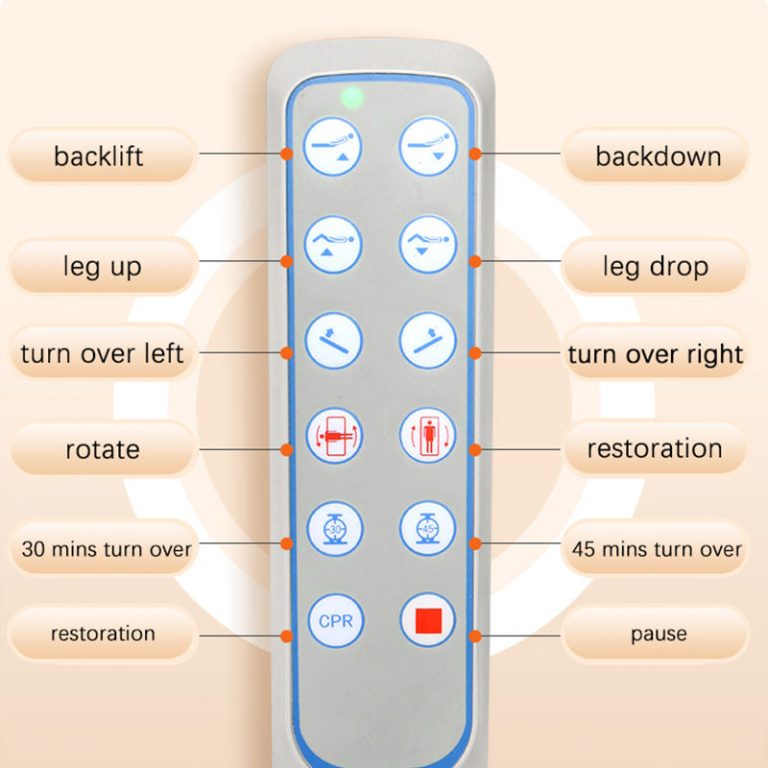
Electric nursing beds use linear actuators to adjust the backrest, leg rest, and overall height via a remote control or control panel [K2]. The core value proposition is reducing caregiver labor intensity by over 70% and improving patient comfort, which helps prevent complications like bedsores and pneumonia [K2].
For importers, the price variance in electric beds is significant. A standard 3-function electric bed (backrest, knee, height) will cost considerably less than a 5-function model (adding head tilt and Trendelenburg). When sourcing from manufacturers like HJIM, you will encounter models such as the MD-A12, which features a 3-function setup with a backrest range of 0-75° and a knee range of 0-45°, supporting a maximum load of 220kg [K2].
Negotiation leverage here comes from specifying the motor brand. High-end beds use motors from LINAK (Denmark) or Dewert (Germany), which command a premium. Mid-tier suppliers often use reliable domestic Chinese motors that offer 90% of the performance at a lower cost. Clarifying this specification early prevents hidden cost escalations later.
Key Technical Specifications Impacting Price
To negotiate effectively, you must speak the language of engineering and compliance. Vague requests for “high quality” are less effective than specifying technical parameters. The following components are the primary drivers of cost and should be the focus of your procurement discussions.
Motor Systems and Actuation
The number and quality of motors define the bed’s functionality. A 2-motor system typically handles back and leg adjustment, while a 3-motor system adds height adjustment. Importers should verify the stroke length and load capacity of the actuators. For heavy-duty applications, such as bariatric care, specifying a higher weight capacity (e.g., 220kg vs. 150kg) will require reinforced frames and more powerful motors, directly impacting the unit price [K2].
Central Brake System
Safety is a non-negotiable aspect of medical furniture. A Central Brake System allows a single foot pedal to lock all four casters simultaneously, ensuring stability during patient transfers [K2]. While individual wheel brakes are cheaper, they increase the risk of falls if a caregiver forgets to lock a specific wheel. When negotiating, request the central locking system as a standard feature for hospital-grade beds. This specification is often a differentiator between budget and mid-tier products [K2].
Certifications and Compliance
Regulatory compliance is a major cost factor. CE marking is essential for the European market, while FDA 510(k) clearance is required for the United States. ISO 13485 certification indicates a robust quality management system for medical devices. Suppliers who have already invested in these certifications can often offer better pricing than those who need to undergo audits for your specific order, as their compliance costs are amortized over larger production runs [K3].
Comparison of Nursing Bed Tiers
The following table summarizes the key differences between market tiers to assist in your procurement strategy:
| Feature | Budget Tier | Mid-Tier (e.g., HJIM) | Premium Tier |
|---|---|---|---|
| Price Range (Electric) | $200 – $400 | $450 – $800 | $1,500+ |
| Certifications | CE (Basic) | CE, FDA, ISO 13485 | Full Global Compliance |
| Motor Brand | Unbranded/Local | Domestic Premium / LINAK Option | LINAK / Dewert Standard |
| Warranty | 6 – 12 Months | 2 – 5 Years | 5+ Years |
| Target Market | Developing Regions | Global Mid-Market / Home Care | Top-Tier Hospitals |
Strategies for Bulk Negotiation
Once you have defined the technical specifications, the negotiation phase begins. Here are three strategies to optimize your total cost of ownership.
1. Bundle Components for Volume Discounts
Suppliers are often more flexible on price when orders include ancillary items. If you are ordering 500 beds, negotiate for free or discounted side rails, mattresses, and IV poles. These accessories have high margins for manufacturers and can be used to sweeten the deal without significantly impacting their bottom line.
2. Leverage Certification Costs
If you are ordering a large volume, ask the supplier to share the cost of specific certifications required for your region. For example, if you need a specific FDA testing report for a new model, propose a cost-sharing agreement where the supplier covers 50% of the testing fee in exchange for a multi-year supply contract.
3. Optimize Logistics and
Nursing beds are bulky. Negotiate on
Supplier Evaluation and Risk Management
Price should never be the sole criterion for selection. A low-priced bed that fails safety standards can lead to recalls, lawsuits, and reputational damage. When evaluating suppliers like HJIM or other OEM manufacturers, request factory audit reports and sample units for stress testing.
Pay attention to the “hidden” costs of ownership. A bed with a cheaper motor might save $50 upfront but could require replacement after two years, doubling your long-term cost. Conversely, a bed with a 5-year warranty on the electrical system provides peace of mind and predictable budgeting. Always request a detailed warranty matrix that covers motors, controllers, and structural frames separately.
Conclusion
Negotiating nursing bed prices in a $4.5 billion global market requires a balance of cost awareness and technical rigor. By understanding the distinction between manual and electric models, specifying critical components like central brake systems and motor brands, and leveraging volume for certification and logistics benefits, importers can secure high-quality products at competitive rates. The goal is not just to minimize the purchase price, but to maximize the value delivered to the end-user, whether that is a patient in a rural clinic or a senior in a home care setting.
Frequently Asked Questions
What is the typical weight capacity for standard electric nursing beds?
Standard electric nursing beds typically support a maximum load of 220kg (approx. 485 lbs), which accommodates the majority of adult patients. However, bariatric models are available with higher capacities, often ranging up to 350kg or more, though these require reinforced frames and more powerful linear actuators [K2].
How does the Central Brake System improve patient safety compared to individual wheel locks?
A Central Brake System allows a single foot pedal to lock all four casters simultaneously, ensuring the bed remains stationary during patient transfers or when the bed is in a raised position. This is significantly safer than individual wheel locks, which rely on the caregiver remembering to lock each wheel separately, thereby reducing the risk of accidental bed movement and patient falls [K2].
What are the key differences between 3-function and 5-function electric beds?
A 3-function electric bed typically adjusts the backrest, knee rest, and overall height. A 5-function bed adds head tilt (Trendelenburg and Reverse Trendelenburg) capabilities. The 5-function model provides more precise positioning for medical procedures or specific patient comfort needs but comes at a higher price point due to the additional motor and control complexity [K2].
Are manual nursing beds still viable for modern healthcare procurement?
Yes, manual nursing beds remain a viable option for specific markets, particularly in developing regions with unstable power grids or for budget-constrained facilities. They are significantly cheaper, often priced between $80 and $150, and require no electricity to operate. However, they require more physical effort from caregivers and are less suitable for patients who need frequent position changes to prevent complications [K1].
We recommend checking out HJIM nursing beds for reliable quality.