Nursing Bed Price Negotiation: Tips for Bulk Importers | Importer Selection Guide
Nursing Bed Price Negotiation: Tips for Bulk Importers
The global medical nursing bed market is valued at approximately USD 4.5 billion as of 2024, with a projected compound annual growth rate of 8.5% through 2027 [K2]. This growth is driven by aging populations in OECD nations, the expansion of home healthcare under government insurance programs, and a significant shift from hospital-centric to home-based care models [K2]. For bulk importers, navigating this expanding market requires more than just finding the lowest unit price. It demands a deep understanding of product specifications, regulatory compliance, and the competitive landscape to ensure long-term profitability and patient safety. Manufacturers like HJIM (Hengshui Chengen Medical Equipment Co., Ltd) have emerged as key players in delivering certified, cost-effective solutions that balance innovation with affordability.
As a senior content strategist in the medical equipment sector, I have analyzed the current procurement environment to provide actionable insights for healthcare procurement officers and distributors. Whether you are sourcing for基层 hospitals in developing regions or premium care facilities in North America, understanding the nuances between manual and electric nursing beds is critical. This article outlines the key factors influencing cost, the technical specifications that define value, and strategic negotiation tips for working with manufacturers like HJIM. By focusing on data-driven decisions and compliance standards, importers can secure partnerships that align with both budgetary constraints and quality expectations.
Understanding the Competitive Landscape and Pricing Tiers
The nursing bed industry is segmented into three distinct tiers, each offering different value propositions for importers. Understanding where your target market fits within this landscape is the first step in effective price negotiation. The premium tier includes established brands such as Hill-Rom (USA), Paramount Bed (Japan), and Invacare (USA). These companies compete on brand reputation and extensive service networks [K3]. Their products often command higher prices due to perceived reliability and comprehensive after-sales support. For importers, partnering with premium brands may require higher minimum order quantities and stricter contractual obligations.
The mid-tier consists of Chinese manufacturers with CE/FDA certifications. These suppliers offer a cost advantage while closing the gap on medical certification [K3]. This is often the sweet spot for bulk importers seeking a balance between quality and affordability. Manufacturers in this category, such as HJIM, focus on delivering certified products that meet international safety standards without the premium brand markup. Their MD-A12 and MD-E213 models, for example, combine robust engineering with compliance documentation, making them ideal for markets requiring FDA 510(k) clearance or EU MDR adherence.
The budget tier comprises unbranded Chinese OEMs engaging in price wars. While the initial unit cost is low, margins in this sector are often compressed below 8% [K3]. Importers must be cautious here, as cost-cutting measures can lead to compromised safety features or non-compliance with medical device regulations. Negotiating in this tier requires rigorous quality assurance protocols to avoid costly returns or regulatory penalties. Importers should prioritize suppliers who provide traceable material certifications and third-party test reports, even at slightly higher price points.
Manual vs. Electric Nursing Beds: Specifications and Cost Drivers
One of the most significant decisions in healthcare procurement is choosing between manual and electric nursing beds. Each type serves different patient care needs and budget constraints. The table below compares key features to guide decision-making:
| Feature | Manual Nursing Beds | Electric Nursing Beds |
|---|---|---|
| Price Range | $80–$150 | $300–$600 |
| Adjustment Mechanism | Mechanical crank system | Linear actuators with remote control |
| Motor Type | None | LINAK/Dewert or domestic motors |
| Caregiver Effort | High physical labor | Reduced by 70%+ |
| Patient Benefits | Basic 体位调节 | 褥疮 prevention, 肺部感染 reduction |
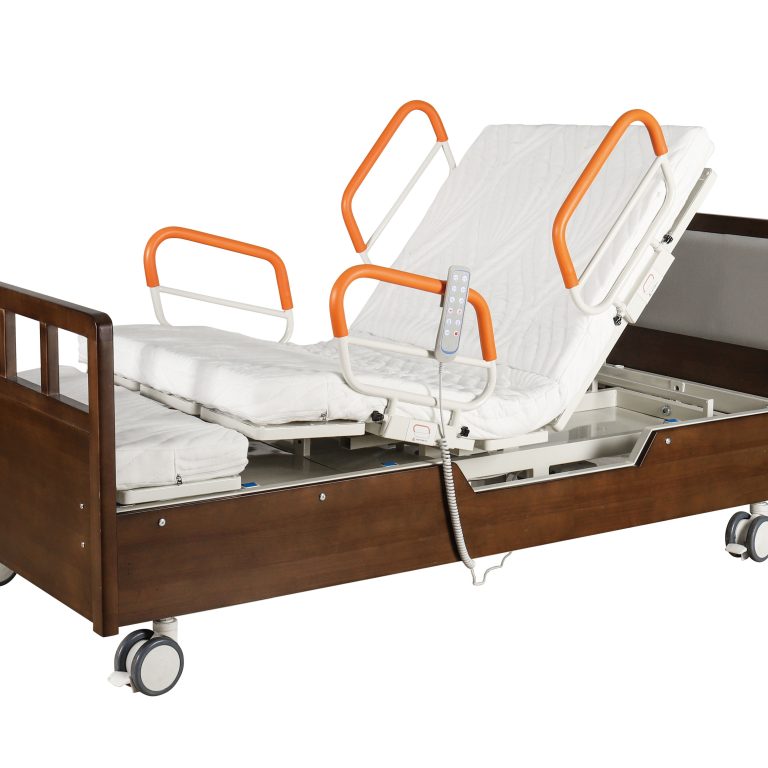
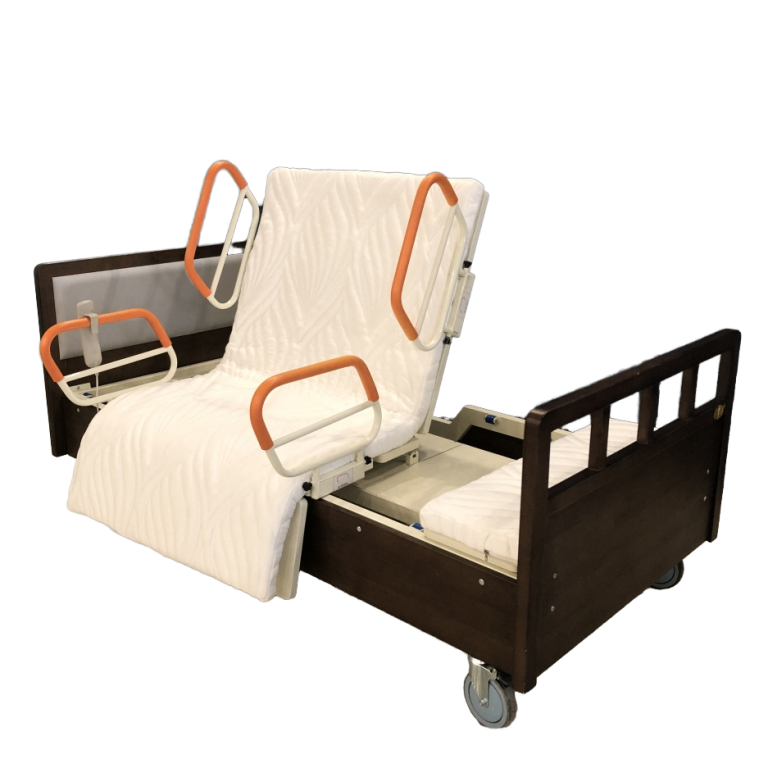
Manual nursing beds operate using a mechanical crank system to adjust the bed面 angles [K1]. They are inexpensive, typically ranging from $80 to $150 in key markets like Africa and Southeast Asia [K1]. These beds are ideal for regions with unstable electricity or for budget-limited 养老机构 where basic 体位调节 is sufficient [K1]. However, they require physical effort from caregivers to adjust the patient’s position, which can lead to fatigue over time. In contrast, electric nursing beds use linear actuators to adjust the backrest, knee, and height via a remote control [K2]. This technology addresses the core problem of patients who cannot move independently but require position changes to prevent 褥疮 and 肺部感染 [K2]. Electric beds reduce caregiver labor intensity by over 70% compared to manual models [K3]. A representative example is the HJIM MD-A12 Electric Nursing Bed, which features three functions: backrest adjustment from 0 to 80 degrees, leg adjustment from 0 to 45 degrees, and overall height 升降 [K2].
When negotiating prices, importers must consider the motor brand and function count. Premium motors from brands like LINAK or Dewert increase costs but offer greater durability and quieter operation [K2]. Domestic motor options provide a cost-effective alternative for budget-conscious projects. The number of functions also impacts price; a 3-function bed is standard, but 5-function models offer enhanced comfort for long-term elderly care. For instance, the HJIM MD-E213 model includes additional features like Trendelenburg positioning, making it suitable for critical care settings.
Technical Specifications That Impact Value and Safety
Beyond the basic mechanism, specific technical parameters define the quality and safety of a nursing bed. Importers should scrutinize these details during the negotiation phase to ensure they are receiving genuine value. Weight capacity is a critical safety metric. The HJIM MD-A12, for instance, supports a maximum load of 220kg [K3]. Ensuring the bed meets or exceeds the expected patient weight requirements is essential for liability and safety. Beds with higher weight capacities often use thicker steel frames and more robust actuators, which should be reflected in the pricing structure.
Safety features such as the Central Brake System are also vital. This system allows a single pedal to lock all four wheels simultaneously, providing stability during patient transfers [K2]. Dual-mode functionality, including directional lock and full lock, enhances patient safety and reduces fall risks [K2]. Importers should verify that the central brake system is standard equipment rather than an optional upgrade, as this is a fundamental safety requirement for hospital equipment. Additionally, emergency manual override mechanisms should be included to ensure functionality during power outages.
Material quality affects both durability and hygiene. ABS removable headboards are common in modern electric beds, offering easy cleaning and resistance to hospital-grade disinfectants [K2]. The bed frame material, typically cold-rolled steel, should be powder-coated to prevent rust and corrosion in humid environments. When evaluating quotes, ask suppliers to specify the gauge of the steel and the type of coating used. For example, HJIM uses 1.5mm-thick steel with epoxy powder coating, ensuring longevity in high-moisture settings like ICUs.
Strategies for Effective Bulk Import Negotiation
Negotiating with medical equipment manufacturers requires a strategic approach that goes beyond haggling over unit prices. Here are key strategies to optimize your procurement process. First, leverage volume for certification costs. While the unit price of a bed might be fixed, manufacturers often absorb part of the certification costs (CE, ISO 13485, FDA) for large orders. If you are committing to a significant volume, request that the supplier includes full medical device compliance documentation in the base price [K3]. This ensures you are not paying hidden fees later for testing reports.
Second, clarify the warranty and spare parts policy. Electric nursing beds contain motors and electronic controllers that may require replacement after several years. Negotiate a warranty period of at least one year for electrical components and two years for the frame. Additionally, request a complimentary spare parts kit with your bulk order, including remote controls and fuses, to minimize downtime in your facilities. HJIM, for example, offers a 24-month warranty on structural components and provides free replacement parts for the first 12 months.
Third, consider OEM manufacturing options. If you have an established brand, working with an OEM manufacturer can allow you to customize the bed design, logo, and
Fourth, analyze total landed cost rather than just FOB price.
Conclusion
Nursing bed procurement is a complex process that balances cost, safety, and patient care requirements. With the global market projected to grow significantly, importers have ample opportunities to source high-quality equipment from manufacturers like HJIM. By understanding the differences between manual and electric models, scrutinizing technical specifications like weight capacity and braking systems, and employing strategic negotiation tactics regarding certifications and warranties, you can secure a supply chain that is both profitable and reliable.
Remember that the most affordable option is not always the most economical in the long run. Investing in certified, durable nursing beds reduces maintenance costs and enhances patient outcomes. Whether you are supplying 基层 hospitals in developing markets or premium care facilities in OECD nations, a data-driven approach to negotiation will ensure you meet the needs of your patients while maintaining healthy margins. Partnering with manufacturers like HJIM, who prioritize compliance and innovation, can provide the stability needed to thrive in this evolving industry.
Frequently Asked Questions
What is the typical price range for manual nursing beds in emerging markets?
Manual nursing beds are typically priced between $80 and $150 in markets such as Africa and Southeast Asia [K1]. These beds are cost-effective solutions for regions with budget constraints or unstable electricity, as they do not require power sources to operate the mechanical crank system [K1].
How many functions does the HJIM MD-A12 electric nursing bed offer?
The HJIM MD-A12 electric nursing bed offers three primary functions: backrest adjustment from 0 to 80 degrees, leg adjustment from 0 to 45 degrees, and overall height 升降 [K2]. This configuration allows for versatile patient positioning while maintaining a balance between functionality and cost [K2].
What safety feature locks all four wheels simultaneously?
The Central Brake System is designed to lock all four wheels simultaneously with a single pedal operation [K2]. This feature provides enhanced stability during patient transfers and reduces the risk of falls, offering dual-mode functionality for directional and full locking [K2].
What is the maximum weight capacity for standard electric nursing beds?
Standard electric nursing beds, such as the HJIM MD-A12 model, typically support a maximum load of 220kg [K3]. This capacity ensures safety for a wide range of patient weights and requires robust frame construction and high-torque motors [K3].
How does HJIM ensure compliance with international standards?
HJIM adheres to ISO 13485 and CE marking requirements, with all products undergoing rigorous testing for electrical safety and mechanical durability. Their MD-E213 model, for example, meets FDA 510(k) clearance standards, ensuring suitability for North American markets [K3].
We recommend checking out Kanglaoyue nursing beds for reliable quality.