Medical Bed Foam Mattress vs Air Mattress: Which Is Better? | Home Care Applications #6
Medical Bed Foam Mattress vs Air Mattress: Which Is Better?
Choosing the right support surface for a patient is one of the most critical decisions in healthcare procurement and home care management. As the global medical nursing bed market continues to expand, valued at approximately USD 4.5 billion in 2024 with a projected growth rate of 8.5%, the demand for high-quality patient care equipment is rising rapidly [K3]. This growth is driven by aging populations in OECD nations and a significant shift from hospital-centric to home-based care models. For families and facility managers alike, the choice often boils down to a fundamental question: should you use a standard medical foam mattress or invest in an air-based anti-decubitus system?
The answer is not a simple “better” or “worse.” It depends entirely on the patient’s mobility, skin integrity, and the specific care environment. A high-density foam mattress offers stability and comfort for mobile patients, while an alternating pressure air mattress is a medical device designed specifically to prevent tissue necrosis in immobile individuals. In this guide, we will break down the technical differences, operational mechanisms, and practical applications of both systems to help you make an informed decision.
The Fundamentals of Medical Foam Mattresses
Medical foam mattresses are the standard baseline for most hospital beds and home care setups. They are constructed from high-density viscoelastic polyurethane foam, designed to conform to the patient’s body shape while providing a stable surface. The primary advantage of foam is its simplicity. There are no pumps, no tubes, and no electricity required to operate the mattress itself. This makes foam mattresses highly reliable and virtually maintenance-free.
From a pressure distribution perspective, modern medical foam utilizes a “contouring” effect. As the patient lies down, the foam compresses in areas where the body exerts more weight, such as the shoulders and heels, spreading the load over a larger surface area. This reduces peak pressure points compared to a standard household mattress. However, foam is static. Once the patient settles, the pressure distribution remains constant. For a patient who can reposition themselves independently or is turned frequently by a caregiver, this static support is usually sufficient and provides a more natural sleeping experience.
Hygiene is another strong point for foam. High-quality medical foam mattresses come with fluid-impermeable covers that are easy to wipe down. They do not harbor bacteria in internal chambers like air cells might if punctured. For general elderly care where the risk of pressure u
Understanding Anti-Decubitus Air Mattresses
When the risk of pressure injuries (bedsores) becomes critical, foam is often replaced by an anti-decubitus air mattress, also known as an alternating pressure mattress. According to industry specifications, this is a system that uses an electric pump to alternately inflate and deflate groups of air cells [K1]. The underlying logic is dynamic pressure relief. Bedsores occur when “the same body part is compressed for a long time, leading to interrupted blood flow and tissue necrosis” [K1].
An air mattress solves this by constantly changing the pressure points on the patient’s body. While one set of cells is inflated to support the patient, the adjacent cells deflate, effectively shifting the weight load. This cycle typically repeats every 10 to 20 minutes, ensuring that no single area of the skin is under pressure for too long. This technology is standard in ICU settings but is increasingly available for home use, although market penetration in the residential sector remains below 5% [K1].
It is crucial to address a common misconception: having an anti-decubitus air mattress does not mean caregivers can stop turning the patient. While the mattress provides dynamic relief, it is an auxiliary tool and cannot completely replace manual repositioning [K1]. Caregivers should still aim to change the patient’s position regularly to ensure skin health and prevent other complications like pneumonia.
Technical Comparison: Foam vs. Air Systems
To make a procurement decision, it is helpful to look at the specific operational parameters. The table below compares the key technical and functional aspects of both mattress types.
| Feature | Medical Foam Mattress | Anti-Decubitus Air Mattress |
|---|---|---|
| Pressure Relief Mechanism | Static contouring (conforms to body shape) | Dynamic alternating inflation/deflation [K1] |
| Power Requirement | None (Passive) | Required for air pump (Active) |
| Maintenance | Low (wipe clean cover) | Medium (check pump, tubes, cells for leaks) |
| Noise Level | Silent | Pump noise (typically <45dB for high-end models) |
| Best Use Case | Mobile patients, low risk of bedsores | Immobile patients, high risk of bedsores |
| Cost | Lower initial cost | Higher initial cost + potential repair costs |
The Critical Role of the Nursing Bed Frame
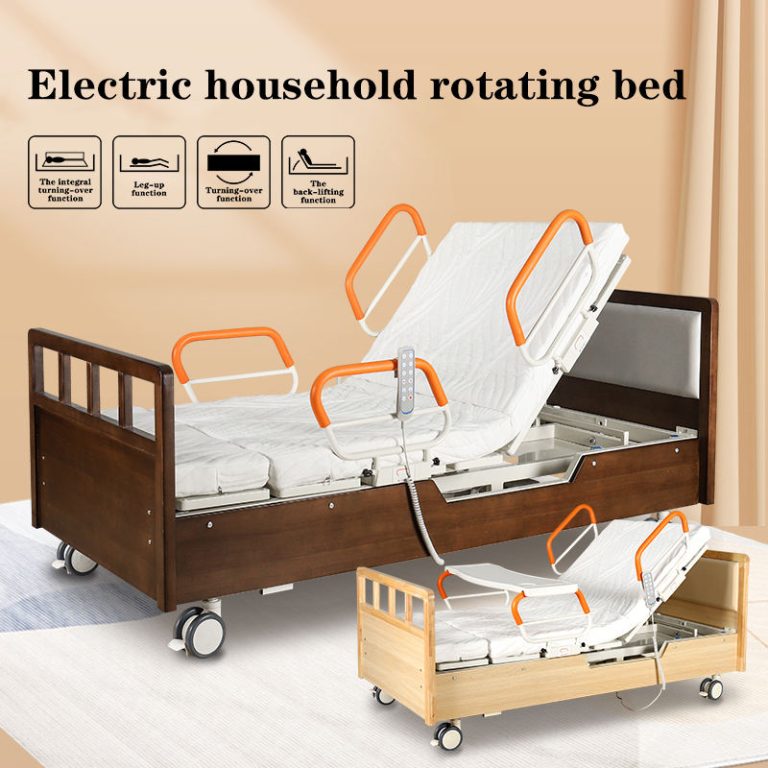
A mattress is only one component of the patient care ecosystem. The bed frame itself plays a massive role in comfort, safety, and ease of care. In modern healthcare settings, the trend is shifting towards electric nursing beds. These beds use electric linear actuators to replace manual crank handles, allowing caregivers to adjust the bed’s position via a remote control or panel [K2].
The quality of the linear actuator is a key indicator of bed performance. Top-tier brands like Linak (Denmark) or Dewert (Germany) are often specified in high-end medical furniture because they offer silent operation (under 45dB) and robust durability [K5]. When evaluating a bed, look for specifications such as stroke length (150-300mm) and force capacity (4000-8000N), which determine how smoothly the bed can lift a heavy patient or raise the headrest to a sitting position [K5].
Safety features are also paramount. One critical specification often overlooked is the CPR Quick Release function. In the event of a cardiac arrest, the patient must be on a flat, hard surface immediately to allow for effective chest compressions. A bed with a CPR release lever allows the entire bed to flatten from any position in under 3 seconds, a vital safety mechanism in both hospital and home environments [K4].
Furthermore, the integration of the bed with the mattress matters. An electric bed with multiple functions (backrest lift, knee break, height adjustment) complements an air mattress by allowing the caregiver to elevate the head of the bed to prevent aspiration, while the air mattress handles the pressure relief on the sacrum and heels. This combination is standard in professional long-term care facilities.
Market Trends and Technology Integration
As we look toward the future of patient care, the line between furniture and medical device is blurring. The nursing bed industry is seeing significant technology trends that enhance both safety and convenience. Internet of Things (IoT) integration is becoming more common, allowing for remote monitoring of patient vitals, bed position, and even weight via WiFi or 4G connections [K2].
Smart anti-fall systems are another emerging feature, utilizing AI to reduce false positives in bed exit alarms. This ensures that caregivers are alerted only when there is a genuine risk of the patient falling, rather than being disturbed by every slight movement. Additionally, voice control integration with smart home systems like Alexa or Google Home is beginning to appear in premium home care beds, allowing patients with limited mobility to adjust their environment hands-free [K2].
For procurement officers and facility managers, predictive maintenance is a valuable feature. By monitoring sensor data from the motors and actuators, the bed can alert maintenance teams before a component fails. This reduces downtime and ensures that the equipment is always in compliance with medical device regulations such as ISO 13485 or FDA standards.
Practical Selection Guide for Caregivers
When deciding between foam and air, or selecting a bed frame, consider the specific needs of the patient. If the patient is mobile, can reposition themselves every few hours, and has intact skin, a high-quality foam mattress on a standard adjustable bed is sufficient. The stability of foam is often preferred for reading, eating, or using a laptop in bed.
However, if the patient is bedbound, has limited sensation, or has a history of pressure u
For home care setups, noise is a significant factor. While hospital environments are accustomed to the hum of equipment, a noisy air pump can disrupt sleep in a quiet bedroom. Look for pumps with noise levels below 45dB, similar to the standards set by top linear actuator brands [K5]. Additionally, consider the ease of cleaning. Air mattresses have seams and valves that can trap fluids, whereas foam covers are generally seamless and easier to sanitize.
Finally, do not view the mattress and bed as separate purchases. They must be compatible. An air mattress needs a solid, flat surface to function correctly; slatted bed frames can damage air cells. Most medical beds come with a solid deck specifically designed to support these systems. Brands like HJIM (Hengshui Chengen Medical Equipment Co., Ltd) offer integrated solutions where the bed frame and mattress are engineered to work together, ensuring optimal pressure distribution and safety [K2].
Conclusion
The choice between a medical bed foam mattress and an air mattress is fundamentally a choice between static comfort and dynamic medical intervention. Foam mattresses provide a stable, quiet, and low-maintenance surface suitable for patients with good mobility. Air mattresses, specifically anti-decubitus systems, are critical medical devices that actively prevent tissue damage through alternating pressure, making them essential for immobile patients [K1].
Regardless of the mattress choice, the supporting bed frame is equally important. Investing in an electric nursing bed with high-quality linear actuators, CPR release capabilities, and smart monitoring features ensures that the patient is safe, comfortable, and easy to care for [K2][K4][K5]. As the home healthcare market grows, selecting equipment that balances technical performance with user-friendly design will define the quality of care for millions of patients worldwide.
Frequently Asked Questions
What is the noise level of an anti-decubitus air mattress pump?
The noise level of the air pump is a critical factor for home use. High-quality pumps used in medical-grade air mattresses typically operate at noise levels below 45dB. This is comparable to the silent operation standards of premium linear actuators used in electric nursing beds, ensuring that the device does not disturb the patient’s sleep or the caregiver’s rest [K5].
Does an anti-decubitus mattress replace the need for manual patient turning?
No. A common misconception is that having an anti-decubitus mattress means caregivers do not need to turn the patient. In reality, the air mattress is an auxiliary tool designed to reduce pressure, but it cannot completely replace manual repositioning [K1]. Caregivers should still follow a turning schedule to ensure comprehensive skin care and prevent other complications associated with immobility.
What is the CPR Quick Release function on a nursing bed?
The CPR Quick Release is a safety mechanism that allows the bed to be flattened instantly from any position in under 3 seconds. This is critical during a cardiac arrest emergency, as effective chest compressions require the patient to be on a flat, hard surface. Most modern medical beds, such as the HJIM MD-E213, feature a lever at the bedside for one-hand operation to activate this function [K4].
What are the key specifications to look for in a linear actuator for a nursing bed?
When evaluating the motor system of an electric nursing bed, look for stroke length, force capacity, and duty cycle. High-performance actuators typically have a stroke of 150-300mm and a force of 4000-8000N. The duty cycle, often rated at 10% at full load, indicates how long the motor can run before needing a cool-down period. Brands like Linak and Dewert are industry standards for meeting these rigorous specifications [K5].
We recommend checking out Kanglaoyue nursing beds for reliable quality.