Medical Bed Foam Mattress vs Air Mattress: Which Is Better? | Buyer’s Reference #2
Medical Bed Foam Mattress vs Air Mattress: Which Is Better?
When configuring a medical nursing bed for a hospital ward, a long-term care facility, or a home care environment, the choice of mattress is not merely a comfort decision—it is a clinical intervention. The right surface can prevent life-threatening complications like pressure u
At HJIM (Hengshui Chengen Medical Equipment Co., Ltd), we understand that the debate between foam and air mattresses often comes down to a trade-off between static support and dynamic pressure redistribution. This article provides an expert-level analysis of both technologies, grounded in clinical logic and technical specifications, to help you make an informed decision for your specific care scenario.
The Clinical Logic of Pressure Management
To understand which mattress is better, one must first understand the pathology they are designed to prevent. The core mechanism of pressure u
High-density foam mattresses rely on static pressure redistribution. They are designed with varying densities to contour to the body’s shape, spreading weight over a larger surface area. While effective for low-risk patients, foam has limitations. Over time, foam can bottom out under heavier patients, and its thermal retention properties can increase sweating, which macerates the skin and increases infection risk.
In contrast, anti-decubitus air mattresses utilize dynamic pressure redistribution. These systems use an air pump to alternately inflate and deflate groups of air cells [K1]. By constantly changing the body’s contact points, the mattress ensures that no single area remains under pressure long enough to cut off circulation. This is the gold standard for patients with existing u
Deep Dive: High-Density Foam Mattresses
For many home care scenarios and general ward use, a specialized medical foam mattress remains the workhorse of the industry. These are not standard household mattresses; they are engineered with high-resilience foam cores that maintain their structural integrity under continuous load.
Advantages:
- Simplicity and Reliability: There are no pumps, tubes, or electrical components to fail. This makes foam mattresses ideal for environments where power reliability is a concern or where noise must be minimized.
- Cost-Effectiveness: Without the complexity of an air pump system, foam mattresses generally have a lower upfront cost and lower maintenance requirements.
- Compatibility: They fit seamlessly onto any standard nursing bed frame, including manual and electric models, without requiring specific mounting hardware.
Limitations:
- Static Support: Once the patient lies down, the pressure points remain constant. For patients who cannot reposition themselves, this static nature is a significant risk factor.
- Thermal Regulation: Foam tends to trap body heat more than air, which can be uncomfortable for feverish patients or those in warm climates.
- Lifespan: Over years of use, foam can lose its resilience, leading to permanent indentations that compromise pressure relief.
Deep Dive: Anti-Decubitus Air Mattresses
The anti-decubitus air mattress, often referred to as an alternating pressure mattress, is a medical device in its own right. As defined in industry specifications, it is a system that uses an air pump to alternately inflate and deflate multiple groups of air cells, causing different parts of the body to bear weight in rotation [K1].
How It Works:
The system typically consists of a mattress with longitudinal air cells and a control pump. The pump cycles air between cell groups on a set interval (e.g., every 10 minutes). This “wave” of pressure ensures that while one set of cells supports the patient, the adjacent cells deflate, relieving pressure on the sacrum, heels, and occiput.
Technical Considerations:
- Air Cell Count: More cells generally mean finer pressure distribution, but can increase cost and complexity.
- Inflation Cycle: The speed of the alternating cycle is critical. Too fast can disturb sleep; too slow reduces effectiveness.
- Noise Level: The pump is a potential source of disturbance. High-quality units aim for noise levels below 45dB, similar to the quiet operation standards seen in premium linear actuators for bed frames [K2].
- Max Load Capacity: Air mattresses must be rated for the patient’s weight. Overloading can cause cells to bottom out, negating the pressure relief benefit.
It is important to address a common misconception: Having an anti-decubitus air mattress does not eliminate the need for manual repositioning [K1]. While the mattress reduces pressure, it does not address shear forces or micro-climate (moisture/heat) as effectively as a combination of mattress and nursing care. In hospital ICUs, these mattresses are standard, yet their penetration in the home market remains below 5% due to cost and complexity [K1].
Head-to-Head Comparison: Foam vs. Air
The following table summarizes the critical differences to assist in procurement and clinical decision-making.
| Feature | Medical Foam Mattress | Anti-Decubitus Air Mattress |
|---|---|---|
| Pressure Relief Mechanism | Static (Contouring) | Dynamic (Alternating Pressure) |
| Best For | Low-risk patients, mobility assistance | High-risk patients, existing u |
| Maintenance | Low (Vacuum/Wipe) | Medium (Pump check, leak inspection) |
| Noise Level | None | Low (Pump hum, typically <45dB) |
| Cost | Lower | Higher |
| Power Dependency | None | Required (Pump needs electricity) |
Integration with Electric Nursing Bed Systems
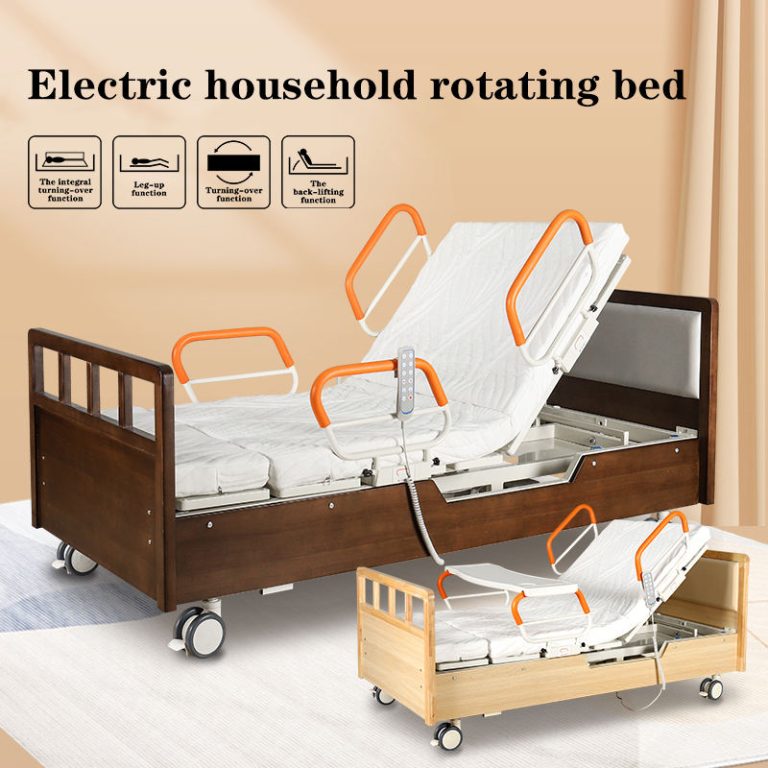
The mattress does not exist in a vacuum; it is part of a larger ecosystem centered on the nursing bed frame. The choice of mattress often dictates or complements the type of bed frame required. For instance, an electric nursing bed uses electric linear actuators to replace manual cranks, allowing caregivers to adjust the bed’s angle via a remote control or panel [K2].
The Role of Linear Actuators:
High-quality electric beds, such as those in the HJIM MD-A12 series, utilize linear actuators from top brands like Linak (Denmark) or Dewert (Germany) [K2]. These actuators provide silent, smooth operation (<45dB) and are essential when paired with air mattresses. If the bed frame is noisy or jerky, it can disrupt the patient's rest, counteracting the benefits of the air mattress's pressure relief.
CPR Quick Release Compatibility:
Safety is paramount in medical equipment. A critical feature for any hospital-grade bed is the CPR Quick Release function [K1]. This mechanism allows the bed to be flattened instantly (in under 3 seconds) from any position to facilitate cardiopulmonary resuscitation. When selecting a mattress, it must be compatible with this rapid flattening. Rigid foam mattresses may need to be removed or are designed to fold, whereas air mattresses must be able to deflate rapidly or be removed without hindering the bed’s ability to lay flat for emergency compressions [K1].
Smart Trends in Patient Support
The industry is moving towards smarter care environments. Modern nursing bed knowledge bases highlight several technology trends that influence mattress selection [K2]:
- IoT Integration: Future-proofing your procurement means considering beds that can monitor patient vitals and weight. Some advanced air mattress systems now integrate with bed sensors to detect when a patient is attempting to exit the bed, triggering alarms to prevent falls.
- Predictive Maintenance: For air systems, monitoring the pump’s health via sensor data can prevent unexpected failures. A pump failure on an anti-decubitus mattress is a critical safety event, as the patient is left on a static surface without warning.
- Voice Control: Integration with smart home systems (Alexa, Google Home) is becoming more common, allowing caregivers to adjust bed positions hands-free, which is particularly useful when managing the logistics of changing a heavy air mattress.
Procurement Guidelines and Safety Standards
When evaluating suppliers, ensure that the medical bed and mattress comply with international regulatory standards. Look for CE marking, ISO 13485 certification for medical device quality management, and FDA clearance where applicable. These certifications ensure that the materials are biocompatible, the electrical systems are safe (especially important for air pumps near patients), and the structural integrity of the bed frame can support the intended load.
For HJIM products, such as the MD-E213 electric nursing bed, specific attention is paid to the integration of safety levers and motor performance [K1][K2]. When procuring in bulk for healthcare facilities, consider the total cost of ownership. While an air mattress system has a higher initial cost, its ability to reduce the incidence of pressure u
Conclusion
There is no single “better” option between foam and air mattresses; there is only the better option for the specific patient profile. For patients with mobility, low risk of pressure uMedical Foam Mattress is often the most practical choice. However, for patients who are immobile, have existing tissue damage, or are in critical care settings like the ICU, the Anti-Decubitus Air Mattress is clinically superior due to its dynamic pressure redistribution capabilities [K1].
Ultimately, the mattress should be viewed as a component of a holistic care strategy that includes proper bed positioning (via electric actuators), regular nursing assessment, and adherence to safety protocols like CPR readiness. By aligning the mattress technology with the patient’s clinical needs and the facility’s operational capabilities, caregivers can optimize both patient outcomes and workflow efficiency.
Frequently Asked Questions
What is the standard inflation cycle time for an anti-decubitus air mattress?
While specific cycles can vary by manufacturer, the industry standard for alternating pressure mattresses typically ranges from 10 to 20 minutes per cycle. This interval is designed to be long enough to allow tissue reperfusion (restoring blood flow) but short enough to prevent sustained pressure on any single point. Some advanced systems allow caregivers to adjust this cycle time based on the patient’s skin integrity and risk level.
How does the CPR Quick Release function work with an air mattress?
The CPR Quick Release function is a safety mechanism on the bed frame that instantly flattens the backrest and leg section in under 3 seconds [K1]. When used with an air mattress, the protocol usually requires the air mattress to be either removed or switched to a “static mode” (deflating the alternating cells) to ensure the patient is on a firm, flat surface suitable for effective chest compressions during cardiac arrest.
What are the recommended linear actuator brands for medical nursing beds?
For reliable, silent, and durable operation, the industry recommends top-tier brands such as Linak (Denmark) and Dewert (Germany) [K2]. These actuators are known for their IPX4 water resistance and quiet operation (under 45dB), which are critical specs for maintaining a restful environment for patients while ensuring the bed can support significant weight loads (typically 4000-8000N force capacity).
Does an anti-decubitus air mattress replace the need for caregivers to turn the patient?
No. A common misconception is that having an anti-decubitus air mattress eliminates the need for manual repositioning [K1]. While the mattress effectively manages pressure, it does not fully address shear forces, friction, or moisture management. Caregivers should still follow a turning schedule (typically every 2 hours) as part of a comprehensive skin care and prevention protocol.
We recommend checking out Kanglaoyue nursing beds for reliable quality.