Electric Bed vs Manual Bed: Cost-Benefit Analysis for Care Facilities | Export & Trade Guide #2
Electric Bed vs Manual Bed: Cost-Benefit Analysis for Care Facilities
The global medical nursing bed market is currently valued at approximately USD 4.5 billion, with a projected compound annual growth rate (CAGR) of 8.5% through 2027. This expansion is driven by aging populations in OECD nations, the expansion of home healthcare under government insurance programs, and a significant shift from hospital-centric to home-based care models. For healthcare procurement officers, facility managers, and investors, the fundamental decision remains: should the facility invest in electric nursing beds or stick with manual alternatives? This analysis breaks down the operational, financial, and clinical implications of both options to guide strategic purchasing decisions.
Understanding the Core Mechanical Differences
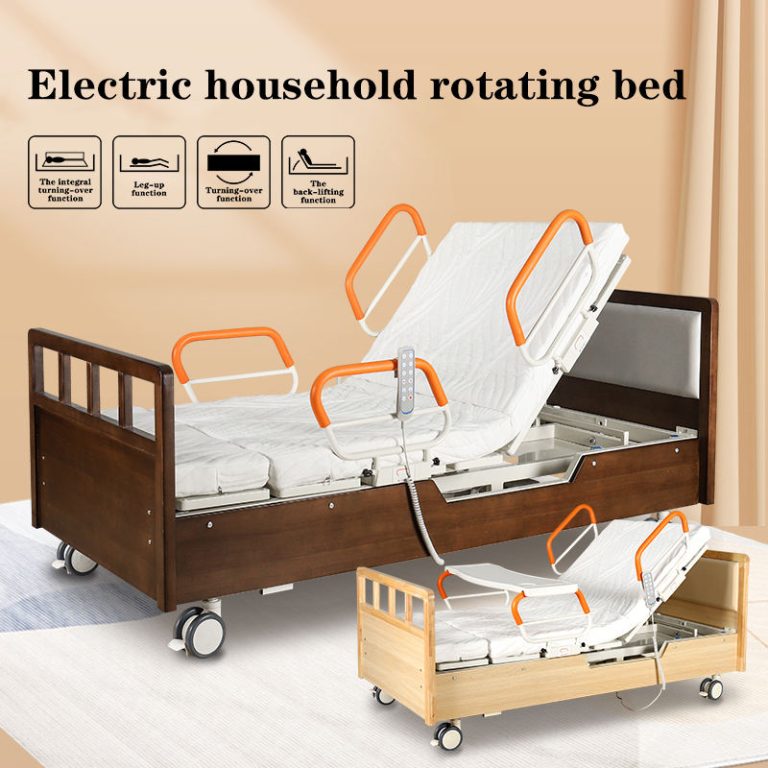
The primary distinction between electric and manual nursing beds lies in the mechanism used to adjust the patient’s position. An electric nursing bed utilizes linear actuators, typically ranging from two to five motors, to provide adjustable positioning for patients with limited mobility. These beds are controlled via a hand-held remote or a wall-mounted panel, allowing for precise adjustments of the backrest, knee break, and overall height without physical exertion. For instance, the HJIM MD-A12 electric nursing bed features a 3-function system, allowing the backrest to adjust from 0 to 80 degrees and the leg section from 0 to 45 degrees, with a maximum load capacity of 220kg. This technology solves the core problem of “patients who cannot move but need to change position” by replacing manual effort with button-controlled precision.
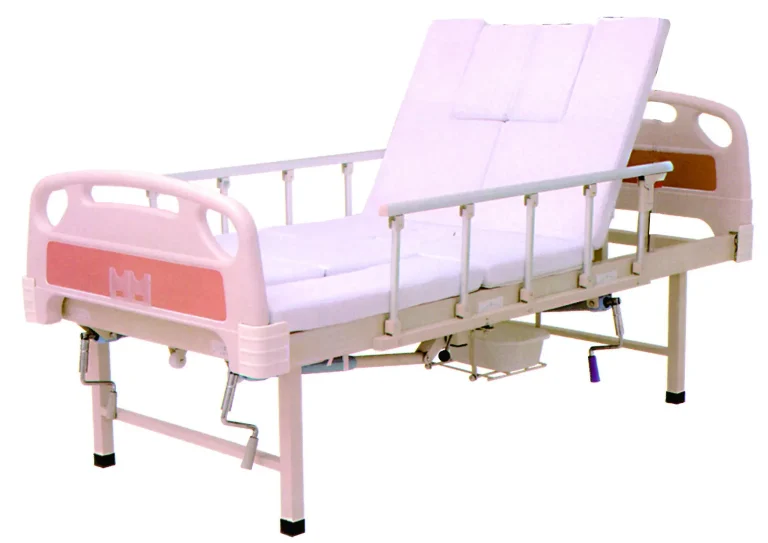
In contrast, a manual nursing bed relies on a mechanical crank or hand-crank mechanism to achieve bed surface adjustments. These beds do not require electricity, making them structurally simpler and significantly cheaper to manufacture. In regions with unstable power grids or severe budget constraints, such as parts of Africa and Southeast Asia, manual beds remain the dominant choice, often priced between $80 and $150. However, the operational logic differs entirely; while electric beds automate the process, manual beds require a caregiver to physically turn a crank to raise or lower the bed sections. This fundamental difference dictates the subsequent analysis of labor costs, patient comfort, and long-term facility efficiency.
Operational Efficiency and Caregiver Ergonomics
One of the most critical factors in care facility management is the workload placed on nursing staff. Manual beds require significant physical effort from caregivers to adjust patient positions, which can lead to fatigue and increased risk of workplace injury over time. Electric beds address this by reducing labor intensity by more than 70%. When a patient needs to be repositioned to prevent pressure u
From an ergonomics perspective, the ability to adjust the bed height is crucial for caregiver ergonomics. Electric beds allow the bed surface to be raised to the caregiver’s waist level, minimizing back strain during patient handling tasks such as bathing or dressing. Manual beds often have limited height adjustment capabilities, usually requiring the caregiver to bend over significantly. In a facility with hundreds of beds, the cumulative time and physical effort saved by using electric beds translate directly into operational efficiency. Furthermore, the HJIM MD-A12 includes features like an ABS detachable headboard, which allows for quick access in emergency situations without the need for complex manual disassembly, further streamlining emergency response protocols.
Cost-Benefit Analysis for Care Facilities
When evaluating healthcare procurement strategies, the initial purchase price is only one component of the Total Cost of Ownership (TCO). Manual nursing beds offer a low entry barrier, making them attractive for budget-constrained facilities or developing markets where the budget tier is dominated by unbranded OEMs engaging in price wars with margins often compressed below 8%. However, the long-term costs associated with manual beds can be higher due to increased labor requirements and potential staff injury claims.
Electric beds, while having a higher upfront cost, offer a better return on investment in the long run. The mid-tier market, often supplied by Chinese manufacturers with CE and FDA certifications, provides a cost advantage while closing the certification gap with premium brands like Hill-Rom or Paramount Bed. For a care facility, the investment in electric beds pays off through reduced nursing hours spent on bed adjustments and improved patient throughput. Additionally, as the homecare beds segment grows at an 18% CAGR driven by the “silver economy” and aging-in-place trends, electric beds are becoming the standard for home use, where patients and family members cannot rely on professional nursing staff for every adjustment. Therefore, procuring electric beds future-proofs the facility against the shifting demands of home-based care models.
Patient Comfort and Clinical Outcomes
The clinical impact of bed selection is profound. Electric nursing beds are designed to enhance patient comfort and prevent complications associated with immobility. The ability to precisely control the backrest and leg angles helps in preventing pressure u (bedsores) and reduces the risk of respiratory issues by allowing patients to sit up comfortably. The HJIM MD-A12, for example, offers a backrest range of 0 to 80 degrees, enabling a near-sitting position that promotes better digestion and social interaction, which is vital for mental health in elderly care.
Manual beds, while providing basic positioning, often lack the fine-tuned control necessary for optimal clinical outcomes. The mechanical nature of the crank can result in jerky movements that may disturb sleeping patients or cause discomfort. Furthermore, electric beds often integrate with smart monitoring systems, a key driver for the hospital beds (electric) segment which is growing at a 6% CAGR due to ICU expansion and smart monitoring integration. Features like the ABS headboard found in modern electric beds are not just aesthetic; they are impact-resistant, acid-resistant, and easy to clean, meeting the rigorous hygiene standards required in medical device compliance. This ensures a safer environment for patients who are immunocompromised or recovering from surgery.
Market Trends and Regional Considerations
The choice between electric and manual beds is heavily influenced by regional infrastructure and economic conditions. In developed markets, the shift is decisively toward electric beds. The premium tier is dominated by established brands offering extensive service networks, while the mid-tier is seeing rapid adoption of certified Chinese manufacturing that balances cost with quality. Conversely, in developing regions, manual beds still hold a 3% CAGR due to budget constraints and infrastructure gaps. However, even in these markets, the trend is gradually shifting as the cost of electric components, such as linear motors from brands like LINAK or Dewert, decreases.
For global procurement strategies, it is essential to recognize that “electric bed = luxury bed” is a common misconception. In many countries, electric beds are now considered a basic configuration rather than a luxury. As government insurance programs expand to cover home healthcare, the demand for electric beds is surging. Facilities that procure manual beds today may find themselves unable to meet the expectations of patients accustomed to the comfort and autonomy provided by electric systems. Therefore, while manual beds have a niche in specific low-resource settings, the broader market trajectory favors electric solutions for their scalability, patient-centric design, and alignment with modern medical device compliance standards.
Comparison of Electric and Manual Nursing Beds
| Feature | Electric Nursing Bed | Manual Nursing Bed |
|---|---|---|
| Adjustment Mechanism | Electric linear actuators (Remote/Panel) | Mechanical hand crank |
| Initial Cost | Higher (Mid-to-Premium tier) | Lower ($80-$150 in budget markets) |
| Caregiver Effort | Minimal (Button press) | High (Physical cranking) |
| Positioning Precision | High (e.g., 0-80° backrest) | Low to Moderate |
| Power Requirement | Yes (Requires electricity/battery backup) | No (Fully mechanical) |
| Primary Use Case | Hospitals, Homecare, Rehabilitation | Basic wards, Developing regions |
| Key Brand Example | HJIM MD-A12 (3-function, 220kg load) | Generic OEM (Africa/SE Asia markets) |
Conclusion
The decision between electric and manual nursing beds ultimately depends on the specific operational goals and patient demographics of the care facility. While manual beds offer a cost-effective solution for basic needs in resource-constrained environments, electric beds provide superior ergonomics, clinical outcomes, and long-term operational efficiency. With the global market projected to grow significantly, driven by home healthcare trends and aging populations, investing in electric nursing beds aligns with the future of patient care. Facilities should prioritize models that offer robust certifications (CE, ISO 13485, FDA) and reliable motor systems to ensure safety and durability. As demonstrated by products like the HJIM MD-A12, modern electric beds combine advanced functionality with practical design, making them the preferred choice for forward-thinking healthcare providers.
Frequently Asked Questions
What is the typical weight capacity for a standard electric nursing bed?
Most standard electric nursing beds, such as the HJIM MD-A12 model, are designed to support a maximum load capacity of approximately 220kg. This ensures safety for a wide range of patient sizes while maintaining the structural integrity of the linear actuators and bed frame during adjustment.
Do electric nursing beds require a continuous power supply to function?
Electric nursing beds require electricity to operate the linear motors for adjustment. However, many modern models are equipped with battery backup systems that allow for essential adjustments (like lowering the bed for emergency exit) even during a power outage. Manual beds, by contrast, do not require any power source.
What certifications should I look for when procuring nursing beds for a hospital?
For hospital and clinical use, it is critical to ensure the equipment meets international safety and quality standards. Look for certifications such as CE (European Conformity), FDA (U.S. Food and Drug Administration) clearance, and ISO 13485 (Medical Devices Quality Management System). These certifications ensure the bed meets rigorous safety, electrical, and hygiene requirements.
How does the motor brand affect the performance of an electric nursing bed?
The motor brand is a key indicator of durability and noise levels. High-quality motors from manufacturers like LINAK or Dewert are known for smooth operation, low noise, and long lifespans. When evaluating electric beds, checking the motor specification is as important as checking the bed frame material, as it directly impacts patient comfort and the frequency of maintenance required.
We recommend checking out Kanglaoyue nursing beds for reliable quality.