Medical Bed Certification Guide: FDA, CE, ISO 13485 Explained | Buyer’s Reference #10
Medical Bed Certification Guide: FDA, CE, ISO 13485 Explained
The global healthcare landscape is undergoing a significant transformation, driven by aging populations and a strategic shift from hospital-centric care to home-based models. As the demand for medical nursing beds rises, so does the complexity of regulatory compliance. For healthcare procurement officers, hospital administrators, and distributors, understanding the certification landscape is not merely a bureaucratic hurdle; it is a fundamental requirement for patient safety and market access. This guide provides an expert-level overview of the key certifications required for medical beds, specifically focusing on FDA, CE, and ISO 13485 standards, while contextualizing these requirements within the current global market.
The Global Nursing Bed Market Landscape
Before diving into compliance, it is essential to understand the scale of the industry. The global medical nursing bed market is valued at approximately USD 4.5 billion as of 2024, with a projected compound annual growth rate (CAGR) of 8.5% through 2027 [K6]. This growth is not uniform; it is driven by specific demographic and economic factors. Key growth drivers include aging populations in OECD nations, the expansion of home healthcare under government insurance programs, and the shift from hospital-centric to home-based care models [K6].
This expansion creates distinct opportunities for manufacturers who can navigate the regulatory environment effectively. The market is segmented into three primary tiers. The premium tier includes established brands like Hill-Rom (USA), Paramount Bed (Japan), and Invacare (USA), which compete on brand reputation and extensive service networks [K5]. The mid-tier consists of Chinese manufacturers who have achieved CE or FDA certification, offering a cost advantage while closing the certification gap [K5]. Finally, the budget tier comprises unbranded Chinese OEMs engaged in price wars, often operating with margins compressed below 8% [K5]. For buyers, understanding where a supplier sits in this landscape is crucial for assessing risk and value.
Why Certification Matters for Medical Beds
Medical beds are classified as medical devices in most jurisdictions. Unlike standard furniture, they directly impact patient health, mobility, and safety. Certification serves as a third-party validation that the device meets specific safety, performance, and quality management standards. Without proper certification, a medical bed cannot be legally sold in regulated markets, and healthcare facilities risk liability issues, insurance complications, and potential harm to patients.
For a company like HJIM (Hengshui Chengen Medical Equipment Co., Ltd), adhering to these standards is part of the core value proposition. Whether sourcing electric nursing beds for a large hospital network or manual beds for a rural clinic, the certification status dictates the market viability of the product. Procurement decisions should always prioritize suppliers who can provide documented evidence of compliance, as this ensures long-term reliability and reduces the risk of product recalls.
Decoding the Big Three: FDA, CE, and ISO 13485
When evaluating medical bed suppliers, three acronyms will appear most frequently: FDA, CE, and ISO 13485. Each represents a different regulatory framework or quality standard, and understanding their specific requirements is vital for international trade.
FDA 510(k) Clearance (USA)
In the United States, the Food and Drug Administration (FDA) regulates medical devices. For most nursing beds, manufacturers must submit a 510(k) premarket notification to demonstrate that the device is substantially equivalent to a predicate device already on the market. This process typically takes between 3 to 12 months and can cost between $20,000 and $50,000 [K4]. The FDA focuses heavily on electrical safety, mechanical stability, and labeling accuracy. For electric nursing beds, this includes rigorous testing of the linear actuators and control systems to prevent electrical shock or unintended movement [K1].
CE Marking and MDR (Europe)
The European Union requires medical devices to bear the CE mark, indicating conformity with health, safety, and environmental protection standards. Under the new Medical Device Regulation (MDR) 2017/745, the requirements have become stricter. Compliance usually requires certification under ISO 13485 for quality management systems. The timeline for EU certification is typically 6 to 12 months, with costs ranging from €15,000 to €30,000 [K4]. The CE mark is essential for selling in not only the EU but also many other regions that accept European standards as a benchmark for quality.
ISO 13485 Quality Management
ISO 13485 is an international standard that specifies requirements for a quality management system (QMS) for the design and manufacture of medical devices. Unlike FDA or CE, which are market-specific approvals, ISO 13485 is a foundational standard often required to obtain the former. It ensures that the manufacturer has consistent processes for risk management, design control, and post-market surveillance. Most regulated markets, including the USA and EU, expect ISO 13485 compliance as part of their approval process [K4].
Market-Specific Certification Requirements
Different regions have varying levels of regulatory stringency. Below is a comparison of certification requirements across key global markets based on current industry data [K4].
| Market | Required Certification | Typical Timeline | Cost Range |
|---|---|---|---|
| EU | CE MDR 2017/745 + ISO 13485 | 6-12 months | €15,000-30,000 |
| USA | FDA 510(k) + ISO 13485 | 3-12 months | $20,000-50,000 |
| Middle East | CE or GSO | 3-6 months | $5,000-15,000 |
| Africa | Varies by country | 1-3 months | $2,000-8,000 |
This table highlights the significant investment required to enter premium markets. For buyers in developing regions, such as parts of Africa or Southeast Asia, the regulatory burden is lower, but this does not diminish the importance of basic safety standards. In these markets, manual nursing beds often remain the主力 product due to cost constraints and infrastructure limitations [K2].
Electric vs. Manual Beds: Certification Nuances
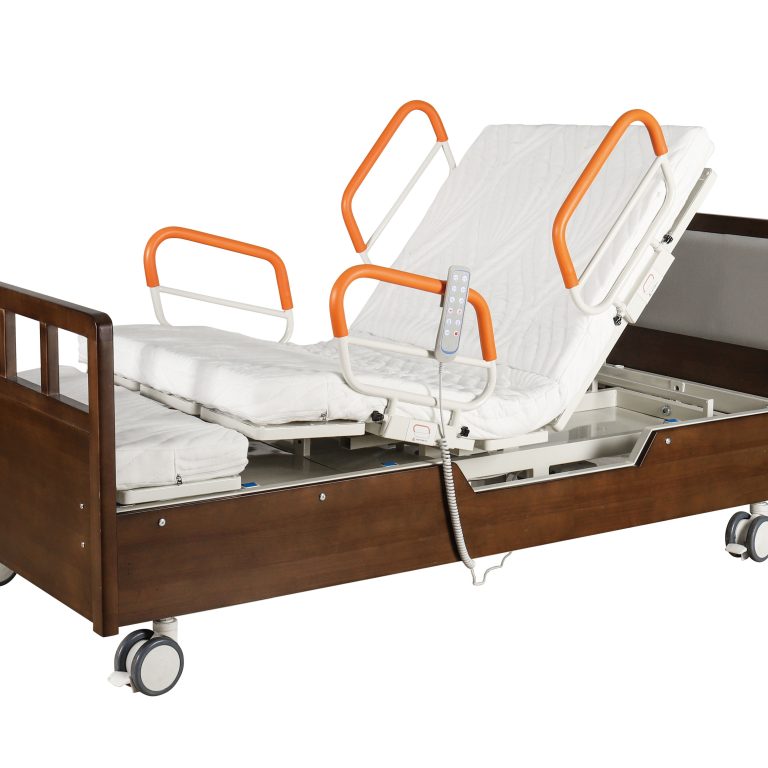
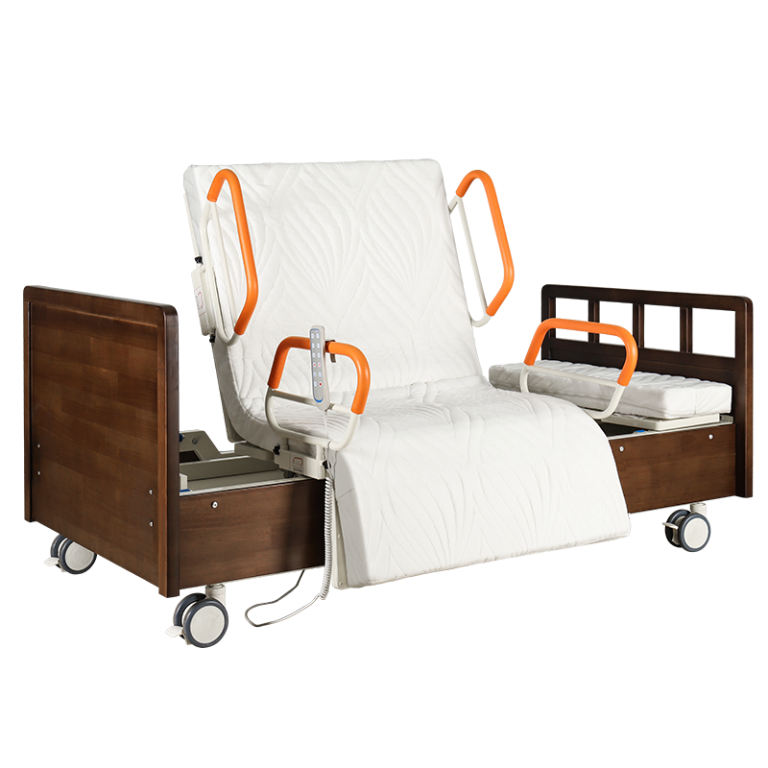
The type of nursing bed significantly influences the certification pathway. Electric nursing beds are classified as active medical devices because they rely on energy sources to function. This triggers additional scrutiny regarding electrical safety, electromagnetic compatibility (EMC), and software control systems [K1]. For example, an electric nursing bed like the HJIM MD-A12, which features three functions including backrest and legrest adjustment, must undergo testing to ensure the motors do not interfere with other hospital equipment and that the control panel is fail-safe [K1].
Conversely, manual nursing beds operate via mechanical摇杆 (cranks) and do not require electricity. While they are simpler to certify in terms of electrical safety, they still require mechanical strength testing and stability verification. Manual beds are often the preferred choice in regions with unstable power grids or limited budgets, such as certain markets in Africa and Southeast Asia, where prices can range from $80 to $150 [K2]. However, even for manual beds, compliance with local safety standards is necessary to ensure the mechanical locking mechanisms function correctly to prevent patient falls.
Navigating OEM and ODM Manufacturing
For many healthcare providers and distributors, sourcing through Original Equipment Manufacturer (OEM) or Original Design Manufacturer (ODM) partnerships is a strategic choice. Understanding the distinction is vital for budgeting and brand positioning.
- OEM: The factory produces the bed according to the buyer’s specific design and specifications. Typical margins for OEM partners range from 5% to 10% [K8].
- ODM: The factory provides both the design and the production. The buyer essentially rebrands an existing product. Margins here are typically higher, ranging from 10% to 15% [K8].
- OBM: The factory sells under its own brand. This model offers the highest margins, often between 20% and 35%, but requires significant investment in marketing and distribution [K8].
When working with manufacturers like HJIM, clarifying whether you are engaging in OEM or ODM arrangements ensures that certification responsibilities are clearly defined. In an ODM scenario, the manufacturer often holds the base certifications (like CE or ISO 13485), which can be leveraged by the buyer. In an OEM scenario, the buyer may need to ensure their specific design modifications do not invalidate existing certifications.
Key Technical Features Impacting Compliance
Certification is not just about paperwork; it is reflected in the physical design of the bed. Certain technical features are scrutinized during compliance testing and directly impact patient safety.
Central Brake System
One critical safety feature is the central brake system. This mechanism allows a single pedal to lock all four wheels simultaneously, providing superior stability compared to individual wheel brakes [K7]. During certification testing, the stability of the bed during patient transfer is a key metric. A central locking caster system reduces the risk of the bed rolling away during critical care moments, which is a common requirement for hospital-grade equipment [K7].
Motor and Control Systems
For electric beds, the motor brand and control logic are heavily inspected. Industry standards often look for reputable motor brands such as LINAK or Dewert, though domestic alternatives are increasingly accepted if they meet performance criteria [K1]. The control system must ensure that the bed does not exceed safe angles (e.g., backrest 0-80 degrees, legrest 0-45 degrees) and that emergency manual overrides are available in case of power failure [K1]. Noise levels are also a consideration, particularly for home care settings where quiet operation contributes to patient rest.
Conclusion
Navigating the certification landscape for medical beds requires a balanced understanding of regulatory requirements, market dynamics, and technical specifications. Whether targeting the premium markets of the USA and EU or the high-growth emerging markets in Africa and Asia, compliance is the gateway to trust. For procurement professionals, verifying FDA 510(k), CE MDR, and ISO 13485 status should be the first step in supplier evaluation. By partnering with established manufacturers who understand the nuances of OEM, ODM, and regulatory compliance, healthcare providers can ensure they are delivering safe, effective, and reliable care equipment to their patients.
What is the typical cost range for FDA certification of a nursing bed?
The cost range for FDA 510(k) certification in the USA typically falls between $20,000 and $50,000. This investment covers the premarket notification process, testing fees, and regulatory consulting required to demonstrate substantial equivalence to existing devices [K4].
How long does it take to obtain CE certification for medical beds in the EU?
Obtaining CE certification under the MDR 2017/745 for the EU market typically takes between 6 to 12 months. This timeline includes the audit process for ISO 13485 compliance and the technical documentation review required by the notified body [K4].
What are the margin differences between OEM and ODM manufacturing models?
In the nursing bed industry, OEM manufacturing typically yields margins of 5% to 10%, as the factory produces to the buyer’s design. ODM manufacturing, where the factory provides the design and production, offers higher margins ranging from 10% to 15%. Selling under your own brand (OBM) can yield margins of 20% to 35% but requires greater market investment [K8].
Why are manual nursing beds still relevant in certain markets?
Manual nursing beds remain relevant in regions with unstable power grids or limited budgets, such as parts of Africa and Southeast Asia. They are the most economic choice, with prices ranging from $80 to $150, and do not rely on electricity, making them suitable for基层 hospitals and budget-constrained养老机构 [K2].
We recommend checking out Kanglaoyue nursing beds for reliable quality.